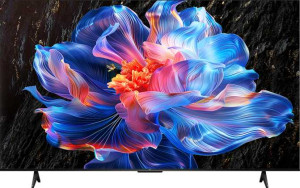
TCL 75P6K 75"
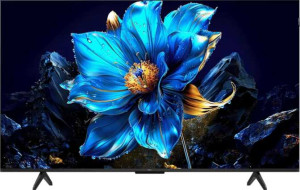
TCL 75P7K 75"

TCL 75P6K 75" TCL 75P7K 75"

Overview

When choosing between the TCL 75P6K 75″ and the TCL 75P7K 75″, buyers are looking at two large-screen 4K televisions from the same family that share a strong common foundation yet diverge in some meaningful areas. Both panels deliver a 74.5-inch 4K UHD picture at 60Hz, but key questions around display technology, HDR format support, and connectivity options set them apart in ways that could matter depending on your viewing habits and home setup.

Common Features

  • Both TVs have a 4K UHD display resolution of 3840 x 2160 px.
  • Both TVs feature a 74.5″ screen size.
  • Both TVs have a pixel density of 59 ppi.
  • Both TVs support 1070 million display colors with a 10-bit bit depth.
  • Both TVs have a 60Hz refresh rate.
  • HDR10 support is available on both products.
  • Both TVs feature an LED-backlit LCD panel construction.
  • Both TVs support Bluetooth and Wi-Fi connectivity.
  • Both TVs are compatible with Wi-Fi 4 (802.11n) and Wi-Fi 5 (802.11ac).
  • Both TVs include 3 HDMI 2.1 ports and 1 RJ45 port.
  • Both TVs are DLNA-certified and support Miracast.
  • Both TVs deliver 2 x 15W audio output power with stereo speakers.
  • Both TVs support Digital Out and neither includes a subwoofer.
  • Both TVs feature HDMI eARC and HDMI ARC.
  • SRS TheaterSound HD is not available on either product.
  • Both TVs support VESA mounting.
  • Both TVs operate within a temperature range of 5 °C to 35 °C.
  • Both TVs have Chromecast built-in and AirPlay support.
  • Both TVs are compatible with Google Assistant and Alexa.
  • Apple HomeKit and Siri compatibility is not available on either product.
  • Both TVs have a built-in smart TV platform and support smartphone remote control.
  • Neither TV includes a rechargeable remote control.

Main Differences

  • Display type is LED-backlit LCD on TCL 75P6K 75″ and QLED LED-backlit LCD on TCL 75P7K 75″.
  • Typical brightness is 330 nits on TCL 75P6K 75″ and 350 nits on TCL 75P7K 75″.
  • HDR10+ support is present on TCL 75P7K 75″ but not available on TCL 75P6K 75″.
  • Dolby Vision support is present on TCL 75P7K 75″ but not available on TCL 75P6K 75″.
  • Bluetooth version is 5.2 on TCL 75P6K 75″ and 5.4 on TCL 75P7K 75″.
  • USB ports number 1 on TCL 75P6K 75″ and 2 on TCL 75P7K 75″.
  • Width is 1667 mm on TCL 75P6K 75″ and 1666 mm on TCL 75P7K 75″.
  • Weight is 18200 g on TCL 75P6K 75″ and 23200 g on TCL 75P7K 75″.
  • Thickness is 74 mm on TCL 75P6K 75″ and 69.5 mm on TCL 75P7K 75″.
  • Height is 959 mm on TCL 75P6K 75″ and 958 mm on TCL 75P7K 75″.
  • Volume is 118300.322 cm³ on TCL 75P6K 75″ and 110923.946 cm³ on TCL 75P7K 75″.
Specs Comparison
TCL 75P6K 75"

TCL 75P6K 75"

TCL 75P7K 75"

TCL 75P7K 75"

Display:
display resolution 4K (UHD) 4K (UHD)
Display type LED-backlit, LCD QLED, LED-backlit, LCD
screen size 74.5" 74.5"
resolution 3840 x 2160 px 3840 x 2160 px
pixel density 59 ppi 59 ppi
display colors 1070 million 1070 million
bit depth 10-bit 10-bit
brightness (typical) 330 nits 350 nits
refresh rate 60Hz 60Hz
supports HDR10
supports HDR10+
supports Dolby Vision
supports HLG
has anti-reflection coating
has an ambient light sensor
maximum horizontal viewing angle 178º 178º
maximum vertical viewing angle 178º 178º

Both the TCL 75P6K and TCL 75P7K share a strong foundation: identical 4K (3840 x 2160) resolution at 74.5″, 59 ppi pixel density, 10-bit color depth rendering 1.07 billion colors, a 60Hz refresh rate, and wide 178º viewing angles in both directions. Both also include anti-reflection coating and an ambient light sensor, meaning neither has an edge on screen legibility or adaptive brightness.

The most meaningful difference lies in panel technology and HDR support. The P7K uses a QLED panel — a quantum dot enhancement over the P6K's standard LED-backlit LCD — which typically translates to a wider color gamut and more vivid, saturated images in practice. This also correlates with the P7K's slightly higher 350 nits typical brightness versus the P6K's 330 nits, a modest but real advantage in bright viewing environments. More significantly, the P7K supports Dolby Vision and HDR10+ in addition to HDR10 and HLG, while the P6K is limited to HDR10 and HLG only. Both dynamic HDR formats (Dolby Vision and HDR10+) offer scene-by-scene tone mapping, which produces more nuanced highlights and shadow detail than static HDR10 — a tangible improvement when watching compatible streaming content.

The P7K holds a clear display advantage. Its QLED panel, higher brightness, and broader HDR format support — particularly Dolby Vision — make it the stronger choice for anyone prioritizing picture quality and future-proofing for HDR content libraries. The P6K remains competitive on the fundamentals but concedes ground on color volume and HDR versatility.

Connectivity:
Has Bluetooth
HDMI version HDMI 2.1 HDMI 2.1
HDMI ports 3 3
supports Wi-Fi
Wi-Fi version Wi-Fi 4 (802.11n), Wi-Fi 5 (802.11ac) Wi-Fi 4 (802.11n), Wi-Fi 5 (802.11ac)
Bluetooth version 5.2 5.4
USB ports 1 2
is DLNA-certified
RJ45 ports 1 1
supports Miracast
has a socket for a 3.5 mm audio jack
has an external memory slot
has a VGA connector
DVB standards DVB-C, DVB-S, DVB-S2, DVB-T, DVB-T2 DVB-C, DVB-S, DVB-S2, DVB-T, DVB-T2
has a DVI connector

The connectivity foundations of these two TVs are largely identical: both offer 3 HDMI 2.1 ports, a single RJ45 ethernet port, matching Wi-Fi 5 (802.11ac) support, DLNA certification, Miracast wireless casting, and a 3.5mm audio jack. For most living room setups — connecting a soundbar, streaming stick, console, and a wired network — either TV covers the bases without compromise.

The differences are small but worth noting. The P7K steps up to Bluetooth 5.4 versus the P6K's 5.2, which in practice means marginally improved connection stability and slightly lower latency when pairing wireless headphones or audio accessories. More practically useful for many users is the P7K's 2 USB ports compared to the P6K's single port — a straightforward but real convenience advantage when simultaneously connecting a USB drive for media playback and another peripheral like a keyboard or storage device.

The P7K edges ahead on connectivity, not dramatically, but meaningfully. The extra USB port is the more day-to-day relevant upgrade, while the newer Bluetooth version adds a modest future-proofing benefit. Neither TV offers an external memory slot, so USB access carries extra weight for local media playback.

Audio:
audio output power 2 x 15W 2 x 15W
supports Digital Out
has SRS TheaterSound HD
has stereo speakers
has a subwoofer
HDMI ARC / eARC HDMI eARC, HDMI ARC HDMI eARC, HDMI ARC

On audio, the TCL 75P6K and 75P7K are a perfect match across every measurable spec. Both deliver 2 x 15W stereo output, lack a built-in subwoofer, support Digital Out, and offer both HDMI eARC and ARC for external audio system integration. There is no differentiator to weigh here.

The practical takeaway is that neither TV is engineered for standalone audio excellence — 30W total from a stereo pair without a subwoofer is adequate for casual viewing but will fall short in larger rooms or for users who value bass depth and cinematic dynamics. The inclusion of eARC on both, however, is a meaningful feature: it allows high-bandwidth audio formats like Dolby Atmos and DTS:HD to pass through to a compatible soundbar or AV receiver, making external audio upgrades straightforward and high-quality.

This group is a dead tie — the specs are identical in every respect. Audio quality should play no role in choosing between these two models; if sound matters, the decision should come down to which TV pairs best with an external audio setup, and both are equally capable of supporting one via eARC.

Design:
width 1667 mm 1666 mm
weight 18200 g 23200 g
thickness 74 mm 69.5 mm
height 959 mm 958 mm
volume 118300.322 cm³ 110923.946 cm³
Supports VESA mount
maximum operating temperature 35 °C 35 °C
lowest potential operating temperature 5 °C 5 °C

Footprint-wise, these two TVs are nearly indistinguishable — width and height differ by just 1mm, and both support VESA mounting with identical operating temperature ranges. The subtle but real physical divergence shows up in thickness and weight. The P7K is slightly slimmer at 69.5mm versus the P6K's 74mm, which contributes to its lower calculated volume despite the near-identical outer dimensions.

The more consequential difference is weight. The P7K weighs 23,200g — roughly 5kg more than the P6K's 18,200g. For wall mounting, this gap is practically significant: heavier panels place greater stress on wall brackets and typically require more robust mounting hardware and a sturdier wall anchor setup. It also makes the installation process itself more demanding, usually requiring an extra pair of hands. For stand-mounted use, weight matters less day-to-day, but repositioning the TV becomes noticeably harder.

From a design standpoint, the P6K holds an advantage for anyone prioritizing ease of installation or wall mounting — its lighter build is meaningfully more manageable. The P7K's marginally slimmer profile is a minor aesthetic plus, but it doesn't offset the real-world handling implications of carrying an extra 5kg.

Features:
release date March 2025 March 2025
has Chromecast built-in
has AirPlay
has built-in smart TV
compatible with Google Assistant
works with Alexa
works with Siri/Apple HomeKit
supports a remote smartphone
has a rechargeable remote control
supports USB recording
standby power consumption 0.5W 0.5W
has PiP
has a search browser
has a sleep timer
has a child lock
has voice commands

Across every feature spec provided, the TCL 75P6K and 75P7K are completely identical. Both run a built-in smart TV platform with Chromecast and AirPlay support, respond to Google Assistant and Alexa voice commands, allow smartphone remote control, and share the same 0.5W standby consumption. Neither supports Apple HomeKit/Siri, USB recording, or Picture-in-Picture.

The smart ecosystem coverage is broad and practical for most households — the combination of Chromecast, AirPlay, Google Assistant, and Alexa means these TVs integrate comfortably into both Google-centric and Amazon-centric smart home setups. The absence of Apple HomeKit support is a shared limitation worth flagging for users deeply embedded in the Apple ecosystem, but it affects both models equally.

This group is a complete tie — there is no feature-based reason to choose one model over the other. Any purchasing decision should rest entirely on the differentiators found in other specification groups, such as display technology or connectivity.

Comparison Summary & Verdict

After a thorough side-by-side review, the two TVs share the same core experience — 4K UHD resolution, 60Hz refresh rate, Chromecast, AirPlay, Google Assistant, Alexa, and a solid 2 x 15W stereo audio system — but the TCL 75P7K 75″ clearly steps up on picture quality credentials. Its QLED panel, higher 350-nit brightness, and support for both HDR10+ and Dolby Vision make it the stronger choice for cinephiles and anyone invested in a premium HDR ecosystem. It also gains a second USB port and newer Bluetooth 5.4. The TCL 75P6K 75″, on the other hand, is a noticeably lighter set at 18,200 g versus 23,200 g, which may appeal to those mounting the TV without heavy-duty wall hardware. If display performance is the priority, the P7K wins; if budget or easier installation matters more, the P6K remains a capable contender.

TCL 75P6K 75
Buy TCL 75P6K 75" if...

Buy the TCL 75P6K 75″ if you want a lighter, easier-to-mount 75-inch 4K TV and do not require QLED, Dolby Vision, or HDR10+ support.

TCL 75P7K 75
Buy TCL 75P7K 75" if...

Buy the TCL 75P7K 75″ if you prioritize a QLED panel with Dolby Vision and HDR10+ support, higher brightness, an extra USB port, and the latest Bluetooth 5.4.