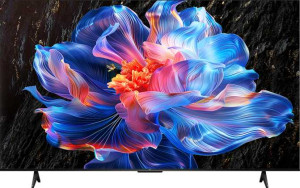
TCL 75P6K 75"
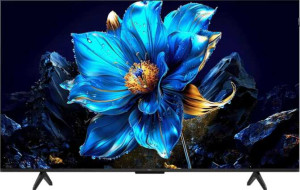
TCL 85P7K 85"

TCL 75P6K 75" TCL 85P7K 85"

Overview

Welcome to our in-depth specification comparison between the TCL 75P6K 75″ and the TCL 85P7K 85″. Both TVs share a strong 4K UHD foundation with HDR10, HLG, and smart platform support, yet they diverge in meaningful ways across display technology, brightness, HDR format coverage, and audio hardware. Whether screen real estate or picture quality enhancements matter most to you, this side-by-side breakdown will help you find the right fit.

Common Features

  • Both TVs offer 4K UHD resolution at 3840 x 2160 px.
  • Both TVs have a 10-bit panel capable of displaying 1070 million colors.
  • Both TVs have a 60Hz refresh rate.
  • HDR10 support is available on both TVs.
  • HLG support is available on both TVs.
  • An anti-reflection coating is present on both TVs.
  • Both TVs include Bluetooth connectivity.
  • Both TVs support Wi-Fi 4 (802.11n) and Wi-Fi 5 (802.11ac).
  • Both TVs are equipped with 3 HDMI 2.1 ports.
  • Both TVs include 1 RJ45 ethernet port.
  • Both TVs are DLNA-certified.
  • Miracast support is available on both TVs.
  • Both TVs support digital audio output.
  • Both TVs feature stereo speakers.
  • Both TVs include HDMI eARC and HDMI ARC.
  • Both TVs support VESA mounting.
  • The operating temperature range is 5 °C to 35 °C on both TVs.
  • Chromecast built-in is available on both TVs.
  • AirPlay support is present on both TVs.
  • Both TVs are compatible with Google Assistant and work with Alexa.
  • Siri and Apple HomeKit compatibility is not available on either TV.
  • Both TVs support smartphone remote control.
  • Neither TV comes with a rechargeable remote control.

Main Differences

  • The display type is LED-backlit LCD on the TCL 75P6K 75″ and QLED LED-backlit LCD on the TCL 85P7K 85″.
  • The screen size is 74.5″ on the TCL 75P6K 75″ and 84.6″ on the TCL 85P7K 85″.
  • Pixel density is 59 ppi on the TCL 75P6K 75″ and 52 ppi on the TCL 85P7K 85″.
  • Typical brightness is 330 nits on the TCL 75P6K 75″ and 450 nits on the TCL 85P7K 85″.
  • HDR10+ support is present on the TCL 85P7K 85″ but not available on the TCL 75P6K 75″.
  • Dolby Vision support is present on the TCL 85P7K 85″ but not available on the TCL 75P6K 75″.
  • Bluetooth version is 5.2 on the TCL 75P6K 75″ and 5.4 on the TCL 85P7K 85″.
  • The number of USB ports is 1 on the TCL 75P6K 75″ and 2 on the TCL 85P7K 85″.
  • A built-in subwoofer is present on the TCL 85P7K 85″ but not available on the TCL 75P6K 75″.
  • Width is 1667 mm on the TCL 75P6K 75″ and 1889.6 mm on the TCL 85P7K 85″.
  • Height is 959 mm on the TCL 75P6K 75″ and 1086 mm on the TCL 85P7K 85″.
  • Thickness is 74 mm on the TCL 75P6K 75″ and 63 mm on the TCL 85P7K 85″.
  • Weight is 18200 g on the TCL 75P6K 75″ and 31000 g on the TCL 85P7K 85″.
  • Volume is 118300.322 cm³ on the TCL 75P6K 75″ and 129282.6528 cm³ on the TCL 85P7K 85″.
Specs Comparison
TCL 75P6K 75"

TCL 75P6K 75"

TCL 85P7K 85"

TCL 85P7K 85"

Display:
display resolution 4K (UHD) 4K (UHD)
Display type LED-backlit, LCD QLED, LED-backlit, LCD
screen size 74.5" 84.6"
resolution 3840 x 2160 px 3840 x 2160 px
pixel density 59 ppi 52 ppi
display colors 1070 million 1070 million
bit depth 10-bit 10-bit
brightness (typical) 330 nits 450 nits
refresh rate 60Hz 60Hz
supports HDR10
supports HDR10+
supports Dolby Vision
supports HLG
has anti-reflection coating
has an ambient light sensor
maximum horizontal viewing angle 178º 178º
maximum vertical viewing angle 178º 178º

Both the TCL 75P6K and TCL 85P7K share the same 4K (3840 x 2160) resolution and 60Hz refresh rate, but their underlying panel technologies diverge in a meaningful way. The P6K uses a standard LED-backlit LCD panel, while the P7K upgrades to a QLED panel — a quantum dot-enhanced layer that widens the color gamut and improves color accuracy and brightness, even though both panels are rated identically at 1070 million colors with 10-bit depth.

The most tangible real-world difference in this group is brightness: the P7K delivers a notably higher 450 nits typical brightness versus the P6K's 330 nits. That roughly 36% gap matters in bright living rooms where ambient light washes out the image — the P7K will hold contrast and color saturation better under those conditions. HDR support is also more complete on the P7K, which covers HDR10, HDR10+, Dolby Vision, and HLG, while the P6K is limited to HDR10 and HLG, missing both HDR10+ and Dolby Vision. For streaming services like Netflix or Apple TV+, which rely heavily on Dolby Vision, this is a practical everyday limitation of the P6K.

Shared traits — 178° viewing angles in both axes, anti-reflection coating, and ambient light sensor — mean neither TV has an edge in ergonomics or usability. The pixel density difference (59 ppi on the 75″ P6K vs. 52 ppi on the 85″ P7K) is real but minor at typical viewing distances where both sizes are used. Overall, the TCL 85P7K holds a clear display advantage: its QLED panel technology, higher brightness, and full HDR format coverage make it the stronger performer, with the larger screen being an additional bonus rather than a trade-off.
Connectivity:
Has Bluetooth
HDMI version HDMI 2.1 HDMI 2.1
HDMI ports 3 3
supports Wi-Fi
Wi-Fi version Wi-Fi 4 (802.11n), Wi-Fi 5 (802.11ac) Wi-Fi 4 (802.11n), Wi-Fi 5 (802.11ac)
Bluetooth version 5.2 5.4
USB ports 1 2
is DLNA-certified
RJ45 ports 1 1
supports Miracast
has a socket for a 3.5 mm audio jack
has an external memory slot
has a VGA connector
DVB standards DVB-C, DVB-S, DVB-S2, DVB-T, DVB-T2 DVB-C, DVB-S, DVB-S2, DVB-T, DVB-T2
has a DVI connector

The connectivity foundation is largely identical between the two TVs: both offer 3 HDMI 2.1 ports, a single RJ45 ethernet port, Wi-Fi 4/5 dual-band wireless, DLNA certification, Miracast screen mirroring, and a 3.5mm audio jack. For most users, this shared baseline covers all standard home theater and streaming needs without compromise on either model.

Where the P7K pulls ahead is in two specific areas. It carries 2 USB ports versus the P6K's single port — a practical advantage when connecting a USB drive and a peripheral simultaneously without needing a hub. Its Bluetooth 5.4 is also a step up from the P6K's Bluetooth 5.2; while both versions offer solid range and low latency, 5.4 brings improved connection stability and more efficient handling of multiple paired devices, which matters if you use wireless headphones, keyboards, or speakers regularly.

Neither TV supports external memory cards or legacy connectors like VGA or DVI, and both share the same DVB tuner standard coverage. The differences here are real but modest — the TCL 85P7K holds a slight connectivity edge, primarily due to the extra USB port and the newer Bluetooth version, making it the more future-ready option for users who rely heavily on wireless accessories or frequently connect USB storage devices.

Audio:
supports Digital Out
has SRS TheaterSound HD
has stereo speakers
has a subwoofer
HDMI ARC / eARC HDMI eARC, HDMI ARC HDMI eARC, HDMI ARC

Audio is where one meaningful hardware difference emerges: the TCL 85P7K includes a built-in subwoofer, while the P6K relies solely on stereo speakers. In practice, a dedicated subwoofer reproduces low-frequency content — bass lines, explosion rumble, cinematic score depth — that standard TV speakers typically roll off entirely. For a large-screen TV used in a living room without a separate soundbar, this is a tangible advantage in perceived audio fullness and immersion.

Everything else in this group is evenly matched. Both TVs support Digital Out and offer both HDMI ARC and eARC — the latter being the more important of the two, as eARC supports high-bandwidth audio formats like Dolby Atmos and DTS:X passthrough to a connected soundbar or AV receiver without quality loss. Neither model includes SRS TheaterSound HD processing.

For users planning to connect an external audio system regardless, the subwoofer difference is largely irrelevant — both TVs handle passthrough equally well via eARC. But for anyone relying on the TV's built-in speakers as their primary audio output, the TCL 85P7K has a clear edge, delivering a more complete frequency range out of the box.

Design:
width 1667 mm 1889.6 mm
weight 18200 g 31000 g
thickness 74 mm 63 mm
height 959 mm 1086 mm
volume 118300.322 cm³ 129282.6528 cm³
Supports VESA mount
maximum operating temperature 35 °C 35 °C
lowest potential operating temperature 5 °C 5 °C

The size gap between these two TVs is substantial and shapes every aspect of placement planning. The TCL 85P7K spans 1889.6 mm wide and 1086 mm tall, compared to the P6K's 1667 mm × 959 mm footprint — a difference significant enough that rooms or wall spaces that comfortably fit the 75″ model may not accommodate the 85″ without careful measurement beforehand.

Weight is the most striking divergence in this group. The P7K weighs 31,000 g (31 kg), nearly 70% heavier than the P6K's 18,200 g (18.2 kg). That gap has direct practical consequences: wall-mounting the P7K requires a bracket and wall fixing rated for substantially higher loads, and moving or installing it typically demands two people. The P6K, at under 20 kg, is noticeably easier to handle solo. On the other hand, the P7K is actually the slimmer of the two at 63 mm thick versus the P6K's 74 mm — a modest but real aesthetic advantage if a low-profile wall-mount look is a priority.

Both TVs support VESA mounting and share identical operating temperature ranges, so neither has an edge in flexibility or environmental tolerance. Overall, there is no single winner here — the P6K is meaningfully easier to install and reposition thanks to its lower weight, while the P7K sits closer to the wall once mounted. The right choice depends entirely on the user's room dimensions and installation setup.

Features:
release date March 2025 March 2025
has Chromecast built-in
has AirPlay
has built-in smart TV
compatible with Google Assistant
works with Alexa
works with Siri/Apple HomeKit
supports a remote smartphone
has a rechargeable remote control
supports USB recording
standby power consumption 0.5W 0.5W
has PiP
has a search browser
has a sleep timer
has a child lock
has voice commands

Across every single feature in this group, the TCL 75P6K and TCL 85P7K are an exact match. Both run a built-in smart TV platform with Chromecast built-in, AirPlay, Google Assistant, and Alexa support, covering the full range of mainstream casting and voice assistant ecosystems. Notably, neither supports Siri/Apple HomeKit directly, which is worth flagging for users deeply embedded in an Apple smart home setup.

Both TVs also share the same set of functional limitations: no Picture-in-Picture, no USB recording, and non-rechargeable remote controls. The 0.5W standby power consumption is identical and commendably low on both. Smartphone remote support, a built-in browser, sleep timer, child lock, and voice commands round out a feature set that is consistent across the two models without exception.

This group is a straightforward tie — there is not a single differentiating feature between the two TVs here. A buyer's decision in this category comes down entirely to the other spec groups; features alone offer no reason to choose one over the other.

Comparison Summary & Verdict

After examining every specification, both TVs prove to be capable 4K smart televisions with broad connectivity and shared smart features. However, the TCL 85P7K 85″ distinguishes itself with a QLED panel, higher 450-nit brightness, support for Dolby Vision and HDR10+, a built-in subwoofer, and more USB ports — making it the stronger choice for cinephiles and those who prioritize premium picture quality in a large living room. The TCL 75P6K 75″, on the other hand, offers a higher pixel density at 59 ppi, a lighter and slimmer profile at just 18.2 kg and 74 mm thick, and a more affordable entry point into the 75-inch category — ideal for buyers who value sharpness and a tidier physical footprint over expanded HDR capabilities.

TCL 75P6K 75
Buy TCL 75P6K 75" if...

Buy the TCL 75P6K 75″ if you want a lighter, slimmer 75-inch TV with higher pixel density and a more compact footprint, and you do not require Dolby Vision or HDR10+ support.

TCL 85P7K 85
Buy TCL 85P7K 85" if...

Buy the TCL 85P7K 85″ if you want a larger screen with a QLED panel, significantly higher brightness, Dolby Vision and HDR10+ support, a built-in subwoofer, and more USB ports for a premium viewing experience.