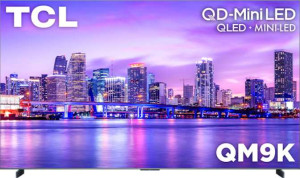
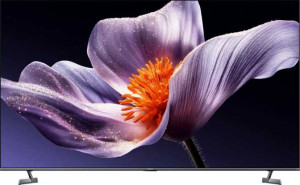
TCL 75QM9K 75"
Xiaomi TV S Pro Mini LED 2026 75"

TCL 75QM9K 75" Xiaomi TV S Pro Mini LED 2026 75"

Overview

Choosing between two high-end 75-inch Mini-LED televisions is never straightforward, and the TCL 75QM9K 75″ versus the Xiaomi TV S Pro Mini LED 2026 75″ is no exception. Both sets share a powerful common foundation built around 4K QLED panels, 144Hz refresh rates, and comprehensive smart TV platforms, yet they diverge in meaningful ways across connectivity, physical design, and smart home ecosystem compatibility — areas that can matter enormously depending on your living room setup and daily usage habits.

Common Features

  • Both TVs have a 4K (UHD) resolution of 3840 x 2160 px.
  • Both TVs use a QLED, LED-backlit, LCD, Mini-LED display type.
  • Both TVs have a pixel density of 59 ppi.
  • Both TVs support 1070 million display colors at 10-bit depth.
  • Both TVs have a 144Hz refresh rate.
  • HDR10 support is available on both TVs.
  • Bluetooth connectivity is available on both TVs.
  • Both TVs use HDMI 2.1 ports.
  • Wi-Fi is supported on both TVs, including Wi-Fi 4, Wi-Fi 5, and Wi-Fi 6.
  • Both TVs have 2 USB ports and 1 RJ45 port.
  • Miracast support is available on both TVs.
  • Neither TV has an external memory slot.
  • Dolby Digital, Dolby Digital Plus, Dolby Atmos, and Dolby Audio are all supported on both TVs.
  • Digital Out support is available on both TVs.
  • Neither TV has SRS TheaterSound HD.
  • Both TVs have stereo speakers.
  • Dolby Virtual is not supported on either TV.
  • Both TVs support VESA mounting.
  • Chromecast built-in is available on both TVs.
  • AirPlay is supported on both TVs.
  • Both TVs have a built-in smart TV platform and are compatible with Google Assistant.
  • Neither TV works with Siri or Apple HomeKit.
  • Remote smartphone control is supported on both TVs.
  • Neither TV has a rechargeable remote control.
  • USB recording is supported on both TVs.

Main Differences

  • Screen size is 74.5″ on TCL 75QM9K 75″ and 75″ on Xiaomi TV S Pro Mini LED 2026 75″.
  • HDMI port count is 4 on TCL 75QM9K 75″ and 3 on Xiaomi TV S Pro Mini LED 2026 75″.
  • Bluetooth version is 5.4 on TCL 75QM9K 75″ and 5.2 on Xiaomi TV S Pro Mini LED 2026 75″.
  • A 3.5 mm audio jack socket is present on Xiaomi TV S Pro Mini LED 2026 75″ but not available on TCL 75QM9K 75″.
  • Width is 1436.1 mm on TCL 75QM9K 75″ and 1667 mm on Xiaomi TV S Pro Mini LED 2026 75″.
  • Weight is 30399 g on TCL 75QM9K 75″ and 26200 g on Xiaomi TV S Pro Mini LED 2026 75″.
  • Thickness is 51.1 mm on TCL 75QM9K 75″ and 73 mm on Xiaomi TV S Pro Mini LED 2026 75″.
  • Height is 948.9 mm on TCL 75QM9K 75″ and 958 mm on Xiaomi TV S Pro Mini LED 2026 75″.
  • Volume is 69634.75 cm³ on TCL 75QM9K 75″ and 116579.98 cm³ on Xiaomi TV S Pro Mini LED 2026 75″.
  • Maximum operating temperature is 35 °C on TCL 75QM9K 75″ and 40 °C on Xiaomi TV S Pro Mini LED 2026 75″.
  • Lowest potential operating temperature is 5 °C on TCL 75QM9K 75″ and 0 °C on Xiaomi TV S Pro Mini LED 2026 75″.
  • Alexa compatibility is present on TCL 75QM9K 75″ but not available on Xiaomi TV S Pro Mini LED 2026 75″.
Specs Comparison
TCL 75QM9K 75"

TCL 75QM9K 75"

Xiaomi TV S Pro Mini LED 2026 75"

Xiaomi TV S Pro Mini LED 2026 75"

Display:
display resolution 4K (UHD) 4K (UHD)
Display type QLED, LED-backlit, LCD, Mini-LED QLED, LED-backlit, LCD, Mini-LED
screen size 74.5" 75"
resolution 3840 x 2160 px 3840 x 2160 px
pixel density 59 ppi 59 ppi
display colors 1070 million 1070 million
bit depth 10-bit 10-bit
refresh rate 144Hz 144Hz
supports HDR10
supports HDR10+
supports Dolby Vision
supports HLG
has anti-reflection coating
has an ambient light sensor
maximum horizontal viewing angle 178º 178º
maximum vertical viewing angle 178º 178º

In terms of display hardware, the TCL 75QM9K and the Xiaomi TV S Pro Mini LED 2026 are virtually identical across every measurable spec. Both use a QLED Mini-LED LCD panel at 4K (3840 x 2160) resolution, delivering the same 59 ppi pixel density on their respective 74.5″ and 75″ screens. They share the same 10-bit color depth, capable of rendering 1.07 billion colors, and both run at a 144Hz refresh rate — a meaningful advantage for fast-motion content and gaming smoothness compared to standard 60Hz or even 120Hz panels.

HDR support is also a complete match: both TVs cover HDR10, HDR10+, Dolby Vision, and HLG — the full suite of major HDR formats. This means neither forces a compromise regardless of the streaming platform or disc format you use. Viewing angles are equally matched at 178° horizontal and vertical, and both include an anti-reflection coating and an ambient light sensor for automatic brightness adaptation.

Based strictly on the provided display specs, these two televisions are in a complete tie. There is no meaningful differentiator between them at the panel level — every specification from resolution and color depth to refresh rate and HDR compatibility is identical. A purchase decision between these two models will need to rest on other spec groups such as processing, audio, or smart platform features.

Connectivity:
Has Bluetooth
HDMI version HDMI 2.1 HDMI 2.1
HDMI ports 4 3
supports Wi-Fi
Wi-Fi version Wi-Fi 4 (802.11n), Wi-Fi 5 (802.11ac), Wi-Fi 6 (802.11ax) Wi-Fi 4 (802.11n), Wi-Fi 5 (802.11ac), Wi-Fi 6 (802.11ax)
Bluetooth version 5.4 5.2
USB ports 2 2
RJ45 ports 1 1
supports Miracast
has a socket for a 3.5 mm audio jack
has an external memory slot
has a VGA connector
has a DVI connector

The two TVs share a solid connectivity foundation — both offer HDMI 2.1, Wi-Fi 6, dual USB ports, a LAN port, and Miracast support. HDMI 2.1 is particularly important here, as it enables 4K@120Hz passthrough and Variable Refresh Rate for next-gen gaming consoles. Where they diverge, however, are in a few details that matter depending on your setup.

The TCL 75QM9K pulls ahead with 4 HDMI ports versus the Xiaomi's 3 — a practical advantage for users running multiple devices like a console, soundbar, streaming stick, and Blu-ray player simultaneously without relying on a switch. The TCL also carries a newer Bluetooth 5.4 versus the Xiaomi's 5.2, which offers modest improvements in connection stability and interference handling, though the real-world difference is subtle for most users. On the flip side, the Xiaomi TV S Pro includes a 3.5mm audio jack — absent on the TCL — which is a convenient option for plugging in headphones directly to the TV, a feature some households rely on.

Overall, the TCL 75QM9K has a slight connectivity edge thanks to its extra HDMI port and newer Bluetooth version, making it the more future-proof choice for multi-device living rooms. The Xiaomi's headphone jack is a niche but genuine advantage for a specific subset of users, so the ″right″ winner here depends on your peripheral priorities.

Audio:
supports Dolby Digital
supports Digital Out
supports Dolby Digital Plus
has SRS TheaterSound HD
has stereo speakers
has Dolby Atmos
has Dolby Audio
supports Dolby Virtual
has a subwoofer
has DTS:X
HDMI ARC / eARC HDMI ARC, HDMI eARC HDMI ARC, HDMI eARC

Audio is another category where these two TVs arrive at exactly the same destination. Both support the full Dolby ecosystem — Dolby Digital, Dolby Digital Plus, Dolby Atmos, and Dolby Audio — alongside DTS:X, covering the major surround sound formats used across streaming services, Blu-ray, and broadcast content. For users pairing either TV with an external soundbar or AV receiver, both also offer HDMI ARC and eARC, with eARC being the more capable option as it supports lossless, high-bandwidth audio formats like Dolby Atmos TrueHD passthrough.

Neither TV includes a subwoofer or any differentiating proprietary audio processing technology, and both rely on stereo speaker configurations. This means that while the format support is comprehensive on paper, real-world bass depth and spatial immersion from the built-in speakers alone will have the same fundamental limitations on both sets.

With every audio specification matching precisely, this group is a complete tie. Neither the TCL 75QM9K nor the Xiaomi TV S Pro offers any audio advantage over the other based on the provided data. Buyers prioritizing sound quality beyond the built-in speakers will find both equally capable of integrating with an external audio system.

Design:
width 1436.1 mm 1667 mm
weight 30399 g 26200 g
thickness 51.1 mm 73 mm
height 948.9 mm 958 mm
volume 69634.751319 cm³ 116579.978 cm³
Supports VESA mount
maximum operating temperature 35 °C 40 °C
lowest potential operating temperature 5 °C 0 °C

Despite covering nearly identical screen sizes, these two TVs diverge noticeably in their physical footprints. The TCL 75QM9K is significantly slimmer at 51.1mm deep versus the Xiaomi's 73mm, and its total volume of roughly 69,635 cm³ is nearly half that of the Xiaomi's 116,580 cm³ — a meaningful difference for wall-mounted installs or tighter entertainment unit setups where depth clearance matters.

Weight tells a different story. The TCL is actually the heavier unit at ~30.4 kg compared to the Xiaomi's ~26.2 kg — a gap of about 4 kg that becomes relevant during installation, particularly for single-person wall mounts or ceiling rigs where every kilogram adds stress to brackets and fixings. Both support VESA mounting, so neither limits your options there. On operating temperature tolerance, the Xiaomi holds a slight practical edge with a range of 0°C to 40°C versus the TCL's 5°C to 35°C, making it marginally more suitable for installations in garages, sunrooms, or environments subject to temperature swings.

The design category doesn't have a single outright winner — it depends on priorities. The TCL is the better choice if a slim profile and compact volume matter most, while the Xiaomi is easier to handle and install thanks to its lower weight, and offers broader environmental tolerance. Buyers should weigh installation context carefully here.

Features:
release date September 2025 September 2025
has Chromecast built-in
has AirPlay
has built-in smart TV
compatible with Google Assistant
works with Alexa
works with Siri/Apple HomeKit
supports a remote smartphone
has a rechargeable remote control
supports USB recording
standby power consumption 0.5W 0.5W
has a search browser
has a sleep timer
has a child lock
warranty period 1 years 1 years
has voice commands

Both TVs arrive well-equipped as smart platforms, sharing Chromecast built-in, AirPlay, Google Assistant, smartphone remote support, USB recording, and voice commands. For households already invested in either the Google or Apple casting ecosystem, both sets handle the basics equally well. Practical utility features like sleep timer, child lock, and a miserly 0.5W standby consumption are also identical across the board.

The only functional split in this category is voice assistant breadth. The TCL 75QM9K adds Alexa compatibility on top of Google Assistant, while the Xiaomi TV S Pro stops at Google Assistant alone. For users running an Amazon smart home — Echo speakers, Ring devices, smart plugs — this means the TCL can be natively integrated into that ecosystem without workarounds, a genuinely useful convenience that the Xiaomi cannot match.

The TCL 75QM9K takes a narrow but clear edge in this group purely on the strength of its Alexa support. It isn't a transformative advantage, but for Alexa-household users it adds real daily convenience. If your home runs on Google Assistant exclusively, both TVs are effectively tied in features.

Comparison Summary & Verdict

After examining every specification, the TCL 75QM9K 75″ and the Xiaomi TV S Pro Mini LED 2026 75″ emerge as closely matched rivals that each earn their place in a premium home cinema setup. Both deliver 4K Mini-LED picture quality at 144Hz, full Dolby audio including Dolby Atmos, and a robust smart TV experience with Chromecast and AirPlay support. The TCL pulls ahead for users who demand the most from their AV rack, offering four HDMI 2.1 ports, a slimmer 51.1 mm chassis, and native Amazon Alexa support — clear advantages for cable-heavy setups and Amazon smart home households. The Xiaomi counters with a significantly lighter 26.2 kg body, a 3.5 mm audio jack for direct headphone or analog audio use, and a broader operating temperature range from 0°C to 40°C, making it a more adaptable choice for varied installation environments. Choose the TCL for connectivity depth and ecosystem breadth; choose the Xiaomi for a lighter, more physically flexible installation with added audio output options.

TCL 75QM9K 75
Buy TCL 75QM9K 75" if...

Buy the TCL 75QM9K 75″ if you need four HDMI 2.1 ports for a multi-device AV setup, want a slimmer and more compact form factor, or use Amazon Alexa as the hub of your smart home.

Xiaomi TV S Pro Mini LED 2026 75
Buy Xiaomi TV S Pro Mini LED 2026 75" if...

Buy the Xiaomi TV S Pro Mini LED 2026 75″ if you want a lighter TV with a 3.5 mm audio jack for direct headphone or analog audio connections, or require a broader operating temperature range for your installation environment.