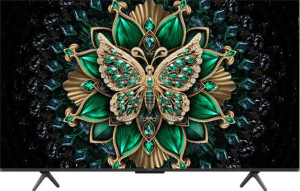
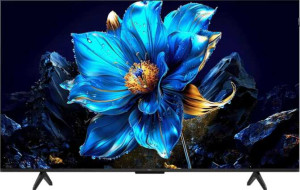
Both the TCL 85C6K and TCL 85P7K share the same 84.6″ panel size, 4K (3840 x 2160) resolution, 52 ppi pixel density, 10-bit color depth, and 1.07 billion displayable colors. They also match on HDR format support — both handle HDR10, HDR10+, Dolby Vision, and HLG — and share identical 178º horizontal and vertical viewing angles, anti-reflection coating, and ambient light sensors. On these fundamentals, the two TVs are evenly matched.
The meaningful differences emerge in three interconnected areas. First, the C6K uses a Mini-LED backlighting layer on top of its QLED LCD panel, which enables far more precise local dimming zones and, critically, a typical brightness of 1000 nits — more than double the P7K's 450 nits. In practical terms, this gap is significant: 1000 nits delivers punchy, specular highlights in HDR content and remains clearly visible in bright rooms, while 450 nits, though acceptable for darker environments, will struggle to render the full impact of HDR10+ or Dolby Vision metadata in daylight conditions. Second, the C6K runs at a 144Hz refresh rate versus the P7K's 60Hz — a difference that matters greatly for gaming and fast-motion sports, where 144Hz dramatically reduces motion blur and judder. Third, the C6K supports AMD FreeSync Premium Pro (the highest FreeSync tier, adding low-latency HDR gaming), while the P7K is limited to baseline AMD FreeSync.
The C6K holds a clear and decisive display advantage over the P7K. Its Mini-LED backlight, higher peak brightness, faster refresh rate, and superior adaptive sync tier collectively make it a meaningfully better panel — especially for HDR movie watching in mixed lighting and for gaming. The P7K's display is competent for casual, darker-room viewing, but it cannot match the C6K on any of the key performance metrics that define a premium large-screen experience.