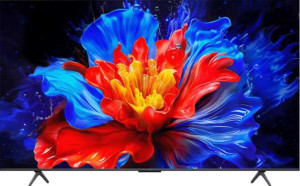
TCL 85P8K 85"
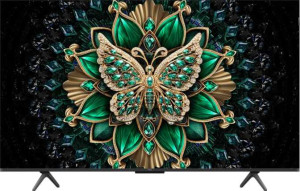
TCL 98C6K 98"

TCL 85P8K 85" TCL 98C6K 98"

Overview

Welcome to our in-depth specification comparison between the TCL 85P8K 85″ and the TCL 98C6K 98″. Both televisions share a strong foundation — 4K UHD resolution, 144Hz refresh rate, and a comprehensive HDR suite — but they diverge in meaningful ways across screen size, brightness, and backlighting technology. Whether you are weighing pixel density against sheer luminance, or comparing adaptive sync capabilities, this side-by-side breakdown covers every key battleground to help you make the most informed decision.

Common Features

  • Both TVs have a 4K (UHD) display resolution of 3840 x 2160 px.
  • Both TVs display 1070 million colors at a 10-bit depth.
  • Both TVs have a 144Hz refresh rate.
  • HDR10 support is available on both products.
  • HDR10+ support is available on both products.
  • Dolby Vision support is available on both products.
  • Both TVs use a QLED, LED-backlit, LCD display type.
  • Both TVs have Bluetooth 5.4.
  • Both TVs support Wi-Fi 4 (802.11n) and Wi-Fi 5 (802.11ac).
  • Both TVs have 4 HDMI 2.1 ports and 1 RJ45 port.
  • Miracast support is available on both products.
  • Dolby Atmos and Dolby Audio are available on both products.
  • Dolby Digital and Dolby Digital Plus support is available on both products.
  • Both TVs have stereo speakers.
  • SRS TheaterSound HD is not available on either product.
  • Dolby Virtual is not available on either product.
  • Both TVs support VESA mounting.
  • Both TVs operate between 5 °C and 35 °C.
  • AirPlay support is available on both products.
  • Both TVs have a built-in smart TV platform, are compatible with Google Assistant, support remote smartphone control, and support USB recording, while neither works with Siri/Apple HomeKit nor has a rechargeable remote control.
  • Both TVs have a standby power consumption of 0.5W.

Main Differences

  • The TCL 98C6K 98″ includes Mini-LED technology in addition to QLED, LED-backlit, LCD, while the TCL 85P8K 85″ uses only QLED, LED-backlit, LCD.
  • Screen size is 84.6″ on the TCL 85P8K 85″ and 97.5″ on the TCL 98C6K 98″.
  • Pixel density is 52 ppi on the TCL 85P8K 85″ and 45 ppi on the TCL 98C6K 98″.
  • Typical brightness is 450 nits on the TCL 85P8K 85″ and 1000 nits on the TCL 98C6K 98″.
  • The TCL 98C6K 98″ supports AMD FreeSync, AMD FreeSync Premium, and AMD FreeSync Premium Pro, while the TCL 85P8K 85″ supports only AMD FreeSync.
  • USB ports number 1 on the TCL 85P8K 85″ and 2 on the TCL 98C6K 98″.
  • Width is 1889.6 mm on the TCL 85P8K 85″ and 2180 mm on the TCL 98C6K 98″.
  • Height is 1086 mm on the TCL 85P8K 85″ and 1247 mm on the TCL 98C6K 98″.
  • Thickness is 63 mm on the TCL 85P8K 85″ and 64 mm on the TCL 98C6K 98″.
  • Weight is 31000 g on the TCL 85P8K 85″ and 53300 g on the TCL 98C6K 98″.
  • Volume is 129282.65 cm³ on the TCL 85P8K 85″ and 173981.44 cm³ on the TCL 98C6K 98″.
Specs Comparison
TCL 85P8K 85"

TCL 85P8K 85"

TCL 98C6K 98"

TCL 98C6K 98"

Display:
display resolution 4K (UHD) 4K (UHD)
Display type QLED, LED-backlit, LCD QLED, LED-backlit, LCD, Mini-LED
screen size 84.6" 97.5"
resolution 3840 x 2160 px 3840 x 2160 px
pixel density 52 ppi 45 ppi
display colors 1070 million 1070 million
bit depth 10-bit 10-bit
brightness (typical) 450 nits 1000 nits
refresh rate 144Hz 144Hz
supports HDR10
supports HDR10+
supports Dolby Vision
supports HLG
Adaptive synchronization AMD FreeSync AMD FreeSync, AMD FreeSync Premium, AMD FreeSync Premium Pro
has anti-reflection coating
has an ambient light sensor
maximum horizontal viewing angle 178º 178º
maximum vertical viewing angle 178º 178º

Both the TCL 85P8K and TCL 98C6K share a solid foundation: 4K (3840 x 2160) resolution, a 144Hz refresh rate, 10-bit color depth rendering 1.07 billion colors, and full HDR format support across HDR10, HDR10+, Dolby Vision, and HLG. Viewing angles are identical at 178° horizontally and vertically, and both include anti-reflection coating and an ambient light sensor. For most users, these shared traits mean comparable motion clarity, color richness, and format flexibility regardless of which model they choose.

Where the two diverge meaningfully is in panel technology and brightness. The 98C6K adds Mini-LED backlighting to its QLED stack — a hardware upgrade that enables far more precise local dimming zones, translating directly into deeper contrast and more controlled highlights in dark scenes. This advantage is reinforced by its 1000 nits typical brightness versus the P8K's 450 nits — more than double — which makes a tangible real-world difference in HDR pop, color volume in bright rooms, and overall image punch. The 98C6K also steps up its gaming credentials with AMD FreeSync Premium Pro, adding low-latency HDR support on top of the basic FreeSync found on the P8K. On the other side, the 85P8K's slightly higher pixel density (52 ppi vs 45 ppi) means individual pixels are marginally less visible at equivalent seating distances — a minor but real sharpness edge given both panels share the same 4K resolution.

The TCL 98C6K holds a clear display advantage, driven by its Mini-LED backlight, dramatically higher brightness, and superior FreeSync tier. The P8K's modest pixel density lead is unlikely to be perceptible in typical living room viewing conditions and does not offset the C6K's structural image quality improvements. Buyers prioritizing HDR performance, bright-room visibility, or high-end gaming will find the 98C6K the stronger panel — size difference aside.
Connectivity:
Has Bluetooth
HDMI version HDMI 2.1 HDMI 2.1
HDMI ports 4 4
supports Wi-Fi
Wi-Fi version Wi-Fi 4 (802.11n), Wi-Fi 5 (802.11ac) Wi-Fi 4 (802.11n), Wi-Fi 5 (802.11ac)
Bluetooth version 5.4 5.4
USB ports 1 2
RJ45 ports 1 1
supports Miracast
has a socket for a 3.5 mm audio jack
has an external memory slot
has a VGA connector
DVB standards DVB-T, DVB-T2, DVB-C, DVB-S, DVB-S2 DVB-T, DVB-T2, DVB-C, DVB-S, DVB-S2
has a DVI connector

Connectivity between the TCL 85P8K and TCL 98C6K is remarkably similar across almost every dimension. Both offer 4x HDMI 2.1 ports — enough bandwidth for 4K@120Hz signals from gaming consoles or PC GPUs — along with a shared Bluetooth 5.4 implementation, Wi-Fi 5 wireless networking, a wired RJ45 port for stable ethernet connections, Miracast screen mirroring, and a 3.5mm audio jack. The wireless stack is identical, meaning neither has an advantage in range, latency, or connection stability for peripherals or wireless audio.

The only concrete differentiator in this group is the USB port count: the 98C6K offers 2 USB ports versus the P8K's single 1 USB port. In practice, this matters for users who want to simultaneously connect, for example, a storage drive and a USB audio adapter, or a keyboard and a media stick, without relying on a hub. It is a modest but genuinely useful convenience advantage, particularly on a large screen likely to serve as a media hub.

Overall, connectivity is essentially a near-tie, with the TCL 98C6K holding a slight practical edge solely due to its extra USB port. Neither TV stands out in wireless capability or port variety beyond that single difference — users with straightforward setups will find both equally capable.

Audio:
supports Dolby Digital
supports Digital Out
supports Dolby Digital Plus
has SRS TheaterSound HD
has stereo speakers
has Dolby Atmos
has Dolby Audio
supports Dolby Virtual
has a subwoofer
has DTS:X
HDMI ARC / eARC HDMI ARC, HDMI eARC HDMI ARC, HDMI eARC

Audio is a clean sweep for parity: every single specification in this group is identical between the TCL 85P8K and TCL 98C6K. Both include a built-in subwoofer alongside stereo speakers, support the full Dolby suite — Dolby Digital, Dolby Digital Plus, Dolby Atmos, and Dolby Audio — and also carry DTS:X for object-based surround decoding from DTS-encoded sources. Neither supports Dolby Virtual or SRS TheaterSound HD.

On the connectivity side of audio, both TVs offer HDMI ARC and eARC, which is the more important of the two. eARC in particular allows lossless, high-bandwidth audio formats like Dolby Atmos TrueHD and DTS:X Master Audio to pass through to a soundbar or AV receiver — a meaningful real-world benefit for users who plan to upgrade their audio setup beyond the built-in speakers.

This group is a complete tie. There is no differentiator — not in codec support, speaker configuration, or audio output options — that favors either model. Buyers for whom audio capability is a deciding factor should look to other specification groups or consider external audio hardware, as both TVs offer an equivalent foundation.

Design:
width 1889.6 mm 2180 mm
weight 31000 g 53300 g
thickness 63 mm 64 mm
height 1086 mm 1247 mm
volume 129282.6528 cm³ 173981.44 cm³
Supports VESA mount
maximum operating temperature 35 °C 35 °C
lowest potential operating temperature 5 °C 5 °C

The physical scale difference between these two TVs is substantial. The TCL 98C6K spans 2180 mm wide and 1247 mm tall, compared to 1889.6 mm and 1086 mm for the TCL 85P8K — a footprint gap that will genuinely determine room suitability before any other spec comes into play. Wall space, viewing distance, and furniture clearance all need to be assessed against these dimensions, particularly for the 98C6K which demands a large, dedicated wall or entertainment area.

Weight is where the logistical difference becomes most acute. The 98C6K tips the scales at 53.3 kg — nearly 72% heavier than the P8K's 31 kg. At that mass, professional installation and wall-mount reinforcement are practical necessities rather than optional considerations. Both TVs do support VESA mounting, and their depth profiles are virtually identical at 63 mm vs 64 mm, so neither has an advantage in how flush they sit against a wall.

Operating temperature range is identical for both, making environment a non-factor. In design terms, the TCL 85P8K holds the clear advantage for anyone with space or installation constraints — it is meaningfully lighter, smaller, and more manageable without any trade-off in depth or mount compatibility. The 98C6K's size is a feature for those with the room to accommodate it, but it comes with real logistical demands.

Features:
release date March 2025 March 2025
has AirPlay
has built-in smart TV
compatible with Google Assistant
works with Siri/Apple HomeKit
supports a remote smartphone
has a rechargeable remote control
supports USB recording
standby power consumption 0.5W 0.5W
has a search browser
has a sleep timer
has a child lock
has voice commands

Feature parity is total here. The TCL 85P8K and TCL 98C6K share an identical feature set across every specification in this group — from smart platform capabilities and Google Assistant voice control to AirPlay support, smartphone remote compatibility, USB recording, and a matched standby power draw of 0.5W. Neither supports Apple HomeKit or Siri integration, and neither ships with a rechargeable remote.

The practical takeaway is that both TVs will behave identically as smart home and media hub devices. AirPlay covers Apple device mirroring and casting, Google Assistant handles voice-driven search and smart home control, and USB recording adds PVR-style functionality without an external recorder. These are meaningful conveniences, and the fact that both models carry all of them means the feature experience is fully transferable between the two.

This group is an unambiguous tie — not a close call, but a point-for-point match. No feature found on one is absent from the other, making this category entirely neutral in any purchase decision between the two models.

Comparison Summary & Verdict

After examining every specification, these two TCL televisions serve distinctly different audiences. The TCL 85P8K 85″ delivers a sharper 52 ppi pixel density in a more manageable form factor, weighing only 31 kg — making it an excellent fit for buyers who want a large-screen experience without the installation challenges of a truly massive display. The TCL 98C6K 98″, on the other hand, is built for those who refuse to compromise: its Mini-LED backlighting pushes typical brightness to an impressive 1000 nits, more than double that of the 85P8K, and its enhanced AMD FreeSync Premium Pro support makes it a more capable choice for serious gamers. The 98C6K also offers a second USB port for added convenience. If living-room impact and peak picture performance are your priorities, the 98C6K justifies its larger footprint; if you value a balanced, space-conscious upgrade, the 85P8K is the smarter pick.

TCL 85P8K 85
Buy TCL 85P8K 85" if...

Buy the TCL 85P8K 85″ if you want a large 4K QLED TV with a lighter, more compact build and a sharper pixel density, without the bulk and weight of a 98-inch panel.

TCL 98C6K 98
Buy TCL 98C6K 98" if...

Buy the TCL 98C6K 98″ if you want the most immersive screen size with superior Mini-LED brightness at 1000 nits, advanced AMD FreeSync Premium Pro for gaming, and an extra USB port.