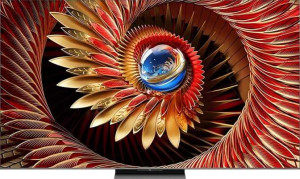
Both the TCL 98C8K and the TCL 98X11K share the same fundamental display architecture — Mini-LED, QLED, LED-backlit LCD panels at 4K (3840 x 2160) resolution with a 45 ppi pixel density, 10-bit color depth rendering 1.07 billion colors, and a 144Hz refresh rate. They also match across the full HDR format suite (HDR10, HDR10+, Dolby Vision, HLG), adaptive sync support via AMD FreeSync Premium Pro, anti-reflection coating, ambient light sensor, and wide 178° viewing angles in both directions. In other words, the baseline display experience is nearly identical on paper.
The one meaningful differentiator is peak brightness: the 98X11K is rated at 6500 nits versus 5000 nits on the 98C8K — a 30% increase. On a screen this large, that gap is tangible. Higher peak brightness translates directly to more impactful HDR highlights, better specular detail in bright scenes (sunlight on water, stadium lighting, explosions), and stronger performance in well-lit or sunlit rooms where the panel needs to overcome ambient glare. At 5000 nits the 98C8K is already well above the HDR10 and Dolby Vision thresholds for a premium experience, but the 98X11K's headroom gives it a visibly punchier image under demanding conditions.
The 98X11K holds a clear edge in this category, and it comes down entirely to that brightness advantage. Every other display specification — resolution, color volume, refresh rate, HDR support, sync technology, coatings, and viewing angles — is a dead tie. If brightness and HDR impact are priorities, the 98X11K is the stronger choice; if the viewing environment is controlled or dimly lit, the 98C8K's 5000 nits will be more than sufficient and the difference will be harder to perceive.