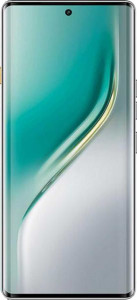
Across most connectivity fundamentals — 5G, NFC, dual SIM, USB Type-C, GPS, Galileo, fingerprint scanner, and core sensors — these two phones are identical. The meaningful differences come down to two specific features that pull in opposite directions. The Camon 40 Premier steps ahead with Wi-Fi 6E (802.11ax), a significant upgrade over the Pro's Wi-Fi 5 (802.11ac). Wi-Fi 6E adds access to the less congested 6GHz band, delivering lower latency and faster sustained speeds in dense network environments — a tangible advantage for heavy streaming, gaming, or use in crowded spaces like offices or apartments with many competing devices.
The Camon 40 Pro, meanwhile, counters with one feature the Premier lacks: an infrared sensor. This allows the Pro to function as a universal remote control for TVs, air conditioners, and other IR-compatible appliances — a convenience feature with a dedicated user base, particularly in markets where smart home control via phone is common practice.
Weighing these two tradeoffs, the Camon 40 Premier 5G holds the broader connectivity advantage. Wi-Fi 6E is a more universally impactful upgrade that benefits everyday wireless performance, whereas the infrared sensor is a niche convenience that not all users will utilize. The Pro's IR sensor gives it a specific functional edge for those who need it, but for the majority of connectivity use cases, the Premier is the stronger performer.