Tecno Camon 40 Pro 4G
Tecno Camon 40 Pro 5G

Tecno Camon 40 Pro 4G Tecno Camon 40 Pro 5G

Overview

Welcome to our in-depth comparison of the Tecno Camon 40 Pro 4G and the Tecno Camon 40 Pro 5G. While these two siblings share a striking amount of DNA — including their sleek IP68-rated design, vivid 144Hz OLED display, and versatile camera system — they diverge sharply when it comes to raw processing power and connectivity capabilities. Read on to find out which one is the right fit for your needs.

Common Features

  • Both phones have an IP68 waterproof rating.
  • Both phones share the same dimensions: 164.3 mm tall, 74.6 mm wide, and 7.3 mm thick.
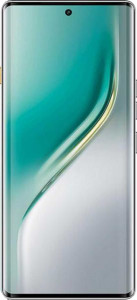
  • Both phones feature an OLED/AMOLED display with a 6.78″ screen size.
  • Both phones have a pixel density of 393 ppi and a resolution of 1080 x 2463 px.
  • Both phones support a 144Hz refresh rate.
  • Gorilla Glass 7i protection is present on both phones.
  • Both phones come with 256GB of internal storage and 12GB of RAM.
  • Both phones use 8-thread CPUs with big.LITTLE technology and HMP support.
  • Both phones have integrated LTE, integrated graphics, and support 64-bit processing.
  • Both phones feature a dual-lens main camera with 50 & 8 MP and an f/1.9 aperture.
  • Both phones have a 50MP front camera.
  • Optical image stabilization is built into both phones.
  • Both phones support 4K video recording at 60 fps.
  • Both phones run Android 15.
  • Both phones have a 5200 mAh battery with 45W fast charging.
  • Wireless charging is not available on either phone.
  • Neither phone has a removable battery.
  • Both phones support NFC, have a fingerprint scanner, and include USB Type-C (USB 2.0).
  • Both phones support Wi-Fi 5 (802.11ac) and Wi-Fi 4 (802.11n), and accommodate 2 SIM cards.
  • Neither phone has a 3.5mm audio jack, but both feature stereo speakers and an FM radio.

Main Differences

  • The Tecno Camon 40 Pro 4G weighs 178 g, while the Tecno Camon 40 Pro 5G weighs 179 g.
  • Branded damage-resistant glass is present on the Tecno Camon 40 Pro 4G but not on the Tecno Camon 40 Pro 5G.
  • HDR10 support is present on the Tecno Camon 40 Pro 5G but not available on the Tecno Camon 40 Pro 4G.
  • The AnTuTu benchmark score is 415,000 on the Tecno Camon 40 Pro 4G and 640,000 on the Tecno Camon 40 Pro 5G.
  • The Tecno Camon 40 Pro 4G is powered by a MediaTek Helio G100 chipset, while the Tecno Camon 40 Pro 5G uses a MediaTek Dimensity 7300.
  • The GPU is Mali G57 on the Tecno Camon 40 Pro 4G and Mali G615 MC2 on the Tecno Camon 40 Pro 5G.
  • CPU speed is 2 x 2.2 & 6 x 2 GHz on the Tecno Camon 40 Pro 4G and 4 x 2.5 & 4 x 2 GHz on the Tecno Camon 40 Pro 5G.
  • GPU clock speed is 1000 MHz on the Tecno Camon 40 Pro 4G and 1047 MHz on the Tecno Camon 40 Pro 5G.
  • RAM speed is 4266 MHz on the Tecno Camon 40 Pro 4G and 6400 MHz on the Tecno Camon 40 Pro 5G.
  • The semiconductor size is 6 nm on the Tecno Camon 40 Pro 4G and 4 nm on the Tecno Camon 40 Pro 5G.
  • DirectX 11 is supported on the Tecno Camon 40 Pro 4G, while the Tecno Camon 40 Pro 5G supports DirectX 12.
  • Maximum memory is 12GB on the Tecno Camon 40 Pro 4G and 16GB on the Tecno Camon 40 Pro 5G.
  • The Tecno Camon 40 Pro 4G uses DDR4 memory, while the Tecno Camon 40 Pro 5G uses DDR5 memory.
  • 5G connectivity is available on the Tecno Camon 40 Pro 5G but not on the Tecno Camon 40 Pro 4G.
  • Download speed is 650 Mbit/s on the Tecno Camon 40 Pro 4G and 3270 Mbit/s on the Tecno Camon 40 Pro 5G.
  • Upload speed is 150 Mbit/s on the Tecno Camon 40 Pro 4G and 3270 Mbit/s on the Tecno Camon 40 Pro 5G.
Specs Comparison
Tecno Camon 40 Pro 4G

Tecno Camon 40 Pro 4G

Tecno Camon 40 Pro 5G

Tecno Camon 40 Pro 5G

Design:
water resistance Waterproof Waterproof
weight 178 g 179 g
thickness 7.3 mm 7.3 mm
width 74.6 mm 74.6 mm
height 164.3 mm 164.3 mm
volume 89.474494 cm³ 89.474494 cm³
Ingress Protection (IP) rating IP68 IP68
has a rugged build
can be folded

In terms of physical design, the Tecno Camon 40 Pro 4G and the Tecno Camon 40 Pro 5G are virtually identical twins. Both share the exact same footprint — 164.3 mm tall, 74.6 mm wide, and 7.3 mm thick — resulting in the same calculated volume of 89.47 cm³. In practice, this means the two phones are indistinguishable by feel or in-hand ergonomics, and any case or accessory designed for one will fit the other perfectly.

The only measurable difference between the two is weight: the 4G variant comes in at 178 g, while the 5G model is marginally heavier at 179 g. A 1-gram difference is well below the threshold of human perception and has zero real-world impact on comfort or daily handling. Both phones also share an IP68 waterproof rating, which is a meaningful shared advantage — it means both can withstand submersion in fresh water up to 1.5 meters for 30 minutes, providing solid protection against rain, spills, and accidental drops in water. Neither device features a rugged build or a foldable form factor.

From a design standpoint, these two phones are a dead tie. There is no meaningful differentiator here — the 1 g weight delta is negligible, and every other design attribute is perfectly matched. A buyer choosing between these two models should look to other spec groups, such as connectivity or performance, to make their decision rather than design.

Display:
Display type OLED/AMOLED OLED/AMOLED
screen size 6.78" 6.78"
pixel density 393 ppi 393 ppi
resolution 1080 x 2463 px 1080 x 2463 px
refresh rate 144Hz 144Hz
has branded damage-resistant glass
Gorilla Glass version Gorilla Glass 7i Gorilla Glass 7i
supports HDR10
supports HDR10+
Always-On Display
supports Dolby Vision
Has a secondary screen
has a touch screen

Both the Camon 40 Pro 4G and the Camon 40 Pro 5G share a strong display foundation: a 6.78″ OLED/AMOLED panel running at 1080 x 2463 px with a pixel density of 393 ppi and a 144Hz refresh rate. That combination delivers sharp, vibrant visuals with smooth scrolling and responsive touch performance — a genuinely capable screen setup for media consumption and gaming at this price tier. Both also support Always-On Display, adding convenient at-a-glance notifications without fully waking the screen.

Where the two diverge is in a pair of notable, and somewhat contradictory, spec flags. The 5G model supports HDR10, meaning it can render a wider dynamic range when streaming compatible content on platforms like YouTube or Netflix — deeper blacks, brighter highlights, and more vivid color gradations. The 4G model lacks this, which is a tangible disadvantage for media-focused users. On the flip side, the 4G variant is listed as having branded damage-resistant glass while the 5G model is not — even though both list Gorilla Glass 7i as the version. This inconsistency in the raw data makes it difficult to draw a firm conclusion on drop protection, but taken at face value, the 4G model has a slight durability edge on paper.

Weighing these two differentiators, the Camon 40 Pro 5G holds the stronger practical advantage for most users: HDR10 support has a visible, everyday impact on streaming quality, whereas the glass protection discrepancy is ambiguous given that both models cite the same Gorilla Glass generation. Users who prioritize display richness — especially for video content — will find the 5G variant the more compelling choice here.

Performance:
internal storage 256GB 256GB
RAM 12GB 12GB
AnTuTu benchmark score 415000 640000
Chipset (SoC) name MediaTek Helio G100 MediaTek Dimensity 7300
GPU name Mali G57 Mali G615 MC2
CPU speed 2 x 2.2 & 6 x 2 GHz 4 x 2.5 & 4 x 2 GHz
GPU clock speed 1000 MHz 1047 MHz
Has integrated LTE
RAM speed 4266 MHz 6400 MHz
semiconductor size 6 nm 4 nm
Supports 64-bit
DirectX version DirectX 11 DirectX 12
Has integrated graphics
Uses big.LITTLE technology
CPU threads 8 threads 8 threads
Uses HMP
maximum memory amount 12GB 16GB
DDR memory version 4 5

This is where the two phones diverge most significantly. The Camon 40 Pro 4G runs on a MediaTek Helio G100 built on a 6 nm process, while the 5G model steps up to a MediaTek Dimensity 7300 on a more advanced 4 nm node. A smaller semiconductor size generally means better power efficiency and thermal management — the Dimensity 7300 can deliver more performance while drawing less energy. This gap is starkly reflected in their AnTuTu scores: 415,000 for the 4G versus 640,000 for the 5G — a roughly 54% advantage that places the two chips in meaningfully different performance tiers, not just marginally different ones.

The architectural differences run deeper than the headline benchmark. The 5G model's CPU configuration features four cores clocked at 2.5 GHz for demanding tasks, compared to the 4G model's top speed of 2.2 GHz. More importantly, the 5G variant uses DDR5 RAM running at 6400 MHz, versus DDR4 at 4266 MHz on the 4G — faster memory directly improves app launch times, multitasking fluidity, and data throughput. The 5G model also supports up to 16 GB of maximum RAM versus 12 GB on the 4G, offering more headroom for future configurations. GPU-wise, the Mali G615 MC2 on the 5G model paired with DirectX 12 support positions it better for graphically intensive gaming compared to the 4G's Mali G57 with DirectX 11.

The Camon 40 Pro 5G wins this category decisively and it is not particularly close. Across every meaningful performance dimension — raw benchmark output, CPU clock speed, memory technology, GPU capability, and process node efficiency — the 5G model holds a clear, real-world advantage. Users who prioritize responsive multitasking, gaming, or simply future-proofing their device will find the 5G variant the substantially stronger performer.
Cameras:
megapixels (main camera) 50 & 8 MP 50 & 8 MP
wide aperture (main camera) 1.9f 1.9f
Has a dual-lens (or multi-lens) main camera
megapixels (front camera) 50MP 50MP
has built-in optical image stabilization
video recording (main camera) 2160 x 60 fps 2160 x 60 fps
Has a dual-tone LED flash
number of flash LEDs 2 2
has a BSI sensor
has a CMOS sensor
has continuous autofocus when recording movies
Has phase-detection autofocus for photos
supports slow-motion video recording
has a built-in HDR mode
has manual exposure
has a flash
optical zoom 0x 0x
has manual ISO
has a serial shot mode
has manual focus
has a front camera
Has laser autofocus
Shoots 360° panorama
has manual white balance
has touch autofocus
has manual shutter speed
can create panoramas in-camera
wide aperture (front camera) 2.5f 2.5f
Has timelapse function
Has a front-facing LED flash
has a dual-lens (or multi-lens) front camera
supports HDR10 recording
supports Dolby Vision recording
has a front-facing camera under the display
Has a RGB LED flash
has 3D photo/video recording capabilities

For once, the 4G and 5G variants of the Camon 40 Pro are in perfect lockstep. Both feature an identical dual-lens rear camera system with a 50 MP + 8 MP configuration, a wide f/1.9 aperture on the main lens, and built-in optical image stabilization (OIS) — a genuinely useful feature at this tier that reduces blur in low-light shots and stabilizes video footage. Up front, both offer a 50 MP selfie camera with an f/2.5 aperture, making them equally capable for portrait and video call use cases.

Video capabilities are also mirrored across both models: each tops out at 4K at 60fps, supports slow-motion recording, continuous autofocus during video, and HDR photo mode. The manual controls on offer — ISO, exposure, focus, and white balance — give enthusiast users meaningful creative flexibility, though the absence of manual shutter speed is a notable omission on both. Neither model supports HDR10 or Dolby Vision recording, which keeps them on par with each other but behind some competitors in cinematic video quality.

This category is an unambiguous tie. Every single camera specification — hardware, software features, video limits, and autofocus systems — is identical between the two phones. Camera performance will not be a deciding factor between these two models; buyers should base their choice entirely on other differentiating spec groups.

Operating system:
Android version Android 15 Android 15
has clipboard warnings
has location privacy options
has camera/microphone privacy options
has Mail Privacy Protection
has theme customization
can block app tracking
blocks cross-site tracking
has on-device machine learning
has notification permissions
has media picker
Can play games while they download
has dark mode
has Wi-Fi password sharing
has battery health check
has an extra dim mode
has focus modes
has dynamic theming
can offload apps
Has customizable notifications
has Live Text
has full-page screenshots
supports split screen
gets direct OS updates
has PiP
Can be used as a PC
Has sharing intents
has a child lock
Supports widgets
Is free and open source
Has offline voice recognition
has voice commands
Tracks the current position of a mobile device
is a multi-user system
has Quick Start

Running Android 15 on both models, Tecno has kept the software experience completely uniform across the Camon 40 Pro 4G and 5G. The shared feature set is well-rounded for a modern Android device: dynamic theming, dark mode, split-screen multitasking, Picture-in-Picture, customizable notifications, and on-device machine learning are all present on both. Privacy-conscious users will find a solid baseline too, with camera and microphone access controls, location privacy options, and app tracking blockers available on either model.

Neither phone receives direct OS updates — meaning software updates are routed through Tecno rather than delivered straight from Google. This is common for many Android OEMs but is worth noting, as it can result in slower or less consistent update delivery compared to devices on Google's direct update program. The absence of focus modes and cross-site tracking blocking are also shared limitations, though these gaps affect both phones equally and do not influence the choice between them.

Much like the camera category, the OS comparison is a complete tie — every single flag and feature is identical across both models. The software experience will be indistinguishable in day-to-day use, and this group offers no basis for choosing one over the other. Buyers should continue to weigh connectivity and performance differences as their primary decision criteria.

Battery:
battery power 5200 mAh 5200 mAh
has wireless charging
Supports fast charging
charging speed 45W 45W
has a removable battery
has a battery level indicator
has a rechargeable battery

Battery specs tell the same story here as cameras and software: the Camon 40 Pro 4G and 5G are completely identical. Both pack a 5200 mAh cell — a generous capacity that comfortably positions these phones for all-day and potentially two-day use under moderate workloads. Neither has a removable battery, which is standard for modern smartphones of this form factor.

Charging is equally matched: both support 45W fast charging, which at that wattage should translate to a meaningful top-up in under an hour from a low charge state. The absence of wireless charging on both models is a shared limitation that users accustomed to Qi pads will need to factor in, though it is a common trade-off at this segment. There are no other charging differentiators — no reverse wireless charging, no distinctions in charging protocol support — to separate the two.

This is another clean tie. Identical capacity, identical charging speed, identical constraints. It is worth noting, however, that the 5G model's more efficient 4 nm chipset — highlighted in the Performance group — could translate to better real-world battery endurance despite the same rated capacity, but that inference goes beyond the data provided here. Based strictly on the battery specs alone, neither phone has an edge over the other.

Audio:
has a socket for a 3.5 mm audio jack
has stereo speakers
has aptX
has LDAC
has aptX HD
has aptX Adaptive
has aptX Lossless
Has a radio

Audio is yet another category where the two phones are spec-for-spec identical. Both the Camon 40 Pro 4G and 5G feature stereo speakers — a welcome inclusion that delivers a wider, more immersive soundstage compared to a single mono speaker, particularly useful for media playback and gaming. Both also retain a built-in FM radio tuner, a feature increasingly rare in smartphones that remains genuinely useful in markets with strong terrestrial radio audiences.

On the wireless audio side, neither model supports any high-resolution Bluetooth audio codec — no aptX, no LDAC, no aptX HD or Adaptive. This means users pairing premium wireless headphones will be limited to standard SBC or AAC transmission, which caps the audio quality ceiling over Bluetooth. It is a shared limitation, but audiophiles relying on lossless wireless audio should note it. The 3.5 mm headphone jack is also absent on both, so wired listening requires a USB-C adapter.

Predictably, this category is a tie in every respect. The shared stereo speaker setup and FM radio are reasonable positives for the segment, while the absence of hi-res Bluetooth codecs and the headphone jack are equally shared drawbacks. Neither phone holds any audio advantage over the other.

Connectivity & Features:
release date March 2025 March 2025
has 5G support
Wi-Fi version Wi-Fi 4 (802.11n), Wi-Fi 5 (802.11ac) Wi-Fi 4 (802.11n), Wi-Fi 5 (802.11ac)
SIM cards 2 SIM 2 SIM
has an external memory slot
Has USB Type-C
USB version 2 2
has NFC
download speed 650 MBits/s 3270 MBits/s
upload speed 150 MBits/s 3270 MBits/s
Has a fingerprint scanner
has emergency SOS via satellite
has crash detection
is DLNA-certified
has a gyroscope
supports ANT+
Has a heart rate monitor
has GPS
has a compass
supports Wi-Fi
Has an infrared sensor
has an accelerometer
has a cellular module
Has a barometer
has an HDMI output
Uses 3D facial recognition
Has an iris scanner
Stylus included
supports Galileo
Has motion tracking
Has optical tracking
Has a built-in projector

Connectivity is where the naming difference between these two phones becomes most tangible. The most obvious distinction is 5G support on the 5G model versus none on the 4G variant — but the real-world gap is even more dramatic when looking at the cellular speeds each supports. The 4G model tops out at 650 Mbps down / 150 Mbps up, while the 5G model reaches up to 3270 Mbps in both directions — a five-fold leap in download throughput and a more than twenty-fold jump in upload speed. For users in areas with 5G coverage, this translates to significantly faster file transfers, smoother cloud streaming at high resolutions, and more responsive real-time applications.

Away from cellular, the two phones are evenly matched. Both share the same Wi-Fi 5 (802.11ac) ceiling, USB 2.0 Type-C, NFC, and an identical sensor suite including gyroscope, accelerometer, compass, GPS with Galileo support, and an infrared sensor. The IR blaster is a convenient addition for using the phone as a universal remote. Neither model offers an external memory slot, HDMI output, or any biometrics beyond a fingerprint scanner.

The Camon 40 Pro 5G wins this category clearly and for an obvious reason — 5G connectivity is the defining feature that separates these two phones at a fundamental level. The speed differential is not marginal; it is transformative for anyone in a 5G-covered area. Users who live or work where 5G infrastructure is available will find the 5G model future-proofs their connectivity in a way the 4G variant simply cannot match.

Miscellaneous:
has a video light
Has sapphire glass display
Has a curved display
Has an e-paper display

The miscellaneous specs for these two phones are, unsurprisingly at this point, identical. Both feature a curved display, which gives the device a more premium, ergonomic feel in hand and softens the visual edges of the screen — a design choice that distinguishes them from flat-panel alternatives at a similar price point. Both also include a video light, a front-facing illumination feature useful for improving visibility in low-light video calls or selfie recording scenarios.

Neither model uses sapphire glass — reserved almost exclusively for ultra-premium devices — nor do they feature an e-paper display, which is expected given these are mainstream smartphones rather than hybrid note-taking devices. These shared absences are entirely unremarkable and carry no practical consequence for the target buyer.

With all four specs matching exactly, this is a tie with nothing to separate the two models. The curved display and video light are the only features of note here, and both phones deliver them equally. As has been the pattern across several spec groups in this comparison, the Miscellaneous category offers no additional basis for choosing one variant over the other.

Comparison Summary & Verdict

After examining every spec, it is clear that both phones offer a strong foundation with their shared IP68 protection, 144Hz OLED display, 50MP camera setup, and 5200 mAh battery with 45W fast charging. However, the differences are meaningful. The Tecno Camon 40 Pro 5G pulls ahead with its faster MediaTek Dimensity 7300 chipset, a significantly higher AnTuTu score of 640,000, DDR5 RAM, a 4nm process node, and blazing 5G download speeds of up to 3270 Mbit/s — making it the better pick for power users and future-focused buyers. The Tecno Camon 40 Pro 4G, on the other hand, retains branded damage-resistant glass on its display and will likely come at a lower price point, making it a sensible choice for budget-conscious users who do not need 5G coverage in their area.

Tecno Camon 40 Pro 4G
Buy Tecno Camon 40 Pro 4G if...

Buy the Tecno Camon 40 Pro 4G if you want a capable smartphone with branded damage-resistant display glass and do not require 5G connectivity or top-tier processing performance.

Tecno Camon 40 Pro 5G
Buy Tecno Camon 40 Pro 5G if...

Buy the Tecno Camon 40 Pro 5G if you want significantly faster performance, 5G connectivity, DDR5 RAM, and a more advanced chipset built on a 4nm process for a more future-proof experience.