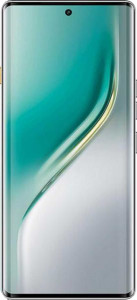
Tecno Camon 40 Pro 4G
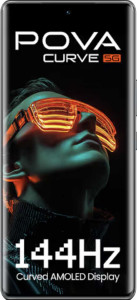
Tecno Pova Curve 5G

Tecno Camon 40 Pro 4G Tecno Pova Curve 5G

Common Features

  • Neither product has a rugged build.
  • Neither product can be folded.
  • Both products feature an OLED/AMOLED display type.
  • Both products have a screen size of 6.78″.
  • Both products have a pixel density of 393 ppi.
  • Both products support a 144Hz refresh rate.
  • Both products feature branded damage-resistant glass.
  • HDR10 support is not available on either product.
  • HDR10+ support is not available on either product.
  • Dolby Vision support is not available on either product.
  • Both products have integrated LTE.
  • Both products support 64-bit processing.
  • Both products use big.LITTLE technology and HMP.
  • Both products have 8 CPU threads.
  • Both products have a dual-lens main camera.
  • Neither product has a BSI sensor, but both have a CMOS sensor.
  • Both products support continuous autofocus when recording movies.
  • Both products support phase-detection autofocus for photos.
  • Both products support slow-motion video recording.
  • Both products have a built-in HDR mode and manual exposure.
  • Both products run Android 15.
  • Both products have clipboard warnings and location privacy options.
  • Both products have camera and microphone privacy options.
  • Mail Privacy Protection is not available on either product.
  • Both products support theme customization and can block app tracking.
  • Cross-site tracking blocking is not available on either product.
  • Neither product supports wireless charging.
  • Both products support fast charging at 45W.
  • Neither product has a removable battery.
  • Neither product has a 3.5mm audio jack.
  • Both products have stereo speakers.
  • aptX, LDAC, aptX HD, aptX Adaptive, aptX Lossless support is not available on either product.
  • Both products have a built-in radio.
  • Both products support 2 SIM cards.
  • Neither product has an external memory slot.
  • Both products have USB Type-C with USB version 2.
  • Both products have NFC.
  • Both products have a fingerprint scanner.
  • Emergency SOS via satellite is not available on either product.
  • Crash detection is not available on either product.
  • Both products have a video light.
  • Neither product has a sapphire glass display.
  • Both products have a curved display.
  • Neither product has an e-paper display.

Main Differences

  • Water resistance is rated as Waterproof (IP68) on Tecno Camon 40 Pro 4G, while the Tecno Pova Curve 5G is Water resistant (IP64).
  • Weight is 178 g on Tecno Camon 40 Pro 4G and 177 g on Tecno Pova Curve 5G.
  • Thickness is 7.3 mm on Tecno Camon 40 Pro 4G and 7.5 mm on Tecno Pova Curve 5G.
  • Display resolution is 1080 x 2463 px on Tecno Camon 40 Pro 4G and 1080 x 2436 px on Tecno Pova Curve 5G.
  • Gorilla Glass version is 7i on Tecno Camon 40 Pro 4G and Gorilla Glass 5 on Tecno Pova Curve 5G.
  • Internal storage is 256GB on Tecno Camon 40 Pro 4G and 128GB on Tecno Pova Curve 5G.
  • RAM is 12GB on Tecno Camon 40 Pro 4G and 8GB on Tecno Pova Curve 5G.
  • The chipset is MediaTek Helio G100 on Tecno Camon 40 Pro 4G and MediaTek Dimensity 7300 on Tecno Pova Curve 5G.
  • The GPU is Mali G57 on Tecno Camon 40 Pro 4G and Mali G615 MC2 on Tecno Pova Curve 5G.
  • CPU speed is 2 x 2.2 & 6 x 2 GHz on Tecno Camon 40 Pro 4G and 4 x 2.5 & 4 x 2 GHz on Tecno Pova Curve 5G.
  • GPU clock speed is 1000 MHz on Tecno Camon 40 Pro 4G and 1047 MHz on Tecno Pova Curve 5G.
  • RAM speed is 4266 MHz on Tecno Camon 40 Pro 4G and 6400 MHz on Tecno Pova Curve 5G.
  • Semiconductor size is 6 nm on Tecno Camon 40 Pro 4G and 4 nm on Tecno Pova Curve 5G.
  • DirectX version is DirectX 11 on Tecno Camon 40 Pro 4G and DirectX 12 on Tecno Pova Curve 5G.
  • Maximum memory amount is 12GB on Tecno Camon 40 Pro 4G and 16GB on Tecno Pova Curve 5G.
  • DDR memory version is DDR4 on Tecno Camon 40 Pro 4G and DDR5 on Tecno Pova Curve 5G.
  • Main camera megapixels are 50 & 8 MP on Tecno Camon 40 Pro 4G and 64 & 2 MP on Tecno Pova Curve 5G.
  • Main camera wide aperture is f/1.9 on Tecno Camon 40 Pro 4G and f/2.4 & f/1.8 on Tecno Pova Curve 5G.
  • Front camera megapixels are 50MP on Tecno Camon 40 Pro 4G and 13MP on Tecno Pova Curve 5G.
  • Optical image stabilization is present on Tecno Camon 40 Pro 4G but not available on Tecno Pova Curve 5G.
  • Main camera video recording goes up to 2160p at 60 fps on Tecno Camon 40 Pro 4G and up to 2160p at 30 fps on Tecno Pova Curve 5G.
  • A dual-tone LED flash is present on Tecno Camon 40 Pro 4G but not available on Tecno Pova Curve 5G.
  • Number of flash LEDs is 2 on Tecno Camon 40 Pro 4G and 1 on Tecno Pova Curve 5G.
  • Battery power is 5200 mAh on Tecno Camon 40 Pro 4G and 5500 mAh on Tecno Pova Curve 5G.
  • 5G support is present on Tecno Pova Curve 5G but not available on Tecno Camon 40 Pro 4G.
  • Wi-Fi versions supported are Wi-Fi 4 and Wi-Fi 5 on Tecno Camon 40 Pro 4G, while Tecno Pova Curve 5G also adds Wi-Fi 6 (802.11ax).
  • Download speed is 650 MBits/s on Tecno Camon 40 Pro 4G and 3270 MBits/s on Tecno Pova Curve 5G.
  • Upload speed is 150 MBits/s on Tecno Camon 40 Pro 4G and 3270 MBits/s on Tecno Pova Curve 5G.
  • A gyroscope is present on Tecno Camon 40 Pro 4G but not available on Tecno Pova Curve 5G.
  • An infrared sensor is present on Tecno Camon 40 Pro 4G but not available on Tecno Pova Curve 5G.
  • Galileo satellite navigation support is present on Tecno Camon 40 Pro 4G but not available on Tecno Pova Curve 5G.
Specs Comparison
Tecno Camon 40 Pro 4G

Tecno Camon 40 Pro 4G

Tecno Pova Curve 5G

Tecno Pova Curve 5G

Design:
water resistance Waterproof Water resistant
weight 178 g 177 g
thickness 7.3 mm 7.5 mm
Ingress Protection (IP) rating IP68 IP64
has a rugged build
can be folded

Both phones are remarkably close in physical form, with near-identical weights (178 g vs 177 g) and slim profiles (7.3 mm vs 7.5 mm). In day-to-day handling, these differences are imperceptible — neither device will feel noticeably lighter or thinner in hand. Neither features a rugged build or foldable form factor, so both target the same mainstream, flat-slab audience.

The most meaningful differentiator in this group is water resistance. The Camon 40 Pro 4G carries a full IP68 rating, meaning it can withstand submersion in water — typically up to 1.5 meters for 30 minutes. The Pova Curve 5G, by contrast, is rated IP64, which only guarantees protection against water splashes from any direction, not submersion. In practical terms, the Camon 40 Pro can survive an accidental drop in a sink or pool, while the Pova Curve should only be trusted to handle rain or minor splashes.

The Camon 40 Pro 4G holds a clear advantage in this group. Its superior IP68 waterproofing is a tangible, real-world benefit that meaningfully reduces risk of water damage, and this edge is not offset by any design trade-off, given that the two phones are otherwise virtually identical in size and weight.

Display:
Display type OLED/AMOLED OLED/AMOLED
screen size 6.78" 6.78"
pixel density 393 ppi 393 ppi
resolution 1080 x 2463 px 1080 x 2436 px
refresh rate 144Hz 144Hz
has branded damage-resistant glass
Gorilla Glass version Gorilla Glass 7i Gorilla Glass 5
supports HDR10
supports HDR10+
supports Dolby Vision
Has a secondary screen
has a touch screen

On paper, these two displays are almost twins: both feature a 6.78″ OLED/AMOLED panel with a 393 ppi pixel density, a smooth 144Hz refresh rate, and a 1080p-class resolution. The practical viewing experience — color vibrancy, motion fluidity, and sharpness — will be essentially indistinguishable to the vast majority of users. Neither panel supports HDR10, HDR10+, or Dolby Vision, so neither has an edge in high-dynamic-range content rendering.

The one meaningful split is screen protection. The Camon 40 Pro 4G ships with Gorilla Glass 7i, while the Pova Curve 5G uses the older Gorilla Glass 5. Gorilla Glass 7i is a newer generation specifically engineered for improved drop and scratch resistance compared to its predecessors, which translates to a meaningfully better chance of surviving accidental drops onto hard surfaces without cracking.

This group is very nearly a tie, but the Camon 40 Pro 4G earns a slight edge solely due to its newer-generation glass. For users who tend to use their phones without a case, that upgraded protection is a practical, real-world benefit. For everyone else, the two displays are for all intents and purposes identical.

Performance:
internal storage 256GB 128GB
RAM 12GB 8GB
Chipset (SoC) name MediaTek Helio G100 MediaTek Dimensity 7300
GPU name Mali G57 Mali G615 MC2
CPU speed 2 x 2.2 & 6 x 2 GHz 4 x 2.5 & 4 x 2 GHz
GPU clock speed 1000 MHz 1047 MHz
Has integrated LTE
RAM speed 4266 MHz 6400 MHz
semiconductor size 6 nm 4 nm
Supports 64-bit
DirectX version DirectX 11 DirectX 12
Has integrated graphics
Uses big.LITTLE technology
CPU threads 8 threads 8 threads
Uses HMP
maximum memory amount 12GB 16GB
DDR memory version 4 5

The silicon at the heart of these two phones tells very different stories. The Camon 40 Pro 4G runs on the MediaTek Helio G100, built on a 6 nm process, while the Pova Curve 5G uses the MediaTek Dimensity 7300 on a more advanced 4 nm node. A smaller manufacturing process generally means better power efficiency and thermal performance — the Dimensity 7300 can sustain higher workloads with less heat and battery drain. Its CPU configuration also favors raw speed, with four performance cores clocked at 2.5 GHz versus the Helio G100's top speed of 2.2 GHz.

The memory architecture further separates the two. The Camon 40 Pro ships with 12 GB of DDR4 RAM at 4266 MHz, which is ample for multitasking today. The Pova Curve counters with DDR5 RAM running at 6400 MHz — a newer standard that delivers higher bandwidth, benefiting memory-intensive tasks like gaming and video editing. The Pova Curve also supports a higher memory ceiling of 16 GB, and pairs its chipset with a Mali G615 MC2 GPU capable of DirectX 12, compared to the Camon 40 Pro's Mali G57 with DirectX 11. That GPU and API generational gap has tangible implications for graphically demanding games. On the other hand, the Camon 40 Pro ships with 256 GB of internal storage versus just 128 GB on the Pova Curve, which is a practical advantage for users who store large amounts of media locally.

Overall, the Pova Curve 5G holds the performance edge. Its newer chipset, faster DDR5 memory, more capable GPU, and DirectX 12 support point to a more future-proof platform. The Camon 40 Pro's higher out-of-box RAM and double the storage soften the blow, but from a raw processing and graphics standpoint, the Pova Curve is the stronger performer.

Cameras:
megapixels (main camera) 50 & 8 MP 64 & 2 MP
wide aperture (main camera) 1.9f 2.4 & 1.8f
Has a dual-lens (or multi-lens) main camera
megapixels (front camera) 50MP 13MP
has built-in optical image stabilization
video recording (main camera) 2160 x 60 fps 2160 x 30 fps
Has a dual-tone LED flash
number of flash LEDs 2 1
has a BSI sensor
has a CMOS sensor
has continuous autofocus when recording movies
Has phase-detection autofocus for photos
supports slow-motion video recording
has a built-in HDR mode
has manual exposure
has a flash
optical zoom 0x 0x
has manual ISO
has a serial shot mode
has manual focus
has a front camera
Has laser autofocus
Shoots 360° panorama
has manual white balance
has touch autofocus
has manual shutter speed
can create panoramas in-camera
Has timelapse function
Has a front-facing LED flash
has a dual-lens (or multi-lens) front camera
supports HDR10 recording
supports Dolby Vision recording
has a front-facing camera under the display
Has a RGB LED flash
has 3D photo/video recording capabilities

The camera systems here diverge in interesting ways. The Pova Curve 5G leads in raw main-sensor megapixels at 64 MP, compared to the Camon 40 Pro 4G's 50 MP primary shooter. However, megapixel count alone rarely determines real-world photo quality — and several other specs tip the balance back toward the Camon 40 Pro. Most notably, it includes optical image stabilization (OIS), which the Pova Curve lacks entirely. OIS physically compensates for hand shake, producing noticeably sharper low-light shots and smoother handheld video. Its main lens also offers a wider aperture of f/1.9 versus the Pova Curve's f/1.8 on its secondary lens and f/2.4 on its primary — meaning the Camon 40 Pro admits more light through its main sensor.

Video capability is another clear differentiator: the Camon 40 Pro records 4K at 60 fps, while the Pova Curve tops out at 4K 30 fps. That 60 fps ceiling matters for capturing fast-moving subjects and producing smoother, more cinematic footage. The Camon 40 Pro also features a 50 MP front camera, a significant step up from the Pova Curve's 13 MP selfie sensor — a gap that will be very visible in selfie and video call quality.

The Camon 40 Pro 4G is the stronger camera package overall. The combination of OIS, higher-fps 4K video, and a dramatically superior front camera outweighs the Pova Curve's marginal lead in rear megapixels. For users who prioritize photography and video, the Camon 40 Pro is the more capable device in this group.

Operating system:
Android version Android 15 Android 15
has clipboard warnings
has location privacy options
has camera/microphone privacy options
has Mail Privacy Protection
has theme customization
can block app tracking
blocks cross-site tracking
has on-device machine learning
has notification permissions
has media picker
Can play games while they download
has dark mode
has Wi-Fi password sharing
has battery health check
has an extra dim mode
has focus modes
has dynamic theming
can offload apps
Has customizable notifications
has Live Text
has full-page screenshots
supports split screen
gets direct OS updates
has PiP
Can be used as a PC
Has sharing intents
has a child lock
Supports widgets
Is free and open source
Has offline voice recognition
has voice commands
Tracks the current position of a mobile device
is a multi-user system
has Quick Start

This is the rarest outcome in a spec comparison: a genuine dead heat. Both the Camon 40 Pro 4G and the Pova Curve 5G run Android 15 and share an identical feature set across every single data point in this group — from privacy controls like location and camera/microphone permissions, to productivity features like split-screen, picture-in-picture, and widgets, to quality-of-life additions like dark mode, dynamic theming, and battery health checks.

Notably, neither device receives direct OS updates — meaning updates are routed through the manufacturer rather than pushed straight from Google. This is common for Android devices outside the Pixel line, but it can mean slower rollouts of security patches and new Android versions. Neither phone has an advantage here; users of both should factor in Tecno's own update cadence when thinking long-term about software support.

This group is a complete tie. There is no basis in the provided specs to recommend one device over the other on software grounds — buyers should treat the operating system experience as identical and let other spec groups drive their decision.

Battery:
battery power 5200 mAh 5500 mAh
has wireless charging
Supports fast charging
charging speed 45W 45W
has a removable battery
has a battery level indicator
has a rechargeable battery

Charging speed is identical between these two — both support 45W fast charging and neither offers wireless charging, so the refueling experience will feel the same regardless of which device you pick. The real question is how long you go between charges, and here the Pova Curve 5G holds a modest but real advantage with a 5500 mAh battery versus the Camon 40 Pro 4G's 5200 mAh. That 300 mAh difference represents roughly a 6% larger reservoir, which in practice could translate to an extra 20–30 minutes of screen-on time during a heavy day of use.

It is worth contextualizing that gap alongside the performance findings from earlier: the Pova Curve's more efficient 4 nm chipset is likely to draw less power under load than the Camon 40 Pro's 6 nm Helio G100. So the Pova Curve benefits from both a larger battery and a more power-efficient processor — a compounding advantage that could make the real-world endurance gap wider than the raw mAh numbers alone suggest.

The Pova Curve 5G takes this group. While neither phone falls short on capacity by any stretch, the combination of a larger battery and a more efficient chip gives it a meaningful edge in day-to-day stamina that power users and frequent travelers will appreciate.

Audio:
has a socket for a 3.5 mm audio jack
has stereo speakers
has aptX
has LDAC
has aptX HD
has aptX Adaptive
has aptX Lossless
Has a radio

Audio is another category where these two phones land in exactly the same place. Both omit the 3.5 mm headphone jack, opting instead for wireless or USB-C audio — a trade-off that has become standard at this price tier but still worth noting for users who rely on wired earphones. On the upside, both feature stereo speakers, which deliver a noticeably wider and more immersive soundstage than a single mono speaker, particularly when watching videos or gaming.

Neither device supports any high-resolution Bluetooth audio codec — no aptX, LDAC, or any of their variants. This means wireless audio quality is capped at standard Bluetooth SBC or AAC performance, which is acceptable for casual listening but will not satisfy audiophiles using high-end wireless headphones that depend on those codecs to shine. Both phones also include a built-in FM radio, a feature increasingly rare in smartphones and genuinely useful in areas with limited data connectivity.

This group is a complete tie. Every audio specification is identical across both devices, and neither holds any advantage. Buyers with strong audio priorities should note that both phones share the same limitations and strengths equally.

Connectivity & Features:
release date March 2025 May 2025
has 5G support
Wi-Fi version Wi-Fi 4 (802.11n), Wi-Fi 5 (802.11ac) Wi-Fi 4 (802.11n), Wi-Fi 5 (802.11ac), Wi-Fi 6 (802.11ax)
SIM cards 2 SIM 2 SIM
has an external memory slot
Has USB Type-C
USB version 2 2
has NFC
download speed 650 MBits/s 3270 MBits/s
upload speed 150 MBits/s 3270 MBits/s
Has a fingerprint scanner
has emergency SOS via satellite
has crash detection
is DLNA-certified
has a gyroscope
supports ANT+
Has a heart rate monitor
has GPS
has a compass
supports Wi-Fi
Has an infrared sensor
has an accelerometer
has a cellular module
Has a barometer
has an HDMI output
Uses 3D facial recognition
Has an iris scanner
Stylus included
supports Galileo
Has motion tracking
Has optical tracking
Has a built-in projector

The most consequential divide in this group is cellular: the Camon 40 Pro 4G is, as its name states, limited to 4G LTE, while the Pova Curve 5G adds 5G support. Beyond raw speed, 5G future-proofs the device for networks that are increasingly prioritizing the newer standard — a meaningful consideration for anyone planning to keep their phone for several years. The wireless gap extends to Wi-Fi as well: the Pova Curve supports Wi-Fi 6 (802.11ax) in addition to the older standards both phones share, enabling faster, more efficient connections on compatible routers. The practical upshot shows up starkly in the peak speeds — the Pova Curve's listed download and upload ceiling of 3270 Mbits/s dwarfs the Camon 40 Pro's 650 Mbits/s down and 150 Mbits/s up, though real-world speeds depend heavily on network availability.

The Camon 40 Pro does retain a few exclusive sensors worth noting. It includes a gyroscope, which is important for AR applications, immersive gaming, and accurate motion sensing — the Pova Curve lacks one entirely. The Camon 40 Pro also features an infrared sensor, enabling it to function as a universal remote for TVs and home appliances, and it supports Galileo satellite navigation for potentially more accurate positioning. The Pova Curve has none of these. Both phones share NFC, dual SIM, USB Type-C, GPS, and a fingerprint scanner.

This group has no clean winner — it comes down to priorities. The Pova Curve 5G is the stronger pick for anyone who values future-proof connectivity and faster wireless speeds. The Camon 40 Pro 4G counters with a more capable sensor suite, including a gyroscope and infrared blaster, that matters for specific use cases. Buyers should weigh which set of trade-offs aligns with how they actually use their phone.
Miscellaneous:
has a video light
Has sapphire glass display
Has a curved display
Has an e-paper display

Across every data point in this group, the Camon 40 Pro 4G and the Pova Curve 5G are identical. Both feature a curved display, a design choice that gives the screen a sleeker, more premium look by gently wrapping at the edges. Both include a video light — useful for illuminating subjects during video calls or recordings. Neither uses sapphire glass nor an e-paper display.

This group is a complete tie with no differentiators to analyze. It should play no role in a buyer's decision between these two devices.

Comparison Summary & Verdict

This is a specification comparison between the Tecno Camon 40 Pro 4G and Tecno Pova Curve 5G. Both models share an OLED/AMOLED display with a 6.78″ screen size, 144Hz refresh rate, and branded damage-resistant glass. However, they differ in several key areas: the Tecno Camon 40 Pro 4G has IP68 water resistance compared to the IP64 rating on the Tecno Pova Curve 5G; the Tecno Camon 40 Pro 4G features a 256GB storage and 12GB RAM while the Tecno Pova Curve 5G has 128GB storage and 8GB RAM. Additionally, the Tecno Camon 40 Pro 4G has a 50MP front camera versus the 13MP front camera on the Tecno Pova Curve 5G.