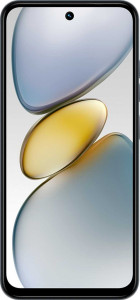
Tecno Camon 40 Pro 5G
Tecno Spark 40

Tecno Camon 40 Pro 5G Tecno Spark 40

Overview

When comparing the Tecno Camon 40 Pro 5G and the Tecno Spark 40, two distinct philosophies emerge from Tecno's lineup. This head-to-head puts their display technology, raw processing power, camera capabilities, and connectivity features under the microscope to help you decide which device truly fits your needs and budget.

Common Features

  • Neither product has a rugged build.
  • Neither product can be folded.
  • Neither product has branded damage-resistant glass.
  • HDR10+ support is not available on either product.
  • Dolby Vision support is not available on either product.
  • Neither product has a secondary screen.
  • Both products have a touch screen.
  • Both products come with 256GB of internal storage.
  • Both products have integrated LTE.
  • Both products support 64-bit processing.
  • Both products use DirectX 12.
  • Both products have integrated graphics.
  • Both products use big.LITTLE technology.
  • Both products have 8 CPU threads.
  • Both cameras share a 50MP main sensor as the primary lens.
  • Neither product has a BSI sensor.
  • Both products have a CMOS sensor.
  • Both products support continuous autofocus when recording movies.
  • Both products have phase-detection autofocus for photos.
  • Both products support manual exposure.
  • Both products have a flash with 2 LEDs.
  • Neither product supports optical zoom.
  • Both products run Android 15.
  • Both products have clipboard warnings.
  • Both products have location privacy options.
  • Both products have camera and microphone privacy options.
  • Mail Privacy Protection is not available on either product.
  • Both products support theme customization.
  • Both products can block app tracking.
  • Cross-site tracking blocking is not available on either product.
  • Both products have a 5200 mAh battery.
  • Neither product supports wireless charging.
  • Both products support fast charging at 45W.
  • Neither product has a removable battery.
  • Both products have a battery level indicator.
  • Both products have a rechargeable battery.
  • Both products have stereo speakers.
  • Neither product supports aptX, LDAC, aptX HD, aptX Adaptive, aptX Lossless.
  • Both products support dual SIM cards.
  • Both products have a USB Type-C port.
  • Both products have a fingerprint scanner.
  • Emergency SOS via satellite is not available on either product.
  • Crash detection is not available on either product.
  • Neither product is DLNA-certified.
  • Neither product supports ANT+.
  • Neither product has a heart rate monitor.
  • Both products have a video light.
  • Neither product has a sapphire glass display.
  • Neither product has an e-paper display.

Main Differences

  • Water resistance is rated as Waterproof on Tecno Camon 40 Pro 5G and Water resistant on Tecno Spark 40.
  • Thickness is 7.3 mm on Tecno Camon 40 Pro 5G and 7.7 mm on Tecno Spark 40.
  • Width is 74.6 mm on Tecno Camon 40 Pro 5G and 77 mm on Tecno Spark 40.
  • Height is 164.3 mm on Tecno Camon 40 Pro 5G and 165.6 mm on Tecno Spark 40.
  • Volume is 89.47 cm³ on Tecno Camon 40 Pro 5G and 98.18 cm³ on Tecno Spark 40.
  • IP rating is IP68 on Tecno Camon 40 Pro 5G and IP64 on Tecno Spark 40.
  • Display type is OLED/AMOLED on Tecno Camon 40 Pro 5G and LCD IPS on Tecno Spark 40.
  • Screen size is 6.78″ on Tecno Camon 40 Pro 5G and 6.67″ on Tecno Spark 40.
  • Pixel density is 393 ppi on Tecno Camon 40 Pro 5G and 263 ppi on Tecno Spark 40.
  • Resolution is 1080 x 2463 px on Tecno Camon 40 Pro 5G and 720 x 1600 px on Tecno Spark 40.
  • HDR10 support is present on Tecno Camon 40 Pro 5G but not available on Tecno Spark 40.
  • Always-On Display is available on Tecno Camon 40 Pro 5G but not on Tecno Spark 40.
  • RAM is 12GB on Tecno Camon 40 Pro 5G and 8GB on Tecno Spark 40.
  • The chipset is MediaTek Dimensity 7300 on Tecno Camon 40 Pro 5G and MediaTek Helio G81 Ultra on Tecno Spark 40.
  • The GPU is Mali G615 MC2 on Tecno Camon 40 Pro 5G and Mali G52 MP2 on Tecno Spark 40.
  • CPU speed is 4 x 2.5 & 4 x 2 GHz on Tecno Camon 40 Pro 5G and 2 x 2 & 6 x 1.8 GHz on Tecno Spark 40.
  • Geekbench 6 multi-core score is 2932 on Tecno Camon 40 Pro 5G and 1391 on Tecno Spark 40.
  • Geekbench 6 single-core score is 1026 on Tecno Camon 40 Pro 5G and 420 on Tecno Spark 40.
  • RAM speed is 6400 MHz on Tecno Camon 40 Pro 5G and 1800 MHz on Tecno Spark 40.
  • Semiconductor size is 4 nm on Tecno Camon 40 Pro 5G and 12 nm on Tecno Spark 40.
  • Maximum memory is 16GB on Tecno Camon 40 Pro 5G and 8GB on Tecno Spark 40.
  • Number of transistors is 6200 million on Tecno Camon 40 Pro 5G and 5500 million on Tecno Spark 40.
  • DDR memory version is DDR5 on Tecno Camon 40 Pro 5G and DDR4 on Tecno Spark 40.
  • The main camera setup includes a 50MP and 8MP dual lens on Tecno Camon 40 Pro 5G, while Tecno Spark 40 has a single 50MP lens.
  • A dual-lens main camera is present on Tecno Camon 40 Pro 5G but not on Tecno Spark 40.
  • Front camera resolution is 50MP on Tecno Camon 40 Pro 5G and 8MP on Tecno Spark 40.
  • Optical image stabilization is built in on Tecno Camon 40 Pro 5G but not available on Tecno Spark 40.
  • Maximum video recording resolution is 2160p at 60 fps on Tecno Camon 40 Pro 5G and 1440p at 30 fps on Tecno Spark 40.
  • A dual-tone LED flash is present on Tecno Camon 40 Pro 5G but not on Tecno Spark 40.
  • Slow-motion video recording is supported on Tecno Camon 40 Pro 5G but not on Tecno Spark 40.
  • Built-in HDR mode is available on Tecno Camon 40 Pro 5G but not on Tecno Spark 40.
  • Timelapse function is available on Tecno Camon 40 Pro 5G but not on Tecno Spark 40.
  • A 3.5mm audio jack is present on Tecno Spark 40 but not on Tecno Camon 40 Pro 5G.
  • A radio is available on Tecno Camon 40 Pro 5G but not on Tecno Spark 40.
  • 5G support is present on Tecno Camon 40 Pro 5G but not available on Tecno Spark 40.
  • An external memory slot is available on Tecno Spark 40 but not on Tecno Camon 40 Pro 5G.
  • NFC is present on Tecno Camon 40 Pro 5G but not available on Tecno Spark 40.
  • Download speed reaches up to 3270 Mbit/s on Tecno Camon 40 Pro 5G and 300 Mbit/s on Tecno Spark 40.
  • Upload speed reaches up to 3270 Mbit/s on Tecno Camon 40 Pro 5G and 100 Mbit/s on Tecno Spark 40.
  • An infrared sensor is present on Tecno Camon 40 Pro 5G but not on Tecno Spark 40.
  • A curved display is featured on Tecno Camon 40 Pro 5G but not on Tecno Spark 40.
Specs Comparison
Tecno Camon 40 Pro 5G

Tecno Camon 40 Pro 5G

Tecno Spark 40

Tecno Spark 40

Design:
water resistance Waterproof Water resistant
thickness 7.3 mm 7.7 mm
width 74.6 mm 77 mm
height 164.3 mm 165.6 mm
volume 89.474494 cm³ 98.18424 cm³
Ingress Protection (IP) rating IP68 IP64
has a rugged build
can be folded

The most consequential difference in this group is water protection. The Tecno Camon 40 Pro 5G carries an IP68 rating, meaning it is fully waterproof and can withstand submersion — a meaningful real-world safeguard against drops in water, rain, or accidental spills. The Tecno Spark 40, by contrast, is rated IP64, which only guarantees resistance to water splashes from any direction, not immersion. For users who work outdoors, near water, or simply want greater peace of mind, this is a significant advantage for the Camon 40 Pro.

On dimensions, the Camon 40 Pro is also the more compact device across every physical measurement. Its 7.3 mm thickness versus the Spark 40's 7.7 mm makes it noticeably slimmer in hand, and its smaller overall footprint results in a volume of roughly 89.5 cm³ compared to the Spark 40's 98.2 cm³ — nearly 10% more bulk. In practice, a slimmer, smaller phone is easier to pocket, grip one-handed, and carry comfortably throughout the day.

Both phones share a standard, non-rugged, non-foldable form factor, so neither targets extreme-durability use cases. Overall, the Camon 40 Pro 5G holds a clear edge in this group: it is simultaneously slimmer, more compact, and substantially better protected against water damage.

Display:
Display type OLED/AMOLED LCD, IPS
screen size 6.78" 6.67"
pixel density 393 ppi 263 ppi
resolution 1080 x 2463 px 720 x 1600 px
has branded damage-resistant glass
supports HDR10
supports HDR10+
Always-On Display
supports Dolby Vision
Has a secondary screen
has a touch screen

Display technology is where these two phones diverge most dramatically. The Camon 40 Pro 5G uses an OLED/AMOLED panel, which delivers true blacks, vivid colors, and superior contrast by lighting each pixel individually. The Spark 40 relies on an LCD IPS screen, which backlights the entire panel uniformly — a fundamentally different and less premium approach that results in washed-out blacks and less vibrant color reproduction, particularly in dark environments or when viewing high-contrast content.

The resolution gap compounds this difference significantly. At 1080 x 2463 px across a 6.78-inch screen, the Camon 40 Pro achieves a pixel density of 393 ppi — sharp enough that individual pixels are invisible to the naked eye at normal viewing distances. The Spark 40's 720 x 1600 px resolution on a 6.67-inch panel yields only 263 ppi, a level where text edges and fine detail can appear visibly soft. For reading, streaming, or general daily use, this is a perceptible difference. The Camon 40 Pro also supports HDR10 and features an Always-On Display, adding practical utility and richer media playback that the Spark 40 entirely lacks.

This is one of the clearest category wins in any comparison: the Camon 40 Pro 5G outclasses the Spark 40 on every meaningful display metric — panel technology, sharpness, and feature set. Users who prioritize screen quality will find no contest here.

Performance:
internal storage 256GB 256GB
RAM 12GB 8GB
Chipset (SoC) name MediaTek Dimensity 7300 MediaTek Helio G81 Ultra
GPU name Mali G615 MC2 Mali G52 MP2
CPU speed 4 x 2.5 & 4 x 2 GHz 2 x 2 & 6 x 1.8 GHz
Geekbench 6 result (multi) 2932 1391
Geekbench 6 result (single) 1026 420
Has integrated LTE
RAM speed 6400 MHz 1800 MHz
semiconductor size 4 nm 12 nm
Supports 64-bit
DirectX version DirectX 12 DirectX 12
Has integrated graphics
Uses big.LITTLE technology
CPU threads 8 threads 8 threads
maximum memory amount 16GB 8GB
number of transistors 6200 million 5500 million
DDR memory version 5 4

At the heart of this comparison lies a generational chipset gap. The Camon 40 Pro 5G runs on the MediaTek Dimensity 7300, built on a modern 4 nm process node, while the Spark 40 uses the MediaTek Helio G81 Ultra on an older 12 nm node. A smaller manufacturing process generally means more transistors in less space, better power efficiency, and higher sustained performance — and the benchmark results confirm exactly that. The Camon 40 Pro scores 2932 in Geekbench 6 multi-core and 1026 single-core, versus the Spark 40's 1391 and 420 respectively. That is roughly a 2x advantage across the board, which translates directly to snappier app launches, smoother multitasking, and a more responsive feel in everyday use.

Memory further widens the gap. The Camon 40 Pro ships with 12 GB of DDR5 RAM running at 6400 MHz, compared to the Spark 40's 8 GB of DDR4 at just 1800 MHz. Faster RAM reduces the latency between the CPU and memory, making the system feel more fluid under load. The Camon 40 Pro also supports up to 16 GB maximum memory versus the Spark 40's hard ceiling of 8 GB, giving it more headroom for demanding apps and future software overhead.

There is no ambiguity in this category: the Camon 40 Pro 5G is substantially more capable on every performance metric. For users who game, run multiple apps simultaneously, or simply expect their phone to stay smooth over its lifespan, the Camon 40 Pro holds a commanding and meaningful advantage.

Cameras:
megapixels (main camera) 50 & 8 MP 50 MP
Has a dual-lens (or multi-lens) main camera
megapixels (front camera) 50MP 8MP
has built-in optical image stabilization
video recording (main camera) 2160 x 60 fps 1440 x 30 fps
Has a dual-tone LED flash
number of flash LEDs 2 2
has a BSI sensor
has a CMOS sensor
has continuous autofocus when recording movies
Has phase-detection autofocus for photos
supports slow-motion video recording
has a built-in HDR mode
has manual exposure
has a flash
optical zoom 0x 0x
has manual ISO
has a serial shot mode
has manual focus
has a front camera
Has laser autofocus
Shoots 360° panorama
has manual white balance
has touch autofocus
has manual shutter speed
can create panoramas in-camera
Has timelapse function
Has a front-facing LED flash
has a dual-lens (or multi-lens) front camera
supports HDR10 recording
supports Dolby Vision recording
has a front-facing camera under the display
Has a RGB LED flash
has 3D photo/video recording capabilities

Selfie capability is where the gap opens most sharply. The Camon 40 Pro 5G packs a 50 MP front camera, compared to just 8 MP on the Spark 40 — a six-fold resolution difference that directly impacts the level of detail, cropping flexibility, and overall quality of self-portraits and video calls. For users who prioritize front-facing photography, this alone is a decisive differentiator. On the rear, both phones share a 50 MP primary sensor, but the Camon 40 Pro adds a second lens, making it a dual-camera system versus the Spark 40's single shooter, offering greater compositional versatility.

Video recording tells a similar story. The Camon 40 Pro captures at up to 2160p at 60 fps — full 4K with a high frame rate for smoother, cinematic footage. The Spark 40 tops out at 1440p at 30 fps, which is a noticeably lower ceiling for anyone shooting detailed or fast-moving content. The Camon 40 Pro further benefits from optical image stabilization (OIS) and support for slow-motion recording, two features entirely absent on the Spark 40. OIS in particular makes a tangible difference in handheld video, reducing the shakiness that electronic stabilization alone cannot fully correct. The Camon 40 Pro also includes a dual-tone LED flash for more natural-looking artificial light in photos, alongside a timelapse mode that the Spark 40 lacks.

Across every meaningful camera metric — front resolution, video ceiling, stabilization, and feature depth — the Camon 40 Pro 5G is the stronger imaging device. The Spark 40 holds its own only on the main sensor resolution, where both are equal, but that parity does not offset the breadth of advantages the Camon 40 Pro brings to photography and video.

Operating system:
Android version Android 15 Android 15
has clipboard warnings
has location privacy options
has camera/microphone privacy options
has Mail Privacy Protection
has theme customization
can block app tracking
blocks cross-site tracking
has on-device machine learning
has notification permissions
has media picker
Can play games while they download
has dark mode
has Wi-Fi password sharing
has battery health check
has an extra dim mode
has focus modes
has dynamic theming
can offload apps
Has customizable notifications
has Live Text
has full-page screenshots
supports split screen
gets direct OS updates
has PiP
Can be used as a PC
Has sharing intents
has a child lock
Supports widgets
Is free and open source
Has offline voice recognition
has voice commands
Tracks the current position of a mobile device
is a multi-user system
has Quick Start

For once, the two phones are on entirely equal footing. Both the Tecno Camon 40 Pro 5G and the Tecno Spark 40 run Android 15 and share an identical feature set across every data point in this group — from privacy controls like location and camera/microphone permissions, to usability features like split-screen multitasking, Picture-in-Picture, dynamic theming, and offline voice recognition. Neither device receives direct OS updates from Google, and neither supports Wi-Fi password sharing or focus modes.

This level of parity is worth noting: it means the software experience — the day-to-day feel of navigating the UI, managing privacy, and accessing Android's feature set — will be functionally indistinguishable between the two. A user switching from one to the other would find no meaningful difference in what the operating system offers or withholds.

This group is a complete tie. The operating system provides no basis for choosing one phone over the other, and buyers should look to hardware categories — performance, display, cameras, and design — to inform their decision.

Battery:
battery power 5200 mAh 5200 mAh
has wireless charging
Supports fast charging
charging speed 45W 45W
has a removable battery
has a battery level indicator
has a rechargeable battery

Battery is the second consecutive category where the two phones are impossible to separate. Both the Tecno Camon 40 Pro 5G and the Tecno Spark 40 carry a 5200 mAh cell and support 45W fast charging — a generous capacity for a mid-range device, and a charging speed that can deliver meaningful top-ups in a short time. Neither phone offers wireless charging, and neither has a removable battery.

One nuance worth keeping in mind: raw battery capacity is only part of the endurance picture. The more power-efficient chipset and AMOLED display of the Camon 40 Pro could translate to longer real-world screen-on time from the same 5200 mAh, since OLED panels consume less power on dark content and the 4 nm Dimensity 7300 is inherently more efficient than the Spark 40's 12 nm Helio G81 Ultra. However, those are hardware factors from other spec groups — based strictly on the battery data provided here, no distinction can be drawn.

This group is a complete tie. Identical capacity and identical charging speed leave no room for differentiation on paper, and neither phone holds an advantage within the bounds of these specs alone.

Audio:
has a socket for a 3.5 mm audio jack
has stereo speakers
has aptX
has LDAC
has aptX HD
has aptX Adaptive
has aptX Lossless
Has a radio

Audio is a genuine trade-off between these two phones, with each holding one meaningful advantage over the other. The Tecno Spark 40 retains a 3.5 mm headphone jack, which the Camon 40 Pro 5G omits entirely. For users who own wired headphones or earbuds — or who simply prefer the reliability and zero-latency of a wired connection without needing a dongle — this is a practical, everyday convenience that should not be underestimated. The Camon 40 Pro, in turn, is the only one of the two with a built-in FM radio, useful for users in regions where radio remains a primary source of news or entertainment, and where it functions without consuming mobile data.

Where the two phones converge, they do so on a notable shared strength: both feature stereo speakers, which deliver a wider, more immersive soundstage than a single mono driver — a real improvement for media consumption, gaming, and speakerphone calls. Neither phone supports high-resolution Bluetooth audio codecs such as aptX or LDAC, so wireless audio quality is limited to standard Bluetooth transmission on both devices.

This group ends in a contextual draw. The Spark 40's headphone jack will matter more to the majority of users, while the Camon 40 Pro's FM radio serves a more specific audience. Neither advantage is universal enough to declare a clear overall winner here — the right choice depends entirely on which feature aligns with the individual user's listening habits.

Connectivity & Features:
release date March 2025 July 2025
has 5G support
SIM cards 2 SIM 2 SIM
has an external memory slot
Has USB Type-C
has NFC
download speed 3270 MBits/s 300 MBits/s
upload speed 3270 MBits/s 100 MBits/s
Has a fingerprint scanner
has emergency SOS via satellite
has crash detection
is DLNA-certified
supports ANT+
Has a heart rate monitor
has GPS
supports Wi-Fi
Has an infrared sensor
has an accelerometer
has a cellular module
Has a barometer
has an HDMI output
Uses 3D facial recognition
Has an iris scanner
Stylus included
supports Galileo
Has motion tracking
Has optical tracking
Has a built-in projector

Network capability is the most consequential dividing line here. The Camon 40 Pro 5G supports 5G, with download and upload speeds reaching 3270 Mbits/s, while the Spark 40 is limited to 4G LTE at a maximum of 300 Mbits/s down and 100 Mbits/s up. In practical terms, 5G means dramatically faster mobile data in covered areas, lower latency for gaming and video calls, and greater future-proofing as 5G networks continue to expand globally. For users in markets where 5G is already widely deployed, this difference is felt daily. The Camon 40 Pro also adds NFC — absent on the Spark 40 — enabling contactless payments and quick device pairing, a feature that has become a baseline expectation in many markets.

The Spark 40 counters with one practical advantage: a microSD card slot for expandable storage, which the Camon 40 Pro lacks entirely. For users who store large volumes of media locally or prefer not to rely on cloud storage, this flexibility is genuinely useful. The Camon 40 Pro compensates somewhat with an infrared sensor, allowing it to function as a universal remote for TVs and appliances — a niche but convenient feature the Spark 40 does not offer.

Taken together, the Camon 40 Pro 5G holds the stronger hand in this group. Its 5G connectivity and NFC support represent high-utility, everyday advantages that outweigh the Spark 40's expandable storage for most users. The Spark 40's microSD slot remains a meaningful differentiator for a specific subset of buyers, but it is not enough to offset the breadth of what the Camon 40 Pro brings to connectivity.

Miscellaneous:
has a video light
Has sapphire glass display
Has a curved display
Has an e-paper display

This group is slim on data points, but one distinction stands out: the Camon 40 Pro 5G features a curved display, while the Spark 40 uses a flat panel. A curved screen wraps gently at the edges, lending the device a more premium, sculpted aesthetic and making edge-to-edge swiping gestures feel more natural in hand. It is primarily a design and feel consideration rather than a functional one, but it does contribute to the overall sense of refinement — consistent with the Camon 40 Pro's positioning across other spec groups.

Both phones share a video light, useful for illuminating subjects during video recording in low-light conditions, and neither features sapphire glass or an e-paper display — shared absences that require no further analysis.

The Camon 40 Pro 5G edges ahead in this group solely on the strength of its curved display. It is a modest advantage in isolation, but it reinforces the broader pattern seen throughout this comparison: the Camon 40 Pro consistently delivers the more premium hardware experience at every level of detail.

Comparison Summary & Verdict

After a thorough look at both devices, it is clear each targets a different kind of user. The Tecno Camon 40 Pro 5G is the stronger all-round performer, boasting a sharper OLED display with a 393 ppi pixel density, a significantly more powerful Dimensity 7300 chipset, a versatile 50MP dual-lens camera with optical image stabilization, and full 5G and NFC connectivity — all wrapped in a slimmer body with an IP68 waterproof rating. By contrast, the Tecno Spark 40 keeps things practical and accessible, offering a 3.5mm headphone jack, expandable storage via a microSD slot, and a more compact footprint. If you demand performance, a premium display, and future-proof connectivity, the Camon 40 Pro 5G is the clear choice. If affordability, familiar audio ports, and storage flexibility matter more to you, the Spark 40 delivers solid everyday value.

Tecno Camon 40 Pro 5G
Buy Tecno Camon 40 Pro 5G if...

Buy the Tecno Camon 40 Pro 5G if you want a powerful 5G-ready smartphone with a vivid OLED display, superior camera performance with optical image stabilization, and a premium IP68 waterproof build.

Tecno Spark 40
Buy Tecno Spark 40 if...

Buy the Tecno Spark 40 if you prefer a straightforward everyday phone that includes a 3.5mm headphone jack and expandable storage, without the need for 5G connectivity.