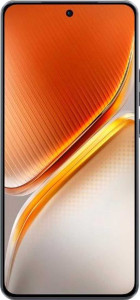
Tecno Camon 40 Pro 5G
Vivo iQOO Z10

Tecno Camon 40 Pro 5G Vivo iQOO Z10

Overview

Welcome to our in-depth spec comparison between the Tecno Camon 40 Pro 5G and the Vivo iQOO Z10 — two competitive 5G mid-rangers that share a surprising amount of common ground, yet diverge sharply in areas that matter most to different types of users. From battery capacity and charging speeds to display refresh rates, camera setups, and raw processing power, this side-by-side breakdown will help you determine which device best fits your priorities.

Common Features

  • Both phones are waterproof with an IP68 ingress protection rating.
  • Neither phone has a rugged build.
  • Neither phone can be folded.
  • Both phones feature an OLED/AMOLED display.
  • Neither phone has branded damage-resistant glass.
  • Neither phone supports HDR10+.
  • Both phones have an Always-On Display.
  • Neither phone supports Dolby Vision.
  • Both phones have a touchscreen.
  • Both phones come with 256GB internal storage and 12GB RAM.
  • Both phones use a 4nm semiconductor and support 64-bit processing.
  • Both phones use big.LITTLE technology and have integrated graphics.
  • DirectX 12 is supported on both phones.
  • Both phones have integrated LTE.
  • Both phones feature a multi-lens main camera with optical image stabilization.
  • Both phones support continuous autofocus and phase-detection autofocus when recording.
  • Both phones have a built-in HDR mode and support slow-motion video recording.
  • Both phones run Android 15.
  • Both phones support fast charging and have a non-removable rechargeable battery.
  • Wireless charging is not available on either phone.
  • Both phones lack a 3.5mm audio jack.
  • Neither phone supports aptX, LDAC, aptX HD, aptX Adaptive, aptX Adaptive, or aptX Lossless.
  • Both phones support 5G, Wi-Fi 4 and Wi-Fi 5, dual SIM, Bluetooth 5.2, and USB Type-C with USB 2.0.
  • Neither phone has an external memory slot.
  • Both phones have a fingerprint scanner.
  • Both phones include a video light.
  • Neither phone has a sapphire glass or e-paper display.

Main Differences

  • Weight is 179g on Tecno Camon 40 Pro 5G and 199g on Vivo iQOO Z10.
  • Thickness is 7.3mm on Tecno Camon 40 Pro 5G and 7.9mm on Vivo iQOO Z10.
  • Width is 74.6mm on Tecno Camon 40 Pro 5G and 76.4mm on Vivo iQOO Z10.
  • Height is 164.3mm on Tecno Camon 40 Pro 5G and 163.4mm on Vivo iQOO Z10.
  • Screen size is 6.78″ on Tecno Camon 40 Pro 5G and 6.77″ on Vivo iQOO Z10.
  • Pixel density is 393 ppi on Tecno Camon 40 Pro 5G and 388 ppi on Vivo iQOO Z10.
  • Resolution is 1080x2463px on Tecno Camon 40 Pro 5G and 1080x2392px on Vivo iQOO Z10.
  • Refresh rate is 144Hz on Tecno Camon 40 Pro 5G and 120Hz on Vivo iQOO Z10.
  • HDR10 support is present on Tecno Camon 40 Pro 5G but not available on Vivo iQOO Z10.
  • The chipset is MediaTek Dimensity 7300 on Tecno Camon 40 Pro 5G and Qualcomm Snapdragon 7s Gen 3 on Vivo iQOO Z10.
  • AnTuTu benchmark score is 640000 on Tecno Camon 40 Pro 5G and 823249 on Vivo iQOO Z10.
  • Geekbench 6 multi-core score is 2932 on Tecno Camon 40 Pro 5G and 3239 on Vivo iQOO Z10.
  • Geekbench 6 single-core score is 1026 on Tecno Camon 40 Pro 5G and 1162 on Vivo iQOO Z10.
  • RAM speed is 6400MHz on Tecno Camon 40 Pro 5G and 3200MHz on Vivo iQOO Z10.
  • Main camera resolution is 50 & 8MP on Tecno Camon 40 Pro 5G and 50 & 2MP on Vivo iQOO Z10.
  • Front camera resolution is 50MP on Tecno Camon 40 Pro 5G and 32MP on Vivo iQOO Z10.
  • Maximum video recording frame rate is 2160x60fps on Tecno Camon 40 Pro 5G and 2160x30fps on Vivo iQOO Z10.
  • A dual-tone LED flash is present on Tecno Camon 40 Pro 5G but not available on Vivo iQOO Z10.
  • Battery capacity is 5200mAh on Tecno Camon 40 Pro 5G and 7300mAh on Vivo iQOO Z10.
  • Charging speed is 45W on Tecno Camon 40 Pro 5G and 90W on Vivo iQOO Z10.
  • Stereo speakers are present on Tecno Camon 40 Pro 5G but not available on Vivo iQOO Z10.
  • A radio is present on Tecno Camon 40 Pro 5G but not available on Vivo iQOO Z10.
  • NFC is present on Tecno Camon 40 Pro 5G but not available on Vivo iQOO Z10.
  • Download speed is 3270 Mbits/s on Tecno Camon 40 Pro 5G and 2900 Mbits/s on Vivo iQOO Z10.
  • A curved display is present on Tecno Camon 40 Pro 5G but not available on Vivo iQOO Z10.
Specs Comparison
Tecno Camon 40 Pro 5G

Tecno Camon 40 Pro 5G

Vivo iQOO Z10

Vivo iQOO Z10

Design:
water resistance Waterproof Waterproof
weight 179 g 199 g
thickness 7.3 mm 7.9 mm
width 74.6 mm 76.4 mm
height 164.3 mm 163.4 mm
volume 89.474494 cm³ 98.621704 cm³
Ingress Protection (IP) rating IP68 IP68
has a rugged build
can be folded

Both the Tecno Camon 40 Pro 5G and the Vivo iQOO Z10 share a strong foundation in terms of protection: both carry an IP68 rating, meaning full dust-tightness and resistance to submersion in water. For everyday users, this translates to genuine peace of mind around rain, splashes, and accidental drops in water — neither phone cuts corners here, and neither has a rugged build, so they target the same mainstream audience rather than outdoor or industrial use cases.

Where the two diverge meaningfully is in physical footprint. The Camon 40 Pro is noticeably lighter at 179 g versus the iQOO Z10's 199 g — a 20-gram difference that becomes perceptible during extended one-handed use or long calls. It is also slimmer at 7.3 mm compared to 7.9 mm, and narrower at 74.6 mm versus 76.4 mm. Cumulatively, these differences result in a total volume of roughly 89.5 cm³ for the Camon 40 Pro against nearly 98.6 cm³ for the iQOO Z10 — nearly a 10% smaller overall envelope. In practical terms, the Camon 40 Pro will sit more comfortably in a pocket and feel less fatiguing to hold for long periods.

On design, the Tecno Camon 40 Pro 5G holds a clear advantage. While both phones offer identical water-resistance credentials, the Camon 40 Pro is the more refined, compact, and ergonomically comfortable device of the two. The iQOO Z10 carries extra bulk that offers no protective benefit, which may reflect internal hardware choices but puts it at a disadvantage purely from a form-factor perspective.

Display:
Display type OLED/AMOLED OLED/AMOLED
screen size 6.78" 6.77"
pixel density 393 ppi 388 ppi
resolution 1080 x 2463 px 1080 x 2392 px
refresh rate 144Hz 120Hz
has branded damage-resistant glass
supports HDR10
supports HDR10+
Always-On Display
supports Dolby Vision
Has a secondary screen
has a touch screen

At a glance, these two displays look nearly identical — both are OLED/AMOLED panels hovering around the 6.77–6.78-inch mark, with full-HD+ resolutions and pixel densities in the 388–393 ppi range. In practice, that similarity means both screens will look sharp and vibrant to the naked eye, with the deep blacks and punchy contrast that OLED technology is known for. Neither phone uses branded damage-resistant glass, so both sit on equal footing there.

The most meaningful differentiator is the refresh rate. The Camon 40 Pro runs at 144Hz versus the iQOO Z10's 120Hz. While 120Hz is already smooth for everyday scrolling and gaming, 144Hz delivers a perceptibly more fluid experience in fast-paced games and quick UI animations — a real advantage for users who prioritize display responsiveness. Compounding this, the Camon 40 Pro also supports HDR10, which means compatible streaming content and games will render with a wider dynamic range and more accurate highlights — a feature the iQOO Z10 lacks entirely.

The Tecno Camon 40 Pro 5G takes a clear edge in this category. The higher refresh rate and HDR10 support are not just spec-sheet wins — they translate to a more immersive and visually capable display in real-world use, particularly for media consumption and gaming. The iQOO Z10's screen is perfectly competent, but it offers nothing the Camon 40 Pro does not also match or exceed.

Performance:
internal storage 256GB 256GB
RAM 12GB 12GB
AnTuTu benchmark score 640000 823249
Chipset (SoC) name MediaTek Dimensity 7300 Qualcomm Snapdragon 7s Gen 3
GPU name Mali G615 MC2 Adreno 710
CPU speed 4 x 2.5 & 4 x 2 GHz 1 x 2.5 & 3 x 2.4 & 4 x 1.8 GHz
Geekbench 6 result (multi) 2932 3239
Geekbench 6 result (single) 1026 1162
GPU clock speed 1047 MHz 1050 MHz
Has integrated LTE
RAM speed 6400 MHz 3200 MHz
semiconductor size 4 nm 4 nm
Supports 64-bit
DirectX version DirectX 12 DirectX 12
Has integrated graphics
Uses big.LITTLE technology
CPU threads 8 threads 8 threads
Uses HMP
maximum memory amount 16GB 16GB
DDR memory version 5 5

Shared specs like 12GB of RAM, 256GB of storage, a 4nm fabrication process, and DDR5 memory establish a common baseline — but the silicon underneath tells very different stories. The Camon 40 Pro runs on a MediaTek Dimensity 7300, while the iQOO Z10 is powered by a Qualcomm Snapdragon 7s Gen 3, and the benchmark gap between them is substantial. The iQOO Z10 scores roughly 823,000 on AnTuTu versus the Camon 40 Pro's 640,000 — a difference of nearly 29% — which is not a marginal gap. Geekbench 6 tells the same story: the iQOO Z10 leads in both single-core and multi-core results, meaning it handles both everyday tasks and sustained workloads more efficiently.

One counterpoint in the Camon 40 Pro's favor is its significantly faster RAM speed at 6400 MHz, compared to the iQOO Z10's 3200 MHz. Faster RAM can reduce latency when loading apps or switching between tasks. However, this advantage is unlikely to close the gap created by the Snapdragon 7s Gen 3's architectural superiority in real-world use. GPU clock speeds are nearly identical between the two, but Qualcomm's Adreno 710 is generally a more capable gaming GPU than the Mali G615 MC2, meaning the iQOO Z10 should handle graphically demanding titles more comfortably over sustained sessions.

The Vivo iQOO Z10 holds a clear and decisive advantage in performance. The Snapdragon 7s Gen 3 outpaces the Dimensity 7300 across every major benchmark, and for users who game heavily, multitask, or simply want their phone to feel fast and future-proof for longer, the iQOO Z10 is the stronger choice in this category.

Cameras:
megapixels (main camera) 50 & 8 MP 50 & 2 MP
wide aperture (main camera) 1.9f 2.4 & 1.8f
Has a dual-lens (or multi-lens) main camera
megapixels (front camera) 50MP 32MP
has built-in optical image stabilization
video recording (main camera) 2160 x 60 fps 2160 x 30 fps
Has a dual-tone LED flash
number of flash LEDs 2 1
has a BSI sensor
has a CMOS sensor
has continuous autofocus when recording movies
Has phase-detection autofocus for photos
supports slow-motion video recording
has a built-in HDR mode
has manual exposure
has a flash
optical zoom 0x 0x
has manual ISO
has a serial shot mode
has manual focus
has a front camera
Has laser autofocus
Shoots 360° panorama
has manual white balance
has touch autofocus
has manual shutter speed
can create panoramas in-camera
wide aperture (front camera) 2.5f 2f
Has timelapse function
Has a front-facing LED flash
has a dual-lens (or multi-lens) front camera
supports HDR10 recording
supports Dolby Vision recording
has a front-facing camera under the display
Has a RGB LED flash
has 3D photo/video recording capabilities

Both phones share a 50MP primary sensor with OIS, phase-detection autofocus, and a broadly identical feature set for stills — but the details reveal meaningful gaps. The Camon 40 Pro's secondary camera is an 8MP lens, compared to the iQOO Z10's 2MP unit, which in practice functions more as a depth-assist sensor than a usable camera. That difference matters when you want to actually shoot with the second lens rather than just relying on it for portrait bokeh calculations. On the main aperture, the iQOO Z10 edges slightly ahead at f/1.8 versus the Camon 40 Pro's f/1.9, which offers a marginal low-light advantage — though the gap is narrow enough that software processing often matters more than this single stop difference.

Video is where the Camon 40 Pro pulls ahead most decisively. It captures 4K footage at 60fps, while the iQOO Z10 tops out at 4K@30fps. For anyone shooting action, sports, or content that benefits from smoother motion, 60fps at full resolution is a significant practical advantage. The Camon 40 Pro also sports a dual-tone, dual-LED flash versus the iQOO Z10's single LED — a small but real benefit for more color-accurate flash photography in varied lighting conditions.

For selfie-focused users, the Camon 40 Pro's 50MP front camera against the iQOO Z10's 32MP is another clear differentiator, offering more detail and greater cropping flexibility. Taken together, the Tecno Camon 40 Pro 5G holds a meaningful camera advantage — particularly for video creators and selfie enthusiasts — making it the stronger imaging device of the two based on the provided specs.

Operating system:
Android version Android 15 Android 15
has clipboard warnings
has location privacy options
has camera/microphone privacy options
has Mail Privacy Protection
has theme customization
can block app tracking
blocks cross-site tracking
has on-device machine learning
has notification permissions
has media picker
Can play games while they download
has dark mode
has Wi-Fi password sharing
has battery health check
has an extra dim mode
has focus modes
has dynamic theming
can offload apps
Has customizable notifications
has Live Text
has full-page screenshots
supports split screen
gets direct OS updates
has PiP
Can be used as a PC
Has sharing intents
has a child lock
Supports widgets
Is free and open source
Has offline voice recognition
has voice commands
Tracks the current position of a mobile device
is a multi-user system
has Quick Start

This is a rare case where the spec data tells a straightforward story: both phones run Android 15 and share an identical feature set across every single tracked operating system attribute. Privacy tools, productivity features, customization options, and system capabilities — from dynamic theming and split-screen to on-device machine learning and offline voice recognition — are matched point for point.

Notably, neither device receives direct OS updates from Google, meaning both rely on their respective manufacturers for software delivery. This is worth keeping in mind for long-term ownership, as update cadence will depend entirely on Tecno's and Vivo's own support commitments rather than a guaranteed pipeline. Neither phone is disadvantaged relative to the other on this front, but users prioritizing update reliability should factor in brand-level software support policies beyond what these specs reveal.

The verdict here is a complete tie. There is no differentiator between the two products in this category based on the provided data. A buyer's operating system experience will be shaped far more by each brand's custom Android skin and their update track record than by anything the raw specs can capture here.

Battery:
battery power 5200 mAh 7300 mAh
has wireless charging
Supports fast charging
charging speed 45W 90W
has a removable battery
has a battery level indicator
has a rechargeable battery

Battery is where the Vivo iQOO Z10 makes its most commanding statement in this entire comparison. Its 7300 mAh cell dwarfs the Camon 40 Pro's already-respectable 5200 mAh — a 40% larger capacity that, in real-world terms, could translate to the difference between needing a top-up mid-afternoon versus comfortably lasting into a second day of use for moderate users. For heavy users — those streaming, gaming, or navigating frequently — that extra headroom is genuinely transformative rather than just a numbers advantage.

The iQOO Z10 also pulls ahead on charging speed, offering 90W fast charging versus the Camon 40 Pro's 45W. Faster charging matters especially with a larger battery, since a bigger cell takes longer to replenish. At 90W, the iQOO Z10 can offset its larger capacity with significantly shorter time tethered to a cable — a well-balanced pairing of size and speed. The Camon 40 Pro's 45W is decent for its battery size, but it simply cannot match the refueling pace of the iQOO Z10. Neither phone supports wireless charging, so both are on equal footing there.

The Vivo iQOO Z10 wins this category decisively and without qualification. A larger battery and faster charging working in tandem give it a substantial longevity advantage — making it the clear choice for users who prioritize all-day or multi-day endurance and minimal charging downtime.

Audio:
has a socket for a 3.5 mm audio jack
has stereo speakers
has aptX
has LDAC
has aptX HD
has aptX Adaptive
has aptX Lossless
Has a radio

Audio is a category where small differences carry outsized everyday impact, and the gap here is clear-cut. The Camon 40 Pro features stereo speakers, while the iQOO Z10 is limited to a single speaker. For media consumption — watching videos, gaming, or listening to music without headphones — stereo output creates a genuine sense of width and spatial separation that a mono speaker simply cannot replicate. This is one of the more noticeable quality-of-life differences a user encounters daily.

The Camon 40 Pro also includes a built-in radio, a feature the iQOO Z10 lacks entirely. While FM radio may feel like a legacy feature to some, it remains a practical tool in areas with limited data connectivity and costs nothing in terms of battery or data usage. Its absence on the iQOO Z10 is a minor but real omission for users who rely on it. Both phones drop the 3.5mm headphone jack and offer no high-resolution Bluetooth audio codecs such as LDAC or aptX, so wired and premium wireless audio listeners are equally underserved by either device.

The Tecno Camon 40 Pro 5G wins this category without contest. Stereo speakers alone would be enough to decide it, and the addition of FM radio only reinforces the advantage. The iQOO Z10 offers no compensating audio feature, making the Camon 40 Pro the meaningfully superior choice for users who care about speaker quality and audio versatility.

Connectivity & Features:
release date March 2025 April 2025
has 5G support
Wi-Fi version Wi-Fi 4 (802.11n), Wi-Fi 5 (802.11ac) Wi-Fi 4 (802.11n), Wi-Fi 5 (802.11ac)
SIM cards 2 SIM 2 SIM
Bluetooth version 5.2 5.2
has an external memory slot
Has USB Type-C
USB version 2 2
has NFC
download speed 3270 MBits/s 2900 MBits/s
Has a fingerprint scanner
has emergency SOS via satellite
has crash detection
is DLNA-certified
has a gyroscope
supports ANT+
Has a heart rate monitor
has GPS
has a compass
supports Wi-Fi
Has an infrared sensor
has an accelerometer
has a cellular module
Has a barometer
has an HDMI output
Uses 3D facial recognition
Has an iris scanner
Stylus included
supports Galileo
Has motion tracking
Has optical tracking
Has a built-in projector

Strip away the identical specs — and there are many — and this category comes down to one pivotal feature: NFC. The Camon 40 Pro supports it; the iQOO Z10 does not. In markets where contactless payments, transit cards, and NFC-based device pairing are part of daily life, this omission on the iQOO Z10 is a genuine practical limitation rather than a niche concern. For users who tap to pay or regularly interact with NFC tags, its absence will be felt consistently.

Beyond NFC, the Camon 40 Pro also holds a modest edge in cellular download speed, rated at 3270 Mbits/s versus the iQOO Z10's 2900 Mbits/s. In real-world conditions, both figures exceed what current 5G networks typically deliver to end users, so this difference is unlikely to be perceptible day-to-day. Everything else — Wi-Fi 5, Bluetooth 5.2, USB Type-C 2.0, dual SIM, infrared sensor, GPS with Galileo support — is shared identically between the two devices, reflecting a well-matched connectivity foundation at this price tier.

The Tecno Camon 40 Pro 5G takes a clear edge here, and NFC is the sole reason. It is a feature with direct, recurring utility for a large portion of smartphone users, and its absence on the iQOO Z10 is the kind of omission that becomes an inconvenience the moment you reach for your phone at a checkout terminal.

Miscellaneous:
has a video light
Has sapphire glass display
Has a curved display
Has an e-paper display

With only a handful of data points in this category, the comparison is concise. Both phones share a video light and lack sapphire glass — leaving the curved display as the sole differentiator. The Camon 40 Pro features one; the iQOO Z10 does not.

A curved display is primarily an aesthetic and ergonomic choice. The gentle wrap of the screen edges can make a phone feel more premium in hand and reduce the visual presence of the bezels, contributing to a more immersive look. However, it is a design preference rather than a functional upgrade — some users actively prefer flat displays for easier screen protector application and less accidental edge input. Neither approach is objectively superior, but the curved panel does give the Camon 40 Pro a more distinctive, flagship-adjacent appearance.

On the basis of the provided specs, the Tecno Camon 40 Pro 5G holds a narrow edge here by virtue of its curved display — a feature that signals a higher design ambition. That said, this is a category where personal preference plays a large role, and users who favor flat-screen practicality will find nothing lacking in the iQOO Z10.

Comparison Summary & Verdict

After examining every specification, it becomes clear that these two phones cater to distinct audiences. The Tecno Camon 40 Pro 5G stands out with its lighter 179g build, 144Hz curved display, HDR10 support, 50MP front camera, stereo speakers, NFC, and a higher RAM speed of 6400MHz — making it the stronger pick for users who value a premium, feature-rich multimedia experience in a compact form. The Vivo iQOO Z10, on the other hand, dominates where endurance and performance are concerned, boasting a massive 7300mAh battery, 90W fast charging, and a notably higher AnTuTu score of 823,249 powered by the Snapdragon 7s Gen 3. If long-lasting battery life and faster CPU performance are your top priorities, the iQOO Z10 is the clear choice. Both phones share IP68 waterproofing, Android 15, and OLED displays, so neither compromises on the essentials.

Tecno Camon 40 Pro 5G
Buy Tecno Camon 40 Pro 5G if...

Buy the Tecno Camon 40 Pro 5G if you want a lighter, more feature-packed phone with a 144Hz curved display, HDR10, a 50MP selfie camera, stereo speakers, and NFC.

Vivo iQOO Z10
Buy Vivo iQOO Z10 if...

Buy the Vivo iQOO Z10 if long battery life and faster performance are your priorities, thanks to its massive 7300mAh battery, 90W charging, and superior Snapdragon 7s Gen 3 benchmark scores.