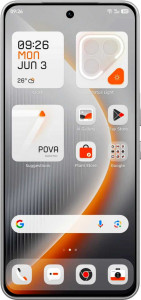
Tecno Pova 7 Pro 5G
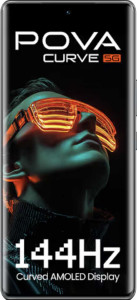
Tecno Pova Curve 5G

Tecno Pova 7 Pro 5G Tecno Pova Curve 5G

Overview

Welcome to our in-depth comparison of the Tecno Pova 7 Pro 5G and the Tecno Pova Curve 5G, two mid-range 5G smartphones that share the same processor and display size yet take notably different paths. From their approach to battery capacity and charging to their choices around display design and storage configuration, these two devices cater to distinct types of users. Read on to see how they stack up across every major specification category.

Common Features

  • Both phones are water resistant with an IP64 ingress protection rating.
  • Neither phone has a rugged build.
  • Neither phone can be folded.
  • Both phones feature an OLED/AMOLED display type.
  • Both phones have a 6.78″ screen size.
  • Both phones support a 144Hz refresh rate.
  • HDR10 support is not available on either phone.
  • HDR10+ support is not available on either phone.
  • Dolby Vision support is not available on either phone.
  • Neither phone has a secondary screen.
  • Both phones have a touchscreen.
  • Both phones are powered by the MediaTek Dimensity 7300 chipset.
  • Both phones use the Mali G615 MC2 GPU with a clock speed of 1047 MHz.
  • Both phones have a CPU speed of 4 x 2.5 & 4 x 2 GHz.
  • Both phones achieve a Geekbench 6 multi-core score of 2932 and a single-core score of 1026.
  • Both phones have integrated LTE support.
  • Both phones have RAM running at 6400 MHz.
  • Both phones feature a dual-lens main camera.
  • Both phones have a 13MP front camera.
  • Optical image stabilization is not available on either phone.
  • Neither phone has a dual-tone LED flash.
  • Neither phone has a BSI sensor.
  • Both phones use a CMOS sensor.
  • Both phones support continuous autofocus when recording movies.
  • Both phones support phase-detection autofocus for photos.
  • Both phones run Android 15.
  • Both phones provide clipboard warnings, location privacy options, and camera/microphone privacy options.
  • Mail Privacy Protection is not available on either phone.
  • Both phones support theme customization and can block app tracking.
  • Cross-site tracking blocking is not available on either phone.
  • Both phones support fast charging at 45W.
  • Neither phone has a removable battery.
  • Both phones have a battery level indicator and a rechargeable battery.
  • Both phones have stereo speakers.
  • Neither phone supports aptX, aptX HD, aptX Adaptive, aptX Lossless, or LDAC.
  • Both phones support 5G and accommodate 2 SIM cards.
  • Neither phone has an external memory slot.
  • Both phones feature a USB Type-C port at USB version 2.
  • Both phones have NFC support.
  • Both phones have a download and upload speed of 3270 MBits/s.
  • Both phones have a video light.
  • Neither phone has a sapphire glass display.
  • Neither phone has an e-paper display.

Main Differences

  • Weight is 195 g on Tecno Pova 7 Pro 5G and 177 g on Tecno Pova Curve 5G.
  • Thickness is 8.2 mm on Tecno Pova 7 Pro 5G and 7.5 mm on Tecno Pova Curve 5G.
  • Pixel density is 440 ppi on Tecno Pova 7 Pro 5G and 393 ppi on Tecno Pova Curve 5G.
  • Resolution is 1224 x 2720 px on Tecno Pova 7 Pro 5G and 1080 x 2436 px on Tecno Pova Curve 5G.
  • Branded damage-resistant glass is present on Tecno Pova Curve 5G but not available on Tecno Pova 7 Pro 5G.
  • Internal storage is 256GB on Tecno Pova 7 Pro 5G and 128GB on Tecno Pova Curve 5G.
  • RAM is 12GB on Tecno Pova 7 Pro 5G and 8GB on Tecno Pova Curve 5G.
  • The main camera is 64 & 8 MP on Tecno Pova 7 Pro 5G and 64 & 2 MP on Tecno Pova Curve 5G.
  • The number of flash LEDs is 2 on Tecno Pova 7 Pro 5G and 1 on Tecno Pova Curve 5G.
  • Battery power is 6000 mAh on Tecno Pova 7 Pro 5G and 5500 mAh on Tecno Pova Curve 5G.
  • Wireless charging is supported on Tecno Pova 7 Pro 5G but not available on Tecno Pova Curve 5G.
  • A 3.5 mm audio jack is present on Tecno Pova 7 Pro 5G but not available on Tecno Pova Curve 5G.
  • A built-in radio is present on Tecno Pova Curve 5G but not available on Tecno Pova 7 Pro 5G.
  • A gyroscope is present on Tecno Pova 7 Pro 5G but not available on Tecno Pova Curve 5G.
  • Galileo satellite navigation is supported on Tecno Pova 7 Pro 5G but not available on Tecno Pova Curve 5G.
  • A curved display is featured on Tecno Pova Curve 5G but not on Tecno Pova 7 Pro 5G.
Specs Comparison
Tecno Pova 7 Pro 5G

Tecno Pova 7 Pro 5G

Tecno Pova Curve 5G

Tecno Pova Curve 5G

Design:
water resistance Water resistant Water resistant
weight 195 g 177 g
thickness 8.2 mm 7.5 mm
Ingress Protection (IP) rating IP64 IP64
has a rugged build
can be folded

Both the Tecno Pova 7 Pro 5G and the Tecno Pova Curve 5G share a solid baseline of design protection, carrying an IP64 rating. This means both can handle dust and splashing water from any direction — useful for everyday mishaps — though neither is built for submersion. Neither device offers a rugged build or a foldable form factor, so they compete squarely as standard-slab smartphones.

Where the two diverge meaningfully is in physical footprint. The Pova Curve is noticeably lighter at 177 g versus the Pova 7 Pro's 195 g — an 18-gram difference that may sound small on paper but translates to a more comfortable feel during extended one-handed use or prolonged sessions. The Curve is also slimmer at 7.5 mm thick compared to 8.2 mm on the 7 Pro, making it easier to pocket and giving it a more premium, sleek-in-hand character.

On design, the Pova Curve 5G holds a clear edge: it is both lighter and thinner while offering identical dust and water resistance. For users who prioritize a more manageable, pocket-friendly device without sacrificing protection credentials, the Curve is the stronger choice in this category.

Display:
Display type OLED/AMOLED OLED/AMOLED
screen size 6.78" 6.78"
pixel density 440 ppi 393 ppi
resolution 1224 x 2720 px 1080 x 2436 px
refresh rate 144Hz 144Hz
has branded damage-resistant glass
supports HDR10
supports HDR10+
supports Dolby Vision
Has a secondary screen
has a touch screen

At a glance, these two screens share a lot of DNA: identical 6.78″ OLED/AMOLED panels with a smooth 144Hz refresh rate, no HDR support on either side, and both are touchscreen-only slabs. The shared panel type guarantees deep blacks, vivid colors, and strong contrast regardless of which device you pick — a meaningful baseline for media consumption and gaming alike.

The sharpest differentiator here is resolution. The Pova 7 Pro renders at 1224 x 2720 px, translating to a pixel density of 440 ppi, while the Pova Curve lands at 1080 x 2436 px and 393 ppi. That 47 ppi gap is perceptible — text will appear crisper and fine detail more defined on the 7 Pro, an advantage that becomes most apparent when reading small print, viewing high-resolution photos, or watching sharp video content up close.

The Pova Curve punches back, however, with one practical advantage the 7 Pro lacks: branded damage-resistant glass. This added screen protection meaningfully reduces the risk of scratches and cracking from everyday drops, which matters for long-term durability. It is a genuine trade-off — the 7 Pro wins on raw visual fidelity, while the Curve wins on resilience. Users who prioritize display sharpness should lean toward the Pova 7 Pro 5G, but those who value screen longevity without a case will find the Curve's protection a compelling reason to choose it.

Performance:
internal storage 256GB 128GB
RAM 12GB 8GB
Chipset (SoC) name MediaTek Dimensity 7300 MediaTek Dimensity 7300
GPU name Mali G615 MC2 Mali G615 MC2
CPU speed 4 x 2.5 & 4 x 2 GHz 4 x 2.5 & 4 x 2 GHz
Geekbench 6 result (multi) 2932 2932
Geekbench 6 result (single) 1026 1026
GPU clock speed 1047 MHz 1047 MHz
Has integrated LTE
RAM speed 6400 MHz 6400 MHz
semiconductor size 4 nm 4 nm
Supports 64-bit
DirectX version DirectX 12 DirectX 12
Has integrated graphics
Uses big.LITTLE technology
CPU threads 8 threads 8 threads
Uses HMP
maximum memory amount 16GB 16GB
number of transistors 6200 million 6200 million
DDR memory version 5 5
supported displays 1 1

Under the hood, these two devices are remarkably close — both are powered by the MediaTek Dimensity 7300 chip built on a 4 nm process, paired with the same Mali G615 MC2 GPU, identical CPU clock configuration, and matching Geekbench 6 scores of 2932 multi-core and 1026 single-core. In practice, this means day-to-day snappiness, app launch times, and gaming frame rates will be virtually indistinguishable between the two phones.

The meaningful separation lies in memory and storage. The Pova 7 Pro ships with 12GB of RAM and 256GB of internal storage, while the Pova Curve offers 8GB of RAM and 128GB. The extra RAM on the 7 Pro allows it to keep more apps active in the background simultaneously, which benefits heavy multitaskers and users who switch frequently between demanding applications. The doubled storage is equally significant — 128GB fills up faster than most users expect once photos, videos, and apps accumulate, and if neither device supports expandable storage, this gap becomes a long-term quality-of-life issue.

The verdict here tilts clearly toward the Pova 7 Pro 5G. Since both phones deliver identical raw processing performance, the 7 Pro's advantages in RAM and storage are the deciding factors — offering more headroom for multitasking and considerably more space for content without compromise.

Cameras:
megapixels (main camera) 64 & 8 MP 64 & 2 MP
Has a dual-lens (or multi-lens) main camera
megapixels (front camera) 13MP 13MP
has built-in optical image stabilization
Has a dual-tone LED flash
number of flash LEDs 2 1
has a BSI sensor
has a CMOS sensor
has continuous autofocus when recording movies
Has phase-detection autofocus for photos
supports slow-motion video recording
has a built-in HDR mode
has manual exposure
has a flash
optical zoom 0x 0x
has manual ISO
has a serial shot mode
has manual focus
has a front camera
Has laser autofocus
Shoots 360° panorama
has manual white balance
shoots raw
has touch autofocus
has manual shutter speed
can create panoramas in-camera
Has timelapse function
Has a front-facing LED flash
has a dual-lens (or multi-lens) front camera
supports HDR10 recording
supports Dolby Vision recording
has a front-facing camera under the display
Has a RGB LED flash
has 3D photo/video recording capabilities

The camera systems on these two phones share a substantial common foundation: a 64 MP primary sensor, a 13 MP front camera, phase-detection autofocus, continuous autofocus during video, slow-motion recording, HDR mode, and a full suite of manual controls including ISO, exposure, focus, and white balance. For the average user, this means both phones are capable of delivering a comparable core shooting experience in most everyday scenarios.

The differences, while fewer, are worth noting. The secondary rear lens tells a more meaningful story — the Pova 7 Pro pairs its main sensor with an 8 MP secondary camera, whereas the Pova Curve's second lens is only 2 MP. A 2 MP auxiliary camera is typically limited to depth-sensing for portrait mode effects and contributes little to actual image quality, while an 8 MP lens can offer a more versatile secondary perspective. Additionally, the Pova 7 Pro features 2 flash LEDs compared to the Curve's single LED, which can mean better flash illumination coverage and more balanced lighting in low-light shots.

The Pova 7 Pro 5G takes the edge in this category. Its more capable secondary camera and dual-LED flash represent genuine, practical improvements over what the Curve offers — particularly for users who care about portrait versatility and low-light flash photography. The gap is not dramatic, but it is consistent enough to tip the scales.

Operating system:
Android version Android 15 Android 15
has clipboard warnings
has location privacy options
has camera/microphone privacy options
has Mail Privacy Protection
has theme customization
can block app tracking
blocks cross-site tracking
has on-device machine learning
has notification permissions
has media picker
Can play games while they download
has dark mode
has Wi-Fi password sharing
has battery health check
has an extra dim mode
has focus modes
has dynamic theming
can offload apps
Has customizable notifications
has Live Text
has full-page screenshots
supports split screen
gets direct OS updates
has PiP
Can be used as a PC
Has sharing intents
has a child lock
Supports widgets
Is free and open source
Has offline voice recognition
has voice commands
Tracks the current position of a mobile device
is a multi-user system
has Quick Start

When it comes to software, these two devices are in complete lockstep. Both run Android 15 and share an identical feature set across every tracked dimension — from privacy controls like location and camera/microphone permissions, to usability features like split-screen multitasking, picture-in-picture, dynamic theming, dark mode, and offline voice recognition. There is simply no functional software differentiator between them based on the available data.

It is worth highlighting what both phones offer together, as the shared package is genuinely strong. On-device machine learning, customizable notifications, app offloading, a battery health check, and a child lock make for a well-rounded Android experience. The inclusion of Live Text and a media picker further signals a modern, capable OS build that covers both productivity and privacy needs competently.

This category is a dead tie. Neither the Pova 7 Pro 5G nor the Pova Curve 5G holds any software advantage over the other — every listed feature is present or absent on both devices equally. The OS should not factor into a purchasing decision between these two phones.

Battery:
battery power 6000 mAh 5500 mAh
has wireless charging
Supports fast charging
charging speed 45W 45W
has a removable battery
has a battery level indicator
has a rechargeable battery

Battery capacity is one of the more consequential specs for daily usability, and the Pova 7 Pro 5G pulls ahead with a 6000 mAh cell versus the Pova Curve 5G's 5500 mAh. That 500 mAh gap won't transform the experience overnight, but it does translate to a meaningful buffer over the course of a heavy-use day — especially given that both phones drive identical high-refresh OLED panels that are relatively power-hungry. For users who regularly push through long days without access to a charger, the 7 Pro's larger reserve is a tangible advantage.

Charging speed is identical on both devices at 45W, so the time it takes to top up from empty is essentially the same — a welcome consistency. Where they diverge again is wireless charging: the Pova 7 Pro supports it, while the Pova Curve does not. Wireless charging is a convenience feature rather than a necessity, but for users who rely on charging pads at a desk or bedside, its absence on the Curve is a daily friction point worth considering.

The Pova 7 Pro 5G wins this category on both fronts — more capacity for longer endurance and wireless charging for added flexibility. The Curve's only partial consolation is that its lighter weight may offset some efficiency losses, but that inference goes beyond the data provided. On battery specs alone, the 7 Pro is the stronger choice.

Audio:
has a socket for a 3.5 mm audio jack
has stereo speakers
has aptX
has LDAC
has aptX HD
has aptX Adaptive
has aptX Lossless
Has a radio

Stereo speakers are the one audio feature both phones share, and it is a meaningful one — dual-channel speaker output delivers a noticeably wider, more immersive soundstage compared to a single mono speaker, whether for media playback, gaming, or hands-free calls. Neither device supports high-resolution Bluetooth audio codecs like LDAC or aptX, so wireless audio quality will be capped at standard levels on both.

Beyond that shared baseline, the two phones make opposite trade-offs. The Pova 7 Pro 5G retains a 3.5 mm headphone jack — an increasingly rare feature that allows users to plug in wired headphones or earphones without an adapter, preserving audio quality and eliminating the need to manage a dongle. The Pova Curve 5G drops the jack entirely but compensates with a built-in FM radio, which the 7 Pro lacks. Radio reception allows access to local broadcasts without an internet connection — useful in low-connectivity environments or for users who regularly tune in to live radio.

This category comes down squarely to user preference. The Pova 7 Pro 5G is the better pick for wired audio enthusiasts who value headphone compatibility, while the Pova Curve 5G suits those who prioritize FM radio access. Neither trade-off is objectively superior — they serve different listening habits — making this category an effective tie with directional relevance depending on the user.

Connectivity & Features:
release date June 2025 May 2025
has 5G support
SIM cards 2 SIM 2 SIM
has an external memory slot
Has USB Type-C
USB version 2 2
has NFC
download speed 3270 MBits/s 3270 MBits/s
upload speed 3270 MBits/s 3270 MBits/s
Has a fingerprint scanner
has emergency SOS via satellite
has crash detection
is DLNA-certified
has a gyroscope
supports ANT+
Has a heart rate monitor
has GPS
has a compass
supports Wi-Fi
Has an infrared sensor
has an accelerometer
has a cellular module
Has a barometer
has an HDMI output
Uses 3D facial recognition
Has an iris scanner
Stylus included
supports Galileo
Has motion tracking
Has optical tracking
Has a built-in projector

Connectivity fundamentals are well-matched across both devices. Dual SIM, 5G, Wi-Fi, USB Type-C, NFC, GPS, a compass, an accelerometer, and a fingerprint scanner are all present on both phones — covering the essentials that most users rely on daily. NFC in particular is worth flagging as a shared strength, enabling contactless payments and quick device pairing without any differentiation between the two.

The gaps, while limited, favour the Pova 7 Pro 5G. It includes a gyroscope, which the Pova Curve lacks entirely. This matters more than it might initially seem — gyroscopes enable accurate motion-based gaming controls, augmented reality applications, and smoother image stabilization in supported apps. Its absence on the Curve is a genuine functional limitation for users who engage with motion-sensitive content. The 7 Pro also supports Galileo satellite navigation in addition to GPS, offering a broader positioning system network that can improve location accuracy and reliability in areas where GPS signal is weaker.

The Pova 7 Pro 5G holds a clear edge here. The gyroscope and Galileo support are not superficial additions — they expand the phone's capabilities in navigation precision and motion-aware applications in ways the Pova Curve simply cannot match given its sensor omissions.

Miscellaneous:
has a video light
Has sapphire glass display
Has a curved display
Has an e-paper display

This spec group is slim in scope but contains one meaningful aesthetic differentiator. Both phones share a video light and neither features sapphire glass or an e-paper display — leaving the curved display as the sole distinguishing characteristic, and it belongs exclusively to the Pova Curve 5G.

A curved screen wraps the display edges gently toward the sides of the frame, creating a more immersive visual impression and a sleeker side profile. It is primarily a design and ergonomics statement — curved displays tend to feel more refined in hand and can reduce the perception of thick bezels. The trade-off, which falls outside the provided data, is not relevant here; what the specs confirm is that the Pova Curve's display curvature is a deliberate design identity feature that the flat-screened Pova 7 Pro 5G does not offer.

For users who value a more premium, sculpted aesthetic, the Pova Curve 5G has the edge in this category by virtue of its curved display. It is a niche advantage — purely cosmetic and ergonomic rather than functional — but for design-conscious buyers it is a genuine point of differentiation.

Comparison Summary & Verdict

After examining every specification, it becomes clear that both phones serve different priorities. The Tecno Pova 7 Pro 5G is the stronger all-rounder for power users: it offers a larger 6000 mAh battery with wireless charging, more RAM and storage (12GB / 256GB), a higher-resolution display at 440 ppi, a more capable secondary camera, a gyroscope, and a 3.5 mm audio jack. If you need a feature-rich daily driver with better connectivity options and future-proofing, it is the clear pick. The Tecno Pova Curve 5G, on the other hand, wins on premium aesthetics and portability: it is lighter, slimmer, sports a curved display with branded damage-resistant glass, and includes a built-in FM radio. It suits users who value a sleek, elegant design and a more compact form factor over raw specifications.

Tecno Pova 7 Pro 5G
Buy Tecno Pova 7 Pro 5G if...

Buy the Tecno Pova 7 Pro 5G if you want more RAM and storage, a larger battery with wireless charging, a sharper display, and extras like a gyroscope and a 3.5 mm audio jack.

Tecno Pova Curve 5G
Buy Tecno Pova Curve 5G if...

Buy the Tecno Pova Curve 5G if you prefer a lighter, slimmer phone with a curved design, branded damage-resistant glass, and a built-in FM radio.