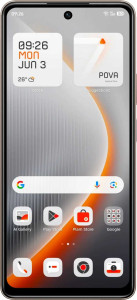
Tecno Pova 7
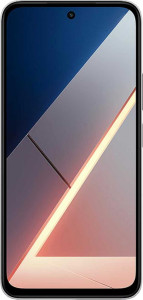
Xiaomi Poco M7 4G

Tecno Pova 7 Xiaomi Poco M7 4G

Overview

When comparing the Tecno Pova 7 and the Xiaomi Poco M7 4G, two budget-friendly contenders emerge with surprisingly different priorities. Both pack a massive 7000 mAh battery and 256GB of storage, yet they diverge sharply on display technology, audio versatility, and chipset choice. Whether you care most about screen quality, charging speed, or everyday multimedia features, this head-to-head breakdown will help you find the right fit.

Common Features

  • Both phones are water resistant.
  • Neither phone has a rugged build.
  • Neither phone can be folded.
  • Neither phone has branded damage-resistant glass on the display.
  • HDR10 support is not available on either phone.
  • HDR10+ support is not available on either phone.
  • Dolby Vision support is not available on either phone.
  • Neither phone has a secondary screen.
  • Both phones have a touch screen.
  • Both phones come with 256GB of internal storage and 8GB of RAM.
  • Both phones have integrated LTE.
  • Both phones use a 6 nm semiconductor size.
  • Both phones support 64-bit processing.
  • Both phones use big.LITTLE CPU technology.
  • Both phones have integrated graphics.
  • Both phones support OpenGL ES version 3.2.
  • Both phones have a dual-lens main camera.
  • Both phones have an 8MP front camera.
  • Optical image stabilization is not available on either phone.
  • Neither phone has a BSI sensor, but both have a CMOS sensor.
  • Both phones support continuous autofocus when recording video.
  • Both phones support phase-detection autofocus for photos.
  • Both phones run Android 15.
  • Both phones have clipboard warnings, location privacy options, and camera/microphone privacy options.
  • App tracking can be blocked on both phones.
  • Cross-site tracking is not blocked on either phone.
  • Mail Privacy Protection is not available on either phone.
  • Both phones support theme customization.
  • Both phones have a 7000 mAh battery.
  • Neither phone supports wireless charging.
  • Both phones support fast charging.
  • Neither phone has a removable battery.
  • Both phones have a battery level indicator and a rechargeable battery.
  • aptX, LDAC, aptX HD, aptX Adaptive, aptX Lossless audio codecs are not supported on either phone.
  • Neither phone supports 5G.
  • Both phones have dual SIM support.
  • Both phones have USB Type-C with USB version 2.
  • Both phones have NFC.
  • Both phones have an upload speed of 150 MBits/s.
  • Both phones have a fingerprint scanner.
  • Emergency SOS via satellite is not available on either phone.
  • Neither phone has a sapphire glass display, curved display, or e-paper display.
  • Both phones have a video light.

Main Differences

  • Weight is 207 g on Tecno Pova 7 and 224 g on Xiaomi Poco M7 4G.
  • Thickness is 9.3 mm on Tecno Pova 7 and 8.6 mm on Xiaomi Poco M7 4G.
  • Width is 76.6 mm on Tecno Pova 7 and 80.5 mm on Xiaomi Poco M7 4G.
  • Height is 168.6 mm on Tecno Pova 7 and 171.1 mm on Xiaomi Poco M7 4G.
  • Volume is 120.11 cm³ on Tecno Pova 7 and 118.45 cm³ on Xiaomi Poco M7 4G.
  • The Tecno Pova 7 uses an OLED/AMOLED display, while the Xiaomi Poco M7 4G uses an LCD IPS panel.
  • Screen size is 6.78″ on Tecno Pova 7 and 6.9″ on Xiaomi Poco M7 4G.
  • Pixel density is 396 ppi on Tecno Pova 7 and 374 ppi on Xiaomi Poco M7 4G.
  • Resolution is 1080 x 2460 px on Tecno Pova 7 and 1080 x 2340 px on Xiaomi Poco M7 4G.
  • Refresh rate is 120Hz on Tecno Pova 7 and 144Hz on Xiaomi Poco M7 4G.
  • The Tecno Pova 7 is powered by a MediaTek Helio G100 chipset, while the Xiaomi Poco M7 4G uses a Qualcomm Snapdragon 685 4G.
  • The GPU is Mali G57 on Tecno Pova 7 and Adreno 610 on Xiaomi Poco M7 4G.
  • CPU speed is 2 x 2.2 & 6 x 2 GHz on Tecno Pova 7 and 4 x 2.8 & 4 x 1.9 GHz on Xiaomi Poco M7 4G.
  • GPU clock speed is 1000 MHz on Tecno Pova 7 and 1260 MHz on Xiaomi Poco M7 4G.
  • RAM speed is 4266 MHz on Tecno Pova 7 and 2133 MHz on Xiaomi Poco M7 4G.
  • DirectX version supported is DirectX 11 on Tecno Pova 7 and DirectX 12 on Xiaomi Poco M7 4G.
  • Maximum memory bandwidth is 17.1 GB/s on Tecno Pova 7 and 17 GB/s on Xiaomi Poco M7 4G.
  • Maximum supported memory is 12GB on Tecno Pova 7 and 16GB on Xiaomi Poco M7 4G.
  • Main camera resolution is 108 & 2 MP on Tecno Pova 7 and 50 & 2 MP on Xiaomi Poco M7 4G.
  • The number of flash LEDs is 2 on Tecno Pova 7 and 1 on Xiaomi Poco M7 4G.
  • Charging speed is 45W on Tecno Pova 7 and 33W on Xiaomi Poco M7 4G.
  • A 3.5 mm audio jack is present on Tecno Pova 7 but not available on Xiaomi Poco M7 4G.
  • Stereo speakers are present on Tecno Pova 7 but not available on Xiaomi Poco M7 4G.
  • FM radio is present on Tecno Pova 7 but not available on Xiaomi Poco M7 4G.
  • An external memory slot is available on Xiaomi Poco M7 4G but not on Tecno Pova 7.
  • Download speed is 650 MBits/s on Tecno Pova 7 and 390 MBits/s on Xiaomi Poco M7 4G.
  • A gyroscope is present on Tecno Pova 7 but not available on Xiaomi Poco M7 4G.
Specs Comparison
Tecno Pova 7

Tecno Pova 7

Xiaomi Poco M7 4G

Xiaomi Poco M7 4G

Design:
water resistance Water resistant Water resistant
weight 207 g 224 g
thickness 9.3 mm 8.6 mm
width 76.6 mm 80.5 mm
height 168.6 mm 171.1 mm
volume 120.107268 cm³ 118.45253 cm³
has a rugged build
can be folded

Both the Tecno Pova 7 and the Xiaomi Poco M7 4G share the same baseline design credentials — water resistance and a standard, non-rugged, non-folding form factor — so the real story here lies in the dimensional trade-offs between them. The Pova 7 is notably lighter at 207 g versus the Poco M7's 224 g, a difference of 17 g that is genuinely perceptible during extended one-handed use or long browsing sessions. The Pova 7 is also narrower at 76.6 mm compared to the Poco M7's 80.5 mm, which directly affects thumb reach and single-hand grip comfort — a meaningful advantage for users with average or smaller hands.

The Poco M7 4G pushes back on one front: it is meaningfully slimmer at 8.6 mm against the Pova 7's 9.3 mm thickness. That 0.7 mm gap gives the Poco M7 a sleeker in-pocket feel and a more premium visual profile. Despite being taller and wider, the Poco M7's overall displaced volume (~118.5 cm³) is nearly identical to the Pova 7's (~120.1 cm³), meaning neither phone is physically bulkier in an absolute sense — they simply distribute that volume differently.

On balance, the Pova 7 has the edge for ergonomics and handling: it is lighter and narrower, which are the two dimensions that matter most for day-to-day comfort. The Poco M7's slimmer profile is a real plus for pocket carry and aesthetics, but it comes at the cost of extra weight and width. Users who prioritize a lighter, easier-to-grip device will prefer the Pova 7, while those who value a slim silhouette may lean toward the Poco M7.

Display:
Display type OLED/AMOLED LCD, IPS
screen size 6.78" 6.9"
pixel density 396 ppi 374 ppi
resolution 1080 x 2460 px 1080 x 2340 px
refresh rate 120Hz 144Hz
has branded damage-resistant glass
supports HDR10
supports HDR10+
supports Dolby Vision
Has a secondary screen
has a touch screen

The single most important differentiator in this category is panel technology. The Tecno Pova 7 uses an OLED/AMOLED display, while the Poco M7 4G relies on an LCD IPS panel. This gap is far more impactful than any other spec on this list: OLED delivers true blacks, infinite contrast ratios, and significantly more vibrant colors by lighting each pixel individually, whereas LCD backlighting produces a fundamentally flatter, less immersive image. For media consumption, dark-mode UI use, and overall visual punch, the Pova 7's screen class is in a different league.

The Poco M7 counters with a faster 144Hz refresh rate against the Pova 7's 120Hz, which translates to marginally smoother scrolling and animations — a perk primarily noticeable in gaming or fast-paced UI interactions. The Poco M7 also sports a slightly larger 6.9″ screen versus 6.78″, but the Pova 7 compensates with a higher pixel density of 396 ppi compared to 374 ppi, meaning its image is actually sharper despite the smaller canvas. Neither phone supports HDR10, HDR10+, or Dolby Vision, so both are on equal footing for HDR content.

The Pova 7 holds a clear overall edge in this group. The OLED advantage in contrast, color depth, and black levels outweighs the Poco M7's 24Hz refresh rate lead — a trade-off that virtually every display-focused buyer would make. Unless gaming smoothness is the user's sole priority, the Pova 7's screen is the more well-rounded and visually superior choice based strictly on these specs.

Performance:
internal storage 256GB 256GB
RAM 8GB 8GB
Chipset (SoC) name MediaTek Helio G100 Qualcomm Snapdragon 685 4G
GPU name Mali G57 Adreno 610
CPU speed 2 x 2.2 & 6 x 2 GHz 4 x 2.8 & 4 x 1.9 GHz
GPU clock speed 1000 MHz 1260 MHz
Has integrated LTE
RAM speed 4266 MHz 2133 MHz
semiconductor size 6 nm 6 nm
Supports 64-bit
DirectX version DirectX 11 DirectX 12
Has integrated graphics
OpenGL ES version 3.2 3.2
Uses big.LITTLE technology
CPU threads 8 threads 8 threads
Has TrustZone
maximum memory bandwidth 17.1 GB/s 17 GB/s
OpenCL version 2 2
maximum memory amount 12GB 16GB
DDR memory version 4 4

At a glance, both phones share the same 6 nm fabrication node, 8 GB of RAM, and 256 GB of storage — but underneath those surface similarities, the chipsets tell meaningfully different stories. The Poco M7 4G's Snapdragon 685 fields four performance cores clocked at 2.8 GHz, compared to the Pova 7's Helio G100 which tops out at just 2.2 GHz on only two of its cores. In practice, that translates to a more responsive experience during CPU-intensive tasks like app launches, multitasking, and processing-heavy workloads on the Poco M7.

The GPU picture follows the same pattern. The Poco M7's Adreno 610 runs at 1260 MHz versus the Pova 7's Mali G57 at 1000 MHz, suggesting a tangible advantage in gaming frame consistency and graphics-heavy apps. The Poco M7 also supports DirectX 12 against the Pova 7's DirectX 11, and its maximum configurable RAM reaches 16 GB versus 12 GB — both pointing to greater headroom for future-proofing. The Pova 7 does counter with substantially faster RAM speed at 4266 MHz compared to the Poco M7's 2133 MHz, which can benefit data-streaming tasks, but this advantage is largely offset by the Snapdragon's stronger raw compute.

The Poco M7 4G holds the performance edge in this group. Its CPU clock speed advantage, higher GPU frequency, DirectX 12 support, and greater maximum RAM capacity collectively point to a chip better suited for demanding tasks and gaming. The Pova 7's faster RAM frequency is a genuine plus but is not enough to close the gap across the broader performance picture.

Cameras:
megapixels (main camera) 108 & 2 MP 50 & 2 MP
Has a dual-lens (or multi-lens) main camera
megapixels (front camera) 8MP 8MP
has built-in optical image stabilization
Has a dual-tone LED flash
number of flash LEDs 2 1
has a BSI sensor
has a CMOS sensor
has continuous autofocus when recording movies
Has phase-detection autofocus for photos
supports slow-motion video recording
has a built-in HDR mode
has manual exposure
has a flash
optical zoom 0x 0x
has manual ISO
has a serial shot mode
has manual focus
has a front camera
Has laser autofocus
Shoots 360° panorama
has manual white balance
shoots raw
has touch autofocus
has manual shutter speed
can create panoramas in-camera
Has timelapse function
Has a front-facing LED flash
has a dual-lens (or multi-lens) front camera
supports HDR10 recording
supports Dolby Vision recording
has a front-facing camera under the display
Has a RGB LED flash
has 3D photo/video recording capabilities

Strip away the identical feature sets and two numbers define this camera comparison: the main sensor resolution and the flash setup. The Tecno Pova 7 leads with a 108 MP primary sensor against the Poco M7 4G's 50 MP. A higher megapixel count enables greater detail retention when cropping shots, and on well-lit subjects it can yield noticeably sharper output — particularly useful for users who frequently crop or zoom into photos in post. Both pair their main lens with a 2 MP secondary camera, and neither offers optical image stabilization or optical zoom, so the resolution gap is the primary differentiator in hardware capability.

The Pova 7 also packs two flash LEDs versus the Poco M7's single LED. More flash emitters typically mean better light distribution and reduced harsh shadowing in low-light shots, which can meaningfully improve flash photography results in dim environments. Beyond that, the feature parity between these two is remarkably complete — both share the same 8 MP front camera, phase-detection autofocus, continuous autofocus for video, slow-motion, HDR mode, and an identical manual controls suite including ISO, exposure, focus, and white balance.

The Pova 7 has a clear edge in this group. Its significantly higher main sensor resolution and dual-LED flash are the only hardware differentiators in an otherwise mirror-matched camera feature set, and both favor the Pova 7. For users who care about photographic detail and low-light flash output, it is the stronger choice based strictly on these specs.

Operating system:
Android version Android 15 Android 15
has clipboard warnings
has location privacy options
has camera/microphone privacy options
has Mail Privacy Protection
has theme customization
can block app tracking
blocks cross-site tracking
has on-device machine learning
has notification permissions
has media picker
Can play games while they download
has dark mode
has Wi-Fi password sharing
has battery health check
has an extra dim mode
has focus modes
has dynamic theming
can offload apps
Has customizable notifications
has Live Text
has full-page screenshots
supports split screen
gets direct OS updates
has PiP
Can be used as a PC
Has sharing intents
has a child lock
Supports widgets
Is free and open source
Has offline voice recognition
has voice commands
Tracks the current position of a mobile device
is a multi-user system
has Quick Start

Rarely does a spec group produce a result this definitive: the Tecno Pova 7 and the Xiaomi Poco M7 4G are in complete lockstep across every single operating system data point provided. Both ship with Android 15, neither receives direct OS updates, and every privacy, usability, and productivity feature — from location and camera/microphone controls to dynamic theming, split-screen, Picture-in-Picture, and offline voice recognition — is present or absent on both devices identically.

The shared Android 15 foundation means users of either phone get the same generation of privacy tooling, including app tracking controls, clipboard warnings, and granular notification permissions. Practically useful features like battery health checks, Live Text, full-page screenshots, and on-device machine learning are equally accessible on both. The absence of direct OS updates on either device is worth noting — both will depend on their respective manufacturers for software support, which is a consideration for long-term ownership regardless of which phone is chosen.

This group is an unambiguous tie. Based strictly on the provided specs, there is no software-level differentiator that gives either phone an advantage over the other. The operating system experience, feature set, and privacy capabilities are identical, and the buying decision for this category comes down entirely to the other spec groups.

Battery:
battery power 7000 mAh 7000 mAh
has wireless charging
Supports fast charging
charging speed 45W 33W
has a removable battery
has a battery level indicator
has a rechargeable battery

Both the Tecno Pova 7 and the Xiaomi Poco M7 4G pack an identical 7000 mAh battery — a genuinely large cell by any standard, comfortably above the mainstream 5000 mAh tier. At this capacity, both phones are strong candidates for multi-day battery life under moderate use, and heavy users can realistically expect to get through a full demanding day without reaching for a charger.

The only differentiator here is charging speed. The Pova 7 supports 45W fast charging versus the Poco M7's 33W. On a battery this large, that gap is tangible in real-world use: a 45W charger will meaningfully cut down the time needed to top up from low, which matters most for users who charge in short bursts rather than overnight. Neither phone offers wireless charging, and both have non-removable batteries — so for users who rely on spare batteries or wireless convenience, both devices are equally limited.

The Pova 7 has a modest but clear edge in this group. The identical battery capacity means longevity is a wash, but the faster 45W charging gives it a practical daily advantage — especially given how long a 7000 mAh cell takes to fully replenish. For users who value minimizing time tethered to a cable, the Pova 7 is the better choice here.

Audio:
has a socket for a 3.5 mm audio jack
has stereo speakers
has aptX
has LDAC
has aptX HD
has aptX Adaptive
has aptX Lossless
Has a radio

Audio is one of the most lopsided categories in this entire comparison. The Tecno Pova 7 brings a 3.5 mm headphone jack, stereo speakers, and a built-in FM radio to the table. The Xiaomi Poco M7 4G has none of these — no headphone jack, a single speaker, and no radio. For users who care about audio quality or versatility, this gap is immediately felt in everyday use.

Stereo speakers alone represent a significant real-world upgrade: they produce a wider, more immersive soundstage for media playback, gaming, and video calls compared to a mono setup, which sounds flat and directional by comparison. The 3.5 mm jack adds further flexibility — it allows use of any wired headphones or earphones without an adapter, which is both more convenient and typically delivers better audio fidelity than Bluetooth for users who prioritize sound quality. Neither phone supports high-resolution Bluetooth codecs like aptX HD or LDAC, so wired listening via the Pova 7's jack becomes even more relevant for audio-conscious users.

The Pova 7 wins this category decisively. Every audio feature present in this spec group belongs exclusively to the Pova 7, and each one — stereo output, wired connectivity, FM radio — addresses a real and common use case. The Poco M7 offers no compensating audio advantage based on the provided data.

Connectivity & Features:
release date June 2025 August 2025
has 5G support
SIM cards 2 SIM 2 SIM
has an external memory slot
Has USB Type-C
USB version 2 2
has NFC
download speed 650 MBits/s 390 MBits/s
upload speed 150 MBits/s 150 MBits/s
Has a fingerprint scanner
has emergency SOS via satellite
has crash detection
is DLNA-certified
has a gyroscope
supports ANT+
Has a heart rate monitor
has GPS
has a compass
supports Wi-Fi
Has an infrared sensor
has an accelerometer
has a cellular module
Has a barometer
has an HDMI output
Uses 3D facial recognition
Has an iris scanner
Stylus included
supports Galileo
Has motion tracking
Has optical tracking
Has a built-in projector

The connectivity foundations are well-matched: both phones run dual-SIM, USB Type-C (USB 2.0), NFC, GPS with Galileo support, a fingerprint scanner, and Wi-Fi — a solid baseline for this segment. Neither supports 5G, which is consistent with their positioning. Where things diverge is in three specific areas that carry genuine everyday relevance. The Poco M7 4G adds a microSD card slot, which the Pova 7 lacks entirely. For users who want to expand beyond the built-in 256 GB or manage media libraries on removable storage, this is a meaningful practical advantage.

The Pova 7 counters with a significantly faster download speed at 650 Mbits/s, compared to the Poco M7's 390 Mbits/s — a 67% advantage in peak cellular throughput. In real-world terms, this translates to faster large file downloads, quicker streaming startup, and more headroom in congested network environments. Upload speeds are identical at 150 Mbits/s on both. The Pova 7 also includes a gyroscope, which the Poco M7 omits — a relevant gap for users into mobile gaming (many titles use gyro for aiming) or any app relying on rotational motion sensing.

This group ends in a split advantage: the Poco M7 wins on storage flexibility with its expandable memory slot, while the Pova 7 pulls ahead on cellular speed and sensor completeness with its gyroscope. Users who prioritize storage expansion should lean toward the Poco M7, while those who value faster data speeds and broader app/game compatibility will find the Pova 7 the more capable device overall in this category.

Miscellaneous:
has a video light
Has sapphire glass display
Has a curved display
Has an e-paper display

The Miscellaneous category offers no differentiating information between the Tecno Pova 7 and the Xiaomi Poco M7 4G. Every data point in this group is identical: both have a video light, and neither features a sapphire glass display, a curved screen, or an e-paper panel.

This is an unambiguous tie. Based strictly on the provided specs, this group contributes nothing to the buying decision between these two devices — users should weigh the other spec categories to make their choice.

Comparison Summary & Verdict

After examining every specification, it is clear that both phones target the budget segment but appeal to different users. The Tecno Pova 7 stands out with its vibrant OLED display, lighter 207 g build, faster 45W charging, a 108MP main camera, a 3.5 mm headphone jack, stereo speakers, FM radio, and a gyroscope, making it the stronger all-around multimedia device. The Xiaomi Poco M7 4G counters with a smoother 144Hz refresh rate, a higher-clocked Adreno 610 GPU, DirectX 12 support, expandable storage via a microSD slot, and support for up to 16GB RAM, giving it an edge for gamers and storage-conscious users. Both share the same large battery, Android 15, NFC, and dual SIM support. Choose the Tecno Pova 7 for a richer audio-visual experience, and the Xiaomi Poco M7 4G if smoother gaming performance and storage flexibility are your top priorities.

Tecno Pova 7
Buy Tecno Pova 7 if...

Buy the Tecno Pova 7 if you want an OLED screen, a 108MP camera, faster 45W charging, a headphone jack, stereo speakers, and a gyroscope in a lighter body.

Xiaomi Poco M7 4G
Buy Xiaomi Poco M7 4G if...

Buy the Xiaomi Poco M7 4G if you prioritize a 144Hz refresh rate, a faster GPU, expandable storage, and support for higher maximum RAM for gaming and multitasking.