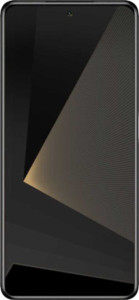
Tecno Pova Curve 5G
ZTE Nubia Neo 3 GT

Tecno Pova Curve 5G ZTE Nubia Neo 3 GT

Common Features

  • Both products have a touchscreen display.
  • Both products support 64-bit architecture.
  • Both products have integrated LTE support.
  • Both products support fast charging.
  • Both products have stereo speakers.
  • Both products support 5G connectivity.
  • Both products have a fingerprint scanner.
  • Both products have an external memory slot.
  • Both products have a rechargeable battery.
  • Both products support clipboard warnings.
  • Both products have camera and microphone privacy options.
  • Both products have location privacy options.
  • Both products support theme customization.
  • Both products support blocking app tracking.
  • Both products have USB Type-C ports.
  • Both products are Android 15 based.
  • Both products support video light.
  • Both products have a CMOS sensor in the camera.
  • Both products have a dual-lens main camera.

Main Differences

  • Screen size is 6.78″ on Tecno Pova Curve 5G and 6.8″ on ZTE Nubia Neo 3 GT.
  • Pixel density is 393 ppi on Tecno Pova Curve 5G and 386 ppi on ZTE Nubia Neo 3 GT.
  • Resolution is 1080 x 2436 px on Tecno Pova Curve 5G and 1080 x 2392 px on ZTE Nubia Neo 3 GT.
  • Refresh rate is 144Hz on Tecno Pova Curve 5G and 120Hz on ZTE Nubia Neo 3 GT.
  • Tecno Pova Curve 5G has branded damage-resistant glass while ZTE Nubia Neo 3 GT does not.
  • Internal storage is 128GB on Tecno Pova Curve 5G and 256GB on ZTE Nubia Neo 3 GT.
  • RAM is 8GB on Tecno Pova Curve 5G and 12GB on ZTE Nubia Neo 3 GT.
  • Chipset is MediaTek Dimensity 7300 on Tecno Pova Curve 5G and Unisoc T9100 on ZTE Nubia Neo 3 GT.
  • GPU is Mali G615 MC2 on Tecno Pova Curve 5G and Mali G57 MP4 on ZTE Nubia Neo 3 GT.
  • CPU speed is 4 x 2.5 & 4 x 2 GHz on Tecno Pova Curve 5G and 1 x 2.7 & 3 x 2.3 & 4 x 2.1 GHz on ZTE Nubia Neo 3 GT.
  • RAM speed is 6400 MHz on Tecno Pova Curve 5G and 2133 MHz on ZTE Nubia Neo 3 GT.
  • Semiconductor size is 4 nm on Tecno Pova Curve 5G and 6 nm on ZTE Nubia Neo 3 GT.
  • Maximum memory amount is 16GB on Tecno Pova Curve 5G and 8GB on ZTE Nubia Neo 3 GT.
  • DDR memory version is 5 on Tecno Pova Curve 5G and 4 on ZTE Nubia Neo 3 GT.
  • Main camera megapixels are 64 & 2 MP on Tecno Pova Curve 5G and 50 & 2 MP on ZTE Nubia Neo 3 GT.
  • Front camera megapixels are 13MP on Tecno Pova Curve 5G and 16MP on ZTE Nubia Neo 3 GT.
  • Video recording resolution is 2160 x 30 fps on Tecno Pova Curve 5G and 1080 x 30 fps on ZTE Nubia Neo 3 GT.
  • Battery power is 5500 mAh on Tecno Pova Curve 5G and 6000 mAh on ZTE Nubia Neo 3 GT.
  • Charging speed is 45W on Tecno Pova Curve 5G and 80W on ZTE Nubia Neo 3 GT.
  • Tecno Pova Curve 5G has a radio while ZTE Nubia Neo 3 GT does not.
  • Bluetooth version is 5.4 on Tecno Pova Curve 5G and 5.2 on ZTE Nubia Neo 3 GT.
  • Download speed is 3270 MBits/s on Tecno Pova Curve 5G and 750 MBits/s on ZTE Nubia Neo 3 GT.
  • Upload speed is 3270 MBits/s on Tecno Pova Curve 5G and 210 MBits/s on ZTE Nubia Neo 3 GT.
  • Tecno Pova Curve 5G does not have a gyroscope while ZTE Nubia Neo 3 GT does.
  • Tecno Pova Curve 5G does not support Galileo while ZTE Nubia Neo 3 GT does.
  • Tecno Pova Curve 5G has a curved display while ZTE Nubia Neo 3 GT does not.
Specs Comparison
Tecno Pova Curve 5G

Tecno Pova Curve 5G

ZTE Nubia Neo 3 GT

ZTE Nubia Neo 3 GT

Design:
has a rugged build
can be folded

In terms of design fundamentals, the Tecno Pova Curve 5G and the ZTE Nubia Neo 3 GT share identical characteristics across the evaluated specs: neither device features a rugged build nor a foldable form factor. This means both are standard, non-hardened smartphones intended for everyday consumer use rather than demanding outdoor or industrial environments.

The absence of ruggedization on both devices implies that neither is rated for significant drop resistance, dust ingress, or water immersion beyond what a typical consumer handset might offer. Users who need durability for tough conditions will find no advantage in either option based on these specs alone.

Given that both products are evenly matched on every provided design data point, there is no clear winner in this category. The design comparison results in a tie, and users should look to other specification groups — such as display, performance, or battery — to differentiate between these two devices.

Display:
Display type OLED/AMOLED OLED/AMOLED
screen size 6.78" 6.8"
pixel density 393 ppi 386 ppi
resolution 1080 x 2436 px 1080 x 2392 px
refresh rate 144Hz 120Hz
has branded damage-resistant glass
supports HDR10
supports HDR10+
supports Dolby Vision
Has a secondary screen
has a touch screen

Both the Tecno Pova Curve 5G and the ZTE Nubia Neo 3 GT sport OLED/AMOLED panels at nearly identical screen sizes — 6.78″ versus 6.8″ — so the viewing experience starts from a very similar baseline. OLED technology on both means deep blacks, vibrant colors, and strong contrast ratios that LCD-based rivals simply cannot match at this price tier.

Where the two diverge meaningfully is in refresh rate and screen protection. The Pova Curve pulls ahead with a 144Hz refresh rate compared to the Neo 3 GT's 120Hz, translating to marginally smoother scrolling and slightly more responsive gaming. The pixel density gap — 393 ppi versus 386 ppi — is negligible in everyday use, but the Pova Curve's advantage in glass protection is far from trivial: it ships with branded damage-resistant glass, while the Neo 3 GT offers none, leaving its display more vulnerable to scratches and minor impacts over time.

Neither device supports HDR10, HDR10+, or Dolby Vision, so premium HDR content will look the same — or rather, identically limited — on both. Overall, the Tecno Pova Curve 5G holds a clear edge in this category, combining a higher refresh rate with the added peace of mind of damage-resistant glass protection.

Performance:
internal storage 128GB 256GB
RAM 8GB 12GB
Chipset (SoC) name MediaTek Dimensity 7300 Unisoc T9100
GPU name Mali G615 MC2 Mali G57 MP4
CPU speed 4 x 2.5 & 4 x 2 GHz 1 x 2.7 & 3 x 2.3 & 4 x 2.1 GHz
Has integrated LTE
RAM speed 6400 MHz 2133 MHz
semiconductor size 4 nm 6 nm
Supports 64-bit
Has integrated graphics
Uses big.LITTLE technology
CPU threads 8 threads 8 threads
Uses HMP
maximum memory amount 16GB 8GB
DDR memory version 5 4

The silicon at the heart of these two devices tells a decisive story. The Tecno Pova Curve 5G runs on the MediaTek Dimensity 7300, built on a 4nm process node, while the ZTE Nubia Neo 3 GT relies on the Unisoc T9100 at 6nm. That two-generation gap in fabrication matters: a smaller node generally delivers better energy efficiency and thermal performance, meaning the Pova Curve can sustain workloads longer before throttling under heat.

Memory architecture further widens the gap. The Pova Curve pairs its chip with LPDDR5 RAM running at a blistering 6400 MHz, versus the Neo 3 GT's LPDDR4 at just 2133 MHz — nearly three times slower. In practice, this translates to snappier app launches, faster data throughput between the CPU and RAM, and a more fluid multitasking experience. The Neo 3 GT counters with a higher out-of-the-box 12GB RAM configuration and a larger 256GB base storage compared to the Pova Curve's 8GB RAM and 128GB, offering more headroom for files and installed apps from day one.

Taken together, the Tecno Pova Curve 5G holds a meaningful performance edge thanks to its more advanced chipset process and dramatically faster memory bus — advantages that show up in sustained workloads and gaming. The Neo 3 GT's higher RAM and storage counts are practical benefits, but they do not offset the underlying architectural advantage of the Pova Curve's platform.

Cameras:
megapixels (main camera) 64 & 2 MP 50 & 2 MP
wide aperture (main camera) 2.4 & 1.8f 2.4 & 1.8f
Has a dual-lens (or multi-lens) main camera
megapixels (front camera) 13MP 16MP
has built-in optical image stabilization
video recording (main camera) 2160 x 30 fps 1080 x 30 fps
Has a dual-tone LED flash
number of flash LEDs 1 1
has a BSI sensor
has a CMOS sensor
has continuous autofocus when recording movies
Has phase-detection autofocus for photos
supports slow-motion video recording
has a built-in HDR mode
has manual exposure
has a flash
optical zoom 0x 0x
has manual ISO
has a serial shot mode
has manual focus
has a front camera
Has laser autofocus
Shoots 360° panorama
has manual white balance
shoots raw
has touch autofocus
has manual shutter speed
can create panoramas in-camera
Has timelapse function
Has a front-facing LED flash
has a dual-lens (or multi-lens) front camera
supports HDR10 recording
supports Dolby Vision recording
has a front-facing camera under the display
Has a RGB LED flash
has 3D photo/video recording capabilities

Strip away the near-identical feature lists and two differences stand out immediately. On the main camera, the Tecno Pova Curve 5G leads with a 64MP primary sensor versus the ZTE Nubia Neo 3 GT's 50MP — a meaningful resolution advantage that allows for more detail retention when cropping shots. Far more impactful, however, is the video ceiling: the Pova Curve tops out at 4K (2160p) at 30fps, while the Neo 3 GT is capped at 1080p at 30fps. For anyone who records video regularly, that is a generational gap — 4K footage offers dramatically more detail, better reframing options in post, and future-proofing for higher-resolution displays.

The Neo 3 GT does edge ahead in one area: its 16MP front camera outresolves the Pova Curve's 13MP selfie shooter, which may matter to users who prioritize portrait and video-call quality. Beyond that, the two devices are functionally identical across every other camera capability — same dual-lens setup, identical apertures, no optical image stabilization on either, and a matching suite of manual controls including ISO, exposure, focus, and white balance.

The Tecno Pova Curve 5G takes a clear win in this category. Its higher-resolution main sensor and especially its 4K video recording capability represent tangible, real-world advantages over the Neo 3 GT, which concedes only a minor point on selfie resolution in return.

Operating system:
Android version Android 15 Android 15
has clipboard warnings
has location privacy options
has camera/microphone privacy options
has Mail Privacy Protection
has theme customization
can block app tracking
blocks cross-site tracking
has on-device machine learning
has notification permissions
has media picker
Can play games while they download
has dark mode
has Wi-Fi password sharing
has battery health check
has an extra dim mode
has focus modes
has dynamic theming
can offload apps
Has customizable notifications
has Live Text
has full-page screenshots
supports split screen
gets direct OS updates
has PiP
Can be used as a PC
Has sharing intents
has a child lock
Supports widgets
Is free and open source
Has offline voice recognition
has voice commands
Tracks the current position of a mobile device
is a multi-user system
has Quick Start

Rarely does a spec group produce such a clean verdict: the Tecno Pova Curve 5G and the ZTE Nubia Neo 3 GT run identical software configurations across every single data point provided. Both ship with Android 15 and share the same feature set — from privacy controls like location and camera/microphone permissions, to productivity tools like split-screen, Picture-in-Picture, and offline voice recognition.

Notably, neither device receives direct OS updates from Google, meaning update delivery will depend on each manufacturer's own schedule — a consideration worth keeping in mind for long-term security and software support. Neither supports Wi-Fi password sharing or focus modes, and neither can be used as a PC substitute. These shared limitations apply equally to both devices and should factor into a buyer's decision if those features matter.

This category is an unambiguous tie. With no differentiating spec across the entire group, the operating system experience is effectively interchangeable between the two devices, and users should weigh other specification categories to make their final choice.

Battery:
battery power 5500 mAh 6000 mAh
has wireless charging
Supports fast charging
charging speed 45W 80W
has a removable battery
has a battery level indicator
has a rechargeable battery

Battery is where the ZTE Nubia Neo 3 GT stages its most compelling challenge. Its 6000 mAh cell edges out the Tecno Pova Curve 5G's 5500 mAh pack — a 500 mAh difference that, while not dramatic, can translate to an extra hour or more of screen-on time during a heavy day of use, offering a modest but real endurance advantage.

The charging story is where the gap becomes more significant. The Neo 3 GT supports 80W fast charging, nearly double the Pova Curve's 45W. In practical terms, this means the Neo 3 GT can go from near-empty to a substantial charge in considerably less time — a genuine daily convenience for users who frequently find themselves short on time between charges. The Pova Curve's 45W is respectable for this segment, but it cannot match the urgency that 80W delivers.

Neither device offers wireless charging or a removable battery, so those are non-factors in the decision. On balance, the ZTE Nubia Neo 3 GT wins this category by a clear margin — it holds more charge to begin with and replenishes that charge significantly faster, making it the stronger choice for battery-conscious users.

Audio:
has a socket for a 3.5 mm audio jack
has stereo speakers
has aptX
has LDAC
has aptX HD
has aptX Adaptive
has aptX Lossless
Has a radio

Audio hardware is largely a wash between these two devices. Both the Tecno Pova Curve 5G and the ZTE Nubia Neo 3 GT ditch the 3.5mm headphone jack — an increasingly common trade-off at this tier — and both offer stereo speakers, which meaningfully improves media consumption and gaming compared to mono setups. Neither supports any high-resolution Bluetooth audio codec, including aptX, aptX HD, LDAC, or their variants, so wireless audio quality will be limited to standard Bluetooth compression on both devices.

The only differentiator in this entire category is the built-in FM radio on the Pova Curve, which the Neo 3 GT lacks entirely. For users in regions where FM radio remains a practical tool — whether for news, local broadcasts, or as a data-free entertainment option — this is a genuine, if niche, advantage.

The Tecno Pova Curve 5G earns a narrow edge here solely on the strength of its FM radio inclusion. For most users the audio experience will be functionally identical across both phones, but the Pova Curve's radio support adds a layer of utility that the Neo 3 GT simply cannot offer.

Connectivity & Features:
release date May 2025 March 2025
has 5G support
Wi-Fi version Wi-Fi 4 (802.11n), Wi-Fi 5 (802.11ac), Wi-Fi 6 (802.11ax) Wi-Fi 4 (802.11n), Wi-Fi 5 (802.11ac), Wi-Fi 6 (802.11ax)
SIM cards 2 SIM 2 SIM
Bluetooth version 5.4 5.2
has an external memory slot
Has USB Type-C
has NFC
download speed 3270 MBits/s 750 MBits/s
upload speed 3270 MBits/s 210 MBits/s
Has a fingerprint scanner
has emergency SOS via satellite
has crash detection
is DLNA-certified
has a gyroscope
supports ANT+
Has a heart rate monitor
has GPS
has a compass
supports Wi-Fi
Has an infrared sensor
has an accelerometer
has a cellular module
Has a barometer
has an HDMI output
Uses 3D facial recognition
Has an iris scanner
Stylus included
supports Galileo
Has motion tracking
Has optical tracking
Has a built-in projector

On the surface, these two devices share a solid connectivity foundation — 5G, Wi-Fi 6, NFC, dual SIM, and USB-C are present on both. But the cellular throughput numbers reveal a stark divide. The Tecno Pova Curve 5G supports download and upload speeds of up to 3270 Mbps, compared to the ZTE Nubia Neo 3 GT's 750 Mbps down and a notably limited 210 Mbps up. For everyday browsing this gap may go unnoticed, but for users who frequently transfer large files, use mobile hotspot, or rely on cloud-based workflows, the Pova Curve's modem is in a different league entirely.

The Pova Curve also holds a slight edge in Bluetooth 5.4 versus the Neo 3 GT's 5.2, bringing marginally improved connection stability and energy efficiency for wireless peripherals. The Neo 3 GT hits back with two sensor advantages: a built-in gyroscope — useful for gaming, AR applications, and more accurate motion detection — and support for the Galileo satellite navigation system, which can improve GPS accuracy and reliability in areas where the US GPS network has weaker coverage. The Pova Curve lacks both.

Weighing it all, the Tecno Pova Curve 5G takes the edge in this category. Its dramatically superior cellular speeds and newer Bluetooth version outweigh the Neo 3 GT's gyroscope and Galileo additions for most users, though those with navigation or motion-sensing needs will find the Neo 3 GT's sensor set more appealing.

Miscellaneous:
has a video light
Has sapphire glass display
Has a curved display
Has an e-paper display

This is a compact category with one meaningful differentiator. Both the Tecno Pova Curve 5G and the ZTE Nubia Neo 3 GT include a video light and skip sapphire glass — the latter being an ultra-premium feature rarely seen outside flagship territory, so its absence is expected at this segment.

The standout distinction is the Pova Curve's curved display, which the Neo 3 GT does not have. A curved screen gives the device a more premium, sculpted aesthetic and can make edge-to-edge content feel more immersive. That said, curved displays are a matter of preference — some users appreciate the visual flair, while others find flat screens easier to use with screen protectors and less prone to accidental edge touches.

Based strictly on the provided data, the Tecno Pova Curve 5G holds the edge here by virtue of its curved display — a design feature that distinguishes it visually and experientially from the Neo 3 GT's conventional flat panel.

Comparison Summary & Verdict

This is a specification comparison between Tecno Pova Curve 5G and ZTE Nubia Neo 3 GT. Both models feature OLED/AMOLED displays, 5G support, and stereo speakers. However, the devices differ in several key areas: the Tecno Pova Curve 5G has a 6.78″ display with a 144Hz refresh rate, while the ZTE Nubia Neo 3 GT has a 6.8″ display with a 120Hz refresh rate. The Tecno Pova Curve 5G also has 128GB storage and 8GB RAM, compared to 256GB storage and 12GB RAM on the ZTE Nubia Neo 3 GT. Additionally, the ZTE model supports faster charging at 80W versus 45W on the Tecno Pova Curve 5G.