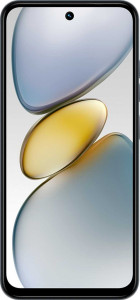
Tecno Spark 40
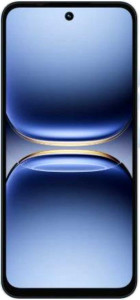
Tecno Spark 40C

Tecno Spark 40 Tecno Spark 40C

Overview

When comparing the Tecno Spark 40 and the Tecno Spark 40C, two budget-friendly Android smartphones emerge with a surprising number of shared traits but some meaningful distinctions worth examining. Both devices run on the same chipset, share an identical display panel, and offer the same storage configuration, yet they diverge notably in areas like camera capability, battery size versus charging speed, and a few key multimedia features. If you are trying to decide between these two models, this side-by-side breakdown will help clarify which one fits your priorities.

Common Features

  • Both phones have an IP64 ingress protection rating and are water resistant.
  • Neither phone has a rugged build or can be folded.
  • Both phones are 77 mm wide and 165.6 mm tall.
  • Both phones feature an LCD IPS display with a 6.67″ screen size.
  • Both phones have a pixel density of 263 ppi and a resolution of 720 x 1600 px.
  • Neither phone has branded damage-resistant glass, HDR10, HDR10+, or Always-On Display support.
  • Both phones are powered by the MediaTek Helio G81 Ultra chipset with a Mali G52 MP2 GPU.
  • Both phones have 8GB of RAM and 256GB of internal storage.
  • Both phones achieve a Geekbench 6 multi-core score of 1391 and a single-core score of 420.
  • Neither phone has a multi-lens main camera or optical image stabilization.
  • Both phones have an 8MP front camera with a CMOS sensor and phase-detection autofocus.
  • Continuous autofocus during video recording is supported on both phones.
  • Both phones run Android 15 and support theme customization and blocking app tracking.
  • Location privacy options and camera/microphone privacy options are available on both phones.
  • Neither phone supports wireless charging, but both support fast charging and have a non-removable battery.
  • Both phones have stereo speakers but lack aptX, LDAC, aptX HD, aptX Adaptive, aptX Lossless, and a built-in radio.
  • Neither phone supports 5G, NFC, or emergency SOS via satellite.
  • Both phones support dual SIM cards, USB Type-C connectivity, and have a fingerprint scanner.
  • Download speed is 300 MBits/s and upload speed is 100 MBits/s on both phones.
  • Neither phone has a curved display, e-paper display, or sapphire glass, but both have a video light.

Main Differences

  • Thickness is 7.7 mm on Tecno Spark 40 and 8.4 mm on Tecno Spark 40C.
  • Volume is 98.18 cm³ on Tecno Spark 40 and 107.11 cm³ on Tecno Spark 40C.
  • The main camera is 50 MP on Tecno Spark 40 and 13 MP on Tecno Spark 40C.
  • Maximum video recording resolution is 1440 x 30 fps on Tecno Spark 40 and 1080 x 30 fps on Tecno Spark 40C.
  • The number of flash LEDs is 2 on Tecno Spark 40 and 1 on Tecno Spark 40C.
  • Slow-motion video recording is not available on Tecno Spark 40 but is supported on Tecno Spark 40C.
  • Built-in HDR mode is not present on Tecno Spark 40 but is available on Tecno Spark 40C.
  • Battery capacity is 5200 mAh on Tecno Spark 40 and 6000 mAh on Tecno Spark 40C.
  • Charging speed is 45W on Tecno Spark 40 and 18W on Tecno Spark 40C.
  • A 3.5 mm audio jack is present on Tecno Spark 40 but absent on Tecno Spark 40C.
Specs Comparison
Tecno Spark 40

Tecno Spark 40

Tecno Spark 40C

Tecno Spark 40C

Design:
water resistance Water resistant Water resistant
thickness 7.7 mm 8.4 mm
width 77 mm 77 mm
height 165.6 mm 165.6 mm
volume 98.18424 cm³ 107.11008 cm³
Ingress Protection (IP) rating IP64 IP64
has a rugged build
can be folded

Both the Tecno Spark 40 and the Spark 40C share the same footprint — identical width of 77 mm and height of 165.6 mm — meaning neither has an advantage in terms of how tall or wide it sits in your hand or pocket. Where they diverge is in the third dimension: the Spark 40 measures just 7.7 mm thick, while the Spark 40C comes in noticeably thicker at 8.4 mm. That 0.7 mm gap may sound minor, but it translates directly into a real difference in perceived slimness and pocketability, categories where thinner devices consistently feel more premium and less bulky in daily carry.

The thickness gap also compounds into a meaningful volume difference: 98.18 cm³ for the Spark 40 versus 107.11 cm³ for the Spark 40C — roughly an 9% larger physical envelope for the latter. In practice, this means the Spark 40C displaces more space and likely feels denser or bulkier to hold, even though both phones share the same face dimensions. The Spark 40C's extra volume typically accommodates a larger internal component — most often a bigger battery — so the trade-off in slimness may come with a functional benefit not captured in this spec group alone.

On protection, both phones are evenly matched, carrying an IP64 rating — meaning full dust resistance and protection against water splashing from any direction. Neither has a rugged build or a foldable form factor. Overall, the Spark 40 holds a clear design edge for users who prioritize a slimmer, lower-profile device, while the Spark 40C's added thickness is the only meaningful design concession it makes.

Display:
Display type LCD, IPS LCD, IPS
screen size 6.67" 6.67"
pixel density 263 ppi 263 ppi
resolution 720 x 1600 px 720 x 1600 px
has branded damage-resistant glass
supports HDR10
supports HDR10+
Always-On Display
supports Dolby Vision
Has a secondary screen
has a touch screen

When it comes to the display, there is no differentiation to be found between the Tecno Spark 40 and the Spark 40C — every single specification is identical. Both feature a 6.67″ LCD IPS panel running at a 720 x 1600 px resolution, which yields a pixel density of 263 ppi. At that density, text and images are reasonably sharp for casual use, though it falls short of the 300+ ppi threshold where sharpness becomes truly crisp and indistinguishable to the naked eye at normal viewing distances.

The LCD IPS panel type means both phones deliver decent color accuracy and wide viewing angles compared to basic TN screens, but neither can match the deeper blacks, higher contrast, or energy efficiency of an OLED display. Notably, neither device supports HDR10, HDR10+, or Dolby Vision, so video content from streaming platforms will not benefit from expanded dynamic range — a limitation that will be felt by users who consume a lot of media.

Since every display spec is a perfect match, this category is an absolute tie. The screen experience on both phones will be indistinguishable in real-world use, and the display should not be a deciding factor when choosing between the two.

Performance:
internal storage 256GB 256GB
RAM 8GB 8GB
Chipset (SoC) name MediaTek Helio G81 Ultra MediaTek Helio G81 Ultra
GPU name Mali G52 MP2 Mali G52 MP2
CPU speed 2 x 2 & 6 x 1.8 GHz 2 x 2 & 6 x 1.8 GHz
Geekbench 6 result (multi) 1391 1391
Geekbench 6 result (single) 420 420
Geekbench 5 result (multi) 1300 1300
Geekbench 5 result (single) 350 350
Has integrated LTE
RAM speed 1800 MHz 1800 MHz
semiconductor size 12 nm 12 nm
Supports 64-bit
DirectX version DirectX 12 DirectX 12
Has integrated graphics
OpenGL version 3.2 3.2
OpenGL ES version 3.2 3.2
Uses big.LITTLE technology
CPU threads 8 threads 8 threads
Has TrustZone
maximum memory bandwidth 13.41 GB/s 13.41 GB/s
OpenCL version 2 2
memory channels 2 2
L2 cache 0.3 MB 0.3 MB
eMMC version 5.1 5.1
maximum memory amount 8GB 8GB
GPU execution units 2 2
GPU turbo 950 MHz 950 MHz
number of transistors 5500 million 5500 million
Thermal Design Power (TDP) 5W 5W
DDR memory version 4 4
shading units 32 32
turbo clock speed 2GHz 2GHz
L3 cache 1 MB 1 MB

Under the hood, the Tecno Spark 40 and the Spark 40C are carbon copies of each other. Both are powered by the MediaTek Helio G81 Ultra chipset, built on a 12 nm process and paired with 8GB of RAM and 256GB of internal storage. The Helio G81 Ultra is a competent mid-range chip with an 8-core configuration running at up to 2 GHz on its performance cores, capable enough for everyday tasks, social media, and casual gaming, though it will show its limits under sustained heavy workloads or graphically demanding titles.

Benchmark scores confirm the parity: both phones post identical Geekbench 6 multi-core scores of 1391 and single-core scores of 420, which places them squarely in the entry-to-mid-range tier. The shared Mali G52 MP2 GPU with a turbo clock of 950 MHz handles light gaming adequately, but users expecting smooth performance in GPU-intensive games should temper their expectations. The eMMC 5.1 storage standard used by both is also worth noting — it is a slower interface compared to UFS, meaning app load times and file transfers will not feel as snappy as on phones using newer storage technology.

Performance is an unequivocal tie — every processor, memory, and benchmark metric is identical. No advantage exists for either device in this category, and buyers can disregard performance entirely as a differentiating factor between these two phones.

Cameras:
megapixels (main camera) 50 MP 13 MP
Has a dual-lens (or multi-lens) main camera
megapixels (front camera) 8MP 8MP
has built-in optical image stabilization
video recording (main camera) 1440 x 30 fps 1080 x 30 fps
Has a dual-tone LED flash
number of flash LEDs 2 1
has a BSI sensor
has a CMOS sensor
has continuous autofocus when recording movies
Has phase-detection autofocus for photos
supports slow-motion video recording
has a built-in HDR mode
has manual exposure
has a flash
optical zoom 0x 0x
has manual ISO
has a serial shot mode
has manual focus
has a front camera
Has laser autofocus
Shoots 360° panorama
has manual white balance
shoots raw
has touch autofocus
has manual shutter speed
can create panoramas in-camera
Has a front-facing LED flash
has a dual-lens (or multi-lens) front camera
supports HDR10 recording
supports Dolby Vision recording
has a front-facing camera under the display
Has a RGB LED flash
has 3D photo/video recording capabilities

The camera category is where these two phones diverge most dramatically. The Tecno Spark 40 comes equipped with a 50 MP main sensor, while the Spark 40C offers just 13 MP — a nearly four-fold difference in resolution. Higher megapixel counts allow for more detail in shots, greater flexibility when cropping images, and generally more usable photos in good lighting conditions. Compounding this advantage, the Spark 40 also captures video at up to 1440p at 30 fps, a full step above the Spark 40C's ceiling of 1080p at 30 fps, meaning sharper, more detailed video footage straight from the camera app.

The Spark 40C does carve out a couple of exclusive features: it supports slow-motion video recording and has a built-in HDR mode for photos, neither of which is available on the Spark 40. Slow-motion can be a fun and creatively useful tool, and in-camera HDR helps recover highlight and shadow detail in high-contrast scenes. However, these additions do not meaningfully offset the Spark 40C's much lower sensor resolution or video quality ceiling. The Spark 40 also benefits from two flash LEDs versus just one on the Spark 40C, which can contribute to more evenly lit low-light shots. The front cameras are identical at 8 MP on both devices.

Overall, the Spark 40 holds a clear and significant camera advantage. For users who care about photo and video quality, the higher-resolution main sensor and superior video output make it the stronger choice in this category by a considerable margin, with the Spark 40C's slow-motion and HDR features representing only minor consolations.

Operating system:
Android version Android 15 Android 15
has clipboard warnings
has location privacy options
has camera/microphone privacy options
has Mail Privacy Protection
has theme customization
can block app tracking
blocks cross-site tracking
has on-device machine learning
has notification permissions
has media picker
Can play games while they download
has dark mode
has Wi-Fi password sharing
has battery health check
has an extra dim mode
has focus modes
has dynamic theming
can offload apps
Has customizable notifications
has Live Text
has full-page screenshots
supports split screen
gets direct OS updates
has PiP
Can be used as a PC
Has sharing intents
has a child lock
Supports widgets
Is free and open source
Has offline voice recognition
has voice commands
Tracks the current position of a mobile device
is a multi-user system
has Quick Start

Running Android 15 on both devices, the Tecno Spark 40 and Spark 40C offer an identical software experience from top to bottom. Android 15 is a mature, feature-rich release, and both phones take full advantage of it — supporting dynamic theming, dark mode, split-screen multitasking, picture-in-picture, and customizable notifications, among many other quality-of-life features that make day-to-day use smooth and flexible.

From a privacy standpoint, both phones are equally equipped, offering camera and microphone access controls, location privacy options, and app tracking restrictions. Neither device gets direct OS updates — meaning updates are routed through Tecno rather than pushed straight from Google — which can result in slower rollouts of security patches and future Android versions. This is a shared limitation worth keeping in mind for users concerned about long-term software support.

With every software feature and OS version in perfect alignment, this category is a complete tie. No matter which of the two phones a buyer chooses, they will land on the exact same Android experience, with the same capabilities, the same privacy tools, and the same update pipeline.

Battery:
battery power 5200 mAh 6000 mAh
has wireless charging
Supports fast charging
charging speed 45W 18W
has a removable battery
has a battery level indicator
has a rechargeable battery

Battery is one of the most consequential spec categories for everyday users, and here the two phones make notably different trade-offs. The Tecno Spark 40C packs a larger 6000 mAh cell compared to the Spark 40's 5200 mAh — an 800 mAh difference that, all else being equal, translates to meaningfully longer time between charges. For users who are heavy on screen time, streaming, or navigation, that extra capacity can realistically mean the difference between making it through a full day and needing a top-up by evening.

The Spark 40 counters with a significantly faster charging speed of 45W, versus the Spark 40C's considerably slower 18W. In practice, 45W charging can replenish a large portion of the battery in under an hour, making short charge windows much more productive. At 18W, filling up the Spark 40C's larger 6000 mAh cell will take considerably longer — a real inconvenience for users who are frequently on the move and cannot afford extended charging sessions. Neither phone supports wireless charging, so that is a shared limitation across the board.

The verdict here depends entirely on usage pattern. The Spark 40C has the edge in raw endurance thanks to its larger battery, making it the stronger pick for users who prioritize all-day or multi-day battery life. The Spark 40 wins on charging speed, suiting users who charge in short bursts and value getting back to full power quickly. Neither phone dominates outright — it is a genuine trade-off between capacity and convenience.

Audio:
has a socket for a 3.5 mm audio jack
has stereo speakers
has aptX
has LDAC
has aptX HD
has aptX Adaptive
has aptX Lossless
Has a radio

Audio is a compact category with one clear and practical differentiator: the Tecno Spark 40 retains a 3.5 mm headphone jack, while the Spark 40C omits it entirely. For users who rely on wired headphones — whether for audio quality, latency-free listening, or simply because they prefer not to manage Bluetooth connectivity — this is a meaningful distinction. The absence of a headphone jack on the Spark 40C forces users toward wireless audio or USB-C adapters, adding friction and potential extra cost.

Where the two phones converge, both feature stereo speakers, which is a genuine asset at this price tier — stereo output delivers a noticeably wider soundstage than mono setups when watching videos or listening to music without headphones. Neither device supports advanced Bluetooth audio codecs such as aptX, LDAC, or their variants, meaning wireless listening quality is capped at standard Bluetooth audio performance regardless of which phone you choose.

The Spark 40 holds a clear edge in audio due solely to the presence of the headphone jack. For users who are already fully committed to wireless audio, this distinction is irrelevant. But for anyone who values wired listening as an option, the Spark 40 is the more versatile and accommodating choice.

Connectivity & Features:
release date July 2025 July 2025
has 5G support
SIM cards 2 SIM 2 SIM
Has USB Type-C
has NFC
download speed 300 MBits/s 300 MBits/s
upload speed 100 MBits/s 100 MBits/s
Has a fingerprint scanner
has emergency SOS via satellite
has crash detection
is DLNA-certified
supports ANT+
Has a heart rate monitor
has GPS
supports Wi-Fi
Has an infrared sensor
has an accelerometer
has a cellular module
Has a barometer
has an HDMI output
Uses 3D facial recognition
Has an iris scanner
Stylus included
supports Galileo
Has motion tracking
Has optical tracking
Has a built-in projector

Across the full connectivity and features spectrum, the Tecno Spark 40 and Spark 40C are indistinguishable. Both are 4G LTE devices with no 5G support — a shared ceiling that is worth flagging for buyers in markets where 5G coverage is expanding rapidly, as neither phone will be future-proofed for faster network speeds. On the flip side, both support identical download and upload speeds of 300 Mbps / 100 Mbps, which is more than adequate for streaming, browsing, and most everyday data tasks over 4G.

Key features such as USB Type-C, dual SIM support, a fingerprint scanner, GPS with Galileo, Wi-Fi, and an accelerometer are present on both phones without exception. The shared absence of NFC is the most practically significant omission for many users — it rules out contactless payments and quick device pairing on either phone. Neither device offers any advanced sensor suite or specialized hardware beyond the essentials.

This category is a complete tie with no differentiator between the two phones. Connectivity and features will not and should not influence the buying decision here — buyers should look to other spec groups, particularly cameras, battery, and design, where the two phones do diverge meaningfully.

Miscellaneous:
has a video light
Has sapphire glass display
Has a curved display
Has an e-paper display

The miscellaneous category offers very little to analyze, as both the Tecno Spark 40 and the Spark 40C share every attribute listed. Both include a video light — a useful addition for recording video in low-light environments — and neither features a curved display, sapphire glass, or an e-paper screen, all of which are niche or premium characteristics not expected at this price tier.

This is an unambiguous tie. There is nothing in this spec group that separates the two devices or should factor into a purchasing decision. Buyers should weigh the more substantive differences found in categories like cameras, battery, and design when making their final choice.

Comparison Summary & Verdict

After reviewing every specification, the choice between the Tecno Spark 40 and the Tecno Spark 40C comes down to what you value most in a daily driver. The Tecno Spark 40 stands out with its significantly superior 50 MP main camera, faster 45W charging, and the convenience of a 3.5 mm headphone jack, making it the stronger pick for users who prioritize photography and quick top-ups. On the other hand, the Tecno Spark 40C offers a larger 6000 mAh battery for extended endurance, a slimmer feature set that suits light users, and adds slow-motion video and a built-in HDR mode as creative bonuses. Both phones are equally matched in performance, display quality, and connectivity, so neither holds a platform advantage there. Choose according to your lifestyle: power users and camera enthusiasts will lean toward the Spark 40, while those needing all-day battery life above all else may prefer the Spark 40C.

Tecno Spark 40
Buy Tecno Spark 40 if...

Buy the Tecno Spark 40 if you want a much higher-resolution 50 MP camera, faster 45W charging, and the convenience of a 3.5 mm audio jack.

Tecno Spark 40C
Buy Tecno Spark 40C if...

Buy the Tecno Spark 40C if long-lasting battery life is your top priority, as its 6000 mAh cell offers significantly more endurance between charges.