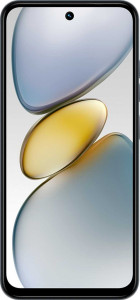
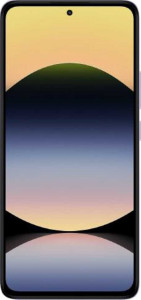
Much of the connectivity foundation here is shared — dual SIM, USB Type-C, expandable storage, GPS with Galileo support, Wi-Fi, and a fingerprint scanner are all present on both devices. Neither supports 5G, which is a notable common limitation for users in coverage areas where 5G is available. That said, even within the 4G space, the Redmi Note 14 4G pulls notably ahead on raw cellular throughput: its peak download speed of 650 Mbits/s more than doubles the Spark 40's 300 Mbits/s, and its upload speed of 150 Mbits/s also outpaces the Spark 40's 100 Mbits/s. In areas with strong LTE signal, this translates to faster file transfers, quicker streaming starts, and snappier cloud syncing.
Two feature additions further distinguish the Redmi Note 14 4G. It includes NFC, enabling contactless payments, quick device pairing, and transit card compatibility — a convenience that has become increasingly important in urban daily life and one the Spark 40 entirely lacks. It also carries an infrared (IR) blaster, allowing the phone to act as a universal remote for TVs, air conditioners, and other IR-controlled appliances. Neither feature is critical, but both add genuine utility that many users come to rely on.
The Redmi Note 14 4G holds a clear edge in this category. Its faster LTE speeds, NFC support, and IR blaster collectively represent a broader and more capable connectivity profile — and none of these advantages are matched by a corresponding strength on the Spark 40's side.