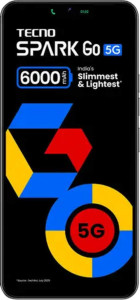
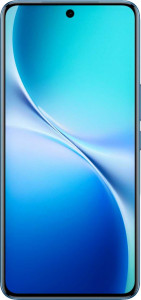
Camera versatility is where the Vivo V60 pulls decisively ahead. While both phones share a 50 MP main sensor, the V60 backs it up with a second 50 MP lens and an 8 MP tertiary shooter, forming a proper multi-camera system. More importantly, it adds 3x optical zoom — meaning lossless magnification without degrading image quality — and built-in optical image stabilization (OIS), which reduces blur in low-light shots and shaky handheld video. The Spark Go 5G has none of these: no secondary lenses, no OIS, and 0x optical zoom, leaving it reliant on a single fixed sensor for every shooting scenario.
Video capability follows the same pattern. The V60 records at 4K (2160p) at 30 fps, while the Spark Go tops out at 1440p at 30 fps — a meaningful gap for users who want footage suitable for large-screen playback or post-production cropping. The V60 also doubles the flash LED count to four, which typically produces more even, natural-looking illumination in dark environments compared to the Spark Go's two LEDs. On the selfie side, the contrast is stark: the V60 offers a 50 MP front camera versus just 5 MP on the Spark Go, a difference that will be immediately obvious in portrait shots and video calls.
The shared feature set — phase-detection autofocus, continuous autofocus during recording, HDR mode, slow-motion, timelapse, and a full suite of manual controls — shows that both phones offer a solid baseline of camera functionality. But the Vivo V60 holds a comprehensive and clear advantage in this group, outclassing the Spark Go in lens count, zoom, stabilization, video resolution, flash quality, and front camera resolution.