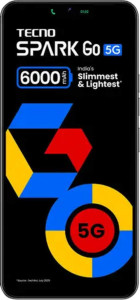
Tecno Spark Go 5G
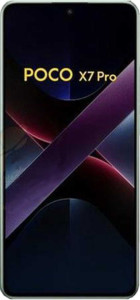
Xiaomi Poco X7 Pro (256GB / 12GB RAM)

Tecno Spark Go 5G Xiaomi Poco X7 Pro (256GB / 12GB RAM)

Overview

Welcome to our detailed specification face-off between the Tecno Spark Go 5G and the Xiaomi Poco X7 Pro (256GB / 12GB RAM). These two 5G smartphones share a handful of similarities — including a 120Hz refresh rate and a 6000 mAh battery — but they take very different approaches to display quality, raw performance, and camera capabilities. Whether you are shopping on a tighter budget or hunting for a more feature-rich powerhouse, this comparison will help you decide which device truly fits your needs.

Common Features

  • Neither product has a rugged build.
  • Neither product can be folded.
  • Both products have a 120Hz refresh rate.
  • Neither product has a secondary screen.
  • Both products have a touch screen.
  • Both products support 64-bit processing.
  • Both products use DirectX 12.
  • Both products have integrated graphics.
  • Both products use big.LITTLE technology.
  • Both products run Android 15.
  • Both products have clipboard warnings.
  • Both products have location privacy options.
  • Both products have camera and microphone privacy options.
  • Mail Privacy Protection is not available on either product.
  • Both products have theme customization.
  • Both products can block app tracking.
  • Cross-site tracking blocking is not available on either product.
  • Both products have a 6000 mAh battery.
  • Wireless charging is not available on either product.
  • Both products support fast charging.
  • Both products come with a charger.
  • Neither product has a removable battery.
  • Both products have a battery level indicator.
  • Both products have a rechargeable battery.
  • aptX Adaptive support is not available on either product.
  • aptX Lossless support is not available on either product.
  • Both products have 5G support.
  • Both products have dual SIM card slots.
  • Both products have USB Type-C.
  • Both products have a fingerprint scanner.
  • Emergency SOS via satellite is not available on either product.
  • Crash detection is not available on either product.
  • Neither product is DLNA-certified.
  • ANT+ support is not available on either product.
  • Both products have a video light.
  • Neither product has a sapphire glass display.
  • Neither product has a curved display.
  • Neither product has an e-paper display.
  • Both products have a CMOS sensor.
  • Both products have continuous autofocus when recording movies.
  • Both products have phase-detection autofocus for photos.
  • Both products support slow-motion video recording.
  • Both products have a built-in HDR mode.
  • Neither product has a dual-tone LED flash.
  • Both products have 2 flash LEDs.
  • Neither product has a BSI sensor.

Main Differences

  • Water resistance is rated as water resistant on Tecno Spark Go 5G and waterproof on Xiaomi Poco X7 Pro (256GB / 12GB RAM).
  • Weight is 194 g on Tecno Spark Go 5G and 198 g on Xiaomi Poco X7 Pro (256GB / 12GB RAM).
  • Thickness is 8 mm on Tecno Spark Go 5G and 8.3 mm on Xiaomi Poco X7 Pro (256GB / 12GB RAM).
  • Width is 77.7 mm on Tecno Spark Go 5G and 75.2 mm on Xiaomi Poco X7 Pro (256GB / 12GB RAM).
  • Height is 167.7 mm on Tecno Spark Go 5G and 160.8 mm on Xiaomi Poco X7 Pro (256GB / 12GB RAM).
  • Volume is 104.24 cm³ on Tecno Spark Go 5G and 100.36 cm³ on Xiaomi Poco X7 Pro (256GB / 12GB RAM).
  • IP rating is IP64 on Tecno Spark Go 5G and IP68 on Xiaomi Poco X7 Pro (256GB / 12GB RAM).
  • Display type is LCD IPS on Tecno Spark Go 5G and OLED/AMOLED on Xiaomi Poco X7 Pro (256GB / 12GB RAM).
  • Screen size is 6.74″ on Tecno Spark Go 5G and 6.67″ on Xiaomi Poco X7 Pro (256GB / 12GB RAM).
  • Pixel density is 260 ppi on Tecno Spark Go 5G and 446 ppi on Xiaomi Poco X7 Pro (256GB / 12GB RAM).
  • Resolution is 720 x 1600 px on Tecno Spark Go 5G and 1220 x 2712 px on Xiaomi Poco X7 Pro (256GB / 12GB RAM).
  • Damage-resistant glass is present on Xiaomi Poco X7 Pro (256GB / 12GB RAM) but not available on Tecno Spark Go 5G.
  • HDR10 support is present on Xiaomi Poco X7 Pro (256GB / 12GB RAM) but not available on Tecno Spark Go 5G.
  • HDR10+ support is present on Xiaomi Poco X7 Pro (256GB / 12GB RAM) but not available on Tecno Spark Go 5G.
  • Always-On Display is available on Xiaomi Poco X7 Pro (256GB / 12GB RAM) but not on Tecno Spark Go 5G.
  • Dolby Vision support is present on Xiaomi Poco X7 Pro (256GB / 12GB RAM) but not available on Tecno Spark Go 5G.
  • Internal storage is 128GB on Tecno Spark Go 5G and 256GB on Xiaomi Poco X7 Pro (256GB / 12GB RAM).
  • RAM is 4GB on Tecno Spark Go 5G and 12GB on Xiaomi Poco X7 Pro (256GB / 12GB RAM).
  • Chipset is MediaTek Dimensity 6400 on Tecno Spark Go 5G and MediaTek Dimensity 8400 on Xiaomi Poco X7 Pro (256GB / 12GB RAM).
  • GPU is Arm Mali-G57 MC2 on Tecno Spark Go 5G and Mali G720 MC7 on Xiaomi Poco X7 Pro (256GB / 12GB RAM).
  • CPU speed is 2 x 2.5 & 6 x 2 GHz on Tecno Spark Go 5G and 1 x 3.25 & 3 x 3 & 4 x 2.15 GHz on Xiaomi Poco X7 Pro (256GB / 12GB RAM).
  • GPU clock speed is 950 MHz on Tecno Spark Go 5G and 1300 MHz on Xiaomi Poco X7 Pro (256GB / 12GB RAM).
  • RAM speed is 2133 MHz on Tecno Spark Go 5G and 4267 MHz on Xiaomi Poco X7 Pro (256GB / 12GB RAM).
  • Semiconductor size is 6 nm on Tecno Spark Go 5G and 4 nm on Xiaomi Poco X7 Pro (256GB / 12GB RAM).
  • Maximum memory bandwidth is 17.1 GB/s on Tecno Spark Go 5G and 68.2 GB/s on Xiaomi Poco X7 Pro (256GB / 12GB RAM).
  • DDR memory version is DDR4 on Tecno Spark Go 5G and DDR5 on Xiaomi Poco X7 Pro (256GB / 12GB RAM).
  • The main camera is a single-lens on Tecno Spark Go 5G (50 MP) and a dual-lens setup on Xiaomi Poco X7 Pro (256GB / 12GB RAM) (50 MP & 8 MP).
  • Front camera resolution is 5 MP on Tecno Spark Go 5G and 20 MP on Xiaomi Poco X7 Pro (256GB / 12GB RAM).
  • Optical image stabilization is present on Xiaomi Poco X7 Pro (256GB / 12GB RAM) but not available on Tecno Spark Go 5G.
  • Video recording resolution is 1440 x 30 fps on Tecno Spark Go 5G and 2160 x 60 fps on Xiaomi Poco X7 Pro (256GB / 12GB RAM).
  • Laser autofocus is present on Xiaomi Poco X7 Pro (256GB / 12GB RAM) but not available on Tecno Spark Go 5G.
  • RAW photo shooting is supported on Xiaomi Poco X7 Pro (256GB / 12GB RAM) but not on Tecno Spark Go 5G.
  • HDR10 video recording is supported on Xiaomi Poco X7 Pro (256GB / 12GB RAM) but not on Tecno Spark Go 5G.
  • Charging speed is 18W on Tecno Spark Go 5G and 90W on Xiaomi Poco X7 Pro (256GB / 12GB RAM).
  • A 3.5 mm audio jack is present on Tecno Spark Go 5G but not available on Xiaomi Poco X7 Pro (256GB / 12GB RAM).
  • Stereo speakers are present on Xiaomi Poco X7 Pro (256GB / 12GB RAM) but not on Tecno Spark Go 5G.
  • aptX support is present on Xiaomi Poco X7 Pro (256GB / 12GB RAM) but not available on Tecno Spark Go 5G.
  • LDAC support is present on Xiaomi Poco X7 Pro (256GB / 12GB RAM) but not available on Tecno Spark Go 5G.
  • aptX HD support is present on Xiaomi Poco X7 Pro (256GB / 12GB RAM) but not available on Tecno Spark Go 5G.
  • A radio is present on Tecno Spark Go 5G but not available on Xiaomi Poco X7 Pro (256GB / 12GB RAM).
  • Wi-Fi versions supported are Wi-Fi 4 and Wi-Fi 5 on Tecno Spark Go 5G, and Wi-Fi 4, Wi-Fi 5, and Wi-Fi 6 on Xiaomi Poco X7 Pro (256GB / 12GB RAM).
  • Bluetooth version is 5.3 on Tecno Spark Go 5G and 6.0 on Xiaomi Poco X7 Pro (256GB / 12GB RAM).
  • An external memory slot is available on Tecno Spark Go 5G but not on Xiaomi Poco X7 Pro (256GB / 12GB RAM).
  • NFC is present on Xiaomi Poco X7 Pro (256GB / 12GB RAM) but not available on Tecno Spark Go 5G.
  • Download speed is 3300 Mbit/s on Tecno Spark Go 5G and 5700 Mbit/s on Xiaomi Poco X7 Pro (256GB / 12GB RAM).
  • An infrared sensor is present on Xiaomi Poco X7 Pro (256GB / 12GB RAM) but not available on Tecno Spark Go 5G.
Specs Comparison
Tecno Spark Go 5G

Tecno Spark Go 5G

Xiaomi Poco X7 Pro (256GB / 12GB RAM)

Xiaomi Poco X7 Pro (256GB / 12GB RAM)

Design:
water resistance Water resistant Waterproof
weight 194 g 198 g
thickness 8 mm 8.3 mm
width 77.7 mm 75.2 mm
height 167.7 mm 160.8 mm
volume 104.24232 cm³ 100.364928 cm³
Ingress Protection (IP) rating IP64 IP68
has a rugged build
can be folded

In terms of physical dimensions, the two phones take slightly different approaches. The Tecno Spark Go 5G is noticeably taller (167.7 mm vs 160.8 mm) and wider (77.7 mm vs 75.2 mm), giving it a larger overall footprint and a greater volume (104.24 cm³ vs 100.36 cm³). In practice, this means the Poco X7 Pro will feel more compact and easier to grip one-handed, while the Spark Go 5G may feel slightly unwieldy for smaller hands. The weight difference — 194 g vs 198 g — is negligible and will not be perceptible in daily use. Both phones share an identical 8 mm thickness profile (the Poco X7 Pro is marginally thicker at 8.3 mm, which is also imperceptible).

The most meaningful differentiator in this category is water protection. The Spark Go 5G carries an IP64 rating, which means it is shielded against dust and can handle water splashes from any direction — but it is not submersion-proof. The Poco X7 Pro steps up significantly with an IP68 rating, meaning it is fully dust-tight and can withstand submersion in water (typically up to 1–1.5 meters for a defined period). This is a tangible real-world advantage: accidental drops in puddles, sinks, or rain are far less of a concern with the Poco X7 Pro.

Overall, the Poco X7 Pro holds a clear edge in this group. Its more compact form factor makes it more pocketable and easier to handle, and its superior IP68 waterproofing offers meaningfully better protection in everyday scenarios compared to the Spark Go 5G's splash-resistant IP64. Neither phone is ruggedized or foldable, so those factors are a wash.

Display:
Display type LCD, IPS OLED/AMOLED
screen size 6.74" 6.67"
pixel density 260 ppi 446 ppi
resolution 720 x 1600 px 1220 x 2712 px
refresh rate 120Hz 120Hz
has branded damage-resistant glass
supports HDR10
supports HDR10+
Always-On Display
supports Dolby Vision
Has a secondary screen
has a touch screen

The display category is where these two phones diverge most dramatically. The Poco X7 Pro uses an OLED/AMOLED panel while the Spark Go 5G relies on an LCD IPS screen — a fundamental technology difference that affects contrast, color vibrancy, and black levels. OLED panels produce true blacks by switching off individual pixels, resulting in virtually infinite contrast ratios, while LCD panels use a backlight that causes blacks to appear grayish. For media consumption, gaming, or simply reading in a dark room, the Poco X7 Pro's panel will look noticeably richer and more immersive.

The resolution gap is equally stark. The Spark Go 5G outputs at 720 x 1600 px — a pixel density of just 260 ppi — which means individual pixels can sometimes be visible when reading fine text or viewing detailed images up close. The Poco X7 Pro delivers 1220 x 2712 px at 446 ppi, a sharpness level where pixels are essentially imperceptible to the human eye at normal viewing distances. Compounding this, the Poco X7 Pro supports HDR10+ and Dolby Vision, enabling it to render a wider dynamic range of brightness and color when consuming compatible streaming content — features the Spark Go 5G entirely lacks. The Poco X7 Pro also includes branded damage-resistant glass and an Always-On Display, adding durability and convenience that the Spark Go 5G does not offer.

Both phones match on 120Hz refresh rate, so scrolling and animations will feel equally fluid on either device — a genuine shared strength. However, that is where the parity ends. The Poco X7 Pro holds an overwhelming advantage in this category: superior panel technology, significantly higher pixel density, full HDR support, and screen protection make it the clear winner for anyone who values display quality.

Performance:
internal storage 128GB 256GB
RAM 4GB 12GB
Chipset (SoC) name MediaTek Dimensity 6400 MediaTek Dimensity 8400
GPU name Arm Mali-G57 MC2 Mali G720 MC7
CPU speed 2 x 2.5 & 6 x 2 GHz 1 x 3.25 & 3 x 3 & 4 x 2.15 GHz
GPU clock speed 950 MHz 1300 MHz
RAM speed 2133 MHz 4267 MHz
semiconductor size 6 nm 4 nm
Supports 64-bit
DirectX version DirectX 12 DirectX 12
Has integrated graphics
Uses big.LITTLE technology
maximum memory bandwidth 17.1 GB/s 68.2 GB/s
DDR memory version 4 5

The silicon at the heart of each phone tells a decisive story. The Spark Go 5G runs on the MediaTek Dimensity 6400, built on a 6 nm process, while the Poco X7 Pro is powered by the MediaTek Dimensity 8400 on a more advanced 4 nm node. A smaller semiconductor process generally means more transistors in less space, translating to better power efficiency and higher peak performance. The Dimensity 8400 also sports a more sophisticated CPU cluster — its top core reaches 3.25 GHz compared to the Dimensity 6400's 2.5 GHz peak — meaning the Poco X7 Pro handles demanding tasks like gaming, video editing, and heavy multitasking with meaningfully more headroom.

Memory tells an equally important story. The Spark Go 5G pairs its chipset with just 4 GB of RAM running at 2133 MHz (DDR4), yielding a maximum memory bandwidth of 17.1 GB/s. The Poco X7 Pro counters with 12 GB of RAM at 4267 MHz (DDR5), delivering a bandwidth of 68.2 GB/s — four times greater. In practical terms, the Spark Go 5G will struggle to keep multiple apps open simultaneously and may show slowdowns under load, while the Poco X7 Pro can juggle demanding applications with ease. The GPU gap reinforces this: the Mali G720 MC7 clocked at 1300 MHz substantially outpaces the Mali-G57 MC2 at 950 MHz, making a noticeable difference in graphically intensive games.

Both phones share the same architectural approach — big.LITTLE CPU design, 64-bit support, and DirectX 12 — but these are baseline features that do not offset the chasm in raw capability. The Poco X7 Pro holds an unambiguous and substantial performance advantage across every meaningful metric in this category, from processing power and GPU throughput to RAM capacity and memory bandwidth.

Cameras:
megapixels (main camera) 50 MP 50 & 8 MP
Has a dual-lens (or multi-lens) main camera
megapixels (front camera) 5MP 20MP
has built-in optical image stabilization
video recording (main camera) 1440 x 30 fps 2160 x 60 fps
Has a dual-tone LED flash
number of flash LEDs 2 2
has a BSI sensor
has a CMOS sensor
has continuous autofocus when recording movies
Has phase-detection autofocus for photos
supports slow-motion video recording
has a built-in HDR mode
has manual exposure
has a flash
optical zoom 0x 0x
has manual ISO
has a serial shot mode
has manual focus
has a front camera
Has laser autofocus
Shoots 360° panorama
has manual white balance
shoots raw
has touch autofocus
has manual shutter speed
can create panoramas in-camera
Has timelapse function
Has a front-facing LED flash
has a dual-lens (or multi-lens) front camera
supports HDR10 recording
supports Dolby Vision recording
has a front-facing camera under the display
Has a RGB LED flash
has 3D photo/video recording capabilities

The Tecno Spark Go 5G and Xiaomi Poco X7 Pro (256GB / 12GB RAM) both feature 50 MP main cameras, but the Poco X7 Pro has an additional 8 MP secondary camera, giving it a dual-lens setup, while the Tecno Spark Go 5G only has a single-lens main camera. The front camera on the Tecno Spark Go 5G is 5 MP, while the Poco X7 Pro has a significantly higher 20 MP front camera.

Both devices support video recording, but the Tecno Spark Go 5G records at a maximum of 1440 x 30 fps, whereas the Poco X7 Pro can record in 2160 x 60 fps for higher video quality. Both devices lack a dual-tone LED flash and offer 2 flash LEDs. They both have CMOS sensors and support features like phase-detection autofocus, continuous autofocus during video recording, and manual exposure. The Tecno Spark Go 5G does not have optical image stabilization, while the Poco X7 Pro includes it for improved video stability.

Additionally, the Poco X7 Pro supports HDR10 video recording, while the Tecno Spark Go 5G does not. Both devices support slow-motion video, have a timelapse function, and allow users to create panoramas in-camera. Neither device features a front-facing LED flash or a dual-lens front camera, and both lack 3D photo/video recording capabilities. The Poco X7 Pro has a laser autofocus feature, which the Tecno Spark Go 5G does not.

Operating system:
Android version Android 15 Android 15
has clipboard warnings
has location privacy options
has camera/microphone privacy options
has Mail Privacy Protection
has theme customization
can block app tracking
blocks cross-site tracking
has on-device machine learning
has notification permissions
has media picker
Can play games while they download
has dark mode
has Wi-Fi password sharing
has battery health check
has an extra dim mode
has focus modes
has dynamic theming
can offload apps
Has customizable notifications
has Live Text
has full-page screenshots
supports split screen
gets direct OS updates
has PiP
Can be used as a PC
Has sharing intents
has a child lock
Supports widgets
Is free and open source
Has offline voice recognition
has voice commands
Tracks the current position of a mobile device
is a multi-user system
has Quick Start

Both the Tecno Spark Go 5G and Xiaomi Poco X7 Pro (256GB / 12GB RAM) run on Android 15, offering similar core features in their operating systems. Both phones support clipboard warnings, location privacy options, and camera/microphone privacy options. They also both allow theme customization, block app tracking, and include on-device machine learning capabilities.

However, there are some key similarities and differences between the two. Neither device supports Mail Privacy Protection, but both offer features like dark mode, battery health checks, extra dim mode, and dynamic theming. Both also allow app offloading and customizable notifications, as well as having PiP (Picture-in-Picture) support, split screen, and full-page screenshots. Additionally, both phones have the ability to play games while downloading, media pickers, Live Text, and offline voice recognition.

The Tecno Spark Go 5G and Poco X7 Pro also share features such as multi-user system support, voice commands, sharing intents, a child lock, and widget support. Neither device can be used as a PC or has Quick Start functionality. Both phones track the current position of the device. Notably, both devices do not receive direct OS updates, and both are free and open source.

Battery:
battery power 6000 mAh 6000 mAh
has wireless charging
Supports fast charging
charging speed 18W 90W
comes with a charger
has a removable battery
has a battery level indicator
has a rechargeable battery

Both the Tecno Spark Go 5G and Xiaomi Poco X7 Pro (256GB / 12GB RAM) feature a 6000 mAh battery, offering substantial power for extended use. Neither device supports wireless charging, but both support fast charging. The Tecno Spark Go 5G supports fast charging at 18W, while the Poco X7 Pro offers much faster charging at 90W, providing a quicker charging experience.

Both devices come with a charger in the box, have a rechargeable battery, and lack a removable battery. They also include a battery level indicator, allowing users to easily monitor the remaining charge.

Audio:
has a socket for a 3.5 mm audio jack
has stereo speakers
has aptX
has LDAC
has aptX HD
has aptX Adaptive
has aptX Lossless
Has a radio

The Tecno Spark Go 5G and Xiaomi Poco X7 Pro (256GB / 12GB RAM) differ significantly in their audio features. The Tecno Spark Go 5G includes a 3.5 mm audio jack, while the Poco X7 Pro does not. The Poco X7 Pro, however, features stereo speakers, which the Tecno Spark Go 5G lacks.

In terms of audio codec support, the Tecno Spark Go 5G does not support aptX, LDAC, or any other high-definition audio codecs. In contrast, the Poco X7 Pro supports aptX, LDAC, and aptX HD, making it better suited for high-quality wireless audio streaming.

Another difference is that the Tecno Spark Go 5G comes with a built-in radio, while the Poco X7 Pro does not include this feature.

Connectivity & Features:
release date August 2025 January 2025
has 5G support
Wi-Fi version Wi-Fi 4 (802.11n), Wi-Fi 5 (802.11ac) Wi-Fi 4 (802.11n), Wi-Fi 5 (802.11ac), Wi-Fi 6 (802.11ax)
SIM cards 2 SIM 2 SIM
Bluetooth version 5.3 6
has an external memory slot
Has USB Type-C
has NFC
download speed 3300 MBits/s 5700 MBits/s
Has a fingerprint scanner
has emergency SOS via satellite
has crash detection
is DLNA-certified
supports ANT+
Has a heart rate monitor
has GPS
supports Wi-Fi
Has an infrared sensor
has an accelerometer
has a cellular module
Has a barometer
has an HDMI output
Uses 3D facial recognition
Has an iris scanner
Stylus included
supports Galileo
Has motion tracking
Has optical tracking
Has a built-in projector

Both the Tecno Spark Go 5G and Xiaomi Poco X7 Pro (256GB / 12GB RAM) support 5G connectivity, making them both suitable for high-speed mobile data. However, the Poco X7 Pro offers faster download speeds, reaching up to 5700 MBits/s, compared to the Tecno Spark Go 5G’s 3300 MBits/s. The Tecno Spark Go 5G supports Wi-Fi 4 (802.11n) and Wi-Fi 5 (802.11ac), while the Poco X7 Pro also supports Wi-Fi 6 (802.11ax), providing it with more advanced wireless connectivity.

In terms of Bluetooth, the Tecno Spark Go 5G features Bluetooth version 5.3, while the Poco X7 Pro has Bluetooth version 6, offering better efficiency and connection range. The Tecno Spark Go 5G has an external memory slot, which the Poco X7 Pro lacks. Both devices feature a USB Type-C port and a fingerprint scanner for security, as well as GPS support for navigation.

The Poco X7 Pro includes NFC, which is not available on the Tecno Spark Go 5G. The Poco X7 Pro also has an infrared sensor, while the Tecno Spark Go 5G does not. Both phones support Galileo for satellite positioning and have an accelerometer. Neither device has a barometer, HDMI output, or a built-in projector. Additionally, both phones do not feature 3D facial recognition or an iris scanner, and neither includes a stylus.

Miscellaneous:
has a video light
Has sapphire glass display
Has a curved display
Has an e-paper display

The Tecno Spark Go 5G and Xiaomi Poco X7 Pro (256GB / 12GB RAM) both feature a video light, making them capable of illuminating subjects during video recording. Neither device has sapphire glass display, a curved display, or an e-paper display. These features are identical across both phones, with no differences in this category.

Comparison Summary & Verdict

After examining every specification, the two phones serve clearly different audiences. The Tecno Spark Go 5G appeals to budget-conscious users who still want 5G connectivity, a large screen, a headphone jack, an FM radio, and expandable storage — practical everyday features at a lower cost. However, it falls noticeably behind in display clarity, processing muscle, and charging speed. The Xiaomi Poco X7 Pro, on the other hand, dominates with its vivid OLED display at 446 ppi, a much faster Dimensity 8400 chipset with 12GB DDR5 RAM, superior camera versatility including optical image stabilization, 90W fast charging, IP68 waterproofing, NFC, and Wi-Fi 6 support. If you need a well-rounded, high-performance smartphone built to last, the Poco X7 Pro is the clear step up. Choose the Tecno Spark Go 5G only if budget and basic feature accessibility are your top priorities.

Tecno Spark Go 5G
Buy Tecno Spark Go 5G if...

Buy the Tecno Spark Go 5G if you want an affordable 5G phone with a headphone jack, FM radio, and expandable storage for everyday use without breaking the bank.

Xiaomi Poco X7 Pro (256GB / 12GB RAM)
Buy Xiaomi Poco X7 Pro (256GB / 12GB RAM) if...

Buy the Xiaomi Poco X7 Pro (256GB / 12GB RAM) if you want a high-performance smartphone with a stunning OLED display, powerful chipset, superior cameras with optical image stabilization, 90W fast charging, and IP68 waterproofing.