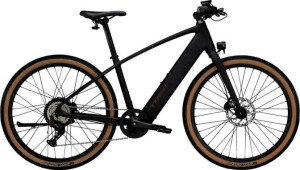
Trek FX Plus 1
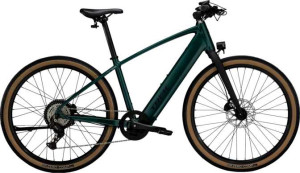
Trek FX Plus 1S

Trek FX Plus 1 Trek FX Plus 1S

Overview

Welcome to our in-depth specification comparison between the Trek FX Plus 1 and the Trek FX Plus 1S. These two electric fitness bikes share a remarkably similar DNA, from their aluminum frames and 520 Wh in-frame batteries to their powerful 500W motors and hydraulic disc brakes. Yet beneath their shared foundations lies a key distinction that could prove decisive for certain riders: their top speed. Read on to discover how these two models stack up across design, battery, performance, and features.

Common Features

  • Both bikes use an aluminum frame.
  • Both bikes weigh 22100 g.
  • Front suspension is not available on either bike.
  • Rear suspension is not available on either bike.
  • Both bikes feature an in-frame battery.
  • Neither bike can be folded.
  • Both bikes have internal cable routing.
  • Neither bike is designed for kids.
  • Both bikes have a battery size of 520 Wh.
  • Both bikes have a charge time of 5.5 hours.
  • Regenerative braking is not available on either bike.
  • The battery is not removable on either bike.
  • Both bikes offer a maximum distance of 80 km per charge.
  • Both bikes use hydraulic disc brakes.
  • Both bikes deliver a maximum torque of 60 Nm.
  • Both bikes have a turbo mode.
  • Both bikes have an eco mode.
  • Both bikes have a motor power of 500W.
  • Both bikes are multi-gear and have 8 gears.
  • Both bikes use a cadence sensor and torque sensor for pedal assistance.
  • Both bikes have a display.
  • Both bikes have a dedicated smartphone app.
  • GPS is not available on either bike.
  • Both bikes have front lights.
  • Both bikes have rear lights.

Main Differences

  • Top speed is 32 km/h on the Trek FX Plus 1 and 45 km/h on the Trek FX Plus 1S.
Specs Comparison
Trek FX Plus 1

Trek FX Plus 1

Trek FX Plus 1S

Trek FX Plus 1S

Design:
frame material Aluminum Aluminum
weight 22100 g 22100 g
has front suspension
has rear suspension
has an in-frame battery
can be folded
has internal cable routing
is designed for kids

In terms of design, the Trek FX Plus 1 and Trek FX Plus 1S are identical across every measured specification. Both feature an aluminum frame, weigh exactly 22,100 g, integrate the battery within the frame, use internal cable routing, and forgo both front and rear suspension. Neither can be folded, and neither is designed for kids.

The shared in-frame battery and internal cable routing are worth noting as real-world positives: a hidden battery keeps the silhouette clean and protects the pack from impacts, while routed cables reduce maintenance exposure and give the bike a tidier appearance. The absence of any suspension keeps the overall system weight lower and reduces mechanical complexity, which is a deliberate trade-off typical of urban fitness e-bikes prioritizing efficiency over trail capability.

Based strictly on the provided design specs, these two models are in a complete tie. There is no distinguishing design advantage on either side — buyers should look to other specification groups to find meaningful differences between the FX Plus 1 and FX Plus 1S.

Battery:
battery size 520 Wh 520 Wh
charge time 5.5 hours 5.5 hours
Has regenerative braking
has a removable battery

Both the Trek FX Plus 1 and Trek FX Plus 1S share an identical battery profile: a 520 Wh pack with a 5.5-hour full charge time. At 520 Wh, this is a competitive capacity for a fitness e-bike — enough to support meaningful assisted range for most daily commuters and recreational riders without needing a mid-ride top-up.

The 5.5-hour charge time is fairly standard for a pack of this size and implies a moderate charging rate. Practically, plugging in overnight covers any realistic daily usage scenario. Neither model offers regenerative braking, which is common for this class of bike where the efficiency gains on relatively flat urban terrain are marginal. More notably, the battery is non-removable on both — meaning charging requires access to the whole bike rather than just pulling the pack indoors, which can be a logistical consideration for riders without easy outlet access near their storage space.

Across every battery specification, the two models are in a complete tie. There is no capacity advantage, no charging speed edge, and no feature distinction to separate them here. As with the design group, buyers will need to look elsewhere in the spec sheet to find differentiators.

Performance:
maximum distance per charge 80 km 80 km
braking system Hydraulic disc brakes Hydraulic disc brakes
maximum torque 60 Nm 60 Nm
has a turbo mode
has an eco mode
motor power 500W 500W
is a multi-gear bike
number of gears 8 8
is a single-gear bike
drive motor type Hub-drive motor Hub-drive motor
top speed 32 km/h 45 km/h

For the most part, the Trek FX Plus 1 and Trek FX Plus 1S are evenly matched on performance fundamentals — both run a 500W hub-drive motor with 60 Nm of torque, offer the same 80 km maximum assisted range, share an 8-speed drivetrain, and include both turbo and eco modes. Hydraulic disc brakes on both models ensure consistent stopping power regardless of conditions, which is the appropriate choice at these performance levels.

The one meaningful differentiator is top speed: the FX Plus 1 is capped at 32 km/h, while the FX Plus 1S reaches 45 km/h. This is a significant real-world gap. A 32 km/h limit is typical of standard e-bike classifications in many markets, while 45 km/h places the FX Plus 1S in a higher speed category — one that may require different licensing, registration, or safety gear depending on local regulations. For riders who want to sustain faster speeds on open roads or long commutes, the FX Plus 1S offers a tangible advantage; for urban riders in regulated environments, the lower cap on the FX Plus 1 may actually be the more legally straightforward choice.

On the strength of its higher top speed, the FX Plus 1S holds a clear performance edge in this group — but whether that advantage is usable depends entirely on the rider's local e-bike laws and intended use case.

Features:
release date May 2025 May 2025
pedal sensor type Cadence sensor & torque sensor Cadence sensor & torque sensor
Has a display
Has a dedicated smartphone app
has GPS
has front light(s)
has rear light(s)

Feature-for-feature, the Trek FX Plus 1 and Trek FX Plus 1S are indistinguishable in this category. Both use a dual cadence and torque sensor setup for pedal assist — a notable detail, since pairing these two sensor types delivers more natural, responsive power delivery than cadence-only systems, which can feel laggy or mechanical. The result is assist that scales more intuitively with actual rider effort.

A dedicated smartphone app and an on-bike display together provide a solid connectivity and control package, giving riders both at-a-glance ride data and deeper settings management from their phone. Integrated front and rear lights round out the feature set practically, reducing the need for aftermarket additions. The absence of built-in GPS on both models is worth noting for riders who want native tracking — they would need to rely on the app or a separate device for navigation and route recording.

With every feature spec matching exactly, this group is a complete tie. Neither the FX Plus 1 nor the FX Plus 1S holds any advantage here, and the feature set itself is well-suited for everyday commuting and fitness riding on both.

Comparison Summary & Verdict

After examining every specification, the Trek FX Plus 1 and Trek FX Plus 1S are nearly identical bikes, sharing the same aluminum frame, 520 Wh in-frame battery, 500W motor, 60 Nm of torque, 8-speed drivetrain, and an 80 km range per charge. The sole but meaningful difference lies in top speed: the Trek FX Plus 1 is capped at 32 km/h, making it the natural choice for riders who prioritize regulatory compliance in regions with strict e-bike speed limits. The Trek FX Plus 1S, reaching up to 45 km/h, is better suited for those who need a faster, more performance-oriented ride on open paths or roads where higher speeds are permitted. Choose based on your local regulations and the pace that fits your riding style.

Trek FX Plus 1
Buy Trek FX Plus 1 if...

Buy the Trek FX Plus 1 if you ride in areas with a legal e-bike speed limit of 32 km/h and want a fully compliant, well-equipped electric fitness bike.

Trek FX Plus 1S
Buy Trek FX Plus 1S if...

Buy the Trek FX Plus 1S if you want a higher top speed of 45 km/h and ride in locations where that increased pace is permitted.