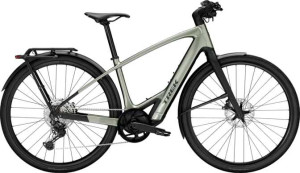
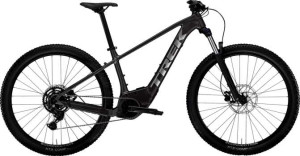
Both the Trek FX Plus 7S and the Trek Marlin Plus 6 share a solid foundation: aluminum frames, in-frame batteries for a clean integrated look, and internal cable routing that keeps aesthetics tidy and cables protected. Neither folds, and both are adult-oriented builds — so on these fronts, the two bikes are evenly matched.
The most meaningful divergence is twofold. First, the Marlin Plus 6 features front suspension, while the FX Plus 7S is a rigid hardtail with no suspension at all. In practice, front suspension absorbs trail chatter, roots, and rough terrain, making the Marlin better suited for off-road or mixed-surface riding — but it also adds mechanical complexity and weight. Second, and directly related, the FX Plus 7S weighs in at 18,650 g versus the Marlin Plus 6's 22,450 g — a substantial ~3.8 kg difference. That gap matters enormously for urban commuters who lift the bike onto transit, carry it up stairs, or prioritize nimble, responsive handling on pavement.
The design edge depends entirely on intended use. For smooth roads and city riding, the FX Plus 7S wins clearly — its rigid frame and significantly lighter weight translate to a more agile, lower-effort experience. For riders who venture onto gravel or light trails, the Marlin Plus 6's front suspension justifies the weight penalty. There is no objectively superior design here, but the weight difference is large enough that it should be a primary decision factor for most buyers.