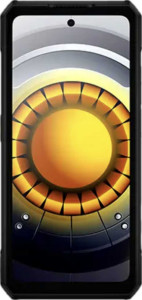
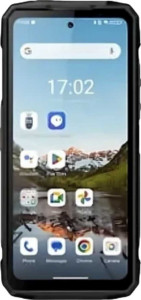
Ulefone Armor 30 Pro
Ulefone Armor 33 Pro

Ulefone Armor 30 Pro Ulefone Armor 33 Pro

Overview

When two rugged smartphones share the same brand DNA but take very different paths, the comparison gets interesting. The Ulefone Armor 30 Pro and Ulefone Armor 33 Pro both arrive with IP68 waterproofing, 120Hz displays, and powerful multi-lens cameras, yet they diverge sharply in areas like display technology, battery capacity, and overall form factor. Whether you prize a slimmer profile or maximum endurance, this head-to-head breakdown will help you find the right fit.

Common Features

  • Both phones are waterproof with an IP68 ingress protection rating.
  • Both phones have a rugged build.
  • Neither phone can be folded.
  • Both phones have a 6.95″ screen size.
  • Both phones have a pixel density of 387 ppi.
  • Both phones have a resolution of 1080 x 2460 px.
  • Both phones have a 120Hz refresh rate.
  • HDR10 support is not available on either phone.
  • HDR10+ support is not available on either phone.
  • Always-On Display is not available on either phone.
  • Dolby Vision support is not available on either phone.
  • Both phones have 512GB of internal storage and 16GB of RAM.
  • Both phones are powered by a Mali G615 MC2 GPU.
  • Both phones have a CPU speed of 4 x 2.5 & 4 x 2 GHz.
  • Both phones have integrated LTE and 5G support.
  • Both phones feature a 4 nm semiconductor size.
  • Both phones have a main camera setup with 64 & 50 & 50 MP and a 32 MP front camera.
  • Optical image stabilization is not available on either phone.
  • Both phones support 2160 x 30 fps video recording on the main camera.
  • Both phones have stereo speakers and a built-in radio.
  • Both phones support fast charging at 66W.
  • Wireless charging is not available on either phone.
  • The battery is not removable on either phone.
  • Both phones support 5G, dual SIM, NFC, USB Type-C, and have a fingerprint scanner.
  • Both phones have an external memory slot.
  • Emergency SOS via satellite is not available on either phone.
  • Crash detection is not available on either phone.
  • Both phones have a video light.
  • Sapphire glass display is not present on either phone.
  • Both phones have clipboard warnings and location privacy options.
  • Camera and microphone privacy options are available on both phones.
  • Both phones support theme customization and allow blocking of app tracking.
  • On-device machine learning is supported on both phones.

Main Differences

  • Thickness is 21.2 mm on the Ulefone Armor 30 Pro and 34 mm on the Ulefone Armor 33 Pro.
  • Width is 84.9 mm on the Ulefone Armor 30 Pro and 85.5 mm on the Ulefone Armor 33 Pro.
  • Height is 181.3 mm on the Ulefone Armor 30 Pro and 185.5 mm on the Ulefone Armor 33 Pro.
  • Volume is 326.318244 cm³ on the Ulefone Armor 30 Pro and 539.2485 cm³ on the Ulefone Armor 33 Pro.
  • The display type is LCD IPS on the Ulefone Armor 30 Pro and OLED/AMOLED on the Ulefone Armor 33 Pro.
  • Branded damage-resistant glass is present on the Ulefone Armor 30 Pro but not on the Ulefone Armor 33 Pro.
  • The chipset is MediaTek Dimensity 7300 on the Ulefone Armor 30 Pro and MediaTek Dimensity 7300X on the Ulefone Armor 33 Pro.
  • The Ulefone Armor 30 Pro supports 1 external display while the Ulefone Armor 33 Pro supports 2.
  • Main camera wide aperture is 1.79 & 1.95 & 2.2f on the Ulefone Armor 30 Pro and 1.8 & 1.9 & 2.2f on the Ulefone Armor 33 Pro.
  • Slow-motion video recording is supported on the Ulefone Armor 30 Pro but not on the Ulefone Armor 33 Pro.
  • Front camera wide aperture is 2.45f on the Ulefone Armor 30 Pro and 2.5f on the Ulefone Armor 33 Pro.
  • Timelapse recording is available on the Ulefone Armor 30 Pro but not on the Ulefone Armor 33 Pro.
  • The Ulefone Armor 30 Pro runs Android 14 while the Ulefone Armor 33 Pro runs Android 15.
  • App offloading is not supported on the Ulefone Armor 30 Pro but is available on the Ulefone Armor 33 Pro.
  • Battery capacity is 12800 mAh on the Ulefone Armor 30 Pro and 25500 mAh on the Ulefone Armor 33 Pro.
Specs Comparison
Ulefone Armor 30 Pro

Ulefone Armor 30 Pro

Ulefone Armor 33 Pro

Ulefone Armor 33 Pro

Design:
water resistance Waterproof Waterproof
thickness 21.2 mm 34 mm
width 84.9 mm 85.5 mm
height 181.3 mm 185.5 mm
volume 326.318244 cm³ 539.2485 cm³
Ingress Protection (IP) rating IP68 IP68
has a rugged build
can be folded

Both the Ulefone Armor 30 Pro and the Armor 33 Pro share a rugged, non-foldable design with an IP68 waterproof rating, meaning both can withstand full submersion in water. For users who need a durable daily driver on a worksite or outdoors, either device clears the baseline protection bar without compromise.

Where they diverge sharply is in physical footprint. The Armor 30 Pro measures 21.2 mm thick with a total volume of roughly 326 cm³, while the Armor 33 Pro balloons to 34 mm thick and approximately 539 cm³ — a staggering ~65% increase in volume. Height and width differences are modest (about 4 mm taller and 0.6 mm wider), so virtually all of that extra bulk comes from depth. In practice, a 34 mm thick device is exceptionally chunky even by rugged-phone standards; it will not sit flat in a standard pants pocket and may feel unwieldy in smaller hands. The Armor 30 Pro, at 21.2 mm, is still thick compared to a mainstream smartphone but sits in a far more manageable range for day-to-day carry.

For the Design category, the Armor 30 Pro holds a clear advantage in portability and ergonomics. Unless the added bulk of the Armor 33 Pro is justified by internal hardware gains found in other spec groups (such as a much larger battery), the 30 Pro is the more practical choice for anyone who values a device that is easier to pocket, grip, and carry throughout the day.

Display:
Display type LCD, IPS OLED/AMOLED
screen size 6.95" 6.95"
pixel density 387 ppi 387 ppi
resolution 1080 x 2460 px 1080 x 2460 px
refresh rate 120Hz 120Hz
has branded damage-resistant glass
supports HDR10
supports HDR10+
Always-On Display
supports Dolby Vision
Has a secondary screen
has a touch screen

On paper, the two displays look nearly identical — same 6.95-inch screen, same 1080 x 2460 resolution, same 387 ppi pixel density, and a matching 120Hz refresh rate. In practice, however, the panel technology tells a very different story. The Armor 30 Pro uses an LCD IPS panel, while the Armor 33 Pro features an OLED/AMOLED display. OLED panels produce true blacks by switching off individual pixels entirely, which yields dramatically higher contrast ratios and more vivid colors than LCD can achieve — a difference that is immediately visible when watching video or using the phone outdoors in varying light conditions.

The Armor 30 Pro counters with one meaningful protection advantage: it includes branded damage-resistant glass, which the Armor 33 Pro lacks. For a rugged phone that is likely to face drops and scratches in the field, this is not a trivial omission. OLED screens, while visually superior, are also generally more costly to replace when cracked. Users who prioritize screen survivability over image quality may find this trade-off significant.

On balance, the Armor 33 Pro holds the display quality edge thanks to its OLED panel — richer contrast and better power efficiency in dark-themed content are real, everyday benefits. That said, the Armor 30 Pro's damage-resistant glass is a legitimate counter-argument in a rugged-use context, making this category a split decision that ultimately depends on whether the user values image quality or screen durability more.

Performance:
internal storage 512GB 512GB
RAM 16GB 16GB
Chipset (SoC) name MediaTek Dimensity 7300 MediaTek Dimensity 7300X
GPU name Mali G615 MC2 Mali G615 MC2
CPU speed 4 x 2.5 & 4 x 2 GHz 4 x 2.5 & 4 x 2 GHz
Has integrated LTE
RAM speed 6400 MHz 6400 MHz
semiconductor size 4 nm 4 nm
Supports 64-bit
DirectX version DirectX 12 DirectX 12
Has integrated graphics
Uses big.LITTLE technology
CPU threads 8 threads 8 threads
Uses HMP
maximum memory amount 16GB 16GB
DDR memory version 5 5
supported displays 1 2

The performance specs of these two devices are remarkably close. Both run on a MediaTek Dimensity 7300-series chip built on a 4nm process, paired with 16GB of LPDDR5 RAM at 6400 MHz, 512GB of internal storage, and an identical Mali G615 MC2 GPU. In day-to-day use — gaming, multitasking, app switching — users would be virtually unable to distinguish one from the other. The shared 8-core CPU configuration with big.LITTLE and HMP scheduling ensures both handles demanding workloads efficiently.

The only differentiator within this group is the chip designation itself — Dimensity 7300 on the Armor 30 Pro versus the Dimensity 7300X on the Armor 33 Pro — and a consequential downstream difference: the Armor 33 Pro supports 2 external displays, while the Armor 30 Pro is limited to 1. The ″X″ suffix on the 7300X typically denotes a minor platform extension rather than a wholesale performance uplift, so raw speed parity between the two is expected. However, dual-display output is a genuinely useful capability for users who want to connect the device to a monitor or use it in a desktop-style workflow.

For pure performance, this category is essentially a tie. The Armor 33 Pro earns a narrow functional edge solely due to its multi-display support — a niche but real advantage for productivity-oriented users. Anyone who has no need for external display output will find zero meaningful performance difference between the two.

Cameras:
megapixels (main camera) 64 & 50 & 50 MP 64 & 50 & 50 MP
wide aperture (main camera) 1.79 & 1.95 & 2.2f 1.8 & 1.9 & 2.2f
Has a dual-lens (or multi-lens) main camera
megapixels (front camera) 32MP 32MP
has built-in optical image stabilization
video recording (main camera) 2160 x 30 fps 2160 x 30 fps
Has a dual-tone LED flash
number of flash LEDs 2 2
has a BSI sensor
has a CMOS sensor
has continuous autofocus when recording movies
Has phase-detection autofocus for photos
supports slow-motion video recording
has a built-in HDR mode
has manual exposure
has a flash
optical zoom 0x 0x
has manual ISO
has a serial shot mode
has manual focus
has a front camera
Has laser autofocus
Shoots 360° panorama
has manual white balance
shoots raw
has touch autofocus
has manual shutter speed
can create panoramas in-camera
wide aperture (front camera) 2.45f 2.5f
Has timelapse function
Has a front-facing LED flash
has a dual-lens (or multi-lens) front camera
supports HDR10 recording
supports Dolby Vision recording
has a front-facing camera under the display
Has a RGB LED flash
has 3D photo/video recording capabilities

The rear camera systems are structurally identical — a triple-lens setup at 64 & 50 & 50 MP with 4K video at 30fps, no optical zoom, and a solid shared feature set including phase-detection autofocus, continuous autofocus during recording, HDR mode, and a range of manual controls. Aperture differences across the three lenses are marginal enough (1.79 vs 1.8f on the main lens, for example) that real-world low-light performance would be indistinguishable between the two. Neither device includes optical image stabilization, which is a notable shared omission for a rugged phone often used in dynamic environments.

The meaningful gaps emerge in video versatility. The Armor 30 Pro supports slow-motion video recording and a timelapse function — neither of which is available on the Armor 33 Pro. Slow-motion is a practical tool for capturing fast-moving subjects or field documentation, and timelapse adds creative flexibility that many users appreciate even in a workhorse device. The Armor 33 Pro simply omits both, with no compensating video feature to offset the loss. Additionally, the 30 Pro's front camera carries a slightly wider aperture (2.45f vs 2.5f), which in theory admits marginally more light for selfies — though the difference is minimal.

The Armor 30 Pro takes a clear win in this category. With an otherwise near-identical camera hardware profile, the addition of slow-motion and timelapse capabilities gives it a tangible functional advantage for users who rely on video features, without any trade-off elsewhere in the camera spec sheet.

Operating system:
Android version Android 14 Android 15
has clipboard warnings
has location privacy options
has camera/microphone privacy options
has Mail Privacy Protection
has theme customization
can block app tracking
blocks cross-site tracking
has on-device machine learning
has notification permissions
has media picker
Can play games while they download
has dark mode
has Wi-Fi password sharing
has battery health check
has an extra dim mode
has focus modes
has dynamic theming
can offload apps
Has customizable notifications
has Live Text
has full-page screenshots
supports split screen
gets direct OS updates
has PiP
Can be used as a PC
Has sharing intents
has a child lock
Supports widgets
Is free and open source
Has offline voice recognition
has voice commands
Tracks the current position of a mobile device
is a multi-user system
has Quick Start

Across a long list of OS-level features, these two devices are functionally identical — sharing the same privacy controls, productivity tools, customization options, and accessibility features. The real story in this category comes down to two differences. First, the Armor 33 Pro ships with Android 15, while the Armor 30 Pro runs Android 14. A newer Android version generally means more recent security patches, refined privacy controls, and improved background process management out of the box — all relevant considerations for a device likely to be used in sensitive or demanding professional environments.

The second differentiator is that the Armor 33 Pro supports app offloading, a feature absent on the Armor 30 Pro. App offloading allows the system to automatically remove infrequently used apps while preserving their data, freeing up storage without manual intervention. Given that both devices ship with 512GB of internal storage, this is a relatively low-stakes advantage in practice — but it remains a useful automation for users who install many large applications over time.

The Armor 33 Pro holds the edge in this category, primarily by virtue of launching on a newer OS version. The app offloading capability is a secondary bonus. Neither gap is dramatic, but for a user planning to hold onto a device for several years, starting one Android generation ahead is a meaningful head start in terms of longevity and up-to-date platform features.

Battery:
battery power 12800 mAh 25500 mAh
has wireless charging
Supports fast charging
charging speed 66W 66W
has a removable battery
has a battery level indicator
has a rechargeable battery

Battery capacity is where the Armor 33 Pro makes its most dramatic statement. Its 25,500 mAh cell is nearly double the Armor 30 Pro's already substantial 12,800 mAh. To put that in perspective, 12,800 mAh already places the 30 Pro well above typical flagship smartphones, which commonly range from 4,000 to 5,000 mAh. The 33 Pro's cell is in an entirely different class — the kind of capacity more commonly associated with a portable power bank than a handheld device. For users working in remote locations, on long shifts, or anywhere reliable charging infrastructure is scarce, this difference is transformative rather than incremental.

Charging parity softens one potential concern: both devices top out at 66W fast charging. While a larger cell will inevitably take longer to fill at the same wattage, 66W is a reasonably brisk rate, and in a device positioned for extended off-grid use, raw capacity matters far more than achieving a full charge in the shortest possible time. The absence of wireless charging on both is a non-issue in this rugged device context, where sealed ports and wireless coils are harder to reconcile with IP-rated builds anyway.

The Armor 33 Pro wins this category decisively. The near-doubling of battery capacity is the single largest quantitative gap across the specs reviewed so far, and it also retrospectively explains the 33 Pro's considerably greater physical bulk noted in the Design category — the extra thickness is essentially the cost of carrying what amounts to a built-in power bank. For any user whose top priority is staying powered through multi-day deployments without access to a charger, the Armor 33 Pro is the only logical choice.

Audio:
has stereo speakers
has aptX
has LDAC
has aptX HD
has aptX Adaptive
has aptX Lossless
Has a radio

The audio specs for these two devices are an exact match across every available data point. Both feature stereo speakers and a built-in FM radio — and both equally omit any high-resolution Bluetooth audio codec support, with no aptX, aptX HD, aptX Adaptive, aptX Lossless, or LDAC on either device. For wireless audio, this means both are limited to standard Bluetooth codecs such as SBC or AAC, which is adequate for everyday listening but falls short for audiophiles seeking lossless or near-lossless wireless playback.

The inclusion of stereo speakers on both is a practical plus for a rugged device, where hands-free audio in loud environments — a worksite, outdoors, or during group communication — is genuinely useful. The FM radio is a similarly pragmatic feature, providing access to local broadcasts without relying on mobile data, which aligns well with the off-grid use cases these phones are built for.

This category is an unambiguous tie. There is no specification in the provided data — shared or unique — that gives either device any audio advantage over the other. A buyer's audio experience on these two phones will be determined by factors not captured in this spec group, such as speaker tuning or driver quality.

Connectivity & Features:
release date January 2025 March 2025
has 5G support
SIM cards 2 SIM 2 SIM
has an external memory slot
Has USB Type-C
has NFC
Has a fingerprint scanner
has emergency SOS via satellite
has crash detection
is DLNA-certified
has a gyroscope
supports ANT+
Has a heart rate monitor
has GPS
has a compass
supports Wi-Fi
Has an infrared sensor
has an accelerometer
has a cellular module
Has a barometer
has an HDMI output
Uses 3D facial recognition
Has an iris scanner
Stylus included
supports Galileo
Has motion tracking
Has optical tracking
Has a built-in projector

Connectivity and features present yet another complete mirror image between these two devices. Both offer 5G, dual SIM, expandable storage, USB Type-C, and NFC — a strong baseline that covers the essentials for modern connectivity. On the sensor side, both include a gyroscope, accelerometer, compass, barometer, and infrared sensor, the latter being a useful addition for device-to-device control that many competing phones omit. Navigation is equally matched, with GPS and Galileo support on both, providing multi-constellation positioning that improves location accuracy in challenging environments — particularly relevant for outdoor or field use.

Neither device ventures into more advanced biometric territory beyond a standard fingerprint scanner, and both omit features like crash detection, satellite SOS, ANT+, and HDMI output. For a rugged-phone audience, the absence of satellite emergency messaging is worth noting as a gap, though it is a shared limitation rather than a differentiator between the two models.

This category is a complete tie. Every connectivity and sensor specification is identical across both devices, with no feature present on one that is absent on the other. A buyer's choice between the Armor 30 Pro and Armor 33 Pro will have no bearing whatsoever on their connectivity capabilities or sensor suite.

Miscellaneous:
has a video light
Has sapphire glass display
Has a curved display
Has an e-paper display

The Miscellaneous category offers very little to distinguish between these two devices. Both include a video light — a practical tool for illuminating subjects during video recording in low-light conditions — and both equally lack sapphire glass, a curved display, or an e-paper secondary screen. None of the absent features represent a meaningful gap for the rugged-phone use case these devices are designed for.

This is a complete tie across every available data point in this group. No feature here favors one device over the other, and the specs provided are too limited in scope to surface any meaningful differentiation. Buyers should weigh this category as a non-factor in their decision between the two models.

Comparison Summary & Verdict

Both phones deliver a strong rugged foundation with IP68 protection, 5G connectivity, 120Hz screens, and 66W fast charging, but their priorities differ significantly. The Ulefone Armor 30 Pro is the more compact and practical choice for everyday carry, offering a slimmer 21.2 mm build, slow-motion and timelapse video recording, branded damage-resistant glass, and a lighter form factor that does not sacrifice performance. The Ulefone Armor 33 Pro, on the other hand, is purpose-built for users who demand extreme endurance, packing a massive 25500 mAh battery and an OLED/AMOLED display alongside Android 15 and dual-display support. Choose the Armor 30 Pro if portability and versatile camera features matter most; choose the Armor 33 Pro if you need a power station in your pocket with a superior screen.

Ulefone Armor 30 Pro
Buy Ulefone Armor 30 Pro if...

Buy the Ulefone Armor 30 Pro if you want a more compact rugged phone with a slimmer build, damage-resistant glass, and full camera versatility including slow-motion and timelapse recording.

Ulefone Armor 33 Pro
Buy Ulefone Armor 33 Pro if...

Buy the Ulefone Armor 33 Pro if you need exceptional battery endurance with its 25500 mAh capacity, prefer an OLED display, and want the latest Android 15 experience with dual-display support.