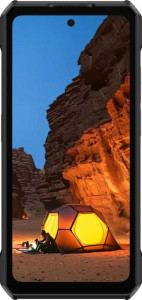
Ulefone Armor 30
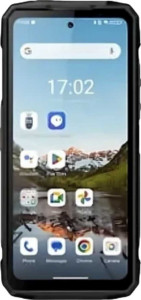
Ulefone Armor 33 Pro

Ulefone Armor 30 Ulefone Armor 33 Pro

Overview

Welcome to our in-depth spec comparison between the Ulefone Armor 30 and the Ulefone Armor 33 Pro — two rugged Android 15 smartphones built to endure the toughest conditions. While both share a waterproof design, a large 6.95″ display, and fast 66W charging, they diverge sharply in areas like battery capacity, chipset performance, and overall physical footprint. Read on to find out which device best matches your needs.

Common Features

  • Both phones are waterproof and feature a rugged build.
  • Neither phone can be folded.
  • Both phones share the same 6.95″ screen size.
  • Both phones have a 1080 x 2460 px resolution.
  • Both phones support a 120Hz refresh rate.
  • HDR10 support is not available on either product.
  • HDR10+ support is not available on either product.
  • Always-On Display is not available on either product.
  • Dolby Vision support is not available on either product.
  • Both phones feature a secondary screen.
  • Both phones come with 512GB of internal storage.
  • Both phones support LTE and 64-bit processing.
  • Both phones use big.LITTLE technology with HMP and have 8 CPU threads.
  • Both phones feature a multi-lens main camera with 64, 50, and 50 MP sensors and a 32MP front camera.
  • Neither phone has built-in optical image stabilization.
  • Both phones support 4K video recording at 30 fps on the main camera.
  • Both phones run Android 15 with theme customization, clipboard warnings, location privacy options, and camera/microphone privacy options.
  • Both phones support fast charging at 66W and feature a non-removable, rechargeable battery with a battery level indicator.
  • Both phones have stereo speakers, a radio, and lack aptX, LDAC, aptX HD, aptX Adaptive, aptX Lossless support.
  • Both phones support dual SIM, external memory, USB Type-C, NFC, and a fingerprint scanner.
  • Neither phone has emergency SOS via satellite or crash detection.
  • Both phones have a video light, and neither has a sapphire glass, curved, or e-paper display.

Main Differences

  • Thickness is 18.5 mm on Ulefone Armor 30 and 34 mm on Ulefone Armor 33 Pro.
  • Width is 86.8 mm on Ulefone Armor 30 and 85.5 mm on Ulefone Armor 33 Pro.
  • Height is 182.8 mm on Ulefone Armor 30 and 185.5 mm on Ulefone Armor 33 Pro.
  • Volume is 293.54 cm³ on Ulefone Armor 30 and 539.25 cm³ on Ulefone Armor 33 Pro.
  • IP rating is IP69 on Ulefone Armor 30 and IP68 on Ulefone Armor 33 Pro.
  • Display type is LCD IPS on Ulefone Armor 30 and OLED/AMOLED on Ulefone Armor 33 Pro.
  • Pixel density is 396 ppi on Ulefone Armor 30 and 387 ppi on Ulefone Armor 33 Pro.
  • Damage-resistant branded glass is present on Ulefone Armor 30 but not available on Ulefone Armor 33 Pro.
  • RAM is 12GB on Ulefone Armor 30 and 16GB on Ulefone Armor 33 Pro.
  • The chipset is MediaTek Helio G100 on Ulefone Armor 30 and MediaTek Dimensity 7300X on Ulefone Armor 33 Pro.
  • The GPU is Mali G57 on Ulefone Armor 30 and Mali G615 MC2 on Ulefone Armor 33 Pro.
  • CPU speed is 2 x 2.2 & 6 x 2 GHz on Ulefone Armor 30 and 4 x 2.5 & 4 x 2 GHz on Ulefone Armor 33 Pro.
  • RAM speed is 4266 MHz on Ulefone Armor 30 and 6400 MHz on Ulefone Armor 33 Pro.
  • Semiconductor size is 6 nm on Ulefone Armor 30 and 4 nm on Ulefone Armor 33 Pro.
  • DirectX version is DirectX 11 on Ulefone Armor 30 and DirectX 12 on Ulefone Armor 33 Pro.
  • DDR memory version is DDR4 on Ulefone Armor 30 and DDR5 on Ulefone Armor 33 Pro.
  • Slow-motion video recording is supported on Ulefone Armor 30 but not available on Ulefone Armor 33 Pro.
  • Timelapse function is available on Ulefone Armor 30 but not present on Ulefone Armor 33 Pro.
  • Battery capacity is 12800 mAh on Ulefone Armor 30 and 25500 mAh on Ulefone Armor 33 Pro.
  • Wireless charging is supported on Ulefone Armor 30 but not available on Ulefone Armor 33 Pro.
  • 5G support is present on Ulefone Armor 33 Pro but not available on Ulefone Armor 30.
Specs Comparison
Ulefone Armor 30

Ulefone Armor 30

Ulefone Armor 33 Pro

Ulefone Armor 33 Pro

Design:
water resistance Waterproof Waterproof
thickness 18.5 mm 34 mm
width 86.8 mm 85.5 mm
height 182.8 mm 185.5 mm
volume 293.54024 cm³ 539.2485 cm³
Ingress Protection (IP) rating IP69 IP68
has a rugged build
can be folded

Both the Ulefone Armor 30 and the Ulefone Armor 33 Pro share the rugged fundamentals: fully waterproof builds, non-foldable slabs, and reinforced chassis — so neither compromises on toughness at a basic level. Where they diverge significantly is in physical footprint. The Armor 33 Pro is nearly 34 mm thick compared to the Armor 30's 18.5 mm, and its volume of 539.25 cm³ is almost double the Armor 30's 293.54 cm³. In practical terms, the Armor 33 Pro is a substantially bulkier device — likely harder to pocket and more fatiguing during extended one-handed use — while the Armor 30 is comparatively slim and manageable for a rugged phone.

On water resistance, the distinction is more nuanced than it first appears. The Armor 30 carries an IP69 rating, which not only covers submersion but also resistance to high-pressure, high-temperature water jets — a step above the Armor 33 Pro's IP68, which certifies sustained submersion but not pressurized spray. For field use involving washdowns or industrial cleaning environments, the IP69 rating of the Armor 30 is a meaningful real-world advantage.

Overall, the Armor 30 has a clear design edge for users who prioritize portability and a higher-tier water resistance standard. The Armor 33 Pro's dramatically increased thickness and volume suggest it houses additional internal hardware, but based purely on design specs, it is the less ergonomic and less water-resilient option of the two.

Display:
Display type LCD, IPS OLED/AMOLED
screen size 6.95" 6.95"
pixel density 396 ppi 387 ppi
resolution 1080 x 2460 px 1080 x 2460 px
refresh rate 120Hz 120Hz
has branded damage-resistant glass
supports HDR10
supports HDR10+
Always-On Display
supports Dolby Vision
Has a secondary screen
has a touch screen

At a glance, these two screens look nearly identical on paper — same 6.95″ size, same 1080 x 2460 px resolution, same 120Hz refresh rate, and a negligible difference in pixel density (396 ppi vs 387 ppi, imperceptible in daily use). The meaningful split comes down to panel technology and physical protection. The Armor 33 Pro uses an OLED/AMOLED panel, which delivers deeper blacks, higher contrast, and more vibrant colors compared to the Armor 30's LCD IPS — an advantage that becomes especially noticeable when viewing media outdoors or in varied lighting conditions.

However, the Armor 30 counters with a practical edge that matters in a rugged context: it includes branded damage-resistant glass, while the Armor 33 Pro does not. For a device designed to withstand harsh environments, screen scratch and impact resistance is not a minor footnote — it directly affects how well the display survives drops and abrasive surfaces over time.

The verdict here is a genuine trade-off rather than a clear winner. The Armor 33 Pro offers a superior visual experience thanks to its OLED panel, but the Armor 30 makes a compelling counter-argument with better screen durability protection — arguably the more relevant priority for a rugged phone. Users who watch a lot of media will lean toward the 33 Pro; those prioritizing longevity in tough conditions will appreciate the Armor 30's reinforced glass.

Performance:
internal storage 512GB 512GB
RAM 12GB 16GB
Chipset (SoC) name MediaTek Helio G100 MediaTek Dimensity 7300X
GPU name Mali G57 Mali G615 MC2
CPU speed 2 x 2.2 & 6 x 2 GHz 4 x 2.5 & 4 x 2 GHz
Has integrated LTE
RAM speed 4266 MHz 6400 MHz
semiconductor size 6 nm 4 nm
Supports 64-bit
DirectX version DirectX 11 DirectX 12
Has integrated graphics
Uses big.LITTLE technology
CPU threads 8 threads 8 threads
Uses HMP
maximum memory amount 12GB 16GB
DDR memory version 4 5

The silicon gap between these two devices is significant. The Armor 33 Pro runs on the MediaTek Dimensity 7300X, built on a 4 nm process node, versus the Armor 30's MediaTek Helio G100 on a 6 nm node. A smaller process means more transistors per unit area, translating directly into better performance-per-watt — the 33 Pro's chip can do more while generating less heat and consuming less energy. The CPU configuration reinforces this: the 33 Pro's 4 x 2.5 GHz performance cores run faster than the Armor 30's 2 x 2.2 GHz top-end cores, meaning heavier tasks like gaming, video processing, or running complex apps will feel noticeably snappier on the 33 Pro.

The memory story also favors the Armor 33 Pro across the board. It carries 16 GB of DDR5 RAM at 6400 MHz, compared to the Armor 30's 12 GB of DDR4 at 4266 MHz. Faster, higher-capacity RAM means more apps can stay active in the background without reloading, and data-intensive operations complete more quickly. On the graphics side, the 33 Pro's Mali G615 MC2 GPU with DirectX 12 support is a step up from the Armor 30's Mali G57 with DirectX 11, offering better rendering capabilities for modern mobile titles and GPU-accelerated tasks.

Across every meaningful performance dimension — chip efficiency, CPU peak speed, RAM capacity, memory bandwidth, and GPU capability — the Armor 33 Pro holds a clear and consistent advantage. Both ship with identical 512 GB of internal storage, so that is a non-factor. For users who demand strong sustained performance, the 33 Pro is the definitive choice here.

Cameras:
megapixels (main camera) 64 & 50 & 50 MP 64 & 50 & 50 MP
wide aperture (main camera) 1.79 & 1.95 & 2.2f 1.8 & 1.9 & 2.2f
Has a dual-lens (or multi-lens) main camera
megapixels (front camera) 32MP 32MP
has built-in optical image stabilization
video recording (main camera) 2160 x 30 fps 2160 x 30 fps
Has a dual-tone LED flash
number of flash LEDs 2 2
has a BSI sensor
has a CMOS sensor
has continuous autofocus when recording movies
Has phase-detection autofocus for photos
supports slow-motion video recording
has a built-in HDR mode
has manual exposure
has a flash
optical zoom 0x 0x
has manual ISO
has a serial shot mode
has manual focus
has a front camera
Has laser autofocus
Shoots 360° panorama
has manual white balance
shoots raw
has touch autofocus
has manual shutter speed
can create panoramas in-camera
wide aperture (front camera) 2.45f 2.5f
Has timelapse function
Has a front-facing LED flash
has a dual-lens (or multi-lens) front camera
supports HDR10 recording
supports Dolby Vision recording
has a front-facing camera under the display
Has a RGB LED flash
has 3D photo/video recording capabilities

Strip away the branding and the camera systems on these two phones are remarkably similar. Both feature a triple-lens rear setup at 64 & 50 & 50 MP, a 32 MP front camera, and identical 4K @ 30fps video recording. The aperture values are also close enough to be functionally equivalent in real-world shooting — the marginal differences across the main lenses will have no meaningful impact on low-light performance or depth-of-field. Manual controls, phase-detection autofocus, continuous autofocus during video, and HDR mode are shared by both, so the day-to-day shooting experience will feel very similar.

The differentiators, while few, are worth noting. The Armor 30 supports slow-motion video recording and has a timelapse function — neither of which the Armor 33 Pro offers. For users who shoot dynamic scenes, action footage, or want creative time-manipulation tools, these are genuine feature gaps on the 33 Pro rather than minor omissions.

In this category, the Armor 30 holds a narrow but clear edge purely by virtue of offering more shooting modes. The core imaging hardware is essentially matched between the two, but the addition of slow-motion and timelapse gives the Armor 30 greater creative versatility without any corresponding advantage on the 33 Pro's side to offset the deficit.

Operating system:
Android version Android 15 Android 15
has clipboard warnings
has location privacy options
has camera/microphone privacy options
has Mail Privacy Protection
has theme customization
can block app tracking
blocks cross-site tracking
has on-device machine learning
has notification permissions
has media picker
Can play games while they download
has dark mode
has Wi-Fi password sharing
has battery health check
has an extra dim mode
has focus modes
has dynamic theming
can offload apps
Has customizable notifications
has Live Text
has full-page screenshots
supports split screen
gets direct OS updates
has PiP
Can be used as a PC
Has sharing intents
has a child lock
Supports widgets
Is free and open source
Has offline voice recognition
has voice commands
Tracks the current position of a mobile device
is a multi-user system
has Quick Start

This is the rare category where the comparison ends before it begins. Both the Ulefone Armor 30 and the Armor 33 Pro run Android 15 and share an identical feature set across every single tracked specification — from privacy controls like location and camera/microphone permissions, to usability features like dark mode, dynamic theming, split-screen, and Picture-in-Picture. There is not a single differentiating data point in this group.

This is a complete tie, and the conclusion is straightforward: the operating system experience will be indistinguishable between the two devices. Users of either phone get the same Android 15 foundation, the same privacy toolkit, and the same suite of productivity and customization features. Neither device holds any software advantage over the other based on the provided data.

Battery:
battery power 12800 mAh 25500 mAh
has wireless charging
Supports fast charging
charging speed 66W 66W
has a removable battery
has a battery level indicator
has a rechargeable battery

The battery gap here is extraordinary. The Armor 33 Pro packs a 25,500 mAh cell — nearly double the Armor 30's already generous 12,800 mAh. To put that in context, most flagship smartphones ship with batteries in the 4,000–5,000 mAh range, meaning the 33 Pro carries roughly five times a typical flagship's capacity. For a rugged device intended for extended field use, remote work, or multi-day deployments without access to a power source, this is a transformative advantage in terms of endurance.

Both phones share the same 66W fast charging speed, which is where the trade-off becomes apparent. At 66W, topping up a 25,500 mAh battery will take considerably longer than charging the 12,800 mAh unit in the Armor 30 — so while the 33 Pro lasts far longer between charges, each charging session demands significantly more time. The Armor 30 also supports wireless charging, a convenience feature the 33 Pro lacks entirely, likely a consequence of its massive battery and bulkier construction.

For raw endurance, the Armor 33 Pro wins this category decisively. The wireless charging omission is a real trade-off, but for the target use case of a heavy-duty rugged phone, sheer battery longevity is almost certainly the higher priority — and the 33 Pro's advantage there is too large to overlook.

Audio:
has stereo speakers
has aptX
has LDAC
has aptX HD
has aptX Adaptive
has aptX Lossless
Has a radio

Audio is another category where the two devices are perfectly matched. Both the Armor 30 and the Armor 33 Pro feature stereo speakers and a built-in FM radio — and neither supports any high-resolution Bluetooth audio codec, including aptX, aptX HD, LDAC, or their variants. For wireless audio enthusiasts who rely on high-fidelity codecs for lossless or near-lossless streaming to premium headphones, neither device caters to that use case.

This is a complete tie. The shared stereo speaker setup means spatial audio output will be equivalent on both phones, and the identical absence of advanced Bluetooth codecs means wired or standard Bluetooth listening experiences will be the same across the board. There is no audio-based reason to choose one over the other.

Connectivity & Features:
release date June 2025 March 2025
has 5G support
SIM cards 2 SIM 2 SIM
has an external memory slot
Has USB Type-C
has NFC
Has a fingerprint scanner
has emergency SOS via satellite
has crash detection
is DLNA-certified
has a gyroscope
supports ANT+
Has a heart rate monitor
has GPS
has a compass
supports Wi-Fi
Has an infrared sensor
has an accelerometer
has a cellular module
Has a barometer
has an HDMI output
Uses 3D facial recognition
Has an iris scanner
Stylus included
supports Galileo
Has motion tracking
Has optical tracking
Has a built-in projector

Across a broad and detailed connectivity spec sheet, these two devices are virtually identical — both offer dual-SIM support, expandable storage, USB Type-C, NFC, fingerprint scanning, GPS with Galileo, and a solid sensor suite including gyroscope, accelerometer, barometer, compass, and infrared. For everyday connectivity and field utility, either phone covers the same ground.

The single differentiator in this entire category is 5G support, which the Armor 33 Pro has and the Armor 30 lacks. This is not a trivial gap. As 5G networks continue to expand globally, a 4G-only device like the Armor 30 will face increasing limitations in network speed and future-proofing — particularly relevant for a rugged phone that may remain in service for several years in demanding environments where fast data transfer matters.

The Armor 33 Pro takes a clear edge here on the strength of that single but meaningful advantage. Everything else is evenly matched, so for users in 5G-covered areas or those planning to keep their device long-term, the 33 Pro's network capability is a forward-looking advantage that the Armor 30 simply cannot match.

Miscellaneous:
has a video light
Has sapphire glass display
Has a curved display
Has an e-paper display

The miscellaneous spec sheet for these two devices is short and entirely uniform. Both the Armor 30 and the Armor 33 Pro include a video light — a useful hands-free illumination tool for recording in low-light environments — and neither features sapphire glass, a curved display, or an e-paper screen. There is nothing to separate them here.

This is a complete tie. No data point in this group favors either device, and the category as a whole carries no weight in differentiating the two phones.

Comparison Summary & Verdict

After reviewing every specification, these two rugged phones clearly target different users. The Ulefone Armor 30 stands out for its slimmer, lighter form factor, its higher IP69 waterproof rating, damage-resistant glass, wireless charging, slow-motion and timelapse camera capabilities, and a more manageable size — making it an excellent companion for active users who want capable ruggedness without excessive bulk. The Ulefone Armor 33 Pro, on the other hand, is a powerhouse built for endurance and raw performance, featuring a 25500 mAh battery, the more advanced Dimensity 7300X chipset on a 4 nm process, DDR5 RAM, a vibrant OLED display, and 5G connectivity. If longevity between charges and cutting-edge processing power are your top priorities, the Armor 33 Pro is the clear choice. But if portability, wireless charging, and a higher IP rating matter more, the Armor 30 is the smarter pick.

Ulefone Armor 30
Buy Ulefone Armor 30 if...

Buy the Ulefone Armor 30 if you want a slimmer rugged phone with a higher IP69 rating, wireless charging, and slow-motion video in a more compact build.

Ulefone Armor 33 Pro
Buy Ulefone Armor 33 Pro if...

Buy the Ulefone Armor 33 Pro if you need an exceptionally long-lasting battery, faster 5G connectivity, and a more powerful chipset with an OLED display.