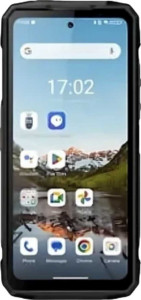
Ulefone Armor 33 Pro
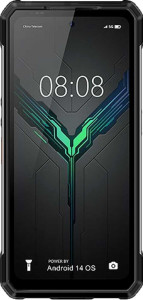
Ulefone Armor 34 Pro

Ulefone Armor 33 Pro Ulefone Armor 34 Pro

Overview

Welcome to our in-depth spec comparison of the Ulefone Armor 33 Pro and the Ulefone Armor 34 Pro, two rugged IP68-rated smartphones that share a surprising amount of DNA yet diverge in some genuinely interesting ways. Both pack a massive 25500 mAh battery, a 6.95″ OLED display, and a triple-camera system, but the differences in display features, audio output, and unique hardware extras make choosing between them far from straightforward. Read on to find out which one suits your needs best.

Common Features

  • Both phones are waterproof with an IP68 ingress protection rating.
  • Both phones feature a rugged build.
  • Neither phone can be folded.
  • Both phones have a 6.95″ OLED/AMOLED display.
  • Both phones share a pixel density of 387 ppi and a resolution of 1080 x 2460 px.
  • Neither phone has branded damage-resistant glass.
  • HDR10 support is not available on either phone.
  • HDR10+ support is not available on either phone.
  • Always-On Display is not available on either phone.
  • Both phones come with 512GB of internal storage and 16GB of RAM.
  • Both phones use a Mali G615 MC2 GPU and a CPU running at 4 x 2.5 and 4 x 2 GHz.
  • Both phones are built on a 4 nm semiconductor with 6400 MHz RAM speed.
  • Both phones have integrated LTE and support 64-bit processing.
  • Both phones feature a triple main camera system with 64, 50, and 50 MP sensors.
  • Neither phone has built-in optical image stabilization.
  • Both phones support 2160 x 30 fps video recording on the main camera.
  • Both phones have a 32 MP front camera.
  • Both phones run Android 15 with theme customization, clipboard warnings, location privacy options, and camera/microphone privacy options.
  • App tracking can be blocked on both phones, though neither blocks cross-site tracking.
  • Both phones have a 25500 mAh battery with 66W fast charging, but neither supports wireless charging or has a removable battery.
  • Neither phone supports aptX, LDAC, aptX HD, aptX Adaptive, or aptX Lossless audio codecs.
  • Both phones have a built-in radio.
  • Both phones support 5G, dual SIM, NFC, USB Type-C, external memory, and a fingerprint scanner.
  • Neither phone supports emergency SOS via satellite or crash detection.
  • Both phones have a video light, and neither has a sapphire glass, curved, or e-paper display.

Main Differences

  • Thickness is 34 mm on the Ulefone Armor 33 Pro and 32.7 mm on the Ulefone Armor 34 Pro.
  • Width is 85.5 mm on the Ulefone Armor 33 Pro and 86.6 mm on the Ulefone Armor 34 Pro.
  • Height is 185.5 mm on the Ulefone Armor 33 Pro and 183.1 mm on the Ulefone Armor 34 Pro.
  • Volume is 539.25 cm³ on the Ulefone Armor 33 Pro and 518.51 cm³ on the Ulefone Armor 34 Pro.
  • The display refresh rate is 120Hz on the Ulefone Armor 33 Pro and 144Hz on the Ulefone Armor 34 Pro.
  • A secondary screen is present on the Ulefone Armor 33 Pro but not available on the Ulefone Armor 34 Pro.
  • The chipset is the MediaTek Dimensity 7300X on the Ulefone Armor 33 Pro and the MediaTek Dimensity 7300 on the Ulefone Armor 34 Pro.
  • The Ulefone Armor 33 Pro supports 2 external displays, while the Ulefone Armor 34 Pro supports 1.
  • Stereo speakers are present on the Ulefone Armor 33 Pro but not available on the Ulefone Armor 34 Pro.
  • A built-in projector is available on the Ulefone Armor 34 Pro but not present on the Ulefone Armor 33 Pro.
Specs Comparison
Ulefone Armor 33 Pro

Ulefone Armor 33 Pro

Ulefone Armor 34 Pro

Ulefone Armor 34 Pro

Design:
water resistance Waterproof Waterproof
thickness 34 mm 32.7 mm
width 85.5 mm 86.6 mm
height 185.5 mm 183.1 mm
volume 539.2485 cm³ 518.506242 cm³
Ingress Protection (IP) rating IP68 IP68
has a rugged build
can be folded

Both the Ulefone Armor 33 Pro and Ulefone Armor 34 Pro share the same core rugged design credentials: full IP68 waterproofing, a non-foldable form factor, and a ruggedized build meant to withstand harsh conditions. In practical terms, IP68 means both devices can handle sustained submersion in water, making either a solid choice for demanding outdoor or industrial use.

Where they diverge is in their physical dimensions. The Armor 34 Pro is measurably more compact — it is 1.3 mm thinner (32.7 mm vs. 34 mm) and 2.4 mm shorter (183.1 mm vs. 185.5 mm), though it is very slightly wider (86.6 mm vs. 85.5 mm). The cumulative result is a notably smaller overall volume: 518.5 cm³ versus 539.2 cm³ for the Armor 33 Pro — a difference of roughly 20 cm³. For rugged phones that already trend large and heavy, even a modest reduction in bulk can meaningfully improve one-handed grip and pocket carry comfort over a long workday.

The Armor 34 Pro holds a clear design edge here: it delivers the identical protection standard in a slightly slimmer and more manageable chassis. Unless a user specifically needs the extra internal volume the Armor 33 Pro's larger frame may accommodate, the 34 Pro is the more ergonomically refined option based purely on these specs.

Display:
Display type OLED/AMOLED OLED/AMOLED
screen size 6.95" 6.95"
pixel density 387 ppi 387 ppi
resolution 1080 x 2460 px 1080 x 2460 px
refresh rate 120Hz 144Hz
has branded damage-resistant glass
supports HDR10
supports HDR10+
Always-On Display
supports Dolby Vision
Has a secondary screen
has a touch screen

On the fundamentals, these two phones are identical: both sport a 6.95″ OLED/AMOLED panel running at 1080 x 2460 px with a pixel density of 387 ppi. That resolution is sharp enough for crisp text and detailed visuals at typical viewing distances, and the AMOLED technology ensures deep blacks and vivid colors — a meaningful perk for a rugged device category that has historically settled for inferior LCD panels.

The key differentiator is refresh rate. The Armor 34 Pro steps up to 144Hz, compared to 120Hz on the Armor 33 Pro. In practice, the jump from 120Hz to 144Hz produces smoother scrolling and more fluid motion in fast-paced content or games — though it is a subtler upgrade than the more noticeable leap from 60Hz to 120Hz. Neither device supports HDR10 or Dolby Vision, which caps their advantage in premium video content.

A more practically significant difference is the Armor 33 Pro's secondary screen, which the Armor 34 Pro lacks entirely. A secondary display on a rugged phone typically allows quick access to notifications, time, or controls without waking the main panel — a genuinely useful feature in field or worksite scenarios. Weighed against the 34 Pro's refresh rate advantage, the 33 Pro's secondary screen is the more impactful real-world differentiator for most users, giving the Armor 33 Pro a functional edge in this category.

Performance:
internal storage 512GB 512GB
RAM 16GB 16GB
Chipset (SoC) name MediaTek Dimensity 7300X MediaTek Dimensity 7300
GPU name Mali G615 MC2 Mali G615 MC2
CPU speed 4 x 2.5 & 4 x 2 GHz 4 x 2.5 & 4 x 2 GHz
Has integrated LTE
RAM speed 6400 MHz 6400 MHz
semiconductor size 4 nm 4 nm
Supports 64-bit
DirectX version DirectX 12 DirectX 12
Has integrated graphics
Uses big.LITTLE technology
CPU threads 8 threads 8 threads
Uses HMP
maximum memory amount 16GB 16GB
DDR memory version 5 5
supported displays 2 1

At the heart of both phones sits a MediaTek Dimensity 7300-series chip built on a 4 nm process, paired with 16GB of LPDDR5 RAM running at 6400 MHz and 512GB of internal storage. The 4 nm fabrication node is efficient by modern mid-range standards, and the 8-thread big.LITTLE CPU configuration — split between four performance cores at 2.5 GHz and four efficiency cores at 2 GHz — means the phones can balance responsiveness with power management. For everyday workloads, multitasking, and moderately demanding apps, both devices are identically equipped.

The sole chipset distinction is that the Armor 33 Pro runs the Dimensity 7300X variant, while the Armor 34 Pro uses the standard Dimensity 7300. The GPU, RAM configuration, CPU clock speeds, and process node are all identical between the two, meaning any performance delta from the X-suffix variant is not reflected in the specs provided here. A more concrete hardware difference, however, is display output: the Armor 33 Pro supports 2 external displays simultaneously, while the Armor 34 Pro is limited to 1. For users who need to connect a phone to multiple monitors in a worksite or desktop-replacement scenario, this is a tangible capability gap.

Overall, the two phones are essentially performance peers — the shared RAM, storage, GPU, and CPU specs ensure near-identical day-to-day speed. The Armor 33 Pro earns a narrow edge in this category solely due to its dual-display output support, which is a meaningful productivity differentiator for the right use case.
Cameras:
megapixels (main camera) 64 & 50 & 50 MP 64 & 50 & 50 MP
wide aperture (main camera) 1.8 & 1.9 & 2.2f 1.8 & 1.9 & 2.2f
Has a dual-lens (or multi-lens) main camera
megapixels (front camera) 32MP 32MP
has built-in optical image stabilization
video recording (main camera) 2160 x 30 fps 2160 x 30 fps
Has a dual-tone LED flash
number of flash LEDs 2 2
has a BSI sensor
has a CMOS sensor
has continuous autofocus when recording movies
Has phase-detection autofocus for photos
supports slow-motion video recording
has a built-in HDR mode
has manual exposure
has a flash
optical zoom 0x 0x
has manual ISO
has a serial shot mode
has manual focus
has a front camera
Has laser autofocus
Shoots 360° panorama
has manual white balance
shoots raw
has touch autofocus
has manual shutter speed
can create panoramas in-camera
wide aperture (front camera) 2.5f 2.5f
Has timelapse function
Has a front-facing LED flash
has a dual-lens (or multi-lens) front camera
supports HDR10 recording
supports Dolby Vision recording
has a front-facing camera under the display
Has a RGB LED flash
has 3D photo/video recording capabilities

The camera systems on the Armor 33 Pro and Armor 34 Pro are, spec-for-spec, completely identical. Both feature a triple rear camera array headlined by a 64 MP primary sensor, flanked by two 50 MP lenses, with apertures of f/1.8, f/1.9, and f/2.2 respectively. The front camera is a 32 MP shooter with an f/2.5 aperture on both devices. Video tops out at 4K at 30 fps on the main camera for each.

Manual controls — including ISO, exposure, focus, and white balance — are present on both, giving users meaningful creative control in the field. Phase-detection autofocus and continuous autofocus during video recording are also shared features, which help with tracking subjects in motion. Notably, neither device offers optical image stabilization, slow-motion video, or RAW capture, which are meaningful omissions for users with serious photography needs.

With every single camera specification matching exactly, this category is an unambiguous tie. Neither phone holds any photographic advantage over the other based on the provided data, and the choice between them should rest entirely on the differentiators found in other spec groups.

Operating system:
Android version Android 15 Android 15
has clipboard warnings
has location privacy options
has camera/microphone privacy options
has Mail Privacy Protection
has theme customization
can block app tracking
blocks cross-site tracking
has on-device machine learning
has notification permissions
has media picker
Can play games while they download
has dark mode
has Wi-Fi password sharing
has battery health check
has an extra dim mode
has focus modes
has dynamic theming
can offload apps
Has customizable notifications
has Live Text
has full-page screenshots
supports split screen
gets direct OS updates
has PiP
Can be used as a PC
Has sharing intents
has a child lock
Supports widgets
Is free and open source
Has offline voice recognition
has voice commands
Tracks the current position of a mobile device
is a multi-user system
has Quick Start

Running Android 15 on both devices, the Armor 33 Pro and Armor 34 Pro offer an identical software experience across every single measured dimension. Privacy tools — including location controls, camera and microphone permissions, app tracking blockers, and clipboard warnings — are fully matched. So too are productivity features like split-screen multitasking, Picture-in-Picture, widgets, dynamic theming, and offline voice recognition.

It is worth highlighting a few shared limitations. Neither device receives direct OS updates from Google, meaning software patches depend on Ulefone's own update cadence — a consideration for users in security-sensitive environments. Cross-site tracking blocking and Wi-Fi password sharing are also absent on both, and neither supports being used as a PC replacement. These are consistent constraints across the lineup rather than differentiators between the two models.

With every OS feature and privacy capability matching exactly, this category is a complete tie. Any user preference between these two phones must be driven by hardware differences covered in other spec groups — the software layer offers no basis for choosing one over the other.

Battery:
battery power 25500 mAh 25500 mAh
has wireless charging
Supports fast charging
charging speed 66W 66W
has a removable battery
has a battery level indicator
has a rechargeable battery

Both the Armor 33 Pro and Armor 34 Pro carry a massive 25,500 mAh battery — a capacity that dwarfs typical consumer smartphones and is firmly aimed at extended field use, where access to a charger may be limited for days at a time. For context, this is roughly five times the battery found in most mainstream smartphones, making multi-day endurance a realistic expectation under moderate usage.

Replenishing that large a cell could be slow without adequate charging hardware, but both devices address this with 66W fast charging, which meaningfully reduces downtime compared to lower-wattage alternatives. Neither phone supports wireless charging, which is a common trade-off at this battery size and rugged build tier. The battery is also non-removable on both.

Every battery specification is identical across the two models, making this category a complete tie. Prospective buyers will find no distinction here and should look to other spec groups — particularly design, display, and performance — to inform their decision.

Audio:
has stereo speakers
has aptX
has LDAC
has aptX HD
has aptX Adaptive
has aptX Lossless
Has a radio

Audio is where these two otherwise closely matched phones diverge in a clear and practical way. The Armor 33 Pro features stereo speakers, while the Armor 34 Pro is limited to a single speaker. For hands-free listening — whether on a worksite, outdoors, or during media playback — stereo output delivers noticeably wider soundstage and better overall volume distribution compared to mono. This is a tangible everyday difference, not a marginal one.

Both devices share a built-in FM radio, which retains genuine utility in field or emergency scenarios where network connectivity may be unavailable. On the wireless audio side, neither phone supports aptX, LDAC, or any of their variants, meaning Bluetooth audio quality is capped at standard codec levels — a shared limitation that does not factor into the comparison between them.

The Armor 33 Pro holds a clear audio edge in this category. Its stereo speaker configuration is a meaningful hardware advantage for any user who relies on the device's built-in speakers regularly, and it comes with no compensating audio benefit on the Armor 34 Pro's side.

Connectivity & Features:
release date March 2025 March 2025
has 5G support
SIM cards 2 SIM 2 SIM
has an external memory slot
Has USB Type-C
has NFC
Has a fingerprint scanner
has emergency SOS via satellite
has crash detection
is DLNA-certified
has a gyroscope
supports ANT+
Has a heart rate monitor
has GPS
has a compass
supports Wi-Fi
Has an infrared sensor
has an accelerometer
has a cellular module
Has a barometer
has an HDMI output
Uses 3D facial recognition
Has an iris scanner
Stylus included
supports Galileo
Has motion tracking
Has optical tracking
Has a built-in projector

Across the broad sweep of connectivity and sensor features, these two phones are remarkably well-matched. Both offer 5G, dual SIM, NFC, USB Type-C, expandable storage, and a comprehensive sensor suite that includes a gyroscope, barometer, accelerometer, compass, and infrared sensor. GPS with Galileo support is present on each, which improves positioning accuracy in challenging outdoor environments — a relevant detail for a rugged device category. Fingerprint authentication is also shared across both models.

The single but significant differentiator is that the Armor 34 Pro includes a built-in projector, while the Armor 33 Pro does not. For a rugged phone aimed at field professionals, an integrated projector can serve as a genuinely practical tool — enabling on-the-spot presentations, document sharing, or site briefings without requiring a separate device or display. It is an uncommon feature in the smartphone segment at large, and its inclusion meaningfully expands the 34 Pro's utility in collaborative or client-facing field scenarios.

The Armor 34 Pro takes a clear edge in this category. The shared connectivity foundation is strong on both devices, but the addition of a built-in projector gives the 34 Pro a distinct functional advantage that has no equivalent counterpart on the Armor 33 Pro.

Miscellaneous:
has a video light
Has sapphire glass display
Has a curved display
Has an e-paper display

The miscellaneous feature set for both the Armor 33 Pro and Armor 34 Pro is identical across every available data point. Both include a video light — a useful addition for recording or illuminating subjects in low-light field conditions — and neither features a sapphire glass display, curved display, or e-paper display.

This category is a complete tie. With no differentiating features on either side, it contributes nothing to the decision between these two models. Buyers should weigh the distinctions surfaced in other spec groups — particularly design, audio, display, and connectivity — when making their choice.

Comparison Summary & Verdict

After examining every spec, both phones prove themselves as capable rugged flagships, but they clearly target different users. The Ulefone Armor 33 Pro stands out with its secondary screen, stereo speakers, and support for two external displays, making it the stronger pick for power users who want richer multimedia and multitasking versatility. The Ulefone Armor 34 Pro, on the other hand, wins with its 144Hz refresh rate, slightly slimmer and lighter body, and a unique built-in projector that opens up sharing and presentation use cases no rival in this segment can match. Both run Android 15 on near-identical internals, so your choice really comes down to whether you value immersive on-device audio and a secondary display, or a smoother screen and the ability to project content anywhere.

Ulefone Armor 33 Pro
Buy Ulefone Armor 33 Pro if...

Buy the Ulefone Armor 33 Pro if you want stereo speakers, a secondary screen, and support for two external displays for a richer multimedia and multitasking experience.

Ulefone Armor 34 Pro
Buy Ulefone Armor 34 Pro if...

Buy the Ulefone Armor 34 Pro if you prefer a smoother 144Hz display, a slightly more compact body, and the added versatility of a built-in projector for sharing content anywhere.