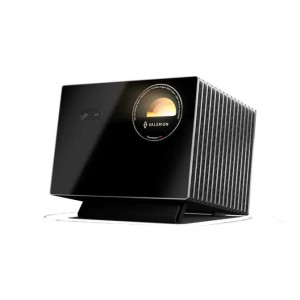
Valerion VisionMaster Max
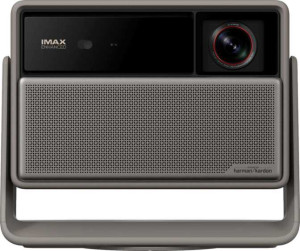
XGIMI Horizon 20 Max

Valerion VisionMaster Max XGIMI Horizon 20 Max

Overview

Welcome to our in-depth specification comparison between the Valerion VisionMaster Max and the XGIMI Horizon 20 Max — two premium laser projectors targeting the high-end home cinema market. Both share an impressive foundation of 4K resolution, 240Hz refresh rate, and broad HDR support, yet key differences in projection size, audio capabilities, and connectivity set them apart in meaningful ways. Read on to find out which projector is the right fit for your setup.

Common Features

  • Both products use a laser light source.
  • Both products have a dedicated smartphone app.
  • Both products come with a 2-year warranty.
  • Both products offer a 4K output resolution.
  • HDR10+ support is available on both products.
  • Both products feature a 240Hz refresh rate.
  • Dolby Vision support is available on both products.
  • HDR10 support is available on both products.
  • HLG support is available on both products.
  • Both products include 2 HDMI ports.
  • AirPlay support is available on both products.
  • Both products have Bluetooth connectivity.
  • Wi-Fi support is available on both products.
  • Both products include 2 USB ports.
  • Chromecast is built into both products.
  • A VGA connector is not present on either product.
  • Both products use Bluetooth version 5.2.
  • Both products feature stereo speakers with an audio output power of 2 x 12W.
  • Both products include a remote control.
  • Both products have a built-in smart TV platform.
  • A 3.5mm audio jack socket is available on both products.
  • A sleep timer is available on both products.
  • Voice commands are supported on both products.

Main Differences

  • Response time is 4 ms on Valerion VisionMaster Max and 1 ms on XGIMI Horizon 20 Max.
  • Maximum projection size is 150″ on Valerion VisionMaster Max and 300″ on XGIMI Horizon 20 Max.
  • Valerion VisionMaster Max supports Wi-Fi 6E (802.11ax), Wi-Fi 6 (802.11ax), Wi-Fi 5 (802.11ac), and Wi-Fi 4 (802.11n), while XGIMI Horizon 20 Max supports Wi-Fi 6 (802.11ax), Wi-Fi 5 (802.11ac), and Wi-Fi 4 (802.11n) but not Wi-Fi 6E.
  • A DVI connector is present on XGIMI Horizon 20 Max but not available on Valerion VisionMaster Max.
  • Valerion VisionMaster Max includes 1 RJ45 port, while XGIMI Horizon 20 Max has no RJ45 port.
  • Dolby Atmos support is present on Valerion VisionMaster Max but not available on XGIMI Horizon 20 Max.
Specs Comparison
Valerion VisionMaster Max

Valerion VisionMaster Max

XGIMI Horizon 20 Max

XGIMI Horizon 20 Max

General info:
has laser light source
release date January 2025 September 2025
Has a dedicated smartphone app
warranty period 2 years 2 years

In terms of general specifications, the Valerion VisionMaster Max and the XGIMI Horizon 20 Max are essentially identical on paper. Both rely on a laser light source, which is a meaningful shared advantage over lamp-based projectors — lasers deliver significantly longer lifespans (typically 20,000+ hours), near-instant on/off, and more consistent color accuracy over time without the gradual dimming that plagues traditional bulbs.

Both projectors also include a dedicated smartphone app, which in practice enables wireless control, input switching, and often keystone or image adjustment from a mobile device — a convenience feature that reduces reliance on a physical remote and broadens accessibility for less technical users. Additionally, both carry an identical 2-year warranty, meaning neither brand offers a longer coverage safety net as a purchasing incentive.

For this spec group, the two products are in a complete tie. There are no differentiators here that should influence a buying decision. Prospective buyers should look to other specification groups — such as brightness, resolution, or audio — to find meaningful distinctions between these two models.

Projection quality:
output resolution 4K 4K
response time 4 ms 1 ms
maximum projection size 150" 300"
supports HDR10+
refresh rate 240Hz 240Hz
supports Dolby Vision
supports HDR10
supports HLG

Both projectors share a strong common foundation: 4K output resolution, a 240Hz refresh rate, and full support for every major HDR format — HDR10, HDR10+, HLG, and Dolby Vision. That HDR breadth matters in practice, as it means neither unit will be caught off-guard by streaming or disc content mastered in any of these standards, ensuring tone mapping and dynamic range are handled natively rather than falling back to a generic profile.

Where the two diverge is on response time and maximum screen size — and both differences favor the XGIMI Horizon 20 Max. Its 1 ms response time versus the VisionMaster Max's 4 ms is largely irrelevant for cinematic content, but for gaming at 240Hz it becomes tangible: lower latency means less perceived blur during fast motion, which competitive or action-focused gamers will appreciate. More striking is the projection size gap — the Horizon 20 Max supports up to 300″ while the VisionMaster Max caps at 150″. Doubling the maximum image diagonal is not a marginal upgrade; it means the Horizon 20 Max can fill genuinely large dedicated home theater screens or commercial spaces that the VisionMaster Max simply cannot reach.

The XGIMI Horizon 20 Max holds a clear edge in this category. Unless a 150″ ceiling is entirely sufficient for a buyer's setup, the combination of faster response time and dramatically larger projection ceiling gives the Horizon 20 Max a meaningful real-world advantage — particularly for large-room installations and gaming use cases.

Connectivity:
HDMI ports 2 2
has AirPlay
Has Bluetooth
supports Wi-Fi
Wi-Fi version Wi-Fi 6E (802.11ax), Wi-Fi 6 (802.11ax), Wi-Fi 5 (802.11ac), Wi-Fi 4 (802.11n) Wi-Fi 6 (802.11ax), Wi-Fi 5 (802.11ac), Wi-Fi 4 (802.11n)
USB ports 2 2
has Chromecast built-in
has a VGA connector
Bluetooth version 5.2 5.2
has a DVI connector
supports Miracast
RJ45 ports 1 0
Has S/PDIF Out port

Wireless connectivity is where these two projectors quietly diverge in a meaningful way. Both support the same cast of screen-sharing protocols — AirPlay, Chromecast, and Miracast — and share identical Bluetooth 5.2 implementations. However, the Valerion VisionMaster Max steps ahead with Wi-Fi 6E support, adding access to the uncongested 6 GHz band on top of the standard 2.4 GHz and 5 GHz frequencies. In dense environments like apartments or offices with many competing networks, Wi-Fi 6E can meaningfully reduce interference and sustain more stable throughput — relevant when streaming high-bitrate 4K content wirelessly.

The wired connectivity picture also favors the VisionMaster Max. It includes an RJ45 Ethernet port, which the XGIMI Horizon 20 Max entirely lacks. For a device mounted in a fixed home theater setup, a wired network connection eliminates wireless variability altogether — a straightforward reliability win. The Horizon 20 Max counters with a DVI connector, but DVI is a legacy interface with limited modern relevance; few contemporary source devices still rely on it, making this a niche advantage at best.

The Valerion VisionMaster Max takes the edge in connectivity. Its combination of Wi-Fi 6E and a dedicated Ethernet port addresses both wireless performance in demanding environments and rock-solid wired reliability — two practical advantages that outweigh the Horizon 20 Max's inclusion of a dated DVI port.

Features:
has stereo speakers
has a remote control
has built-in smart TV
has a built-in speaker
audio output power 2 x 12W 2 x 12W
has a socket for a 3.5 mm audio jack
has a sleep timer
has Dolby Atmos
has voice commands

Across most of this feature set, the two projectors are evenly matched. Both deliver 2 × 12W stereo audio, built-in smart TV platforms, voice commands, a 3.5 mm headphone jack for external audio routing, and a sleep timer. For a projector in this class, 24W of total onboard power is a reasonable baseline — capable enough for casual viewing, though serious home theater users will likely route audio to a dedicated system regardless.

The sole differentiator in this group is Dolby Atmos support, which the Valerion VisionMaster Max includes and the XGIMI Horizon 20 Max does not. Dolby Atmos decoding means the VisionMaster Max can process object-based surround sound metadata from streaming services and Blu-ray sources natively, preserving the spatial audio mix as the creator intended. Even through the built-in stereo speakers — which cannot physically reproduce a true surround soundstage — Atmos content can be downmixed more intelligently. More importantly, when the projector's audio is passed through to an Atmos-capable soundbar or AV receiver, the format is preserved end-to-end rather than being stripped upstream.

The Valerion VisionMaster Max earns the edge here. For users invested in a quality audio chain — or who may add an Atmos soundbar in the future — native Dolby Atmos support is a tangible, forward-looking advantage that the Horizon 20 Max simply cannot match in this category.

Comparison Summary & Verdict

After a thorough comparison, both the Valerion VisionMaster Max and the XGIMI Horizon 20 Max deliver a premium laser projection experience with shared strengths including 4K resolution, 240Hz refresh rate, full HDR format support, and a rich connectivity suite. However, their differences define two distinct audiences. The Valerion VisionMaster Max stands out with Dolby Atmos audio, Wi-Fi 6E support, and an RJ45 ethernet port, making it ideal for dedicated home theatre enthusiasts who demand the best in immersive sound and stable wired networking. The XGIMI Horizon 20 Max, on the other hand, impresses with its massive 300″ maximum projection size, faster 1ms response time, and a DVI connector, making it the stronger choice for large-venue use or gamers who need the lowest possible latency on an expansive screen.

Valerion VisionMaster Max
Buy Valerion VisionMaster Max if...

Buy the Valerion VisionMaster Max if you want immersive Dolby Atmos audio, Wi-Fi 6E connectivity, and a wired ethernet port for a premium dedicated home theatre experience.

XGIMI Horizon 20 Max
Buy XGIMI Horizon 20 Max if...

Buy the XGIMI Horizon 20 Max if you need an enormous 300″ projection size and a faster 1ms response time, especially for large rooms or low-latency gaming sessions.