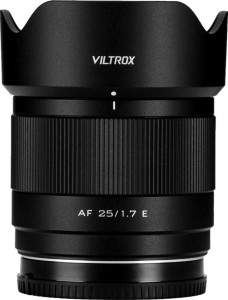
Viltrox AF 25mm f/1.7 Air E
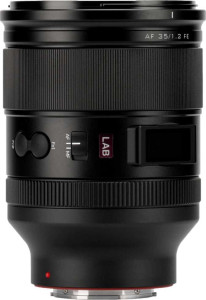
Viltrox AF 35mm f/1.2 LAB FE

Viltrox AF 25mm f/1.7 Air E Viltrox AF 35mm f/1.2 LAB FE

Overview

Welcome to our in-depth spec comparison between the Viltrox AF 25mm f/1.7 Air E and the Viltrox AF 35mm f/1.2 LAB FE, two Sony E-mount prime lenses that take very different approaches to everyday shooting. While they share the same mount and a few core traits, they diverge significantly in areas like maximum aperture, physical size and weight, and autofocus capability — making the choice between them anything but straightforward.

Common Features

  • Both lenses use the Sony E lens mount.
  • Neither lens offers weather sealing or splash protection.
  • Neither lens includes built-in optical image stabilization.
  • The smallest aperture at minimum focal length is f/16 on both lenses.
  • Both lenses can focus to infinity.
  • Both lenses support full-time manual focus.

Main Differences

  • The lens type is Prime on Viltrox AF 25mm f/1.7 Air E and Wide-angle, Prime on Viltrox AF 35mm f/1.2 LAB FE.
  • Weight is 170 g on Viltrox AF 25mm f/1.7 Air E and 910 g on Viltrox AF 35mm f/1.2 LAB FE.
  • Filter size is 52 mm on Viltrox AF 25mm f/1.7 Air E and 77 mm on Viltrox AF 35mm f/1.2 LAB FE.
  • The focal length is 25 mm on Viltrox AF 25mm f/1.7 Air E and 35 mm on Viltrox AF 35mm f/1.2 LAB FE.
  • The angle of view is 60° on Viltrox AF 25mm f/1.7 Air E and 64.2° on Viltrox AF 35mm f/1.2 LAB FE.
  • Magnification is 0.11x on Viltrox AF 25mm f/1.7 Air E and 0.17x on Viltrox AF 35mm f/1.2 LAB FE.
  • The wide aperture is f/1.7 on Viltrox AF 25mm f/1.7 Air E and f/1.2 on Viltrox AF 35mm f/1.2 LAB FE.
  • Aperture blades number 9 on Viltrox AF 25mm f/1.7 Air E and 11 on Viltrox AF 35mm f/1.2 LAB FE.
  • The smallest aperture at maximum focal length is f/1.7 on Viltrox AF 25mm f/1.7 Air E and f/1.2 on Viltrox AF 35mm f/1.2 LAB FE.
  • A focus motor is present on Viltrox AF 35mm f/1.2 LAB FE but not available on Viltrox AF 25mm f/1.7 Air E.
  • Minimum focus distance is 0.3 m on Viltrox AF 25mm f/1.7 Air E and 0.34 m on Viltrox AF 35mm f/1.2 LAB FE.
Specs Comparison
Viltrox AF 25mm f/1.7 Air E

Viltrox AF 25mm f/1.7 Air E

Viltrox AF 35mm f/1.2 LAB FE

Viltrox AF 35mm f/1.2 LAB FE

General info:
lens type Prime Wide-angle, Prime
lens mount Sony E Sony E
release date February 2025 April 2025
is weather-sealed (splashproof)
weight 170 g 910 g
filter size 52 mm 77 mm

Both the Viltrox AF 25mm f/1.7 Air E and the Viltrox AF 35mm f/1.2 LAB FE share the same Sony E mount and are Prime lenses, but they occupy very different positions in a shooter's kit. The most striking difference is weight: the AF 25mm tips the scales at just 170 g, while the AF 35mm f/1.2 LAB FE is a substantially heftier 910 g — more than five times heavier. In practical terms, this means the 25mm Air E is a natural companion for all-day street or travel shooting, while the 35mm LAB FE demands a more deliberate, tripod-friendly or two-handed shooting style.

The filter size gap reinforces this divide: the 25mm uses a compact 52 mm filter thread, keeping accessory costs low, whereas the 35mm requires 77 mm filters — a larger, pricier standard typically associated with professional-grade glass. Neither lens offers weather sealing, so both demand the same level of care in damp or dusty conditions regardless of their size difference.

For shooters prioritizing portability and discreet carry, the AF 25mm f/1.7 Air E holds a clear advantage. However, if maximum low-light aperture and a wider focal-length classification (the 35mm is also designated as a wide-angle lens) are the priority, the added bulk of the AF 35mm f/1.2 LAB FE is the deliberate trade-off for that optical ambition.

Optics:
maximum focal length 25 mm 35 mm
minimum focal length 25 mm 35 mm
has built-in optical image stabilization
maximum angle of view 60° 64.2°
minimum angle of view 60° 64.2°
magnification 0.11x 0.17x

On paper, a 25 mm focal length versus 35 mm might seem like a modest difference, but the real-world shooting experience diverges meaningfully. The 25mm Air E delivers a 60° angle of view, making it a solid environmental and street lens on Sony E-mount APS-C bodies. The 35mm LAB FE edges slightly wider at 64.2° — a counterintuitive result of its focal length on a full-frame body, where the field of view translates differently. This means the 35mm actually captures marginally more of a scene despite its longer focal length.

Neither lens includes optical image stabilization, so both rely entirely on in-body stabilization if the camera provides it — an equal limitation worth noting for low-light, handheld shooting. Where the two lenses diverge further is in close-focus capability: the 35mm LAB FE achieves a 0.17x magnification ratio compared to the 25mm Air E's 0.11x, giving it a modest but tangible edge for photographers who occasionally need to move in close on small subjects.

Taken together, the optical specs favor the AF 35mm f/1.2 LAB FE in this group: it offers a fractionally wider field of view and meaningfully better magnification. The 25mm Air E holds its own as a capable prime, but for pure optical reach and close-subject versatility, the 35mm has the edge.

Aperture:
wide aperture (main camera) 1.7f 1.2f
widest aperture at maximum focal length 1.7f 1.2f
aperture blades 9 11
smallest aperture at maximum focal length 1.7f 1.2f
smallest aperture at minimum focal length 16f 16f

Aperture is where the gap between these two lenses becomes most consequential. The AF 35mm f/1.2 LAB FE opens to a remarkable f/1.2, versus the AF 25mm f/1.7 Air E's already-respectable f/1.7. That difference translates to roughly 1.3 stops of additional light-gathering — meaning the 35mm can shoot in noticeably darker environments at the same ISO and shutter speed, or achieve shallower depth of field and more pronounced background separation at equivalent settings.

Bokeh quality is further shaped by the aperture blade count: the 35mm LAB FE features 11 blades compared to the 25mm Air E's 9 blades. More blades generally produce a rounder, smoother out-of-focus rendering, which matters most to portrait and artistic shooters who scrutinize the quality of background blur. Both lenses share the same minimum aperture of f/16, so their diffraction and depth-of-field characteristics at the narrow end are equivalent.

The AF 35mm f/1.2 LAB FE holds a decisive edge in this category. Its wider maximum aperture and higher blade count give it a clear advantage for low-light performance and subject-isolation work — the two attributes aperture-focused buyers care about most.

Focus:
Can focus to infinity
Has focus motor
Has full-time manual focus
minimum focus distance 0.3 m 0.34 m

The most functionally significant difference in this group is the presence of a built-in focus motor in the AF 35mm f/1.2 LAB FE, versus the AF 25mm f/1.7 Air E which has no focus motor of its own. The 25mm therefore depends entirely on the camera body to drive autofocus — which works fine on most modern Sony bodies that have a body-side focus drive, but can result in slower or less consistent AF performance on bodies that lack one. The 35mm's self-contained motor gives it more predictable, body-independent autofocus behavior.

Minimum focus distance is nearly identical — 0.3 m for the 25mm versus 0.34 m for the 35mm — a difference too small to matter in most real-world scenarios. Both lenses support full-time manual focus override, which is a welcome shared feature for shooters who like to fine-tune focus after an autofocus acquisition without switching modes.

Overall, the AF 35mm f/1.2 LAB FE takes the edge here thanks to its integrated focus motor, which removes a potential dependency on the camera body and broadens its compatibility. The 25mm Air E is not at a severe disadvantage on capable Sony bodies, but the 35mm's self-sufficiency is a tangible practical advantage.

Comparison Summary & Verdict

After examining every specification, it is clear that these two lenses serve distinct types of photographers. The Viltrox AF 25mm f/1.7 Air E is a compact, lightweight option at just 170 g with a 52 mm filter thread, making it an excellent everyday carry lens for those who value portability and a natural field of view. The Viltrox AF 35mm f/1.2 LAB FE, on the other hand, is a substantially more ambitious optic: its f/1.2 maximum aperture, 11-blade aperture diaphragm, dedicated focus motor, and 0.17x magnification place it firmly in the premium category for photographers who prioritize subject separation and low-light performance above all else, and are willing to carry its 910 g frame to get there. Neither lens is weather-sealed, so both require care in adverse conditions.

Viltrox AF 25mm f/1.7 Air E
Buy Viltrox AF 25mm f/1.7 Air E if...

Buy the Viltrox AF 25mm f/1.7 Air E if you want a lightweight, compact Sony E-mount prime that is easy to carry daily without sacrificing a versatile field of view.

Viltrox AF 35mm f/1.2 LAB FE
Buy Viltrox AF 35mm f/1.2 LAB FE if...

Buy the Viltrox AF 35mm f/1.2 LAB FE if you demand a wider f/1.2 maximum aperture, a built-in focus motor, and greater magnification for superior low-light shooting and subject separation.