Vivo iQOO 15 (512GB / 16GB RAM)
ZTE Nubia Red Magic 11 Pro Plus

Vivo iQOO 15 (512GB / 16GB RAM) ZTE Nubia Red Magic 11 Pro Plus

Overview

Welcome to our in-depth comparison of the Vivo iQOO 15 (512GB / 16GB RAM) and the ZTE Nubia Red Magic 11 Pro Plus — two powerhouse flagship smartphones sharing the same Snapdragon 8 Elite Gen 5 chipset. While they agree on many fundamentals, key battlegrounds emerge around display sharpness, camera versatility, battery and charging capabilities, and audio connectivity. Read on to see which device best suits your needs.

Common Features

  • Both phones have a waterproof depth rating of 1.5 m.
  • Neither phone has a rugged build.
  • Neither phone can be folded.
  • Both phones feature an OLED/AMOLED display.
  • Both phones have a screen size of 6.85″.
  • Both phones support a 144Hz refresh rate.
  • Neither phone has branded damage-resistant glass.
  • Both phones support Always-On Display.
  • Neither phone supports Dolby Vision.
  • Both phones are powered by the Qualcomm Snapdragon 8 Elite Gen 5 chipset.
  • Both phones use the Adreno 830 GPU.
  • Both phones have a CPU speed of 2 x 4.6 and 6 x 3.62 GHz.
  • Both phones have a Geekbench 6 multi-core score of 10059.
  • Both phones have a Geekbench 6 single-core score of 3234.
  • Both phones run Android 16.
  • Both phones support wireless charging.
  • Both phones support fast charging.
  • Neither phone has a removable battery.
  • Both phones have stereo speakers.
  • Both phones support 5G connectivity.
  • Both phones support dual SIM cards.
  • Both phones feature a USB Type-C port with USB 3.2.
  • Both phones have NFC support.
  • Both phones support Wi-Fi 7 (802.11be).

Main Differences

  • Water resistance is rated as Waterproof (IP68) on Vivo iQOO 15 (512GB / 16GB RAM) and Water resistant (IPX8) on ZTE Nubia Red Magic 11 Pro Plus.
  • Weight is 220 g on Vivo iQOO 15 (512GB / 16GB RAM) and 230 g on ZTE Nubia Red Magic 11 Pro Plus.
  • Thickness is 8.1 mm on Vivo iQOO 15 (512GB / 16GB RAM) and 8.9 mm on ZTE Nubia Red Magic 11 Pro Plus.
  • Volume is 101.83 cm³ on Vivo iQOO 15 (512GB / 16GB RAM) and 111.52 cm³ on ZTE Nubia Red Magic 11 Pro Plus.
  • Pixel density is 508 ppi on Vivo iQOO 15 (512GB / 16GB RAM) and 431 ppi on ZTE Nubia Red Magic 11 Pro Plus.
  • Resolution is 1440 x 3168 px on Vivo iQOO 15 (512GB / 16GB RAM) and 1216 x 2688 px on ZTE Nubia Red Magic 11 Pro Plus.
  • HDR10 support is present on Vivo iQOO 15 (512GB / 16GB RAM) but not available on ZTE Nubia Red Magic 11 Pro Plus.
  • HDR10+ support is present on Vivo iQOO 15 (512GB / 16GB RAM) but not available on ZTE Nubia Red Magic 11 Pro Plus.
  • Internal storage is 512GB on Vivo iQOO 15 (512GB / 16GB RAM) and 1024GB on ZTE Nubia Red Magic 11 Pro Plus.
  • RAM is 16GB on Vivo iQOO 15 (512GB / 16GB RAM) and 24GB on ZTE Nubia Red Magic 11 Pro Plus.
  • Main camera megapixels are 50 & 50 & 50 MP on Vivo iQOO 15 (512GB / 16GB RAM) and 50 & 50 & 2 MP on ZTE Nubia Red Magic 11 Pro Plus.
  • Front camera resolution is 32MP on Vivo iQOO 15 (512GB / 16GB RAM) and 16MP on ZTE Nubia Red Magic 11 Pro Plus.
  • Optical image stabilization is present on ZTE Nubia Red Magic 11 Pro Plus but not available on Vivo iQOO 15 (512GB / 16GB RAM).
  • Optical zoom is 3x on Vivo iQOO 15 (512GB / 16GB RAM) and 0x on ZTE Nubia Red Magic 11 Pro Plus.
  • Battery capacity is 7000 mAh on Vivo iQOO 15 (512GB / 16GB RAM) and 7500 mAh on ZTE Nubia Red Magic 11 Pro Plus.
  • Wired charging speed is 100W on Vivo iQOO 15 (512GB / 16GB RAM) and 120W on ZTE Nubia Red Magic 11 Pro Plus.
  • Wireless charging speed is 40W on Vivo iQOO 15 (512GB / 16GB RAM) and 80W on ZTE Nubia Red Magic 11 Pro Plus.
  • A 3.5 mm audio jack is absent on Vivo iQOO 15 (512GB / 16GB RAM) but present on ZTE Nubia Red Magic 11 Pro Plus.
  • aptX Adaptive support is present on Vivo iQOO 15 (512GB / 16GB RAM) but not available on ZTE Nubia Red Magic 11 Pro Plus.
  • Bluetooth version is 6 on Vivo iQOO 15 (512GB / 16GB RAM) and 5.4 on ZTE Nubia Red Magic 11 Pro Plus.
  • A barometer is present on Vivo iQOO 15 (512GB / 16GB RAM) but not available on ZTE Nubia Red Magic 11 Pro Plus.
  • Wi-Fi 6E (802.11ax) support is available on ZTE Nubia Red Magic 11 Pro Plus but not on Vivo iQOO 15 (512GB / 16GB RAM).
Specs Comparison
Vivo iQOO 15 (512GB / 16GB RAM)

Vivo iQOO 15 (512GB / 16GB RAM)

ZTE Nubia Red Magic 11 Pro Plus

ZTE Nubia Red Magic 11 Pro Plus

Design:
water resistance Waterproof Water resistant
weight 220 g 230 g
thickness 8.1 mm 8.9 mm
width 76.8 mm 76.5 mm
height 163.7 mm 163.8 mm
volume 101.834496 cm³ 111.52323 cm³
Ingress Protection (IP) rating IP68 IPX8
waterproof depth rating 1.5 m 1.5 m
has a rugged build
can be folded

In terms of physical footprint, these two phones are nearly twins: height and width are virtually identical, making them interchangeable in the hand from a reach perspective. Where they diverge meaningfully is in thickness and weight. The iQOO 15 is noticeably slimmer at 8.1 mm versus the Red Magic 11 Pro+'s 8.9 mm, and lighter at 220 g compared to 230 g. While a 10-gram difference may sound trivial on paper, combined with the reduced thickness, it translates to a more pocket-friendly, less fatiguing device during extended one-handed use — a real distinction for day-to-day carry.

On water protection, both phones share a 1.5 m submersion depth rating, but the certification standards tell a different story. The iQOO 15 carries a full IP68 rating, which covers both dust ingress (rated ″6″) and water immersion. The Red Magic 11 Pro+ holds an IPX8 rating, where the ″X″ denotes that dust resistance was not formally tested or certified. In practical terms, the iQOO 15 offers broader protection against fine particles — relevant in sandy, dusty, or workshop environments — while the Red Magic's coverage is limited to liquid exposure only.

Overall, the iQOO 15 holds a clear edge in this group. Its slimmer, lighter build is objectively more compact, and its full IP68 certification provides a more comprehensive protection envelope than the IPX8 on the Red Magic 11 Pro+. Neither device is ruggedized or foldable, so for users prioritizing a refined, well-protected everyday design, the iQOO 15 is the stronger choice here.

Display:
Display type OLED/AMOLED OLED/AMOLED
screen size 6.85" 6.85"
pixel density 508 ppi 431 ppi
resolution 1440 x 3168 px 1216 x 2688 px
refresh rate 144Hz 144Hz
has branded damage-resistant glass
supports HDR10
supports HDR10+
Always-On Display
supports Dolby Vision
Has a secondary screen
has a touch screen

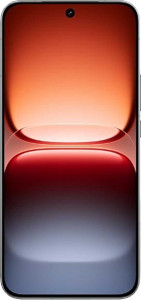
Both phones share the same 6.85″ OLED/AMOLED panel type and a 144Hz refresh rate, meaning the underlying display technology and motion smoothness are on equal footing. The critical split comes down to resolution: the iQOO 15 renders at 1440 x 3168 px for a pixel density of 508 ppi, while the Red Magic 11 Pro+ tops out at 1216 x 2688 px and 431 ppi. That 77 ppi gap is perceptible — at typical viewing distances, the iQOO 15's screen will render text, fine UI elements, and high-resolution images with noticeably sharper edges, which matters especially for reading, productivity, and VR-style use cases.

Where the iQOO 15 extends its lead further is in HDR support. It is certified for both HDR10 and HDR10+, meaning compatible streaming content from platforms like Netflix or Prime Video will display with wider dynamic range, deeper blacks, and more nuanced highlights. The Red Magic 11 Pro+ carries no HDR certification at all, so it will display the same content in standard dynamic range regardless of the source quality.

The iQOO 15 wins this category decisively. A sharper panel plus HDR10+ support versus no HDR certification is a meaningful real-world gap — not just a spec sheet footnote. For media consumption, gaming visuals, and everyday sharpness, the iQOO 15 delivers a demonstrably richer display experience based strictly on the provided data.

Performance:
internal storage 512GB 1024GB
RAM 16GB 24GB
Chipset (SoC) name Qualcomm Snapdragon 8 Elite Gen 5 Qualcomm Snapdragon 8 Elite Gen 5
GPU name Adreno 830 Adreno 830
CPU speed 2 x 4.6 & 6 x 3.62 GHz 2 x 4.6 & 6 x 3.62 GHz
Geekbench 6 result (multi) 10059 10059
Geekbench 6 result (single) 3234 3234
GPU clock speed 1200 MHz 1200 MHz
Has integrated LTE
RAM speed 5300 MHz 5300 MHz
semiconductor size 3 nm 3 nm
Supports 64-bit
DirectX version DirectX 12 DirectX 12
Has integrated graphics
OpenGL version 3.2 3.2
OpenGL ES version 3.2 3.2
Uses big.LITTLE technology
CPU threads 8 threads 8 threads
Uses HMP
Has TrustZone
maximum memory bandwidth 85.1 GB/s 85.1 GB/s
OpenCL version 3 3
memory channels 2 2
L2 cache 12 MB 12 MB
Supports ECC memory
L1 cache 192 KB 192 KB
maximum memory amount 24GB 24GB
uses multithreading
Thermal Design Power (TDP) 8.2W 8.2W
DDR memory version 5 5
shading units 1536 1536
supported displays 2 2
L3 cache 8 MB 8 MB

At the silicon level, these two devices are identical. Both run on the Qualcomm Snapdragon 8 Elite Gen 5 paired with the Adreno 830 GPU, built on a 3 nm process with the same clock speeds, cache configuration, memory bandwidth, and TDP. Predictably, their benchmark results mirror each other exactly — 10,059 multi-core and 3,234 single-core on Geekbench 6. In raw processing and graphics performance, there is zero daylight between them.

The only meaningful separation in this group comes from memory and storage provisioning. The Red Magic 11 Pro+ ships with 24 GB of RAM and 1 TB of internal storage, versus 16 GB of RAM and 512 GB on the iQOO 15. The RAM difference is worth noting for power users: 24 GB allows more apps and game assets to remain resident in memory simultaneously, reducing reload times during heavy multitasking or when switching between demanding titles. The doubled storage is similarly relevant for users who accumulate large game libraries or local media without relying on cloud solutions.

For this group, the Red Magic 11 Pro+ holds a practical edge — not because of any CPU or GPU advantage, but purely due to its more generous 24 GB RAM and 1 TB storage configuration. Users who push their device hard across multiple simultaneous workloads will appreciate the headroom, even though both phones draw from the exact same processing foundation.

Cameras:
megapixels (main camera) 50 & 50 & 50 MP 50 & 50 & 2 MP
wide aperture (main camera) 1.9 & 2.7 & 2.1f 1.9 & 2.2 & 2.4f
Has a dual-lens (or multi-lens) main camera
megapixels (front camera) 32MP 16MP
has built-in optical image stabilization
video recording (main camera) 4320 x 30 fps 4320 x 30 fps
Has a dual-tone LED flash
number of flash LEDs 1 1
has a BSI sensor
has a CMOS sensor
has continuous autofocus when recording movies
Has phase-detection autofocus for photos
supports slow-motion video recording
has a built-in HDR mode
has manual exposure
has a flash
optical zoom 3x 0x
has manual ISO
has a serial shot mode
has manual focus
has a front camera
Has laser autofocus
Shoots 360° panorama
has manual white balance
has touch autofocus
has manual shutter speed
can create panoramas in-camera
wide aperture (front camera) 2.2f 2f
Has timelapse function
Has a front-facing LED flash
has a dual-lens (or multi-lens) front camera
supports HDR10 recording
supports Dolby Vision recording
has a front-facing camera under the display
Has a RGB LED flash
has 3D photo/video recording capabilities

The rear camera systems look similar on the surface — both lead with a 50 MP primary shooter — but the supporting lenses tell very different stories. The iQOO 15 backs its main sensor with two additional 50 MP lenses and a 3x optical zoom, meaning its telephoto reach is backed by genuine optical magnification rather than digital cropping. The Red Magic 11 Pro+, by contrast, pairs its primary with another 50 MP lens but rounds out the trio with a 2 MP sensor — a resolution so limited it functions effectively as a depth aid rather than a versatile shooter — and lists 0x optical zoom, meaning any zoom is purely digital and inherently lossy in quality.

The Red Magic does counter with one meaningful advantage: built-in optical image stabilization (OIS), which the iQOO 15 lacks. OIS reduces blur from hand shake during low-light photography and video recording, which is a real-world benefit for handheld shooting. However, that advantage is weighed against having no optical zoom at all, which is a significant functional gap for users who regularly photograph subjects at distance. On the selfie side, the iQOO 15's 32 MP front camera holds a substantial resolution lead over the Red Magic's 16 MP, offering more detail and greater crop flexibility for portrait shots.

The iQOO 15 takes the edge in this category. Its versatile triple-50 MP system with 3x optical zoom and a higher-resolution front camera outweighs the Red Magic's OIS advantage — particularly since the Red Magic's third lens contributes minimally and the absence of optical zoom limits telephoto quality in a way OIS cannot compensate for.

Operating system:
Android version Android 16 Android 16
has clipboard warnings
has location privacy options
has camera/microphone privacy options
has Mail Privacy Protection
has theme customization
can block app tracking
blocks cross-site tracking
has on-device machine learning
has notification permissions
has media picker
Can play games while they download
has dark mode
has Wi-Fi password sharing
has battery health check
has an extra dim mode
has focus modes
has dynamic theming
can offload apps
Has customizable notifications
has Live Text
has full-page screenshots
supports split screen
gets direct OS updates
has PiP
Can be used as a PC
Has sharing intents
has a child lock
Supports widgets
Is free and open source
Has offline voice recognition
has voice commands
Tracks the current position of a mobile device
is a multi-user system
has Quick Start

This is a rare instance of complete parity: every single specification in this group is identical across both devices. Both run Android 16, support the same privacy controls — including location, camera, and microphone permissions and app tracking blockers — and share the same quality-of-life features such as split-screen multitasking, Picture-in-Picture, dynamic theming, dark mode, and offline voice recognition. Neither device receives direct OS updates, and neither supports Wi-Fi password sharing or focus modes.

The practical takeaway is that a user switching between these two phones would find the software experience essentially indistinguishable at the feature-set level covered here. The shared Android 16 base ensures both benefit from the same security architecture, privacy tooling, and core productivity capabilities without either holding a software advantage over the other.

This group is a dead tie. There are no differentiators whatsoever in the provided data — the decision between these two phones cannot and should not be influenced by operating system features as defined here.

Battery:
battery power 7000 mAh 7500 mAh
has wireless charging
Supports fast charging
charging speed 100W 120W
wireless charging speed 40W 80W
has reverse wireless charging
has a removable battery
has a battery level indicator
has a rechargeable battery

Both phones arrive with generously sized batteries well above the mainstream flagship norm, but the Red Magic 11 Pro+ pulls ahead on every charging metric. Its 7500 mAh cell edges out the iQOO 15's 7000 mAh — a 500 mAh difference that, while not transformative, does represent a tangible buffer for heavy users pushing through a full day of gaming or media consumption. Combined with the larger capacity, the Red Magic also charges faster at 120W wired versus the iQOO 15's 100W, meaning top-up sessions will be marginally shorter even from a larger starting cell.

The wireless charging gap is more pronounced. The Red Magic 11 Pro+ supports 80W wireless charging — an unusually high rate for cable-free replenishment that effectively blurs the line between wired and wireless convenience. The iQOO 15's 40W wireless is still fast by general standards, but it is half the speed, meaning a full wireless charge on the iQOO 15 will take roughly twice as long under equivalent conditions. Neither device supports reverse wireless charging, so that capability is off the table for both.

The Red Magic 11 Pro+ wins this group clearly. It carries more capacity, charges faster both wired and wirelessly, and does so without conceding anything on the fundamentals. For users who prioritize endurance and charging flexibility — particularly those who rely on wireless pads as their primary charging method — the Red Magic's battery package is the stronger proposition across the board.

Audio:
has a socket for a 3.5 mm audio jack
has stereo speakers
has aptX
has aptX HD
has aptX Adaptive
has aptX Lossless
Has a radio

Wired and wireless audio pull in opposite directions here, making this a genuine trade-off rather than a clear sweep. The Red Magic 11 Pro+ retains a 3.5 mm headphone jack — a feature increasingly rare in flagship gaming phones — which matters to users with high-quality wired headphones or those who simply prefer a zero-latency, no-pairing-required connection. The iQOO 15 drops the jack entirely, committing users to wireless or USB-C audio solutions.

Where the iQOO 15 compensates is in Bluetooth audio codec support. It carries aptX, aptX HD, and aptX Adaptive — a codec stack that enables progressively higher-quality wireless audio, with aptX Adaptive dynamically adjusting bitrate for low-latency, high-fidelity output when paired with compatible headphones. The Red Magic 11 Pro+ supports none of these codecs, meaning wireless audio is limited to more basic Bluetooth transmission quality. Both phones feature stereo speakers and neither includes a radio, so speaker-based listening is evenly matched.

This group comes down to user preference and ecosystem. The Red Magic 11 Pro+ is the better choice for wired audio purists, while the iQOO 15 is the stronger platform for users invested in premium wireless headphones compatible with aptX Adaptive. Neither has an absolute advantage — the deciding factor is how you personally listen.

Connectivity & Features:
release date October 2025 October 2025
has 5G support
Wi-Fi version Wi-Fi 4 (802.11n), Wi-Fi 5 (802.11ac), Wi-Fi 6 (802.11ax), Wi-Fi 7 (802.11be) Wi-Fi 4 (802.11n), Wi-Fi 6E (802.11ax), Wi-Fi 6 (802.11ax), Wi-Fi 5 (802.11ac), Wi-Fi 7 (802.11be)
SIM cards 2 SIM 2 SIM
Bluetooth version 6 5.4
has an external memory slot
Has USB Type-C
USB version 3.2 3.2
has NFC
download speed 10000 MBits/s 10000 MBits/s
upload speed 3500 MBits/s 3500 MBits/s
Has a fingerprint scanner
has emergency SOS via satellite
has crash detection
is DLNA-certified
has a gyroscope
supports ANT+
Has a heart rate monitor
has GPS
has a compass
supports Wi-Fi
Has an infrared sensor
has an accelerometer
has a cellular module
Has a barometer
has an HDMI output
Uses 3D facial recognition
Has an iris scanner
Stylus included
supports Galileo
Has motion tracking
Has optical tracking
Has a built-in projector

Across the core connectivity pillars — 5G, USB 3.2 Type-C, NFC, dual SIM, and Wi-Fi 7 — these two phones are functionally identical, and both hit the same peak cellular speeds. The differences emerge in the finer details. The iQOO 15 ships with Bluetooth 6 versus the Red Magic 11 Pro+'s Bluetooth 5.4, a newer specification that brings improved connection precision, reduced latency, and more robust multi-device handling — meaningful for users who regularly pair wireless audio gear or peripherals. The Red Magic, meanwhile, adds Wi-Fi 6E support to its wireless stack, unlocking access to the 6 GHz band where available. In environments with a compatible router, this translates to less congestion and potentially more stable throughput — a useful edge for competitive gaming over Wi-Fi.

The remaining differentiator is the barometer, present on the iQOO 15 but absent on the Red Magic 11 Pro+. A barometer enables more accurate altitude readings and can improve GPS positioning in certain navigation scenarios, as well as supporting weather-sensing applications. It is a niche sensor, but it is an addition the Red Magic simply does not have.

This group is closely contested. The iQOO 15 holds a forward-looking edge with Bluetooth 6 and a barometer, while the Red Magic 11 Pro+ counters with Wi-Fi 6E. Which advantage matters more depends on the user: those prioritizing wireless peripheral quality will lean toward the iQOO 15, while users on Wi-Fi 6E networks who want the cleanest possible wireless gaming connection will appreciate the Red Magic's broader Wi-Fi coverage. Overall, a narrow edge to the iQOO 15 on account of the more significant Bluetooth version jump and additional sensor.

Miscellaneous:
has a video light
Has sapphire glass display
Has a curved display
Has an e-paper display

The miscellaneous category yields another complete tie. Both devices share a video light and both omit sapphire glass, curved displays, and e-paper panels — with no variation whatsoever across any of the four data points provided.

This group offers no basis for differentiation between the two phones. The decision here is a dead tie, and buyers should look to the other specification groups to inform their choice.

Comparison Summary & Verdict

Both phones are flagship-grade devices built on the same processor foundation, yet they cater to different priorities. The Vivo iQOO 15 (512GB / 16GB RAM) stands out with its sharper 1440 x 3168 px display, full HDR10 and HDR10+ support, a higher pixel density of 508 ppi, a triple 50MP camera system with 3x optical zoom, and Bluetooth 6 with aptX Adaptive — making it ideal for media enthusiasts and photography-focused users who want a lighter, more compact device. The ZTE Nubia Red Magic 11 Pro Plus counters with more RAM (24GB) and storage (1TB), a larger 7500 mAh battery with faster 120W wired and 80W wireless charging, optical image stabilization, and a 3.5 mm headphone jack — suiting power users and gamers who demand maximum endurance and versatility.

Vivo iQOO 15 (512GB / 16GB RAM)
Buy Vivo iQOO 15 (512GB / 16GB RAM) if...

Buy the Vivo iQOO 15 (512GB / 16GB RAM) if you prioritize a sharper, higher-resolution display with HDR10+ support, a versatile triple 50MP camera with 3x optical zoom, and a lighter, slimmer design with Bluetooth 6 and aptX Adaptive audio.

ZTE Nubia Red Magic 11 Pro Plus
Buy ZTE Nubia Red Magic 11 Pro Plus if...

Buy the ZTE Nubia Red Magic 11 Pro Plus if you need more RAM and storage, longer battery life with faster wired and wireless charging, optical image stabilization, and the convenience of a 3.5 mm headphone jack.