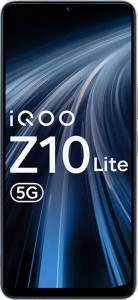
Vivo iQOO Z10 Lite
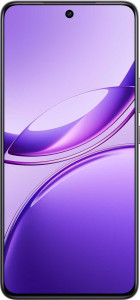
Vivo V50 Lite 5G

Vivo iQOO Z10 Lite Vivo V50 Lite 5G

Overview

Welcome to our in-depth comparison of the Vivo iQOO Z10 Lite and the Vivo V50 Lite 5G, two mid-range smartphones that share the same processor but take notably different paths when it comes to display quality, charging speed, and camera capabilities. Whether you prioritize everyday essentials or a more feature-rich experience, this head-to-head breakdown will help you find the right fit for your needs.

Common Features

  • Both phones are water resistant.
  • Neither phone has a rugged build.
  • Neither phone can be folded.
  • Both phones feature an OLED/AMOLED display.
  • Neither phone has branded damage-resistant glass.
  • HDR10 support is not available on either phone.
  • HDR10+ support is not available on either phone.
  • Always-On Display is available on both phones.
  • Dolby Vision support is not available on either phone.
  • Neither phone has a secondary screen.
  • Both phones have a touch screen.
  • Both phones are powered by the MediaTek Dimensity 6300 chipset.
  • Both phones use the Arm Mali-G57 MC2 GPU.
  • Both phones have a CPU speed of 2 x 2.4 and 6 x 2 GHz.
  • Both phones scored 2012 on the Geekbench 6 multi-core test and 782 on the single-core test.
  • Both phones have a RAM speed of 2133 MHz.
  • Both phones have integrated LTE.
  • Both phones have a dual-lens main camera.
  • Optical image stabilization is not available on either phone.
  • Both phones record video at 1080 x 30 fps on the main camera.
  • Neither phone has a dual-tone LED flash.
  • Both phones have one flash LED.
  • Both phones support continuous autofocus when recording movies.
  • Both phones support phase-detection autofocus for photos.
  • Both phones run Android 15.
  • Both phones include clipboard warnings.
  • Both phones offer location privacy options.
  • Both phones offer camera and microphone privacy options.
  • Mail Privacy Protection is not available on either phone.
  • Both phones support theme customization.
  • Both phones can block app tracking.
  • Cross-site tracking blocking is not available on either phone.
  • Neither phone supports wireless charging.
  • Both phones support fast charging.
  • Neither phone has a removable battery.
  • Both phones have a battery level indicator.
  • Both phones have a rechargeable battery.
  • Both phones have stereo speakers.
  • Both phones support 5G.
  • Both phones support Wi-Fi 4 (802.11n) and Wi-Fi 5 (802.11ac).
  • Both phones have dual SIM card slots.
  • Both phones have Bluetooth version 5.4.
  • Both phones have USB Type-C with USB version 2.
  • Both phones have a download speed of 3300 MBits/s.
  • Both phones have a fingerprint scanner.
  • Both phones have a video light.
  • Neither phone has a sapphire glass display.
  • Neither phone has a curved display.
  • Neither phone has an e-paper display.

Main Differences

  • Weight is 202 g on Vivo iQOO Z10 Lite and 197 g on Vivo V50 Lite 5G.
  • Thickness is 8.2 mm on Vivo iQOO Z10 Lite and 7.8 mm on Vivo V50 Lite 5G.
  • Width is 77 mm on Vivo iQOO Z10 Lite and 76.3 mm on Vivo V50 Lite 5G.
  • Height is 167.3 mm on Vivo iQOO Z10 Lite and 163.8 mm on Vivo V50 Lite 5G.
  • Volume is 105.63 cm³ on Vivo iQOO Z10 Lite and 97.48 cm³ on Vivo V50 Lite 5G.
  • IP rating is IP64 on Vivo iQOO Z10 Lite and IP65 on Vivo V50 Lite 5G.
  • Screen size is 6.74″ on Vivo iQOO Z10 Lite and 6.77″ on Vivo V50 Lite 5G.
  • Pixel density is 260 ppi on Vivo iQOO Z10 Lite and 388 ppi on Vivo V50 Lite 5G.
  • Resolution is 720 x 1600 px on Vivo iQOO Z10 Lite and 1080 x 2392 px on Vivo V50 Lite 5G.
  • Refresh rate is 90Hz on Vivo iQOO Z10 Lite and 120Hz on Vivo V50 Lite 5G.
  • Internal storage is 256GB on Vivo iQOO Z10 Lite and 512GB on Vivo V50 Lite 5G.
  • RAM is 8GB on Vivo iQOO Z10 Lite and 12GB on Vivo V50 Lite 5G.
  • Main camera megapixels are 50 and 2 MP on Vivo iQOO Z10 Lite and 50 and 8 MP on Vivo V50 Lite 5G.
  • Front camera resolution is 5MP on Vivo iQOO Z10 Lite and 32MP on Vivo V50 Lite 5G.
  • A CMOS sensor is present on Vivo iQOO Z10 Lite but not on Vivo V50 Lite 5G.
  • Front camera aperture is f/2.2 on Vivo iQOO Z10 Lite and f/2.5 on Vivo V50 Lite 5G.
  • Battery capacity is 6000 mAh on Vivo iQOO Z10 Lite and 6500 mAh on Vivo V50 Lite 5G.
  • Charging speed is 15W on Vivo iQOO Z10 Lite and 90W on Vivo V50 Lite 5G.
  • A 3.5mm audio jack is present on Vivo iQOO Z10 Lite but not available on Vivo V50 Lite 5G.
  • FM radio is present on Vivo iQOO Z10 Lite but not available on Vivo V50 Lite 5G.
  • NFC is present on Vivo V50 Lite 5G but not available on Vivo iQOO Z10 Lite.
  • A gyroscope is present on Vivo V50 Lite 5G but not available on Vivo iQOO Z10 Lite.
Specs Comparison
Vivo iQOO Z10 Lite

Vivo iQOO Z10 Lite

Vivo V50 Lite 5G

Vivo V50 Lite 5G

Design:
water resistance Water resistant Water resistant
weight 202 g 197 g
thickness 8.2 mm 7.8 mm
width 77 mm 76.3 mm
height 167.3 mm 163.8 mm
volume 105.63322 cm³ 97.483932 cm³
Ingress Protection (IP) rating IP64 IP65
has a rugged build
can be folded

Both phones share the same fundamental design philosophy — non-rugged, non-foldable slabs with water resistance — but the Vivo V50 Lite 5G is meaningfully more compact across every physical dimension. It is shorter (163.8 mm vs 167.3 mm), narrower (76.3 mm vs 77 mm), and slimmer (7.8 mm vs 8.2 mm), which collectively results in a noticeably smaller total volume of 97.48 cm³ compared to the iQOO Z10 Lite's 105.63 cm³ — roughly an 8% reduction. In practical terms, the V50 Lite 5G will feel less bulky in a pocket and easier to grip one-handed.

The weight gap is modest but real: the V50 Lite 5G comes in at 197 g versus 202 g for the iQOO Z10 Lite. A 5-gram difference is unlikely to be consciously felt in a single-handed lift, but over extended use — long calls, gaming sessions, or navigating — the slightly lighter and slimmer V50 Lite 5G can reduce fatigue at the margins.

On water resistance, both carry an IP6X rating, but there is a meaningful distinction: the iQOO Z10 Lite holds an IP64 rating, meaning it is protected against splashes from any direction but only limited dust ingress. The V50 Lite 5G steps up to IP65, which adds full dust-tight protection and resistance to low-pressure water jets. This gives the V50 Lite 5G a clear edge for use in dusty or mildly harsh outdoor environments. Overall, the Vivo V50 Lite 5G has the design advantage here — it is slimmer, more compact, lighter, and better protected against the elements.

Display:
Display type OLED/AMOLED OLED/AMOLED
screen size 6.74" 6.77"
pixel density 260 ppi 388 ppi
resolution 720 x 1600 px 1080 x 2392 px
refresh rate 90Hz 120Hz
has branded damage-resistant glass
supports HDR10
supports HDR10+
Always-On Display
supports Dolby Vision
Has a secondary screen
has a touch screen

Both phones use OLED/AMOLED panels and are nearly identical in screen size — 6.74″ for the iQOO Z10 Lite versus 6.77″ for the V50 Lite 5G — so the viewing experience starts from a similar baseline. The real divergence, however, lies in resolution and pixel density, where the gap is substantial. The iQOO Z10 Lite renders at just 720 x 1600 px at 260 ppi, which is an HD+ panel. The V50 Lite 5G steps up to a full 1080 x 2392 px resolution at 388 ppi — nearly 50% more pixels per inch. At typical phone viewing distances, this difference is visible: text will appear crisper, fine details in images will be sharper, and the overall image will look more polished on the V50 Lite 5G.

The refresh rate gap adds another layer to this advantage. The iQOO Z10 Lite runs at 90Hz, which is smooth enough for everyday scrolling, while the V50 Lite 5G pushes to 120Hz. That extra 30Hz translates into visibly more fluid animations, more responsive-feeling touch interactions, and a more comfortable experience during fast-scrolling or gaming. Neither phone supports HDR10 or Dolby Vision, and both feature Always-On Display, so those factors are a wash.

The display category is a clear win for the Vivo V50 Lite 5G. It delivers a noticeably sharper FHD+ panel and a faster refresh rate on a virtually identical screen size — two upgrades that directly affect how the phone looks and feels to use every single day.

Performance:
internal storage 256GB 512GB
RAM 8GB 12GB
Chipset (SoC) name MediaTek Dimensity 6300 MediaTek Dimensity 6300
GPU name Arm Mali-G57 MC2 Arm Mali-G57 MC2
CPU speed 2 x 2.4 & 6 x 2 GHz 2 x 2.4 & 6 x 2 GHz
Geekbench 6 result (multi) 2012 2012
Geekbench 6 result (single) 782 782
GPU clock speed 950 MHz 950 MHz
Has integrated LTE
RAM speed 2133 MHz 2133 MHz
semiconductor size 6 nm 6 nm
Supports 64-bit
DirectX version DirectX 12 DirectX 12
Has integrated graphics
Uses big.LITTLE technology
CPU threads 8 threads 8 threads
Uses HMP
maximum memory bandwidth 17.07 GB/s 17.07 GB/s
L2 cache 1 MB 1 MB
L1 cache 512 KB 512 KB
maximum memory amount 12GB 12GB
uses multithreading
DDR memory version 4 4
L3 cache 2 MB 2 MB

Under the hood, these two phones are essentially identical in terms of raw processing power. Both run on the MediaTek Dimensity 6300 — a 6 nm chip with an 8-core CPU configuration and the same Arm Mali-G57 MC2 GPU — and post exactly the same Geekbench 6 scores: 782 single-core and 2012 multi-core. Every architectural detail, from cache sizes to memory bandwidth to GPU clock speed, is shared between them. For everyday tasks, streaming, social media, and casual gaming, both phones will feel indistinguishable from each other.

Where the V50 Lite 5G separates itself is in memory and storage provisioning. It ships with 12 GB of RAM versus 8 GB on the iQOO Z10 Lite, and doubles the base storage to 512 GB from 256 GB. More RAM means the system can keep a larger number of apps loaded in the background simultaneously, reducing the frequency of cold relaunches — a tangible quality-of-life improvement for users who multitask heavily or keep many apps open. The extra storage, meanwhile, is straightforward: more room for photos, videos, apps, and offline content before needing to manage space.

Since raw chip performance is a dead heat, the edge in this category goes to the Vivo V50 Lite 5G purely on the strength of its superior RAM and storage configuration. The iQOO Z10 Lite's 8 GB of RAM is adequate for most users, but the V50 Lite 5G's headroom makes it the more future-proof and versatile choice for heavier workloads.

Cameras:
megapixels (main camera) 50 & 2 MP 50 & 8 MP
Has a dual-lens (or multi-lens) main camera
megapixels (front camera) 5MP 32MP
has built-in optical image stabilization
video recording (main camera) 1080 x 30 fps 1080 x 30 fps
Has a dual-tone LED flash
number of flash LEDs 1 1
has a BSI sensor
has a CMOS sensor
has continuous autofocus when recording movies
Has phase-detection autofocus for photos
supports slow-motion video recording
has a built-in HDR mode
has manual exposure
has a flash
optical zoom 0x 0x
has manual ISO
has a serial shot mode
has manual focus
has a front camera
Has laser autofocus
Shoots 360° panorama
has manual white balance
has touch autofocus
has manual shutter speed
can create panoramas in-camera
wide aperture (front camera) 2.2f 2.5f
Has timelapse function
Has a front-facing LED flash
has a dual-lens (or multi-lens) front camera
supports HDR10 recording
supports Dolby Vision recording
has a front-facing camera under the display
Has a RGB LED flash
has 3D photo/video recording capabilities

The rear camera story starts from the same foundation — a 50 MP primary sensor on both phones — but diverges at the secondary lens. The iQOO Z10 Lite pairs its main camera with a 2 MP auxiliary sensor, which in practice contributes very little beyond enabling depth-effect portrait mode. The V50 Lite 5G upgrades that second lens to 8 MP, a resolution substantial enough to actually capture usable detail, whether for macro shots or additional scene data. Both phones top out at 1080p at 30fps for video and share an identical feature set — phase-detection autofocus, HDR mode, slow-motion, panorama, and a full suite of manual controls — so the rear camera experience is similar in most shooting scenarios.

The most dramatic gap, however, is the selfie camera. The iQOO Z10 Lite ships with a 5 MP front shooter, while the V50 Lite 5G leaps to 32 MP — more than six times the resolution. For users who prioritize selfies, video calls, or social content, this is a defining difference: the V50 Lite 5G can capture significantly more detail, crop more aggressively in post, and produce sharper, more versatile self-portraits. The iQOO Z10 Lite does have a marginally wider front aperture at f/2.2 versus the V50 Lite 5G's f/2.5, which offers a slight low-light edge, but that advantage is difficult to offset against such a large megapixel disparity.

The Vivo V50 Lite 5G takes a clear win in the camera category. Its stronger secondary rear lens and, more decisively, its 32 MP front camera make it the more capable imaging device of the two — particularly for anyone who values selfie quality as a purchasing factor.
Operating system:
Android version Android 15 Android 15
has clipboard warnings
has location privacy options
has camera/microphone privacy options
has Mail Privacy Protection
has theme customization
can block app tracking
blocks cross-site tracking
has on-device machine learning
has notification permissions
has media picker
Can play games while they download
has dark mode
has Wi-Fi password sharing
has battery health check
has an extra dim mode
has focus modes
has dynamic theming
can offload apps
Has customizable notifications
has Live Text
has full-page screenshots
supports split screen
gets direct OS updates
has PiP
Can be used as a PC
Has sharing intents
has a child lock
Supports widgets
Is free and open source
Has offline voice recognition
has voice commands
Tracks the current position of a mobile device
is a multi-user system
has Quick Start

On the software front, this comparison is a rare clean sweep of parity. Both the iQOO Z10 Lite and the V50 Lite 5G ship with Android 15 and share an identical feature set across every single tracked attribute — privacy controls, productivity tools, and customization options alike. Both support location and camera/microphone privacy toggles, on-device machine learning, dynamic theming, split-screen multitasking, Picture-in-Picture, offline voice recognition, and more. Neither receives direct OS updates, and neither supports Wi-Fi password sharing or focus modes.

This is a genuine dead heat — not because the feature sets are sparse, but because they are extensive and perfectly matched. Users of either phone will encounter the same Android 15 experience, with the same privacy safeguards, the same customization depth, and the same set of limitations. The software cannot be used as a tiebreaker here in any direction.

Battery:
battery power 6000 mAh 6500 mAh
has wireless charging
Supports fast charging
charging speed 15W 90W
has a removable battery
has a battery level indicator
has a rechargeable battery

Battery capacity is close but tilts in the V50 Lite 5G's favor: its 6500 mAh cell edges out the iQOO Z10 Lite's already generous 6000 mAh. In practice, both are large batteries by any standard, and the 500 mAh gap alone is unlikely to translate into a dramatically different runtime experience for most users. What truly separates these two phones, however, is not how long the battery lasts — it's how fast it refills.

The charging speed difference is the standout story of this category. The iQOO Z10 Lite supports fast charging at just 15W, which for a 6000 mAh battery means long waits — likely exceeding two hours for a full charge. The V50 Lite 5G, by contrast, charges at 90W, a six-fold increase. At that wattage, topping up even a large battery becomes a matter of minutes rather than hours, fundamentally changing how dependent the user is on planning charging sessions in advance. Neither phone offers wireless charging, so the wired speed is the only charging avenue available to both.

The Vivo V50 Lite 5G wins this category decisively. The marginally larger battery is a modest bonus, but the 90W fast charging is a transformative practical advantage over the iQOO Z10 Lite's 15W — making it the far more convenient phone to live with day to day.

Audio:
has a socket for a 3.5 mm audio jack
has stereo speakers
Has a radio

Stereo speakers are the one point of common ground here — both phones deliver them, which means spatial, balanced audio for media playback without needing headphones. Beyond that shared feature, the audio specs diverge in ways that matter depending on how a user listens to content.

The iQOO Z10 Lite retains a 3.5 mm headphone jack and a built-in FM radio — two features the V50 Lite 5G drops entirely. The headphone jack is a meaningful inclusion for users who own wired headphones or earphones, as it eliminates the need for a dongle or Bluetooth audio. The FM radio, while niche, adds offline, data-free audio access that some users in certain markets actively rely on. The V50 Lite 5G, by omitting both, pushes users exclusively toward wireless audio solutions.

For the audio category specifically, the Vivo iQOO Z10 Lite has the edge. Stereo speakers are a wash, but the addition of a 3.5 mm jack and FM radio represents tangible hardware that the V50 Lite 5G simply cannot replicate — making the iQOO Z10 Lite the more versatile audio device of the two.

Connectivity & Features:
release date April 2025 March 2025
has 5G support
Wi-Fi version Wi-Fi 4 (802.11n), Wi-Fi 5 (802.11ac) Wi-Fi 4 (802.11n), Wi-Fi 5 (802.11ac)
SIM cards 2 SIM 2 SIM
Bluetooth version 5.4 5.4
Has USB Type-C
USB version 2 2
has NFC
download speed 3300 MBits/s 3300 MBits/s
Has a fingerprint scanner
has emergency SOS via satellite
has crash detection
is DLNA-certified
has a gyroscope
supports ANT+
Has a heart rate monitor
has GPS
has a compass
supports Wi-Fi
Has an infrared sensor
has an accelerometer
has a cellular module
Has a barometer
has an HDMI output
Uses 3D facial recognition
Has an iris scanner
Stylus included
supports Galileo
Has motion tracking
Has optical tracking
Has a built-in projector

The connectivity foundations are identical across both phones: 5G support, dual SIM, Bluetooth 5.4, USB Type-C (USB 2.0), Wi-Fi 5, and the same 3300 Mbits/s peak download speed. For the vast majority of day-to-day wireless tasks — browsing, streaming, file transfers — users of either device will have an equivalent experience. The shared Bluetooth 5.4 standard ensures modern audio stability and range for wireless accessories on both.

Two specific omissions on the iQOO Z10 Lite, however, create a meaningful gap. It lacks NFC, which rules out contactless payments and quick device pairing — features that have become a daily convenience for many users who rely on mobile wallets. It also has no gyroscope, a sensor that enables screen auto-rotation based on orientation, supports immersive gaming, and is required for many AR applications and 360° content experiences. The V50 Lite 5G includes both, rounding out its sensor suite more completely.

The Vivo V50 Lite 5G takes this category. While the two phones are evenly matched on core wireless connectivity, the addition of NFC and a gyroscope gives the V50 Lite 5G a practical edge in both everyday convenience and broader app compatibility — two gaps the iQOO Z10 Lite cannot close through software.

Miscellaneous:
has a video light
Has sapphire glass display
Has a curved display
Has an e-paper display

The miscellaneous category offers nothing to separate these two phones — every tracked attribute is identical. Both include a video light, and neither features sapphire glass, a curved display, or an e-paper display. This is a complete tie with no differentiating factors on either side.

Comparison Summary & Verdict

After examining every specification, it is clear that both phones serve different types of users. The Vivo iQOO Z10 Lite appeals to those who value a 3.5mm headphone jack, FM radio, a larger battery, and a more compact price-oriented package, making it a solid pick for users with straightforward daily needs. The Vivo V50 Lite 5G, on the other hand, stands out with its significantly sharper 1080p 120Hz display, a much more powerful 90W fast charging, a higher-resolution 32MP front camera, more RAM and storage, NFC, and a gyroscope, making it the stronger choice for users who want a more capable and future-proof device. Both run Android 15 and share the same chipset, so the core performance experience is similar, but the V50 Lite 5G clearly offers more premium features overall.

Vivo iQOO Z10 Lite
Buy Vivo iQOO Z10 Lite if...

Buy the Vivo iQOO Z10 Lite if you rely on a 3.5mm headphone jack or FM radio, and prefer a phone with a larger 6000 mAh battery in a lighter everyday package.

Vivo V50 Lite 5G
Buy Vivo V50 Lite 5G if...

Buy the Vivo V50 Lite 5G if you want a sharper Full HD+ 120Hz display, blazing 90W fast charging, a superior 32MP selfie camera, NFC, and more RAM and storage for a well-rounded premium experience.