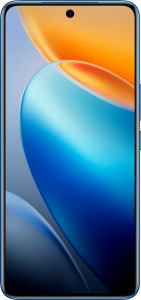
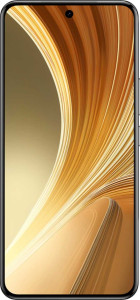
Both phones use OLED/AMOLED panels with a 120Hz refresh rate, so the baseline experience — deep blacks, vibrant colors, smooth scrolling — is shared. Where they diverge sharply is sharpness. The T4 Ultra's 460 ppi pixel density, driven by its 1260 x 2800 resolution, is substantially crisper than the T4 Pro's 388 ppi at 1080 x 2392. That 72 ppi gap is visible in fine text, detailed images, and video — the T4 Ultra's screen will appear noticeably more refined at normal viewing distances, despite its slightly smaller 6.67″ panel versus the T4 Pro's 6.77″.
HDR support flips the advantage back toward the T4 Pro. It supports both HDR10 and HDR10+, which means compatible streaming content — Netflix, YouTube, Amazon Prime — is rendered with wider dynamic range and better highlight/shadow detail. The T4 Ultra supports neither, so HDR content will be tone-mapped down to standard dynamic range, losing that visual depth. Conversely, the T4 Ultra offers an Always-On Display, a convenience feature the T4 Pro lacks, letting users glance at time and notifications without waking the screen.
The T4 Pro also includes branded damage-resistant glass while the T4 Ultra does not, adding a layer of physical durability to its screen. On balance, this category is a genuine trade-off: the T4 Ultra wins on raw sharpness, but the T4 Pro holds the edge for multimedia quality and screen durability. Users who prioritize visual fidelity when streaming content or who want a more resilient display will find the T4 Pro more compelling; those who value pixel-dense clarity for everyday use will lean toward the T4 Ultra.