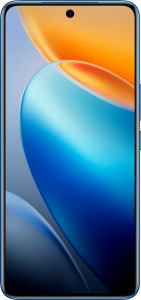
Vivo T4 Pro
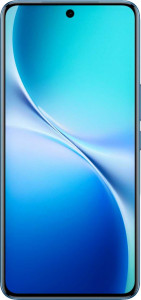
Vivo V60 (256GB / 8GB RAM)

Vivo T4 Pro Vivo V60 (256GB / 8GB RAM)

Overview

When choosing between the Vivo T4 Pro and the Vivo V60 (256GB / 8GB RAM), you are looking at two smartphones that share a surprisingly strong foundation — yet diverge in meaningful ways. Both pack the same chipset, display size, battery capacity, and charging speed, but key battlegrounds emerge around RAM, camera capabilities, and display feature support. Read on to find out which device better suits your needs.

Common Features

  • Both phones are waterproof with an IP68 rating and a depth rating of 1.5 m.
  • Both phones weigh 192 g and have a thickness of 7.5 mm.
  • Both phones have a 6.77″ OLED/AMOLED display with a 388 ppi pixel density and a 1080 x 2392 px resolution.
  • Both phones support a 120Hz refresh rate.
  • Damage-resistant glass is present on both phones.
  • Always-On Display is not available on either phone.
  • Dolby Vision support is not available on either phone.
  • Both phones are powered by the Qualcomm Snapdragon 7 Gen 4 chipset built on a 4 nm process.
  • Both phones offer 256GB of internal storage.
  • Both phones have a RAM speed of 4200 MHz.
  • Both phones feature a dual-lens main camera with optical image stabilization and a CMOS sensor.
  • Both phones support 4K video recording at 30 fps on the main camera.
  • Both phones support phase-detection autofocus and continuous autofocus during video recording.
  • Both phones run Android 15 with theme customization, clipboard warnings, location privacy options, and camera/microphone privacy options.
  • App tracking can be blocked on both phones, but neither blocks cross-site tracking.
  • Both phones have a 6500 mAh battery with 90W fast charging and come with a charger included.
  • Wireless charging and reverse wireless charging are not available on either phone.
  • Both phones have stereo speakers but no 3.5 mm audio jack and no radio.
  • Both phones support 5G, NFC, dual SIM, Bluetooth 5.4, USB Type-C (USB 2.0), and have a fingerprint scanner.
  • Neither phone has an external memory slot.

Main Differences

  • RAM is 12GB on Vivo T4 Pro and 8GB on Vivo V60 (256GB / 8GB RAM).
  • HDR10 support is present on Vivo T4 Pro but not available on Vivo V60 (256GB / 8GB RAM).
  • HDR10+ support is present on Vivo T4 Pro but not available on Vivo V60 (256GB / 8GB RAM).
  • The third rear camera is 2 MP on Vivo T4 Pro and 8 MP on Vivo V60 (256GB / 8GB RAM).
  • The main camera wide aperture values are f/1.8, f/2.7, and f/2.4 on Vivo T4 Pro, compared to f/1.9, f/2.7, and f/2.0 on Vivo V60 (256GB / 8GB RAM).
  • The front camera resolution is 32 MP on Vivo T4 Pro and 50 MP on Vivo V60 (256GB / 8GB RAM).
  • The front camera aperture is f/2.5 on Vivo T4 Pro and f/2.2 on Vivo V60 (256GB / 8GB RAM).
  • The number of flash LEDs is 1 on Vivo T4 Pro and 4 on Vivo V60 (256GB / 8GB RAM).
  • The minimum focal length is 26 mm on Vivo T4 Pro and 15 mm on Vivo V60 (256GB / 8GB RAM).
  • Wi-Fi 6 (802.11ax) support is present on Vivo T4 Pro but not available on Vivo V60 (256GB / 8GB RAM).
Specs Comparison
Vivo T4 Pro

Vivo T4 Pro

Vivo V60 (256GB / 8GB RAM)

Vivo V60 (256GB / 8GB RAM)

Design:
water resistance Waterproof Waterproof
weight 192 g 192 g
thickness 7.5 mm 7.5 mm
width 77 mm 77 mm
height 163.5 mm 163.5 mm
volume 94.42125 cm³ 94.42125 cm³
Ingress Protection (IP) rating IP68 IP68
waterproof depth rating 1.5 m 1.5 m
has a rugged build
can be folded

In terms of physical design, the Vivo T4 Pro and Vivo V60 are identical across every measurable dimension: both weigh 192 g, measure 163.5 × 77 × 7.5 mm, and share the same calculated volume of 94.42 cm³. This level of parity is unusual and suggests these two devices may share a common chassis or manufacturing platform.

Both phones carry an IP68 rating with a waterproof depth of 1.5 m, meaning either can handle submersion in fresh water without damage — a reassuring feature for everyday use in rain or near water. Neither has a rugged build or a folding form factor, so both occupy the same standard candy-bar smartphone category.

Given that every design spec is a perfect match, this category is a clear tie. There is no design-based reason to choose one over the other — any differentiator between these two products will need to come from other spec groups such as performance, display, or camera.

Display:
Display type OLED/AMOLED OLED/AMOLED
screen size 6.77" 6.77"
pixel density 388 ppi 388 ppi
resolution 1080 x 2392 px 1080 x 2392 px
refresh rate 120Hz 120Hz
has branded damage-resistant glass
supports HDR10
supports HDR10+
Always-On Display
supports Dolby Vision
Has a secondary screen
has a touch screen

Both phones share a strong display foundation: a 6.77″ OLED/AMOLED panel running at 1080 × 2392 px with a pixel density of 388 ppi and a 120Hz refresh rate. In practice, this means smooth scrolling, punchy colors, and sharp text on both devices — there is no perceptible difference in everyday viewing between them at this resolution and screen size.

The meaningful split comes down to HDR support. The Vivo T4 Pro supports both HDR10 and HDR10+, while the V60 supports neither. HDR10+ in particular enables dynamic, scene-by-scene tone mapping, which translates to noticeably richer contrast and more accurate highlights when streaming compatible content on platforms like Amazon Prime Video. For media consumption, this is a tangible real-world difference — not just a spec-sheet checkbox.

The Vivo T4 Pro takes a clear edge in this category. The shared panel quality means the V60 is by no means a poor display, but the T4 Pro's HDR10+ support makes it the superior choice for users who regularly consume HDR video content.

Performance:
internal storage 256GB 256GB
RAM 12GB 8GB
Chipset (SoC) name Qualcomm Snapdragon 7 Gen 4 Qualcomm Snapdragon 7 Gen 4
CPU speed 1 x 2.8 & 4 x 2.4 & 3 x 1.8 GHz 1 x 2.8 & 4 x 2.4 & 3 x 1.8 GHz
GPU clock speed 1000 MHz 1000 MHz
Has integrated LTE
RAM speed 4200 MHz 4200 MHz
semiconductor size 4 nm 4 nm
Supports 64-bit
DirectX version DirectX 12 DirectX 12
Has integrated graphics
OpenGL ES version 3.2 3.2
Uses big.LITTLE technology
Has TrustZone
maximum memory bandwidth 33.6 GB/s 33.6 GB/s
OpenCL version 2 2
uses multithreading
Thermal Design Power (TDP) 6W 6W
DDR memory version 5 5

Under the hood, these two phones are built on the exact same foundation: the Qualcomm Snapdragon 7 Gen 4 on a 4 nm process, with identical CPU configuration, a 1000 MHz GPU, and LPDDR5 memory running at 4200 MHz. For day-to-day tasks, gaming, and sustained workloads, both will behave virtually the same — the chipset is capable, power-efficient at 6W TDP, and fully modern in its graphics and compute support.

The sole differentiator is RAM: the Vivo T4 Pro ships with 12 GB versus the V60's 8 GB. This gap matters more than it might initially seem. With 12 GB, the T4 Pro can keep significantly more apps suspended in the background without forcing reloads, which makes multitasking noticeably smoother over time. It also provides more headroom for memory-intensive tasks like video editing, high-fidelity gaming, or running multiple large apps simultaneously. The V60's 8 GB is adequate for typical use, but under sustained multitasking pressure it will hit its ceiling sooner.

The Vivo T4 Pro holds a clear advantage here. The identical chipset means raw processing power is a draw, but the additional 4 GB of RAM gives it a practical edge in longevity and multitasking — a difference that tends to compound over the lifespan of the device.

Cameras:
megapixels (main camera) 50 & 50 & 2 MP 50 & 50 & 8 MP
wide aperture (main camera) 1.8 & 2.7 & 2.4f 1.9 & 2.7 & 2f
Has a dual-lens (or multi-lens) main camera
megapixels (front camera) 32MP 50MP
has built-in optical image stabilization
video recording (main camera) 2160 x 30 fps 2160 x 30 fps
Has a dual-tone LED flash
number of flash LEDs 1 4
has a BSI sensor
has a CMOS sensor
has continuous autofocus when recording movies
Has phase-detection autofocus for photos
supports slow-motion video recording
has a built-in HDR mode
has manual exposure
has a flash
optical zoom 3x 3x
has manual ISO
has a serial shot mode
has manual focus
has a front camera
Has laser autofocus
Shoots 360° panorama
has manual white balance
shoots raw
has touch autofocus
has manual shutter speed
can create panoramas in-camera
wide aperture (front camera) 2.5f 2.2f
Has timelapse function
minimum focal length 26 mm 15 mm
maximum focal length 73 mm 73 mm
Has a front-facing LED flash
has a dual-lens (or multi-lens) front camera
supports HDR10 recording
supports Dolby Vision recording
has a front-facing camera under the display
Has a RGB LED flash
has 3D photo/video recording capabilities

The primary and telephoto lenses are closely matched — both phones use a 50 MP main sensor and a 50 MP periscope-style lens with identical f/2.7 apertures and 3x optical zoom. The main lens aperture is nearly the same too (f/1.8 vs f/1.9), so low-light performance from the primary camera will be comparable. Where the rear systems diverge is the third lens: the Vivo V60 pairs it with an 8 MP / f/2.0 sensor versus the T4 Pro's 2 MP / f/2.4 depth assist unit. The V60's third lens is a far more capable imaging sensor, capturing meaningful detail rather than serving purely as a depth helper.

The V60 also extends its focal range further, with a minimum focal length of 15 mm compared to the T4 Pro's 26 mm — a significant difference that translates to a genuinely wider ultra-wide field of view for architecture, landscapes, and tight spaces. Add to that a 4-LED flash array versus a single LED on the T4 Pro, which means more even, powerful artificial lighting for night shots. The front camera gap is equally striking: the V60 offers a 50 MP / f/2.2 selfie sensor against the T4 Pro's 32 MP / f/2.5, giving it both higher resolution and better light intake for selfies and video calls.

The Vivo V60 holds a clear and multi-faceted advantage in this category. Across the third rear lens, the ultra-wide focal range, flash power, and front camera, it consistently outspecifies the T4 Pro — making it the stronger choice for users who prioritize camera versatility and selfie quality.

Operating system:
Android version Android 15 Android 15
has clipboard warnings
has location privacy options
has camera/microphone privacy options
has Mail Privacy Protection
has theme customization
can block app tracking
blocks cross-site tracking
has on-device machine learning
has notification permissions
has media picker
Can play games while they download
has dark mode
has Wi-Fi password sharing
has battery health check
has an extra dim mode
has focus modes
has dynamic theming
can offload apps
Has customizable notifications
has Live Text
has full-page screenshots
supports split screen
gets direct OS updates
has PiP
Can be used as a PC
Has sharing intents
has a child lock
Supports widgets
Is free and open source
Has offline voice recognition
has voice commands
Tracks the current position of a mobile device
is a multi-user system
has Quick Start

Running Android 15 on both devices, the software experience here is a complete mirror image. Every single feature in this spec group — from privacy controls like camera/microphone permissions and app tracking blocks, to productivity tools like split-screen, Picture-in-Picture, and widgets — is identical across the Vivo T4 Pro and Vivo V60. Neither receives direct OS updates, which is a shared limitation worth noting for buyers concerned about long-term software support.

This is a tie in every meaningful sense. With no differentiating features between the two on the software side, the operating system cannot be a deciding factor in this comparison.

Battery:
battery power 6500 mAh 6500 mAh
has wireless charging
Supports fast charging
charging speed 90W 90W
has reverse wireless charging
comes with a charger
has a removable battery
has a battery level indicator
has a rechargeable battery

Battery is another category where these two phones are indistinguishable on paper. Both pack a 6500 mAh cell — a generous capacity that comfortably places them in heavy-use, multi-day endurance territory for most users — and both top up at 90W fast charging, which at this wattage typically means a full charge in well under an hour. A charger is included in the box with both, which is increasingly uncommon and worth acknowledging.

Neither phone offers wireless charging or reverse wireless charging, so users dependent on Qi pads will need to adapt. That said, this is a shared constraint rather than a differentiator. The verdict here is a clear tie — there is no battery-based reason to choose one device over the other.

Audio:
has a socket for a 3.5 mm audio jack
has stereo speakers
has aptX
has LDAC
has aptX HD
has aptX Adaptive
has aptX Lossless
Has a radio

Audio is yet another draw between these two devices. Both the Vivo T4 Pro and Vivo V60 feature stereo speakers and forgo the 3.5 mm headphone jack — a now-common trade-off in the mid-to-upper segment that pushes users toward Bluetooth or USB-C audio. Stereo speakers are a genuine everyday benefit, providing wider soundstage for media playback compared to a single-speaker setup.

On the wireless audio side, neither phone supports high-resolution codecs such as LDAC, aptX HD, or aptX Adaptive. This means audiophiles using high-end Bluetooth headphones will be limited to standard SBC or AAC quality — a shared limitation that affects both equally. This category is a tie with no differentiating factors between the two.

Connectivity & Features:
release date August 2025 August 2025
has 5G support
Wi-Fi version Wi-Fi 4 (802.11n), Wi-Fi 5 (802.11ac), Wi-Fi 6 (802.11ax) Wi-Fi 4 (802.11n), Wi-Fi 5 (802.11ac)
SIM cards 2 SIM 2 SIM
Bluetooth version 5.4 5.4
has an external memory slot
Has USB Type-C
USB version 2 2
has NFC
Has a fingerprint scanner
has emergency SOS via satellite
has crash detection
is DLNA-certified
has a gyroscope
supports ANT+
Has a heart rate monitor
has GPS
has a compass
supports Wi-Fi
Has an infrared sensor
has an accelerometer
has a cellular module
Has a barometer
has an HDMI output
Uses 3D facial recognition
Has an iris scanner
Stylus included
supports Galileo
Has motion tracking
Has optical tracking
Has a built-in projector

Across the bulk of this category, the two phones are evenly matched — both support 5G, Bluetooth 5.4, NFC, dual SIM, USB Type-C, and an identical sensor suite including gyroscope, GPS, compass, and infrared. These are solid, modern connectivity credentials that cover virtually every real-world use case from contactless payments to navigation and device control.

The single differentiator is Wi-Fi: the Vivo T4 Pro supports Wi-Fi 6 (802.11ax) in addition to Wi-Fi 5 and Wi-Fi 4, while the V60 tops out at Wi-Fi 5 (802.11ac). Wi-Fi 6 brings meaningful real-world benefits — higher throughput, lower latency, and significantly better performance in congested environments like apartments or offices with many connected devices. For users with a Wi-Fi 6 router, the T4 Pro will make better use of that infrastructure.

The Vivo T4 Pro takes a narrow but genuine edge here solely due to Wi-Fi 6 support. It is not a dramatic gap, but in dense network environments or when future-proofing connectivity matters, it is the more capable device.

Miscellaneous:
has a video light
Has sapphire glass display
Has a curved display
Has an e-paper display

The miscellaneous specs for these two devices are identical across every data point provided. Both the Vivo T4 Pro and Vivo V60 include a video light — a handy torch-style assist for video recording in low-light conditions — and neither features a curved display, sapphire glass, or e-paper screen, keeping both firmly in the mainstream smartphone category.

With no differentiating factors present, this category is a complete tie and has no bearing on a purchase decision between the two.

Comparison Summary & Verdict

Both the Vivo T4 Pro and the Vivo V60 (256GB / 8GB RAM) deliver a solid mid-range package with identical IP68 waterproofing, a 6.77″ OLED display, a 6500 mAh battery with 90W fast charging, and the Qualcomm Snapdragon 7 Gen 4 chipset. However, their differences cater to distinct user profiles. The Vivo T4 Pro pulls ahead with 12GB of RAM, HDR10 and HDR10+ display support, and Wi-Fi 6, making it the stronger choice for performance-focused users and media enthusiasts. The Vivo V60 counters with a higher-resolution 50MP front camera, a wider minimum focal length of 15 mm, a higher-resolution third rear lens, and a quad-LED flash, making it the better pick for users who prioritize versatile and high-quality photography.

Vivo T4 Pro
Buy Vivo T4 Pro if...

Buy the Vivo T4 Pro if you want more RAM for smoother multitasking, HDR10 and HDR10+ display support for richer media, and Wi-Fi 6 connectivity for faster wireless performance.

Vivo V60 (256GB / 8GB RAM)
Buy Vivo V60 (256GB / 8GB RAM) if...

Buy the Vivo V60 (256GB / 8GB RAM) if you prioritize a superior front camera with 50MP resolution, a more versatile rear camera system with a wider focal range, and a brighter quad-LED flash for photography.