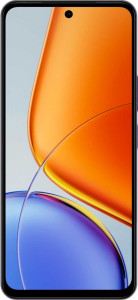
Vivo T4x 5G (128GB / 8GB RAM)
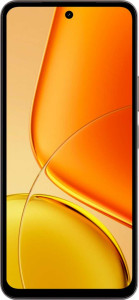
Vivo Y31 Pro 5G

Vivo T4x 5G (128GB / 8GB RAM) Vivo Y31 Pro 5G

Overview

Choosing between two capable mid-range 5G smartphones from the same brand is never easy. In this head-to-head comparison, we pit the Vivo T4x 5G (128GB / 8GB RAM) against the Vivo Y31 Pro 5G, examining key battlegrounds like display durability, onboard storage, Wi-Fi standards, and camera hardware. Both phones share a powerful MediaTek Dimensity 7300 chipset and a massive 6500 mAh battery, but their differences could prove decisive depending on your priorities.

Common Features

  • Both phones are water resistant with an IP64 ingress protection rating.
  • Both phones share the same dimensions: 8.1 mm thick, 76.3 mm wide, and 165.7 mm tall.
  • Neither phone has a rugged build or a foldable form factor.
  • Both phones feature a 6.72″ LCD IPS display with a resolution of 1080 x 2408 px and a pixel density of 393 ppi.
  • Both phones support a 120Hz refresh rate.
  • HDR10 and HDR10+ support are not available on either phone.
  • Always-On Display is not available on either phone.
  • Both phones are powered by the MediaTek Dimensity 7300 chipset built on a 4 nm process.
  • Both phones come with 8GB of RAM running at 6400 MHz.
  • Both phones use the Mali G615 MC2 GPU clocked at 1047 MHz with a CPU speed of 4 x 2.5 & 4 x 2 GHz.
  • Both phones run Android 15 with theme customization, clipboard warnings, location privacy options, and camera/microphone privacy options.
  • Both phones feature a 6500 mAh battery with 44W fast charging and come with a charger included.
  • Neither phone supports wireless charging or has a removable battery.
  • Both phones have a dual-lens main camera with 50 & 2 MP resolution and an 8 MP front camera.
  • Neither phone has built-in optical image stabilization or a BSI sensor.
  • Both phones can record video at 2160 x 30 fps.
  • Both phones have stereo speakers but lack a 3.5 mm audio jack.
  • Neither phone supports aptX, LDAC, aptX HD, aptX Adaptive, or aptX Lossless.
  • Both phones support 5G, dual SIM, Bluetooth 5.4, USB Type-C (USB 2.0), and offer download and upload speeds of 3270 MBits/s.
  • Neither phone has NFC support.

Main Differences

  • Weight is 204 g on Vivo T4x 5G (128GB / 8GB RAM) and 208 g on Vivo Y31 Pro 5G.
  • Damage-resistant glass is present on Vivo Y31 Pro 5G but not available on Vivo T4x 5G (128GB / 8GB RAM).
  • Internal storage is 128GB on Vivo T4x 5G (128GB / 8GB RAM) and 256GB on Vivo Y31 Pro 5G.
  • Geekbench 6 multi-core score is 2827 on Vivo T4x 5G (128GB / 8GB RAM) and 2932 on Vivo Y31 Pro 5G.
  • Geekbench 6 single-core score is 1031 on Vivo T4x 5G (128GB / 8GB RAM) and 1026 on Vivo Y31 Pro 5G.
  • The number of flash LEDs is 1 on Vivo T4x 5G (128GB / 8GB RAM) and 2 on Vivo Y31 Pro 5G.
  • Front camera aperture is 2.1f on Vivo T4x 5G (128GB / 8GB RAM) and 2f on Vivo Y31 Pro 5G.
  • Wi-Fi support includes Wi-Fi 4, Wi-Fi 5, and Wi-Fi 6 on Vivo T4x 5G (128GB / 8GB RAM), while Vivo Y31 Pro 5G supports only Wi-Fi 4 and Wi-Fi 5.
  • An external memory slot is available on Vivo Y31 Pro 5G but not on Vivo T4x 5G (128GB / 8GB RAM).
Specs Comparison
Vivo T4x 5G (128GB / 8GB RAM)

Vivo T4x 5G (128GB / 8GB RAM)

Vivo Y31 Pro 5G

Vivo Y31 Pro 5G

Design:
water resistance Water resistant Water resistant
weight 204 g 208 g
thickness 8.1 mm 8.1 mm
width 76.3 mm 76.3 mm
height 165.7 mm 165.7 mm
volume 102.407571 cm³ 102.407571 cm³
Ingress Protection (IP) rating IP64 IP64
has a rugged build
can be folded

In terms of design, the Vivo T4x 5G and the Vivo Y31 Pro 5G are virtually identical twins. Both share the exact same physical footprint — 165.7 mm tall, 76.3 mm wide, and 8.1 mm thick — resulting in the same total volume of 102.41 cm³. Neither device folds, and neither carries a rugged build certification.

The only measurable difference between the two is weight: the T4x 5G comes in at 204 g, while the Y31 Pro 5G is marginally heavier at 208 g. A 4-gram gap is imperceptible in everyday use — you would not notice it switching between the two — so this cannot meaningfully be called an advantage. Both phones also share an IP64 rating, meaning they offer the same level of dust and water resistance: full protection against dust ingress and resistance to water splashing from any direction, though neither is rated for submersion.

For this spec group, the two devices are effectively tied. There is no practical design differentiator to guide a purchase decision here — buyers should look to other spec groups such as performance, display, or battery to find meaningful distinctions between these two models.

Display:
Display type LCD, IPS LCD, IPS
screen size 6.72" 6.72"
pixel density 393 ppi 393 ppi
resolution 1080 x 2408 px 1080 x 2408 px
refresh rate 120Hz 120Hz
has branded damage-resistant glass
supports HDR10
supports HDR10+
Always-On Display
supports Dolby Vision
Has a secondary screen
has a touch screen

Both the Vivo T4x 5G and the Vivo Y31 Pro 5G feature an identical display panel: a 6.72″ LCD IPS screen running at 1080 x 2408 px with a pixel density of 393 ppi and a 120Hz refresh rate. At this resolution and size, sharpness is genuinely good — text and images appear crisp and detailed in everyday use. The 120Hz refresh rate ensures smooth scrolling and responsive touch interactions, which is a meaningful quality-of-life feature at this price tier.

The sole differentiator in this group is branded damage-resistant glass: the Y31 Pro 5G has it, while the T4x 5G does not. In practice, this means the Y31 Pro 5G′s display is less susceptible to scratches and minor impacts from everyday hazards like keys or drops onto hard surfaces. For users who tend to use their phones without a case, this is a genuinely relevant advantage — screen repairs or replacements are a common and costly pain point.

The Vivo Y31 Pro 5G takes a clear edge in this category solely due to its damage-resistant glass. Every other display specification is a dead heat between the two. If screen durability matters to you — and it should — the Y31 Pro 5G is the stronger choice here.

Performance:
internal storage 128GB 256GB
RAM 8GB 8GB
Chipset (SoC) name MediaTek Dimensity 7300 MediaTek Dimensity 7300
GPU name Mali G615 MC2 Mali G615 MC2
CPU speed 4 x 2.5 & 4 x 2 GHz 4 x 2.5 & 4 x 2 GHz
Geekbench 6 result (multi) 2827 2932
Geekbench 6 result (single) 1031 1026
GPU clock speed 1047 MHz 1047 MHz
Has integrated LTE
RAM speed 6400 MHz 6400 MHz
semiconductor size 4 nm 4 nm
Supports 64-bit
DirectX version DirectX 12 DirectX 12
Has integrated graphics
Uses big.LITTLE technology
CPU threads 8 threads 8 threads
Uses HMP
maximum memory amount 16GB 16GB
number of transistors 6200 million 6200 million
DDR memory version 5 5
supported displays 1 1

Under the hood, both phones are built around the same foundation: the MediaTek Dimensity 7300 chipset, fabbed on a 4 nm process, paired with 8GB of LPDDR5 RAM running at 6400 MHz and the Mali G615 MC2 GPU. This is a capable mid-range platform — the 4 nm node keeps power consumption in check while delivering solid sustained performance for daily multitasking, social media, and casual gaming. There is simply no meaningful hardware differentiation to speak of at the processor or memory level.

Geekbench 6 scores confirm this near-parity in real-world terms. The Vivo Y31 Pro 5G edges out a slightly higher multi-core score (2932 vs 2827), while the T4x 5G returns a marginally higher single-core result (1031 vs 1026). These differences — roughly 3–4% in either direction — fall well within normal benchmark variance and would be completely imperceptible in everyday use. Neither phone has a processing advantage over the other in any practical sense.

The one concrete differentiator here is internal storage: the Y31 Pro 5G ships with 256GB versus the T4x 5G′s 128GB. Double the base storage is a meaningful real-world advantage — it translates to more room for apps, photos, videos, and offline media without worrying about management. On raw compute, this is a tie; on storage, the Vivo Y31 Pro 5G holds a clear and practical edge.

Cameras:
megapixels (main camera) 50 & 2 MP 50 & 2 MP
wide aperture (main camera) 2.4 & 1.8f 2.4 & 1.8f
Has a dual-lens (or multi-lens) main camera
megapixels (front camera) 8MP 8MP
has built-in optical image stabilization
video recording (main camera) 2160 x 30 fps 2160 x 30 fps
Has a dual-tone LED flash
number of flash LEDs 1 2
has a BSI sensor
has a CMOS sensor
has continuous autofocus when recording movies
Has phase-detection autofocus for photos
supports slow-motion video recording
has a built-in HDR mode
has manual exposure
has a flash
optical zoom 0x 0x
has manual ISO
has a serial shot mode
has manual focus
has a front camera
Has laser autofocus
Shoots 360° panorama
has manual white balance
shoots raw
has touch autofocus
has manual shutter speed
can create panoramas in-camera
wide aperture (front camera) 2.1f 2f
Has timelapse function
Has a front-facing LED flash
has a dual-lens (or multi-lens) front camera
supports HDR10 recording
supports Dolby Vision recording
has a front-facing camera under the display
Has a RGB LED flash
has 3D photo/video recording capabilities

Camera hardware is nearly identical across both devices. Each sports a dual rear camera system led by a 50 MP main sensor paired with a 2 MP secondary, sharing the same apertures, the same 4K 30fps video ceiling, and the same autofocus implementation — phase-detection for stills and continuous autofocus during video. The feature set is also a match: HDR mode, slow-motion, timelapse, panorama, and a solid suite of manual controls including ISO, exposure, white balance, and focus are all present on both phones.

The front camera tells a similar story — both are 8 MP shooters — with one minor distinction: the Y31 Pro 5G has a fractionally wider aperture of f/2.0 versus the T4x 5G′s f/2.1. In theory, a wider aperture admits slightly more light, which can help in dim selfie conditions, though the practical difference at this scale is marginal at best.

The most tangible differentiator is the rear flash: the Vivo Y31 Pro 5G carries 2 flash LEDs compared to the T4x 5G′s single unit. Dual-LED flash typically produces more evenly lit, natural-looking shots in low-light scenarios by reducing harsh shadows. It is a modest but real advantage in nighttime or indoor photography. Overall, the Y31 Pro 5G holds a narrow edge in this category — not by a dramatic margin, but its dual flash and slightly wider front aperture make it the slightly more capable camera package based on the available data.

Operating system:
Android version Android 15 Android 15
has clipboard warnings
has location privacy options
has camera/microphone privacy options
has Mail Privacy Protection
has theme customization
can block app tracking
blocks cross-site tracking
has on-device machine learning
has notification permissions
has media picker
Can play games while they download
has dark mode
has Wi-Fi password sharing
has battery health check
has an extra dim mode
has focus modes
has dynamic theming
can offload apps
Has customizable notifications
has Live Text
has full-page screenshots
supports split screen
gets direct OS updates
has PiP
Can be used as a PC
Has sharing intents
has a child lock
Supports widgets
Is free and open source
Has offline voice recognition
has voice commands
Tracks the current position of a mobile device
is a multi-user system
has Quick Start

When it comes to software, these two phones are completely indistinguishable. Both run Android 15 and share an identical feature set across every single spec in this category — from privacy controls like location and camera/microphone permissions, to usability staples like dark mode, split-screen multitasking, Picture-in-Picture, dynamic theming, and widget support. Neither receives direct OS updates, and neither supports features like Wi-Fi password sharing, focus modes, or PC mode.

This is a complete tie — there is not a single software differentiator to separate the two devices in this group. Buyers should not let operating system features factor into their decision between the T4x 5G and the Y31 Pro 5G, as the experience on both will be functionally identical out of the box.

Battery:
battery power 6500 mAh 6500 mAh
has wireless charging
Supports fast charging
charging speed 44W 44W
comes with a charger
has a removable battery
has a battery level indicator
has a rechargeable battery

Battery is another category where the two phones converge entirely. Both the Vivo T4x 5G and the Vivo Y31 Pro 5G pack a 6500 mAh cell — a generously sized battery by any standard, well above the typical 5000 mAh found in most mid-range competitors. In practice, this capacity comfortably supports heavy users through a full day and light-to-moderate users well into a second day without reaching for a charger.

Charging is equally matched: both support 44W fast charging and both ship with a charger in the box. At 44W, topping up a 6500 mAh battery from empty to a usable level takes a reasonable amount of time, and neither phone is left waiting while the other charges ahead. Wireless charging is absent on both, which is a common omission at this segment.

This is a straightforward tie. Every battery specification — capacity, charging speed, included accessories — is identical. The strong 6500 mAh capacity is a shared highlight worth noting, but it offers no basis for differentiation between the two models.

Audio:
has a socket for a 3.5 mm audio jack
has stereo speakers
has aptX
has LDAC
has aptX HD
has aptX Adaptive
has aptX Lossless
Has a radio

Audio hardware is a mirror image between the two phones. Both the Vivo T4x 5G and the Vivo Y31 Pro 5G offer stereo speakers — a welcome inclusion that makes media consumption, gaming, and speakerphone calls noticeably more immersive than a single mono driver. Neither device carries a 3.5mm headphone jack, so wired audio users will need a USB-C adapter or a wireless alternative.

On the wireless audio quality front, both phones skip higher-fidelity Bluetooth codecs entirely — no aptX, no LDAC, no aptX HD or Adaptive. This means audiophiles using wireless headphones will be limited to standard Bluetooth audio quality rather than lossless or near-lossless transmission. That said, this is a common trade-off at this price tier and unlikely to be a dealbreaker for the target audience.

With every audio specification identical across both devices, this category is an unambiguous tie. The shared stereo speaker setup is the standout feature here, but it provides no basis for choosing one phone over the other.

Connectivity & Features:
release date March 2025 September 2025
has 5G support
Wi-Fi version Wi-Fi 4 (802.11n), Wi-Fi 6 (802.11ax), Wi-Fi 5 (802.11ac) Wi-Fi 4 (802.11n), Wi-Fi 5 (802.11ac)
SIM cards 2 SIM 2 SIM
Bluetooth version 5.4 5.4
has an external memory slot
Has USB Type-C
USB version 2 2
has NFC
download speed 3270 MBits/s 3270 MBits/s
upload speed 3270 MBits/s 3270 MBits/s
Has a fingerprint scanner
has emergency SOS via satellite
has crash detection
is DLNA-certified
has a gyroscope
supports ANT+
Has a heart rate monitor
has GPS
has a compass
supports Wi-Fi
Has an infrared sensor
has an accelerometer
has a cellular module
Has a barometer
has an HDMI output
Uses 3D facial recognition
Has an iris scanner
Stylus included
supports Galileo
Has motion tracking
Has optical tracking
Has a built-in projector

Across the broad connectivity landscape, these two phones are largely aligned — both support 5G, dual SIM, Bluetooth 5.4, USB Type-C, and an identical sensor suite including gyroscope, GPS, compass, accelerometer, and infrared. NFC is absent on both, which rules out tap-to-pay functionality for either device. The shared feature set is competent and well-rounded for the mid-range segment.

Two meaningful differences emerge on closer inspection. The Vivo T4x 5G supports Wi-Fi 6 (802.11ax) in addition to Wi-Fi 4 and 5, while the Y31 Pro 5G tops out at Wi-Fi 5 (802.11ac). Wi-Fi 6 brings tangible real-world benefits in congested environments — think dense apartment buildings or busy offices — offering better throughput, lower latency, and more efficient handling of multiple connected devices simultaneously. Conversely, the Vivo Y31 Pro 5G includes an external memory slot, allowing users to expand storage via a microSD card, while the T4x 5G offers no such option.

This creates a genuine trade-off. The T4x 5G is the stronger pick for users who prioritize network performance and future-proofing their wireless connectivity. The Y31 Pro 5G appeals more to those who value storage flexibility — particularly relevant given that even its larger 256GB base storage can fill up with media over time. Neither advantage cancels out the other cleanly, but for most users, Wi-Fi 6 support on the T4x 5G is arguably the more broadly useful differentiator in day-to-day use.
Miscellaneous:
has a video light
Has sapphire glass display
Has a curved display
Has an e-paper display

The miscellaneous category offers nothing to separate these two devices. Both the Vivo T4x 5G and the Vivo Y31 Pro 5G share every spec listed here: each has a video light, and neither features a sapphire glass display, a curved screen, or an e-paper panel. This is a complete tie with no differentiator of any kind — buyers can set this category aside entirely when making their decision.

Comparison Summary & Verdict

After a thorough look at the specs, both the Vivo T4x 5G (128GB / 8GB RAM) and the Vivo Y31 Pro 5G share an impressive foundation: identical displays, chipsets, RAM, battery capacity, and software. The differences, however, are meaningful. The Y31 Pro 5G edges ahead with 256GB of built-in storage, an expandable memory slot, damage-resistant glass, and a dual-LED flash, making it the stronger pick for users who prioritize durability and generous storage. The T4x 5G counters with Wi-Fi 6 support and a slightly lighter build at 204 g, appealing to users who value cutting-edge wireless connectivity. In short, opt for the Y31 Pro 5G if storage flexibility and screen protection top your list, or choose the T4x 5G if Wi-Fi 6 is a must-have feature.

Vivo T4x 5G (128GB / 8GB RAM)
Buy Vivo T4x 5G (128GB / 8GB RAM) if...

Buy the Vivo T4x 5G (128GB / 8GB RAM) if Wi-Fi 6 support is a priority and you prefer a marginally lighter handset at 204 g.

Vivo Y31 Pro 5G
Buy Vivo Y31 Pro 5G if...

Choose the Vivo Y31 Pro 5G if you need more storage space, expandable memory via a card slot, damage-resistant glass, and a dual-LED flash.