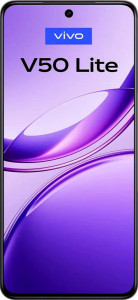
Vivo V50 Lite 4G
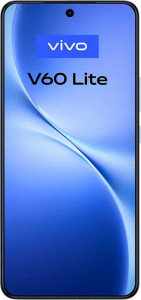
Vivo V60 Lite 4G

Vivo V50 Lite 4G Vivo V60 Lite 4G

Overview

Welcome to our detailed spec comparison between the Vivo V50 Lite 4G and the Vivo V60 Lite 4G. These two mid-range siblings share a surprising amount of DNA, from their identical display panels and chipsets to their large 6500 mAh batteries, but a closer look reveals meaningful differences in areas like camera capabilities, display features, and build dimensions that could make one a better fit for your needs than the other.

Common Features

  • Both phones are water resistant with an IP65 ingress protection rating.
  • Both phones share the same width of 76.3 mm and height of 163.8 mm.
  • Neither phone has a rugged build or can be folded.
  • Both feature an OLED/AMOLED display with a screen size of 6.77″.
  • Both phones have a pixel density of 388 ppi and a resolution of 1080 x 2392 px.
  • Both support a 120Hz refresh rate.
  • Damage-resistant branded glass is not present on either phone.
  • HDR10 and HDR10+ support are not available on either phone.
  • Both phones are powered by the Qualcomm Snapdragon 685 4G chipset with an Adreno 610 GPU.
  • Both phones offer 256GB of internal storage and 8GB of RAM.
  • Both phones score 1510 on Geekbench 6 multi-core and 473 on single-core.
  • Both feature a dual-lens main camera with a 50 MP primary sensor and a 32 MP front camera.
  • Optical image stabilization is not available on either phone.
  • Both phones record video at a maximum of 1080p at 30 fps and support continuous autofocus during recording.
  • Both run Android 15 and support theme customization and app tracking blocking.
  • Both phones have a 6500 mAh battery with 90W fast charging and come with a charger included.
  • Wireless charging is not supported on either phone.
  • Neither phone has a 3.5 mm audio jack, but both feature stereo speakers.
  • Both phones support Wi-Fi 5, Bluetooth 5, NFC, USB Type-C, and dual SIM cards.
  • 5G support is not available on either phone.

Main Differences

  • Weight is 196 g on the Vivo V50 Lite 4G and 194 g on the Vivo V60 Lite 4G.
  • Thickness is 7.8 mm on the Vivo V50 Lite 4G and 7.6 mm on the Vivo V60 Lite 4G.
  • Volume is 97.483932 cm³ on the Vivo V50 Lite 4G and 94.984344 cm³ on the Vivo V60 Lite 4G.
  • Always-On Display is available on the Vivo V50 Lite 4G but not on the Vivo V60 Lite 4G.
  • The secondary camera is 2 MP on the Vivo V50 Lite 4G and 8 MP on the Vivo V60 Lite 4G.
  • The wide aperture of the main camera is f/2.4 & f/1.8 on the Vivo V50 Lite 4G and f/2.2 & f/1.8 on the Vivo V60 Lite 4G.
  • A CMOS sensor is present on the Vivo V60 Lite 4G but not on the Vivo V50 Lite 4G.
  • Slow-motion video recording is supported on the Vivo V50 Lite 4G but not on the Vivo V60 Lite 4G.
  • A timelapse function is available on the Vivo V50 Lite 4G but not on the Vivo V60 Lite 4G.
Specs Comparison
Vivo V50 Lite 4G

Vivo V50 Lite 4G

Vivo V60 Lite 4G

Vivo V60 Lite 4G

Design:
water resistance Water resistant Water resistant
weight 196 g 194 g
thickness 7.8 mm 7.6 mm
width 76.3 mm 76.3 mm
height 163.8 mm 163.8 mm
volume 97.483932 cm³ 94.984344 cm³
Ingress Protection (IP) rating IP65 IP65
has a rugged build
can be folded

In terms of overall form factor, the Vivo V50 Lite 4G and Vivo V60 Lite 4G are nearly identical twins. They share the exact same 163.8 mm height and 76.3 mm width, meaning their footprints are indistinguishable in hand or in a pocket. Both carry an IP65 rating, offering protection against dust ingress and low-pressure water jets — a meaningful real-world feature that guards against rain, splashes, and dusty environments, though it falls short of full submersion protection.

Where the two diverge, albeit very slightly, is in slimness and weight. The V60 Lite 4G is marginally thinner at 7.6 mm versus 7.8 mm, and a touch lighter at 194 g compared to 196 g. This translates to a fractionally smaller total volume (94.98 cm³ vs. 97.48 cm³). In isolation, a 0.2 mm thickness gap and a 2 g weight difference are imperceptible in daily use — no user will notice these figures without a scale or caliper.

From a design perspective, the two phones are essentially evenly matched. Neither has a rugged build, neither folds, and both offer the same IP65 protection. The V60 Lite 4G holds a marginal technical edge in compactness, but the difference is cosmetic at best and should carry no meaningful weight in a purchase decision based on design alone.

Display:
Display type OLED/AMOLED OLED/AMOLED
screen size 6.77" 6.77"
pixel density 388 ppi 388 ppi
resolution 1080 x 2392 px 1080 x 2392 px
refresh rate 120Hz 120Hz
has branded damage-resistant glass
supports HDR10
supports HDR10+
Always-On Display
supports Dolby Vision
Has a secondary screen
has a touch screen

Both phones share an identical display panel on paper: a 6.77″ OLED/AMOLED screen running at 1080 x 2392 px with a pixel density of 388 ppi and a 120Hz refresh rate. The OLED technology guarantees deep blacks, vivid colors, and strong contrast, while 120Hz ensures smooth scrolling and responsive touch interactions — a combination that holds up well for media consumption and everyday use. Neither device features branded damage-resistant glass, HDR10, HDR10+, or Dolby Vision support, so on those fronts the two are equally matched.

The sole differentiator in this category is Always-On Display (AOD), which the Vivo V50 Lite 4G supports and the V60 Lite 4G does not. AOD leverages OLED's ability to light individual pixels independently, allowing the screen to passively show the time, notifications, or a clock face at minimal battery cost. For users who frequently glance at their phone without waking it fully, this is a genuine quality-of-life feature rather than a gimmick.

The V50 Lite 4G takes a clear, if narrow, edge in this group purely on the strength of AOD. Every other display specification is a dead tie, so buyers who value that ambient information feature will find the V50 Lite 4G the more capable option here.

Performance:
internal storage 256GB 256GB
RAM 8GB 8GB
Chipset (SoC) name Qualcomm Snapdragon 685 4G Qualcomm Snapdragon 685 4G
GPU name Adreno 610 Adreno 610
CPU speed 4 x 2.8 & 4 x 1.9 GHz 4 x 2.8 & 4 x 1.9 GHz
Geekbench 6 result (multi) 1510 1510
Geekbench 6 result (single) 473 473
Geekbench 5 result (multi) 1787 1787
Geekbench 5 result (single) 442 442
GPU clock speed 1260 MHz 1260 MHz
Has integrated LTE
RAM speed 2133 MHz 2133 MHz
semiconductor size 6 nm 6 nm
Supports 64-bit
DirectX version DirectX 12 DirectX 12
Has integrated graphics
OpenGL ES version 3.2 3.2
Uses big.LITTLE technology
CPU threads 8 threads 8 threads
Has NX bit
Has TrustZone
maximum memory bandwidth 17 GB/s 17 GB/s
OpenCL version 2 2
eMMC version 5.1 5.1
maximum memory amount 16GB 16GB
GPU turbo 1260 MHz 1260 MHz
DDR memory version 4 4

Under the hood, the Vivo V50 Lite 4G and Vivo V60 Lite 4G are completely identical. Both are powered by the Qualcomm Snapdragon 685 4G, a 6 nm chip paired with an Adreno 610 GPU, 8GB of DDR4 RAM, and 256GB of eMMC 5.1 storage. The 6 nm fabrication process strikes a reasonable balance between power efficiency and thermal control for a mid-range device, and the big.LITTLE CPU architecture — four performance cores at 2.8 GHz and four efficiency cores at 1.9 GHz — handles everyday multitasking and app switching without issue.

Benchmark results confirm there is zero performance gap between the two: both post identical Geekbench 6 multi-core scores of 1510 and single-core scores of 473, with Geekbench 5 results matching as well. The Adreno 610 GPU, clocked at 1260 MHz with DirectX 12 and OpenGL ES 3.2 support, is adequate for casual gaming and UI rendering at this price tier, though it is not positioned for demanding 3D titles.

This category is an absolute dead tie. Every processing metric — chipset, RAM, storage, GPU, benchmark scores, and memory bandwidth — is identical across both devices. Performance cannot be a differentiating factor in this comparison, and buyers should look to other specification groups to find meaningful distinctions.

Cameras:
megapixels (main camera) 50 & 2 MP 50 & 8 MP
wide aperture (main camera) 2.4 & 1.8f 2.2 & 1.8f
Has a dual-lens (or multi-lens) main camera
megapixels (front camera) 32MP 32MP
has built-in optical image stabilization
video recording (main camera) 1080 x 30 fps 1080 x 30 fps
Has a dual-tone LED flash
number of flash LEDs 1 1
has a BSI sensor
has a CMOS sensor
has continuous autofocus when recording movies
Has phase-detection autofocus for photos
supports slow-motion video recording
has a built-in HDR mode
has manual exposure
has a flash
optical zoom 0x 0x
has manual ISO
has a serial shot mode
has manual focus
has a front camera
Has laser autofocus
Shoots 360° panorama
has manual white balance
shoots raw
has touch autofocus
has manual shutter speed
can create panoramas in-camera
wide aperture (front camera) 2.5f 2.5f
Has timelapse function
Has a front-facing LED flash
has a dual-lens (or multi-lens) front camera
supports HDR10 recording
supports Dolby Vision recording
has a front-facing camera under the display
Has a RGB LED flash
has 3D photo/video recording capabilities

The primary cameras on both phones lead with a 50 MP main sensor and a 32 MP front camera, and video tops out at 1080p at 30fps on both — a mid-range ceiling that neither exceeds. The more telling difference lies in the secondary rear lens: the Vivo V60 Lite 4G pairs its main sensor with an 8 MP companion, while the V50 Lite 4G makes do with a much more limited 2 MP auxiliary lens. In practice, an 8 MP secondary lens is genuinely usable for depth mapping or ultra-wide shots, whereas 2 MP is largely a marketing figure with minimal real-world photographic value.

The V60 Lite 4G also carries two further still-photography advantages: a slightly wider main aperture of f/2.2 versus the V50 Lite 4G's f/2.4 — which allows marginally more light in low-light conditions — and a CMOS sensor that the V50 Lite 4G lacks. The V50 Lite 4G does fight back on the video side, offering both slow-motion recording and a timelapse mode, neither of which the V60 Lite 4G supports. For users who enjoy creative video formats, that omission on the V60 is a genuine trade-off.

On balance, the V60 Lite 4G holds the edge in camera hardware, with a substantially more capable secondary lens, a wider main aperture, and a CMOS sensor. The V50 Lite 4G's slow-motion and timelapse capabilities keep it competitive for video enthusiasts, but for everyday photo quality, the V60 Lite 4G's imaging setup is the stronger package based on the provided data.

Operating system:
Android version Android 15 Android 15
has clipboard warnings
has location privacy options
has camera/microphone privacy options
has Mail Privacy Protection
has theme customization
can block app tracking
blocks cross-site tracking
has on-device machine learning
has notification permissions
has media picker
Can play games while they download
has dark mode
has Wi-Fi password sharing
has battery health check
has an extra dim mode
has focus modes
has dynamic theming
can offload apps
Has customizable notifications
has Live Text
has full-page screenshots
supports split screen
gets direct OS updates
has PiP
Can be used as a PC
Has sharing intents
has a child lock
Supports widgets
Is free and open source
Has offline voice recognition
has voice commands
Tracks the current position of a mobile device
is a multi-user system
has Quick Start

When it comes to software, the Vivo V50 Lite 4G and Vivo V60 Lite 4G are running an identical stack — both ship with Android 15 and offer the exact same feature set across every single tracked data point. Privacy controls such as location permissions, camera and microphone toggles, clipboard warnings, and app tracking blockers are all present on both devices, giving users a solid baseline of modern Android privacy management.

The shared feature list also covers practical usability additions that matter in day-to-day life: split-screen multitasking, Picture-in-Picture (PiP), dynamic theming, dark mode, on-device machine learning, and offline voice recognition are all supported by both phones equally. Neither device receives direct OS updates from Google, which is worth noting as it means update cadence depends entirely on Vivo's own rollout schedule.

This category is a complete tie — not a single feature separates the two devices in software. Buyers looking to distinguish between the V50 Lite 4G and V60 Lite 4G will need to look entirely to other specification groups, as the operating system experience they will encounter is, by every available measure, identical.

Battery:
battery power 6500 mAh 6500 mAh
has wireless charging
Supports fast charging
charging speed 90W 90W
comes with a charger
has a removable battery
has a battery level indicator
has a rechargeable battery

A 6500 mAh battery is a genuinely large cell by smartphone standards, and both the Vivo V50 Lite 4G and Vivo V60 Lite 4G carry exactly that capacity. Paired with the power-efficient Snapdragon 685 chip shared by both devices, this battery size is well-positioned to deliver extended screen-on time, making either phone a strong candidate for heavy users or those who cannot charge frequently throughout the day.

Replenishing that large cell is handled equally on both devices via 90W fast charging, which is a notably rapid speed at this price tier — enough to take a depleted battery to a meaningful charge level in a short window. Both phones also come bundled with a charger in the box, so there is no hidden cost to unlocking that charging speed. Neither device supports wireless charging, which is a common omission at this segment.

Much like the performance and software categories, battery is a complete tie. Identical capacity, identical charging speed, identical accessories — there is no angle from which one phone pulls ahead of the other here. This group offers no basis for differentiation between the two models.

Audio:
has a socket for a 3.5 mm audio jack
has stereo speakers
Has a radio

The audio setup on both the Vivo V50 Lite 4G and Vivo V60 Lite 4G is identical in every respect. Both feature stereo speakers, which meaningfully improves the experience for media consumption — whether streaming video or listening to music without headphones — by delivering a wider, more immersive soundstage compared to a single mono speaker. Neither device includes a 3.5 mm headphone jack, so wired audio listeners will need to rely on a USB-C adapter or switch to Bluetooth headphones entirely.

This is a complete tie. With only three tracked data points in this group and all three matching exactly, there is nothing to separate the two phones on audio. Buyers with strong preferences around wired headphone use should note the absent jack, but that consideration applies equally to both models.

Connectivity & Features:
release date March 2025 September 2025
has 5G support
Wi-Fi version Wi-Fi 4 (802.11n), Wi-Fi 5 (802.11ac) Wi-Fi 4 (802.11n), Wi-Fi 5 (802.11ac)
SIM cards 2 SIM 2 SIM
Bluetooth version 5 5
Has USB Type-C
USB version 2 2
has NFC
download speed 390 MBits/s 390 MBits/s
upload speed 150 MBits/s 150 MBits/s
Has a fingerprint scanner
has emergency SOS via satellite
has crash detection
is DLNA-certified
has a gyroscope
supports ANT+
Has a heart rate monitor
has GPS
has a compass
supports Wi-Fi
Has an infrared sensor
has an accelerometer
has a cellular module
Has a barometer
has an HDMI output
Uses 3D facial recognition
Has an iris scanner
Stylus included
supports Galileo
Has motion tracking
Has optical tracking
Has a built-in projector

Across the full breadth of connectivity features, the Vivo V50 Lite 4G and Vivo V60 Lite 4G are once again mirror images of each other. Both support Wi-Fi 5 (802.11ac), Bluetooth 5, and NFC — a combination that covers fast wireless networking, stable peripheral pairing, and contactless payments respectively. Cellular speeds are capped at 4G LTE with identical download and upload ceilings of 390 Mbps and 150 Mbps, meaning neither phone offers 5G, which is a limitation worth considering for buyers in markets where 5G coverage is already widespread.

On the sensor and navigation front, both devices carry GPS with Galileo support, a gyroscope, accelerometer, compass, and a fingerprint scanner — a well-rounded package for navigation, motion-aware apps, and biometric security. The shared USB Type-C 2.0 port handles data transfer and charging, though the USB 2.0 standard means wired data transfers will be noticeably slower than USB 3.x alternatives. Neither phone includes an infrared sensor, barometer, or any satellite messaging capability.

This group is a complete tie — every single connectivity and feature data point is identical across both models. As has been the pattern in several specification groups, the V50 Lite 4G and V60 Lite 4G are functionally indistinguishable here, and buyers must look to design, display, and camera groups to find the few areas where the two actually diverge.

Miscellaneous:
has a video light
Has sapphire glass display
Has a curved display
Has an e-paper display

The miscellaneous category covers a handful of niche hardware traits, and predictably, the Vivo V50 Lite 4G and Vivo V60 Lite 4G are identical across all of them. Both include a video light — useful for illuminating subjects during video calls or recordings in low-light environments — and neither features a curved display, sapphire glass, or an e-paper screen, all of which are premium or specialist characteristics uncommon at this price tier.

This group is a complete tie with no differentiating factors between the two models. Given the limited scope of the data points here, this category carries little weight in any purchase decision, and buyers should continue to rely on the camera and display groups for the few genuine distinctions between these two devices.

Comparison Summary & Verdict

After reviewing every specification, the Vivo V50 Lite 4G and Vivo V60 Lite 4G are remarkably close rivals. Both deliver the same 6.77″ 120Hz OLED display, identical Snapdragon 685 performance, and a generous 6500 mAh battery with 90W fast charging. The V50 Lite 4G stands out with its Always-On Display, slow-motion video recording, and timelapse function, making it the stronger pick for users who value extra software-driven shooting versatility. The Vivo V60 Lite 4G, on the other hand, gains an edge with its higher-resolution 8 MP secondary camera, CMOS sensor, and a marginally slimmer and lighter build, appealing to those who prioritize hardware camera quality and a more refined in-hand feel.

Vivo V50 Lite 4G
Buy Vivo V50 Lite 4G if...

Buy the Vivo V50 Lite 4G if you want an Always-On Display and value extra camera features like slow-motion video recording and timelapse out of the box.

Vivo V60 Lite 4G
Buy Vivo V60 Lite 4G if...

Buy the Vivo V60 Lite 4G if you prefer a slightly slimmer and lighter design paired with a higher-resolution 8 MP secondary camera and a CMOS sensor.