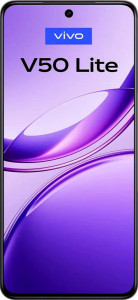
Vivo V50 Lite 4G
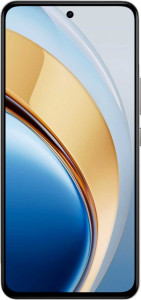
Vivo Y200 4G

Vivo V50 Lite 4G Vivo Y200 4G

Overview

Welcome to our in-depth spec comparison between the Vivo V50 Lite 4G and the Vivo Y200 4G — two mid-range Android smartphones that share a surprisingly similar foundation yet diverge in some meaningful ways. Both devices run on the same Snapdragon 685 chipset with 8GB of RAM, but key battlegrounds emerge around battery capacity and charging speed, display size and brightness, software features, and connectivity options like NFC. Read on to see which phone comes out on top for your specific needs.

Common Features

  • Both phones are water resistant.
  • Both phones have a thickness of 7.8 mm.
  • Neither phone has a rugged build.
  • Neither phone can be folded.
  • Both phones feature an OLED/AMOLED display.
  • Both phones have a 120Hz refresh rate.
  • Neither phone has branded damage-resistant glass.
  • Neither phone supports HDR10, HDR10+, or Dolby Vision.
  • Neither phone has a secondary screen.
  • Both phones have a touchscreen.
  • Both phones are powered by the Qualcomm Snapdragon 685 4G chipset with an Adreno 610 GPU.
  • Both phones have 8GB of RAM and 256GB of internal storage.
  • Both phones have a CPU speed of 4 x 2.8 and 4 x 1.9 GHz.
  • Both phones scored 1510 on Geekbench 6 multi-core and 473 on single-core.
  • Both phones have a dual-lens main camera with 50 and 2 MP and apertures of f/2.4 and f/1.8.
  • Both phones have a 32MP front camera.
  • Neither phone has built-in optical image stabilization.
  • Both phones record main camera video at 1080p 30fps.
  • Both phones support continuous autofocus when recording movies.
  • Both phones lack a BSI sensor.
  • Both phones warn users when content is copied to the clipboard.
  • Both phones offer location privacy options.
  • Both phones offer camera and microphone privacy options.
  • Neither phone has Mail Privacy Protection.
  • Both phones support theme customization.
  • Both phones can block app tracking.
  • Neither phone blocks cross-site tracking.
  • Both phones have on-device machine learning.
  • Neither phone supports wireless charging.
  • Both phones support fast charging.
  • Both phones come with a charger in the box.
  • Neither phone has a removable battery.
  • Both phones have a battery level indicator and a rechargeable battery.
  • Neither phone has a 3.5mm audio jack.
  • Both phones have stereo speakers.
  • Neither phone has a built-in radio.
  • Neither phone supports 5G.
  • Both phones support Wi-Fi 4 (802.11n) and Wi-Fi 5 (802.11ac).
  • Both phones have dual SIM card slots.
  • Both phones have Bluetooth 5.
  • Both phones feature a USB Type-C port with USB 2.0.
  • Both phones have a download speed of 390 Mbit/s and upload speed of 150 Mbit/s.
  • Both phones have a video light.
  • Neither phone has a sapphire glass display, curved display, or e-paper display.

Main Differences

  • Weight is 196 g on Vivo V50 Lite 4G and 188 g on Vivo Y200 4G.
  • Width is 76.3 mm on Vivo V50 Lite 4G and 75.9 mm on Vivo Y200 4G.
  • Height is 163.8 mm on Vivo V50 Lite 4G and 163.2 mm on Vivo Y200 4G.
  • Volume is 97.48 cm³ on Vivo V50 Lite 4G and 96.62 cm³ on Vivo Y200 4G.
  • The IP rating is IP65 on Vivo V50 Lite 4G and IP64 on Vivo Y200 4G.
  • Screen size is 6.77″ on Vivo V50 Lite 4G and 6.67″ on Vivo Y200 4G.
  • Pixel density is 388 ppi on Vivo V50 Lite 4G and 395 ppi on Vivo Y200 4G.
  • Resolution is 1080 x 2392 px on Vivo V50 Lite 4G and 1080 x 2400 px on Vivo Y200 4G.
  • Typical brightness is 1300 nits on Vivo V50 Lite 4G and 1200 nits on Vivo Y200 4G.
  • Always-On Display is available on Vivo V50 Lite 4G but not on Vivo Y200 4G.
  • A CMOS sensor is present on Vivo Y200 4G but not on Vivo V50 Lite 4G.
  • The Android version is Android 15 on Vivo V50 Lite 4G and Android 14 on Vivo Y200 4G.
  • The ability to offload apps is available on Vivo V50 Lite 4G but not on Vivo Y200 4G.
  • Battery capacity is 6500 mAh on Vivo V50 Lite 4G and 5000 mAh on Vivo Y200 4G.
  • Charging speed is 90W on Vivo V50 Lite 4G and 80W on Vivo Y200 4G.
  • NFC is available on Vivo V50 Lite 4G but not on Vivo Y200 4G.
Specs Comparison
Vivo V50 Lite 4G

Vivo V50 Lite 4G

Vivo Y200 4G

Vivo Y200 4G

Design:
water resistance Water resistant Water resistant
weight 196 g 188 g
thickness 7.8 mm 7.8 mm
width 76.3 mm 75.9 mm
height 163.8 mm 163.2 mm
volume 97.483932 cm³ 96.617664 cm³
Ingress Protection (IP) rating IP65 IP64
has a rugged build
can be folded

In terms of physical design, these two phones are remarkably close siblings. Both share an identical 7.8 mm thickness and nearly indistinguishable footprints, with the V50 Lite 4G being just marginally taller and wider. Neither features a rugged build or a foldable form factor, so both target the same mainstream, everyday-use audience.

Where a real-world difference does emerge is in weight and water resistance. The Vivo Y200 4G is notably lighter at 188 g versus the V50 Lite 4G's 196 g — an 8-gram gap that may sound small on paper but is perceptible during extended one-handed use or long calls. On the protection front, the V50 Lite 4G holds an IP65 rating, meaning it is fully sealed against dust ingress and can withstand low-pressure water jets from any direction. The Y200 4G's IP64 rating provides the same dust protection but limits water resistance to splashes only, not directed water streams. For users who frequently use their phone outdoors or near water, this distinction matters.

Overall, the Vivo V50 Lite 4G has a clear edge in durability thanks to its superior IP65 rating, while the Vivo Y200 4G wins on ergonomics with its lighter body. If water protection is a priority, the V50 Lite 4G is the safer choice; if comfortable daily carry is paramount, the Y200 4G has a slight advantage.

Display:
Display type OLED/AMOLED OLED/AMOLED
screen size 6.77" 6.67"
pixel density 388 ppi 395 ppi
resolution 1080 x 2392 px 1080 x 2400 px
refresh rate 120Hz 120Hz
brightness (typical) 1300 nits 1200 nits
has branded damage-resistant glass
supports HDR10
supports HDR10+
Always-On Display
supports Dolby Vision
Has a secondary screen
has a touch screen

Both phones share a strong display foundation — OLED/AMOLED panels with a fluid 120Hz refresh rate and full-HD+ resolution — meaning users on either device get punchy colors, deep blacks, and smooth scrolling as a baseline. Neither supports HDR10 or Dolby Vision, and neither uses branded damage-resistant glass, so those fronts are a wash.

The meaningful separations lie in size, brightness, and a key software feature. The V50 Lite 4G offers a larger 6.77-inch screen versus the Y200 4G's 6.67 inches, making it noticeably better for media consumption and multitasking. The Y200 4G counters with a marginally higher pixel density (395 ppi vs. 388 ppi), but this 7-ppi difference is effectively invisible to the human eye at normal viewing distances. More impactful is brightness: the V50 Lite 4G peaks at 1300 nits against the Y200 4G's 1200 nits, a gap that translates to better outdoor legibility under direct sunlight. On top of that, the V50 Lite 4G supports Always-On Display, a practical convenience that lets users check time and notifications without waking the screen — a feature the Y200 4G entirely lacks.

The Vivo V50 Lite 4G holds a clear display advantage: it is larger, brighter, and adds Always-On Display functionality. The Y200 4G's marginally sharper pixel density is not a real-world differentiator, making the V50 Lite 4G the stronger choice for display-focused buyers.

Performance:
internal storage 256GB 256GB
RAM 8GB 8GB
Chipset (SoC) name Qualcomm Snapdragon 685 4G Qualcomm Snapdragon 685 4G
GPU name Adreno 610 Adreno 610
CPU speed 4 x 2.8 & 4 x 1.9 GHz 4 x 2.8 & 4 x 1.9 GHz
Geekbench 6 result (multi) 1510 1510
Geekbench 6 result (single) 473 473
Geekbench 5 result (multi) 1787 1787
Geekbench 5 result (single) 442 442
GPU clock speed 1260 MHz 1260 MHz
Has integrated LTE
RAM speed 2133 MHz 2133 MHz
semiconductor size 6 nm 6 nm
Supports 64-bit
DirectX version DirectX 12 DirectX 12
Has integrated graphics
OpenGL ES version 3.2 3.2
Uses big.LITTLE technology
CPU threads 8 threads 8 threads
Has NX bit
Has TrustZone
maximum memory bandwidth 17 GB/s 17 GB/s
OpenCL version 2 2
eMMC version 5.1 5.1
maximum memory amount 16GB 16GB
GPU turbo 1260 MHz 1260 MHz
DDR memory version 4 4

This is a rare case of absolute hardware parity. Both the Vivo V50 Lite 4G and the Vivo Y200 4G are powered by the identical Qualcomm Snapdragon 685 4G chipset, built on a 6 nm process, paired with the same Adreno 610 GPU, 8GB of DDR4 RAM, and 256GB of internal storage. Every benchmark figure — Geekbench 6 single-core, multi-core, and both Geekbench 5 scores — is exactly the same across the two devices.

What does the Snapdragon 685 actually deliver in practice? It is a capable mid-range chip well-suited for everyday tasks — social media, streaming, and light multitasking — but users should not expect flagship-level gaming performance. The Adreno 610 GPU handles casual titles comfortably, while the big.LITTLE CPU architecture balances performance and efficiency by routing demanding tasks to the faster 2.8 GHz cores and routine operations to the efficiency cores. The 17 GB/s memory bandwidth and eMMC 5.1 storage are adequate for this tier, though neither stands out as a strength.

For performance, this comparison is a complete tie. No decision should be made on performance grounds alone — both phones will feel identical in daily use, under load, and in any benchmark scenario. Buyers should focus entirely on the other spec groups to differentiate these two devices.

Cameras:
megapixels (main camera) 50 & 2 MP 50 & 2 MP
wide aperture (main camera) 2.4 & 1.8f 2.4 & 1.8f
Has a dual-lens (or multi-lens) main camera
megapixels (front camera) 32MP 32MP
has built-in optical image stabilization
video recording (main camera) 1080 x 30 fps 1080 x 30 fps
has a BSI sensor
has a CMOS sensor
has continuous autofocus when recording movies
Has phase-detection autofocus for photos
supports slow-motion video recording
has a built-in HDR mode
has manual exposure
has a flash
optical zoom 0x 0x
has manual ISO
has a serial shot mode
has manual focus
has a front camera
Has laser autofocus
Shoots 360° panorama
has manual white balance
shoots raw
has touch autofocus
has manual shutter speed
can create panoramas in-camera
wide aperture (front camera) 2.5f 2.5f
Has timelapse function
Has a front-facing LED flash
has a dual-lens (or multi-lens) front camera
supports HDR10 recording
supports Dolby Vision recording
has a front-facing camera under the display
Has a RGB LED flash
has 3D photo/video recording capabilities

Camera hardware is nearly a mirror image across these two devices. Both carry a dual-lens rear setup at 50 & 2 MP with matching apertures, a 32MP front camera, and identical video capabilities capped at 1080p at 30fps. The shared feature set is also extensive — phase-detection autofocus, continuous autofocus during video, slow-motion, HDR mode, panorama, timelapse, and a full suite of manual controls including ISO, exposure, focus, and white balance. Neither offers optical image stabilization or optical zoom, which are notable absences at this tier.

The sole technical differentiator is that the Vivo Y200 4G uses a CMOS sensor, while the V50 Lite 4G does not have this explicitly confirmed in the specs. In practical terms, CMOS sensors are the industry standard for smartphone cameras, offering good low-light sensitivity and fast readout speeds. The absence of this designation for the V50 Lite 4G is a data gap rather than a confirmed hardware deficiency, so it should not be over-interpreted — but based strictly on the provided data, the Y200 4G has a verifiable sensor advantage.

Given the near-total overlap in camera specs, this category is essentially a tie with a marginal edge to the Vivo Y200 4G solely on the confirmed CMOS sensor. Neither phone will satisfy users who prioritize camera performance, as the shared 1080p video ceiling and lack of OIS are limiting factors regardless of which model is chosen.
Operating system:
Android version Android 15 Android 14
has clipboard warnings
has location privacy options
has camera/microphone privacy options
has Mail Privacy Protection
has theme customization
can block app tracking
blocks cross-site tracking
has on-device machine learning
has notification permissions
has media picker
Can play games while they download
has dark mode
has Wi-Fi password sharing
has battery health check
has an extra dim mode
has focus modes
has dynamic theming
can offload apps
Has customizable notifications
has Live Text
has full-page screenshots
supports split screen
gets direct OS updates
has PiP
Can be used as a PC
Has sharing intents
has a child lock
Supports widgets
Is free and open source
Has offline voice recognition
has voice commands
Tracks the current position of a mobile device
is a multi-user system
has Quick Start

The software gap between these two phones is small but consequential. The V50 Lite 4G ships with Android 15 while the Y200 4G runs Android 14 — a full generation behind. This matters because newer Android versions bring refined privacy controls, security patches, and system-level improvements. Since neither device receives direct OS updates according to the specs, whatever version they ship with is likely what users will be working with for a significant portion of the device's lifespan, making the V50 Lite 4G's head start genuinely meaningful.

Across the rest of the feature set, the two phones are functionally identical — sharing dark mode, dynamic theming, split-screen multitasking, picture-in-picture, on-device machine learning, and a comprehensive suite of privacy tools including location controls and camera/microphone permissions. One secondary differentiator is that the V50 Lite 4G supports app offloading, which frees up storage by removing an app's installation files while preserving its data — a useful feature for managing the 256GB of storage over time that the Y200 4G simply does not offer.

The Vivo V50 Lite 4G has a clear software advantage: a newer OS out of the box and app offloading support. Given that neither phone gets direct OS updates, shipping on Android 15 versus Android 14 is not a trivial difference — it represents a longer runway of relevance before the software feels dated.

Battery:
battery power 6500 mAh 5000 mAh
has wireless charging
Supports fast charging
charging speed 90W 80W
comes with a charger
has a removable battery
has a battery level indicator
has a rechargeable battery

Battery is where the V50 Lite 4G pulls ahead most decisively. Its 6500 mAh cell dwarfs the Y200 4G's 5000 mAh — a 30% larger capacity that, on the same Snapdragon 685 chipset, translates directly into significantly longer time between charges. For heavy users, that gap could mean the difference between reaching the end of a long day comfortably and needing a top-up by evening.

Both phones support fast charging and ship with a charger included, but even here the V50 Lite 4G maintains an edge with 90W charging versus the Y200 4G's 80W. In practice, both speeds are fast enough to meaningfully replenish the battery in short windows, though the V50 Lite 4G's higher wattage also has more work to do given its larger capacity. Neither device offers wireless charging or a removable battery, so those are non-factors for both.

The Vivo V50 Lite 4G wins this category convincingly. A 1500 mAh capacity advantage on identical hardware is a substantial real-world benefit, and the marginally faster charging speed adds a small but welcome bonus. For users who prioritize battery longevity and all-day endurance, the V50 Lite 4G is the clear choice.

Audio:
has a socket for a 3.5 mm audio jack
has stereo speakers
Has a radio

Audio is a clean tie. Both the V50 Lite 4G and the Y200 4G feature stereo speakers, lack a 3.5mm headphone jack, and omit an FM radio — there is no differentiator to speak of across any of the three data points provided.

The presence of stereo speakers is a genuine positive shared by both, as it enables a wider, more immersive soundstage for media playback compared to mono setups common at this price tier. The absence of a headphone jack, on the other hand, pushes users toward Bluetooth or USB-C audio adapters — a trade-off that has become standard practice in the industry but remains a minor inconvenience for those with wired headphone collections.

This category is a complete tie. Audio capability cannot be used as a deciding factor between these two phones — buyers with specific audio needs should look to other specification groups to guide their choice.

Connectivity & Features:
release date March 2025 January 2025
has 5G support
Wi-Fi version Wi-Fi 4 (802.11n), Wi-Fi 5 (802.11ac) Wi-Fi 4 (802.11n), Wi-Fi 5 (802.11ac)
SIM cards 2 SIM 2 SIM
Bluetooth version 5 5
Has USB Type-C
USB version 2 2
has NFC
download speed 390 MBits/s 390 MBits/s
upload speed 150 MBits/s 150 MBits/s
Has a fingerprint scanner
has emergency SOS via satellite
has crash detection
is DLNA-certified
has a gyroscope
supports ANT+
Has a heart rate monitor
has GPS
has a compass
supports Wi-Fi
Has an infrared sensor
has an accelerometer
has a cellular module
Has a barometer
has an HDMI output
Uses 3D facial recognition
Has an iris scanner
Stylus included
supports Galileo
Has motion tracking
Has optical tracking
Has a built-in projector

Across most of the connectivity spectrum, these two phones are identical — matching Wi-Fi 5 support, Bluetooth 5, USB Type-C with USB 2.0, identical 4G download and upload speeds, dual SIM, and the same sensor suite including GPS, gyroscope, accelerometer, and compass. Neither supports 5G, which is an expected limitation at this tier but worth noting for future-proofing considerations.

The single meaningful differentiator in this entire category is NFC. The V50 Lite 4G includes it; the Y200 4G does not. NFC enables contactless payments, quick Bluetooth pairing, and transit card functionality — everyday conveniences that, once relied upon, are genuinely missed when absent. For users in markets where tap-to-pay is deeply integrated into daily life, this omission on the Y200 4G is a tangible step down in practical utility.

The Vivo V50 Lite 4G has a clear edge in connectivity thanks solely to its NFC support. Every other spec in this group is evenly matched, making NFC the single deciding factor — and depending on a buyer's payment habits and daily workflow, it could be a significant one.

Miscellaneous:
has a video light
Has sapphire glass display
Has a curved display
Has an e-paper display

The miscellaneous category offers nothing to separate these two devices. Both the V50 Lite 4G and the Y200 4G share an identical profile across every data point: each has a video light, and neither features a sapphire glass display, a curved display, or an e-paper display.

This is a complete tie with no differentiators whatsoever. The shared video light is a minor but practical feature — useful for recording in low-light conditions — while the absence of sapphire glass or a curved display is entirely standard for this market segment. Buyers should place no weight on this category when choosing between the two phones.

Comparison Summary & Verdict

After examining every spec category, both phones prove to be competent mid-range contenders built on the same performance core — but their differences reveal distinct personalities. The Vivo V50 Lite 4G stands out with its significantly larger 6500 mAh battery, faster 90W charging, bigger and brighter 6.77-inch display at 1300 nits, Always-On Display, NFC support, and a higher IP65 water resistance rating — all while running the newer Android 15. The Vivo Y200 4G, on the other hand, is slightly lighter and more compact, features a CMOS camera sensor, and delivers a marginally sharper pixel density. For most buyers, the V50 Lite 4G offers a more feature-rich package, while the Y200 4G may appeal to those who prefer a lighter handset at a potentially lower price point.

Vivo V50 Lite 4G
Buy Vivo V50 Lite 4G if...

Buy the Vivo V50 Lite 4G if you want a larger battery, faster charging, NFC, an Always-On Display, and stronger water resistance with a newer Android version.

Vivo Y200 4G
Buy Vivo Y200 4G if...

Buy the Vivo Y200 4G if you prefer a lighter, more compact phone with a CMOS camera sensor and a slightly sharper display.