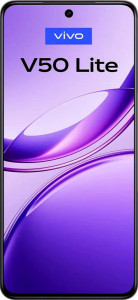
Vivo V50 Lite 4G
Xiaomi Redmi Note 14 Pro 4G (Global)

Vivo V50 Lite 4G Xiaomi Redmi Note 14 Pro 4G (Global)

Overview

When comparing the Vivo V50 Lite 4G and the Xiaomi Redmi Note 14 Pro 4G (Global), two compelling mid-range contenders emerge with sharply different priorities. This comparison digs into the key battlegrounds between them, including battery capacity and charging speed, camera hardware, display quality, and everyday performance — to help you decide which device truly fits your needs.

Common Features

  • Both phones are water resistant.
  • Neither phone has a rugged build.
  • Neither phone can be folded.
  • Both phones feature an OLED/AMOLED display.
  • Both phones have a 120Hz refresh rate.
  • Both phones support Always-On Display.
  • Neither phone has a secondary screen.
  • Both phones have a touchscreen.
  • Both phones have integrated LTE.
  • Both phones use a 6 nm semiconductor size.
  • Both phones support 64-bit processing.
  • Both phones have integrated graphics.
  • Both phones support OpenGL ES version 3.2.
  • Both phones use big.LITTLE technology.
  • Both phones have 8 CPU threads.
  • Both phones have TrustZone security.
  • Both phones feature a dual-lens or multi-lens main camera.
  • Both phones have a 32MP front camera.
  • Neither phone has built-in optical image stabilization.
  • Neither phone has a dual-tone LED flash.
  • Both phones have a single flash LED.
  • Neither phone has a BSI sensor.
  • Both phones support continuous autofocus when recording movies.
  • Both phones support phase-detection autofocus for photos.
  • Both phones include clipboard warnings.
  • Both phones have location privacy options.
  • Both phones have camera and microphone privacy options.
  • Neither phone has Mail Privacy Protection.
  • Both phones support theme customization.
  • Both phones can block app tracking.
  • Neither phone blocks cross-site tracking.
  • Both phones have on-device machine learning.
  • Neither phone supports wireless charging.
  • Both phones support fast charging.
  • Both phones come with a charger.
  • Neither phone has a removable battery.
  • Both phones have a battery level indicator.
  • Both phones have a rechargeable battery.
  • Both phones have stereo speakers.
  • Neither phone has a radio.
  • Neither phone supports 5G.
  • Both phones support dual SIM cards.
  • Both phones have USB Type-C.
  • Both phones use USB version 2.
  • Both phones have NFC.
  • Both phones have an upload speed of 150 MBits/s.
  • Both phones have a fingerprint scanner.
  • Neither phone has emergency SOS via satellite.
  • Both phones have a video light.
  • Neither phone has a sapphire glass display.
  • Neither phone has an e-paper display.

Main Differences

  • Weight is 196 g on Vivo V50 Lite 4G and 180 g on Xiaomi Redmi Note 14 Pro 4G (Global).
  • Thickness is 7.8 mm on Vivo V50 Lite 4G and 8.2 mm on Xiaomi Redmi Note 14 Pro 4G (Global).
  • Width is 76.3 mm on Vivo V50 Lite 4G and 74.9 mm on Xiaomi Redmi Note 14 Pro 4G (Global).
  • Height is 163.8 mm on Vivo V50 Lite 4G and 162.2 mm on Xiaomi Redmi Note 14 Pro 4G (Global).
  • Volume is 97.48 cm³ on Vivo V50 Lite 4G and 99.62 cm³ on Xiaomi Redmi Note 14 Pro 4G (Global).
  • IP rating is IP65 on Vivo V50 Lite 4G and IP64 on Xiaomi Redmi Note 14 Pro 4G (Global).
  • Screen size is 6.77″ on Vivo V50 Lite 4G and 6.67″ on Xiaomi Redmi Note 14 Pro 4G (Global).
  • Pixel density is 388 ppi on Vivo V50 Lite 4G and 395 ppi on Xiaomi Redmi Note 14 Pro 4G (Global).
  • Resolution is 1080 x 2392 px on Vivo V50 Lite 4G and 1080 x 2400 px on Xiaomi Redmi Note 14 Pro 4G (Global).
  • Typical brightness is 1300 nits on Vivo V50 Lite 4G and 1800 nits on Xiaomi Redmi Note 14 Pro 4G (Global).
  • Branded damage-resistant glass is present on Xiaomi Redmi Note 14 Pro 4G (Global) but not available on Vivo V50 Lite 4G.
  • HDR10 support is present on Xiaomi Redmi Note 14 Pro 4G (Global) but not available on Vivo V50 Lite 4G.
  • HDR10+ support is present on Xiaomi Redmi Note 14 Pro 4G (Global) but not available on Vivo V50 Lite 4G.
  • Dolby Vision support is present on Xiaomi Redmi Note 14 Pro 4G (Global) but not available on Vivo V50 Lite 4G.
  • Internal storage is 256GB on Vivo V50 Lite 4G and 512GB on Xiaomi Redmi Note 14 Pro 4G (Global).
  • RAM is 8GB on Vivo V50 Lite 4G and 12GB on Xiaomi Redmi Note 14 Pro 4G (Global).
  • Chipset is Qualcomm Snapdragon 685 4G on Vivo V50 Lite 4G and MediaTek Helio G100 on Xiaomi Redmi Note 14 Pro 4G (Global).
  • GPU is Adreno 610 on Vivo V50 Lite 4G and Mali G57 on Xiaomi Redmi Note 14 Pro 4G (Global).
  • CPU speed is 4 x 2.8 & 4 x 1.9 GHz on Vivo V50 Lite 4G and 2 x 2.2 & 6 x 2 GHz on Xiaomi Redmi Note 14 Pro 4G (Global).
  • GPU clock speed is 1260 MHz on Vivo V50 Lite 4G and 1000 MHz on Xiaomi Redmi Note 14 Pro 4G (Global).
  • RAM speed is 2133 MHz on Vivo V50 Lite 4G and 4266 MHz on Xiaomi Redmi Note 14 Pro 4G (Global).
  • DirectX version is DirectX 12 on Vivo V50 Lite 4G and DirectX 11 on Xiaomi Redmi Note 14 Pro 4G (Global).
  • Maximum memory bandwidth is 17 GB/s on Vivo V50 Lite 4G and 17.1 GB/s on Xiaomi Redmi Note 14 Pro 4G (Global).
  • Maximum supported memory is 16GB on Vivo V50 Lite 4G and 12GB on Xiaomi Redmi Note 14 Pro 4G (Global).
  • Main camera resolution is 50 & 2 MP on Vivo V50 Lite 4G and 200 & 8 & 2 MP on Xiaomi Redmi Note 14 Pro 4G (Global).
  • Main camera wide aperture is f/2.4 & f/1.8 on Vivo V50 Lite 4G and f/1.7, f/2.2 & f/2.4 on Xiaomi Redmi Note 14 Pro 4G (Global).
  • Main camera video recording is 1080p at 30 fps on Vivo V50 Lite 4G and 2160p at 30 fps on Xiaomi Redmi Note 14 Pro 4G (Global).
  • A CMOS sensor is present on Xiaomi Redmi Note 14 Pro 4G (Global) but not available on Vivo V50 Lite 4G.
  • Front camera wide aperture is f/2.5 on Vivo V50 Lite 4G and f/2.2 on Xiaomi Redmi Note 14 Pro 4G (Global).
  • Android version is Android 15 on Vivo V50 Lite 4G and Android 14 on Xiaomi Redmi Note 14 Pro 4G (Global).
  • The ability to offload apps is available on Vivo V50 Lite 4G but not on Xiaomi Redmi Note 14 Pro 4G (Global).
  • Battery capacity is 6500 mAh on Vivo V50 Lite 4G and 5500 mAh on Xiaomi Redmi Note 14 Pro 4G (Global).
  • Charging speed is 90W on Vivo V50 Lite 4G and 45W on Xiaomi Redmi Note 14 Pro 4G (Global).
  • A 3.5 mm audio jack is present on Xiaomi Redmi Note 14 Pro 4G (Global) but not available on Vivo V50 Lite 4G.
  • Wi-Fi support includes Wi-Fi 4 and Wi-Fi 5 on Vivo V50 Lite 4G, and Wi-Fi 4, Wi-Fi 5, and Wi-Fi 6 on Xiaomi Redmi Note 14 Pro 4G (Global).
  • Bluetooth version is 5.0 on Vivo V50 Lite 4G and 5.3 on Xiaomi Redmi Note 14 Pro 4G (Global).
  • Download speed is 390 MBits/s on Vivo V50 Lite 4G and 650 MBits/s on Xiaomi Redmi Note 14 Pro 4G (Global).
  • An infrared sensor is present on Xiaomi Redmi Note 14 Pro 4G (Global) but not available on Vivo V50 Lite 4G.
  • A curved display is featured on Xiaomi Redmi Note 14 Pro 4G (Global) but not on Vivo V50 Lite 4G.
Specs Comparison
Vivo V50 Lite 4G

Vivo V50 Lite 4G

Xiaomi Redmi Note 14 Pro 4G (Global)

Xiaomi Redmi Note 14 Pro 4G (Global)

Design:
water resistance Water resistant Water resistant
weight 196 g 180 g
thickness 7.8 mm 8.2 mm
width 76.3 mm 74.9 mm
height 163.8 mm 162.2 mm
volume 97.483932 cm³ 99.619996 cm³
Ingress Protection (IP) rating IP65 IP64
has a rugged build
can be folded

Both phones share a broadly similar physical footprint and neither offers a rugged build or foldable form factor. The Xiaomi Redmi Note 14 Pro 4G is the more comfortable device to hold for extended periods, coming in at 180 g versus the Vivo's 196 g — a 16 g difference that is noticeable during one-handed use or long sessions. The Vivo V50 Lite 4G does counter with a slimmer profile at 7.8 mm thick compared to the Redmi's 8.2 mm, making it feel more premium in the hand despite being the heavier option. The Vivo is also marginally taller and wider, which slightly offsets its thinness advantage in terms of overall pocketability.

Where the Vivo V50 Lite 4G earns a clear, practical edge is in water resistance. Its IP65 rating means it is protected against sustained, low-pressure water jets from any direction, while the Redmi Note 14 Pro 4G's IP64 rating only guarantees protection against water splashes. In real-world terms, the Vivo can handle being rinsed under a tap or caught in heavier rain with more confidence, making it the safer choice for users who are frequently near water or work in unpredictable environments.

In summary, this group is split: the Redmi Note 14 Pro 4G has a meaningful weight advantage that improves day-to-day handling comfort, but the Vivo V50 Lite 4G wins on water resistance with its superior IP65 rating and also edges ahead on slimness. For users who prioritize durability and protection, the Vivo holds the stronger position here.

Display:
Display type OLED/AMOLED OLED/AMOLED
screen size 6.77" 6.67"
pixel density 388 ppi 395 ppi
resolution 1080 x 2392 px 1080 x 2400 px
refresh rate 120Hz 120Hz
brightness (typical) 1300 nits 1800 nits
has branded damage-resistant glass
supports HDR10
supports HDR10+
Always-On Display
supports Dolby Vision
Has a secondary screen
has a touch screen

Both phones use an OLED/AMOLED panel with a 120Hz refresh rate and a 1080p resolution, so the baseline viewing experience is comparable. The Vivo V50 Lite 4G has a slightly larger 6.77″ screen versus the Redmi's 6.67″, which benefits media consumption and reading. Pixel density is virtually identical — 388 ppi versus 395 ppi — meaning neither has a perceptible sharpness advantage in everyday use.

The most consequential difference is brightness. The Redmi Note 14 Pro 4G reaches 1800 nits typical brightness, compared to the Vivo's 1300 nits. That 500-nit gap is significant outdoors: the Redmi will remain clearly legible in direct sunlight where the Vivo may start to struggle. The Redmi also supports HDR10+ and Dolby Vision, meaning it can render a wider dynamic range with certified streaming content on platforms like Netflix or Prime Video, unlocking a richer visual experience that the Vivo simply cannot match. On top of that, the Redmi features branded damage-resistant glass, adding a layer of scratch and drop protection that the Vivo lacks entirely.

The Redmi Note 14 Pro 4G holds a clear and well-rounded advantage in this category. Its superior brightness, full HDR certification stack, and protected glass make it the stronger display choice — particularly for users who consume a lot of video content or frequently use their phone outdoors. The Vivo's larger screen is a minor consolation, but it does not offset the Redmi's qualitative lead.

Performance:
internal storage 256GB 512GB
RAM 8GB 12GB
Chipset (SoC) name Qualcomm Snapdragon 685 4G MediaTek Helio G100
GPU name Adreno 610 Mali G57
CPU speed 4 x 2.8 & 4 x 1.9 GHz 2 x 2.2 & 6 x 2 GHz
GPU clock speed 1260 MHz 1000 MHz
Has integrated LTE
RAM speed 2133 MHz 4266 MHz
semiconductor size 6 nm 6 nm
Supports 64-bit
DirectX version DirectX 12 DirectX 11
Has integrated graphics
OpenGL ES version 3.2 3.2
Uses big.LITTLE technology
CPU threads 8 threads 8 threads
Has TrustZone
maximum memory bandwidth 17 GB/s 17.1 GB/s
OpenCL version 2 2
maximum memory amount 16GB 12GB
DDR memory version 4 4

Under the hood, both phones are built on a 6nm process with 8-thread CPUs and DDR4 memory, placing them in the same broad performance tier. The chips themselves pull in different directions: the Vivo V50 Lite 4G runs on a Qualcomm Snapdragon 685 with an Adreno 610 GPU clocked at 1260 MHz, while the Redmi Note 14 Pro 4G uses a MediaTek Helio G100 with a Mali G57 running at 1000 MHz. On the graphics side, the Vivo holds a tangible edge — its higher GPU clock speed and support for DirectX 12 (versus the Redmi's DirectX 11) translate to more headroom in GPU-intensive tasks and games.

The Redmi fights back decisively on memory. It ships with 12GB of RAM running at 4266 MHz, compared to the Vivo's 8GB at 2133 MHz. Faster, more abundant RAM directly improves multitasking fluidity, app-switching speed, and sustained performance under load — the Redmi will keep more apps alive in the background and feel more responsive when juggling multiple tasks. It also doubles down on storage with 512GB built in, versus the Vivo's 256GB, which is a meaningful long-term advantage for users who store large media libraries or avoid cloud storage.

Taken together, this group is genuinely split by use case. The Vivo V50 Lite 4G has the edge for graphics-focused tasks thanks to its faster GPU and DirectX 12 support, while the Redmi Note 14 Pro 4G is the stronger everyday performer with its superior RAM configuration and double the base storage. For most users prioritizing smooth day-to-day operation and future-proofing, the Redmi's memory and storage advantage carries more practical weight.

Cameras:
megapixels (main camera) 50 & 2 MP 200 & 8 & 2 MP
wide aperture (main camera) 2.4 & 1.8f 1.7 & 2.2 & 2.4f
Has a dual-lens (or multi-lens) main camera
megapixels (front camera) 32MP 32MP
has built-in optical image stabilization
video recording (main camera) 1080 x 30 fps 2160 x 30 fps
Has a dual-tone LED flash
number of flash LEDs 1 1
has a BSI sensor
has a CMOS sensor
has continuous autofocus when recording movies
Has phase-detection autofocus for photos
supports slow-motion video recording
has a built-in HDR mode
has manual exposure
has a flash
optical zoom 0x 0x
has manual ISO
has a serial shot mode
has manual focus
has a front camera
Has laser autofocus
Shoots 360° panorama
has manual white balance
shoots raw
has touch autofocus
has manual shutter speed
can create panoramas in-camera
wide aperture (front camera) 2.5f 2.2f
Has timelapse function
Has a front-facing LED flash
has a dual-lens (or multi-lens) front camera
supports HDR10 recording
supports Dolby Vision recording
has a front-facing camera under the display
Has a RGB LED flash
has 3D photo/video recording capabilities

The camera systems here diverge sharply in ambition. The Vivo V50 Lite 4G fields a dual-lens rear setup with a 50MP main shooter and a 2MP depth sensor, while the Redmi Note 14 Pro 4G deploys a triple-lens system anchored by a 200MP main camera, an 8MP secondary lens, and a 2MP sensor. The megapixel gap is enormous — a 200MP sensor captures vastly more detail and gives users far greater flexibility to crop and reframe shots without losing clarity. Reinforcing this, the Redmi's main lens opens to f/1.7 versus the Vivo's f/1.8 on its primary shooter, meaning the Redmi lets in more light and is better positioned for low-light photography. The Redmi also includes a CMOS sensor, while the Vivo does not specify one, and adds a genuine third lens to the array, expanding compositional options the Vivo simply cannot match.

Video capability is another area where the gap is concrete. The Redmi records at 4K (2160p) at 30fps, while the Vivo tops out at 1080p at 30fps. For users who care about video quality — whether for social content, travel footage, or archiving memories — this is a significant real-world limitation on the Vivo's side. Both phones share the same 32MP front camera and an identical manual controls feature set, so selfie capability and shooting flexibility are evenly matched.

The Redmi Note 14 Pro 4G is the clear winner in this category. Its 200MP main sensor, wider aperture, triple-lens versatility, and 4K video recording represent a substantially more capable imaging system across nearly every shooting scenario. The Vivo V50 Lite 4G's camera setup is functional, but it competes in a different league.

Operating system:
Android version Android 15 Android 14
has clipboard warnings
has location privacy options
has camera/microphone privacy options
has Mail Privacy Protection
has theme customization
can block app tracking
blocks cross-site tracking
has on-device machine learning
has notification permissions
has media picker
Can play games while they download
has dark mode
has Wi-Fi password sharing
has battery health check
has an extra dim mode
has focus modes
has dynamic theming
can offload apps
Has customizable notifications
has Live Text
has full-page screenshots
supports split screen
gets direct OS updates
has PiP
Can be used as a PC
Has sharing intents
has a child lock
Supports widgets
Is free and open source
Has offline voice recognition
has voice commands
Tracks the current position of a mobile device
is a multi-user system
has Quick Start

The software story between these two phones is remarkably consistent — both run Android with heavily overlapping feature sets covering privacy controls, productivity tools, and customization options. The one version difference is meaningful, however: the Vivo V50 Lite 4G ships with Android 15, while the Redmi Note 14 Pro 4G launches on Android 14. A newer Android version means access to the latest security patches, refined privacy controls, and platform-level improvements out of the box, giving the Vivo a head start in terms of software freshness.

Beyond the OS version, the only functional difference in this group is app offloading. The Vivo supports the ability to offload apps — removing an app's installation files while retaining its data — whereas the Redmi does not. This is a minor but useful storage management feature, particularly relevant on lower storage configurations. Everything else, from split-screen multitasking and picture-in-picture to dynamic theming, on-device machine learning, and the full suite of privacy options, is identical across both devices.

The Vivo V50 Lite 4G takes a narrow but clear edge in this category, courtesy of its newer Android version and app offloading support. Neither advantage is dramatic, but for users who value having the most current software platform at launch, the Vivo is the more future-facing choice here.

Battery:
battery power 6500 mAh 5500 mAh
has wireless charging
Supports fast charging
charging speed 90W 45W
comes with a charger
has a removable battery
has a battery level indicator
has a rechargeable battery

Battery is where the Vivo V50 Lite 4G puts forward its most compelling argument of the entire comparison. Its 6500 mAh cell is 1000 mAh larger than the Redmi Note 14 Pro 4G's 5500 mAh — a gap that, in practical terms, translates to meaningfully longer usage between charges. For heavy users who routinely push through a full day and into a second, or for those who travel without reliable access to power, that extra capacity is a tangible daily advantage.

The charging speed gap reinforces the Vivo's lead. At 90W, the V50 Lite 4G charges at twice the rate of the Redmi's 45W, which means a significantly larger battery can still be topped up in a fraction of the time. In real-world use, this combination — more capacity and faster replenishment — is nearly the ideal battery scenario. Both phones include a charger in the box, neither supports wireless charging, and both use non-removable batteries, so those variables are a wash.

The Vivo V50 Lite 4G wins this category without contest. A larger battery paired with faster charging is a straightforward double advantage, and there are no offsetting factors from the Redmi's side in this group. For any user who ranks endurance and charging convenience highly, the Vivo's battery setup is a standout strength.

Audio:
has a socket for a 3.5 mm audio jack
has stereo speakers
Has a radio

The audio specs here are lean, but the one differentiator that exists is meaningful. Both phones deliver stereo speakers, ensuring an immersive, directional sound experience for media playback without headphones. Neither includes a radio, so that is a non-factor. The dividing line is the headphone jack: the Redmi Note 14 Pro 4G retains a 3.5mm audio jack, while the Vivo V50 Lite 4G omits it entirely.

For users who rely on wired headphones — whether for audio quality, convenience, or simply avoiding the need to charge yet another device — the absence of a headphone jack on the Vivo is a genuine inconvenience. It forces a dependency on Bluetooth audio or a USB-C adapter, neither of which is as seamless as a direct wired connection. The Redmi's inclusion of the jack keeps both options open, catering to a wider range of listening preferences without compromise.

The Redmi Note 14 Pro 4G takes this category on the strength of its 3.5mm jack alone. With stereo speakers matched on both sides, that single hardware inclusion is the deciding factor — and for wired audio users, it is a practical advantage that surfaces every single day.

Connectivity & Features:
release date March 2025 January 2025
has 5G support
Wi-Fi version Wi-Fi 4 (802.11n), Wi-Fi 5 (802.11ac) Wi-Fi 4 (802.11n), Wi-Fi 6 (802.11ax), Wi-Fi 5 (802.11ac)
SIM cards 2 SIM 2 SIM
Bluetooth version 5 5.3
Has USB Type-C
USB version 2 2
has NFC
download speed 390 MBits/s 650 MBits/s
upload speed 150 MBits/s 150 MBits/s
Has a fingerprint scanner
has emergency SOS via satellite
has crash detection
is DLNA-certified
has a gyroscope
supports ANT+
Has a heart rate monitor
has GPS
has a compass
supports Wi-Fi
Has an infrared sensor
has an accelerometer
has a cellular module
Has a barometer
has an HDMI output
Uses 3D facial recognition
Has an iris scanner
Stylus included
supports Galileo
Has motion tracking
Has optical tracking
Has a built-in projector

Across the core connectivity checklist — dual SIM, USB Type-C, NFC, GPS, Galileo, fingerprint scanner, and gyroscope — these two phones are completely aligned. Neither supports 5G, which places both squarely in the 4G tier regardless of other strengths. The Redmi Note 14 Pro 4G does pull ahead on wireless standards, supporting Wi-Fi 6 (802.11ax) in addition to Wi-Fi 5 and Wi-Fi 4, while the Vivo V50 Lite 4G tops out at Wi-Fi 5. Wi-Fi 6 delivers faster throughput, lower latency, and better performance in congested environments — a relevant upgrade for households with many connected devices.

The Redmi also leads on cellular data speeds, with a download speed of 650 Mbits/s versus the Vivo's 390 Mbits/s — a gap that matters when pulling large files or streaming in bandwidth-heavy environments. Its Bluetooth 5.3 edges out the Vivo's Bluetooth 5, offering marginally improved connection stability and energy efficiency for wireless peripherals. An added practical bonus exclusive to the Redmi is its infrared sensor, which lets the phone function as a universal remote for TVs and home appliances — a small but genuinely useful everyday feature the Vivo lacks.

The Redmi Note 14 Pro 4G is the stronger device in this category. Its Wi-Fi 6 support, faster download speeds, newer Bluetooth, and infrared sensor collectively represent a more modern and versatile connectivity package. None of these gaps are dramatic in isolation, but together they add up to a meaningful lead for the Redmi.

Miscellaneous:
has a video light
Has sapphire glass display
Has a curved display
Has an e-paper display

This is a sparse spec group with limited room for differentiation. Both phones include a video light and neither uses sapphire glass or an e-paper display, leaving just one distinguishing factor: the Redmi Note 14 Pro 4G features a curved display, while the Vivo V50 Lite 4G has a flat panel.

A curved screen is primarily an aesthetic and ergonomic choice. It gives the phone a more premium, sculpted look and can make edge-to-edge swiping feel more natural in hand. The trade-off is that curved displays are generally more prone to accidental edge touches and can be harder to protect with standard screen protectors. Whether this counts as an advantage depends entirely on personal preference — some users actively seek the curved form factor, while others prefer the simplicity and practicality of a flat screen.

Given how narrow the data set is here, neither phone holds a clear objective advantage. The Redmi's curved display is the only differentiator, and its value is subjective. Users who appreciate the premium aesthetic will favour the Redmi; those who prioritise ease of screen protection and no accidental touches will prefer the Vivo's flat panel. This group is effectively a tie on measurable grounds.

Comparison Summary & Verdict

Both phones share a solid OLED display, 120Hz refresh rate, and dual-SIM support, but they diverge meaningfully where it matters most. The Vivo V50 Lite 4G stands out with its massive 6500 mAh battery and 90W fast charging, a newer Android 15 out of the box, a larger screen, and a higher IP65 water resistance rating — making it the stronger pick for power users and outdoor enthusiasts. The Xiaomi Redmi Note 14 Pro 4G (Global) counters with a 200MP triple-camera system, a significantly brighter 1800-nit display with HDR10+ and Dolby Vision, more RAM, 4K video recording, Wi-Fi 6, a 3.5mm audio jack, and a curved screen — suiting creators and multimedia fans far better. Neither is a clear all-around winner; your ideal choice depends entirely on whether you value endurance and water protection or camera versatility and display richness.

Vivo V50 Lite 4G
Buy Vivo V50 Lite 4G if...

Buy the Vivo V50 Lite 4G if you prioritize a larger battery with faster charging, stronger water resistance, and a newer Android version straight out of the box.

Xiaomi Redmi Note 14 Pro 4G (Global)
Buy Xiaomi Redmi Note 14 Pro 4G (Global) if...

Buy the Xiaomi Redmi Note 14 Pro 4G (Global) if you want a superior camera system with 4K video, a brighter HDR-capable display, Wi-Fi 6, and the convenience of a 3.5mm headphone jack.