Vivo V50 Lite 5G
Vivo V50e

Vivo V50 Lite 5G Vivo V50e

Overview

Choosing between the Vivo V50 Lite 5G and the Vivo V50e is no simple task — both phones share the same display size, refresh rate, and Android 15 foundation, yet diverge sharply in areas like performance, durability, and camera capability. In this comparison, we break down exactly where each device pulls ahead, from chipset benchmarks and storage configurations to IP ratings and battery capacity, so you can make a confident, informed decision.

Common Features

  • Neither product has a rugged build.
  • Neither product can be folded.
  • Both products feature an OLED/AMOLED display.
  • Both products have a screen size of 6.77″.
  • Both products have a pixel density of 388 ppi.
  • Both products have a resolution of 1080 x 2392 px.
  • Both products support a 120Hz refresh rate.
  • Dolby Vision support is not available on either product.
  • Neither product has a secondary screen.
  • Both products have a touchscreen.
  • Both products have integrated LTE.
  • Both products support 64-bit processing.
  • Both products use DirectX 12.
  • Both products have integrated graphics.
  • Both products use big.LITTLE technology with 8 CPU threads and HMP.
  • Both products have a dual-lens main camera with 50 & 8 MP and apertures of f/2.2 & f/1.8.
  • Neither product has a dual-tone LED flash.
  • Both products support continuous autofocus when recording movies.
  • Both products have phase-detection autofocus for photos.
  • Both products support slow-motion video recording.
  • Both products run Android 15.
  • Both products have clipboard warnings, location privacy options, and camera/microphone privacy options.
  • Mail Privacy Protection is not available on either product.
  • Both products support theme customization and can block app tracking.
  • Cross-site tracking blocking is not available on either product.
  • Neither product supports wireless charging.
  • Both products support fast charging at 90W.
  • Neither product has a removable battery.
  • Both products have a battery level indicator and a rechargeable battery.
  • Neither product has a 3.5mm audio jack.
  • Both products have stereo speakers.
  • Neither product has a radio.
  • Both products support 5G.
  • Both products support Wi-Fi 4 (802.11n) and Wi-Fi 5 (802.11ac).
  • Both products have dual SIM card slots.
  • Both products have USB Type-C with USB version 2.
  • Both products have a fingerprint scanner.
  • Emergency SOS via satellite is not available on either product.
  • Crash detection is not available on either product.
  • Both products have a video light.
  • Neither product has a sapphire glass display, a curved display, or an e-paper display.

Main Differences

  • Water resistance is rated as water resistant (IP65) on the Vivo V50 Lite 5G and waterproof (IP68) on the Vivo V50e.
  • Weight is 197g on the Vivo V50 Lite 5G and 186g on the Vivo V50e.
  • Thickness is 7.8mm on the Vivo V50 Lite 5G and 7.4mm on the Vivo V50e.
  • Width is 76.3mm on the Vivo V50 Lite 5G and 76.7mm on the Vivo V50e.
  • Height is 163.8mm on the Vivo V50 Lite 5G and 163.3mm on the Vivo V50e.
  • Volume is 97.48 cm³ on the Vivo V50 Lite 5G and 92.69 cm³ on the Vivo V50e.
  • Damage-resistant glass is present on the Vivo V50e but not available on the Vivo V50 Lite 5G.
  • HDR10 support is present on the Vivo V50e but not available on the Vivo V50 Lite 5G.
  • HDR10+ support is present on the Vivo V50e but not available on the Vivo V50 Lite 5G.
  • Always-On Display is available on the Vivo V50 Lite 5G but not on the Vivo V50e.
  • Internal storage is 512GB on the Vivo V50 Lite 5G and 256GB on the Vivo V50e.
  • RAM is 12GB on the Vivo V50 Lite 5G and 8GB on the Vivo V50e.
  • The chipset is MediaTek Dimensity 6300 on the Vivo V50 Lite 5G and MediaTek Dimensity 7300 on the Vivo V50e.
  • The GPU is Arm Mali-G57 MC2 on the Vivo V50 Lite 5G and Mali G615 MC2 on the Vivo V50e.
  • CPU speed is 2 x 2.4 & 6 x 2 GHz on the Vivo V50 Lite 5G and 4 x 2.5 & 4 x 2 GHz on the Vivo V50e.
  • Geekbench 6 multi-core score is 2012 on the Vivo V50 Lite 5G and 2932 on the Vivo V50e.
  • Geekbench 6 single-core score is 782 on the Vivo V50 Lite 5G and 1026 on the Vivo V50e.
  • GPU clock speed is 950 MHz on the Vivo V50 Lite 5G and 1047 MHz on the Vivo V50e.
  • RAM speed is 2133 MHz on the Vivo V50 Lite 5G and 6400 MHz on the Vivo V50e.
  • Semiconductor size is 6nm on the Vivo V50 Lite 5G and 4nm on the Vivo V50e.
  • Maximum memory is 12GB on the Vivo V50 Lite 5G and 16GB on the Vivo V50e.
  • DDR memory version is DDR4 on the Vivo V50 Lite 5G and DDR5 on the Vivo V50e.
  • Front camera resolution is 32MP on the Vivo V50 Lite 5G and 50MP on the Vivo V50e.
  • Optical image stabilization is present on the Vivo V50e but not available on the Vivo V50 Lite 5G.
  • A CMOS sensor is present on the Vivo V50e but not on the Vivo V50 Lite 5G.
  • Front camera aperture is f/2.5 on the Vivo V50 Lite 5G and f/2.0 on the Vivo V50e.
  • Battery capacity is 6500 mAh on the Vivo V50 Lite 5G and 5600 mAh on the Vivo V50e.
  • NFC is available on the Vivo V50 Lite 5G but not on the Vivo V50e.
  • Download speed is 3300 Mbit/s on the Vivo V50 Lite 5G and 3270 Mbit/s on the Vivo V50e.
Specs Comparison
Vivo V50 Lite 5G

Vivo V50 Lite 5G

Vivo V50e

Vivo V50e

Design:
water resistance Water resistant Waterproof
weight 197 g 186 g
thickness 7.8 mm 7.4 mm
width 76.3 mm 76.7 mm
height 163.8 mm 163.3 mm
volume 97.483932 cm³ 92.685814 cm³
Ingress Protection (IP) rating IP65 IP68
has a rugged build
can be folded

Both phones share nearly identical footprints — the height and width differ by less than a millimeter — so in terms of one-handed reach and pocket fit, they are virtually interchangeable. Where they start to diverge is in how they carry that size. The Vivo V50e comes in at 186 g and 7.4 mm thick, while the V50 Lite 5G is noticeably heavier at 197 g and thicker at 7.8 mm. An 11-gram difference may sound trivial on paper, but over a full day of use — calls, scrolling, photography — that extra weight is perceptible, and the V50e's slimmer profile makes it sit more comfortably in a shirt pocket.

The most consequential distinction in this group, however, is water protection. The V50 Lite 5G carries an IP65 rating, which means it can withstand sustained low-pressure water jets — fine for rain or an accidental splash, but it is not rated for submersion. The V50e steps up to IP68, certifying it for full immersion in fresh water at defined depth and duration. For anyone who uses their phone near pools, in the kitchen, or simply wants peace of mind during unexpected downpours, that is a meaningful real-world upgrade, not just a spec-sheet bullet point.

Neither device is rugged-built or foldable, so those are non-factors here. Overall, the V50e holds a clear design advantage: it is lighter, slimmer, and offers substantially stronger water protection. Unless size parity with the V50 Lite 5G is a specific requirement, the V50e is the more refined and better-protected of the two.

Display:
Display type OLED/AMOLED OLED/AMOLED
screen size 6.77" 6.77"
pixel density 388 ppi 388 ppi
resolution 1080 x 2392 px 1080 x 2392 px
refresh rate 120Hz 120Hz
has branded damage-resistant glass
supports HDR10
supports HDR10+
Always-On Display
supports Dolby Vision
Has a secondary screen
has a touch screen

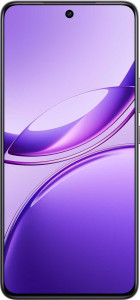
At the panel level, these two phones are carbon copies of each other: the same 6.77″ OLED/AMOLED panel, the same 1080 x 2392 px resolution at 388 ppi, and the same 120Hz refresh rate. Day-to-day, users of either device will see identically sharp, fluid, and vibrant screens — there is no meaningful visual gap on raw display fundamentals alone.

The differentiators emerge in the surrounding feature set. The V50e supports HDR10 and HDR10+, which means compatible streaming content — Netflix, YouTube, Amazon Prime — can render with a wider dynamic range, deeper blacks, and more gradated highlights than standard video. It also ships with branded damage-resistant glass, adding a layer of drop and scratch protection that the V50 Lite 5G simply does not have. On the flip side, the V50 Lite 5G offers an Always-On Display, letting users check the time, notifications, or a clock face without fully waking the screen — a battery-conscious convenience feature the V50e lacks.

Weighing these trade-offs: HDR10+ support and damage-resistant glass are objectively harder to add after the fact than forgoing an Always-On Display, making the V50e the stronger pick for display in most use cases — especially for media consumption. The Always-On Display on the V50 Lite 5G is a genuine convenience perk, but it does not offset the V50e's advantages in screen durability and content quality.

Performance:
internal storage 512GB 256GB
RAM 12GB 8GB
Chipset (SoC) name MediaTek Dimensity 6300 MediaTek Dimensity 7300
GPU name Arm Mali-G57 MC2 Mali G615 MC2
CPU speed 2 x 2.4 & 6 x 2 GHz 4 x 2.5 & 4 x 2 GHz
Geekbench 6 result (multi) 2012 2932
Geekbench 6 result (single) 782 1026
GPU clock speed 950 MHz 1047 MHz
Has integrated LTE
RAM speed 2133 MHz 6400 MHz
semiconductor size 6 nm 4 nm
Supports 64-bit
DirectX version DirectX 12 DirectX 12
Has integrated graphics
Uses big.LITTLE technology
CPU threads 8 threads 8 threads
Uses HMP
maximum memory amount 12GB 16GB
DDR memory version 4 5

The chipset gap here is significant. The Vivo V50e runs on the MediaTek Dimensity 7300, built on a 4 nm process node, while the V50 Lite 5G uses the Dimensity 6300 on a 6 nm node. A smaller fabrication process generally means better power efficiency and thermal headroom — the 7300 can sustain higher performance for longer before throttling under load. The benchmark numbers confirm this decisively: the V50e scores 2932 multi-core and 1026 single-core on Geekbench 6, versus 2012 and 782 for the V50 Lite 5G — roughly a 45% advantage in multi-threaded workloads. For gaming, video editing, or running multiple demanding apps simultaneously, that gap is tangible.

Memory architecture further separates them. The V50e uses DDR5 RAM at 6400 MHz, compared to the V50 Lite 5G's DDR4 at 2133 MHz — a massive bandwidth difference that feeds the faster CPU more efficiently, reducing bottlenecks in data-heavy tasks. The V50e also supports a higher maximum memory ceiling of 16 GB. Where the V50 Lite 5G fights back is in raw provisioning: it ships with 12 GB RAM and 512 GB storage, versus 8 GB and 256 GB on the V50e. For users who juggle many background apps or store large local media libraries, that extra headroom has practical value.

On balance, the V50e holds a clear performance advantage — its faster chip, superior benchmark scores, higher GPU clock, and modern memory architecture make it the stronger performer for compute-intensive use. The V50 Lite 5G's larger RAM and storage are meaningful perks for multitaskers and heavy local storage users, but they do not close the processing power gap.

Cameras:
megapixels (main camera) 50 & 8 MP 50 & 8 MP
wide aperture (main camera) 2.2 & 1.8f 2.2 & 1.8f
Has a dual-lens (or multi-lens) main camera
megapixels (front camera) 32MP 50MP
has built-in optical image stabilization
Has a dual-tone LED flash
has a BSI sensor
has a CMOS sensor
has continuous autofocus when recording movies
Has phase-detection autofocus for photos
supports slow-motion video recording
has a built-in HDR mode
has manual exposure
has a flash
optical zoom 0x 0x
has manual ISO
has a serial shot mode
has manual focus
has a front camera
Has laser autofocus
Shoots 360° panorama
has manual white balance
shoots raw
has touch autofocus
has manual shutter speed
can create panoramas in-camera
wide aperture (front camera) 2.5f 2f
Has timelapse function
Has a front-facing LED flash
has a dual-lens (or multi-lens) front camera
supports HDR10 recording
supports Dolby Vision recording
has a front-facing camera under the display
Has a RGB LED flash
has 3D photo/video recording capabilities

The rear camera systems are identical on paper — both offer a 50 MP + 8 MP dual-lens setup with matching apertures — so neither phone has an advantage shooting behind. The real divergence happens elsewhere. The V50e includes optical image stabilization (OIS), which the V50 Lite 5G entirely lacks. OIS physically compensates for hand tremor during shooting, which translates directly to sharper low-light photos, steadier video, and cleaner handheld footage at slower shutter speeds. For video creators especially, the absence of OIS on the V50 Lite 5G is a notable limitation that software stabilization can only partially compensate for.

Selfie shooters will notice an equally significant gap at the front. The V50e's front camera resolves at 50 MP with an f/2.0 aperture, versus 32 MP at f/2.5 on the V50 Lite 5G. More megapixels enable finer detail in portraits and allow more aggressive cropping without quality loss, while the wider f/2.0 aperture admits more light — a meaningful advantage for indoor selfies or video calls in dim environments. The V50e also uses a CMOS sensor, which is confirmed in the specs; the V50 Lite 5G's sensor type is unspecified.

Across every differentiating camera spec in this group, the advantage consistently falls to the V50e: it wins on stabilization, front camera resolution, and front aperture. For users who prioritize photography — and particularly selfies or vlogging — the V50e is the more capable imaging device by a meaningful margin.

Operating system:
Android version Android 15 Android 15
has clipboard warnings
has location privacy options
has camera/microphone privacy options
has Mail Privacy Protection
has theme customization
can block app tracking
blocks cross-site tracking
has on-device machine learning
has notification permissions
has media picker
Can play games while they download
has dark mode
has Wi-Fi password sharing
has battery health check
has an extra dim mode
has focus modes
has dynamic theming
can offload apps
Has customizable notifications
has Live Text
has full-page screenshots
supports split screen
gets direct OS updates
has PiP
Can be used as a PC
Has sharing intents
has a child lock
Supports widgets
Is free and open source
Has offline voice recognition
has voice commands
Tracks the current position of a mobile device
is a multi-user system
has Quick Start

This is a rare case of complete parity. Every single operating system specification listed for both phones is identical — both run Android 15 and share the same feature set across privacy controls, productivity tools, and customization options. From on-device machine learning and dynamic theming to split-screen multitasking, Picture-in-Picture, and offline voice recognition, users of either device will have an indistinguishable software experience out of the box.

It is worth noting what neither phone offers: neither receives direct OS updates from Google, meaning updates are mediated through Vivo's own software pipeline. This is standard for Android OEM devices and not a differentiator between the two, but it is a consideration for buyers who prioritize timely security patches or major version upgrades.

On operating system alone, this comparison is a dead tie. No advantage can be assigned to either product based on the provided data — a buyer's decision in this category comes down entirely to factors in other spec groups.

Battery:
battery power 6500 mAh 5600 mAh
has wireless charging
Supports fast charging
charging speed 90W 90W
has a removable battery
has a battery level indicator
has a rechargeable battery

Charging infrastructure is identical: both phones support 90W fast charging with no wireless charging option on either side. At 90W, top-ups from low battery to full are rapid, which softens the blow of a smaller cell — but capacity still determines how long you go between those charges.

And that is where the two diverge meaningfully. The Vivo V50 Lite 5G packs a 6500 mAh battery, versus 5600 mAh in the V50e — a 900 mAh difference, or roughly 16% more capacity. On a device used for moderate to heavy daily tasks like streaming, social media, and calls, that gap realistically translates to several additional hours of screen-on time, or the difference between needing a top-up mid-evening versus comfortably reaching the next morning. For frequent travelers, field workers, or anyone who cannot always reach an outlet, that extra headroom is genuinely useful.

Battery is the one category where the V50 Lite 5G holds an unambiguous advantage. It cannot match the V50e in performance or protection, but for endurance-focused users, its substantially larger cell is a compelling counter-argument — and since both phones refill at the same 90W speed, the V50 Lite 5G simply starts each charge cycle with more to give.

Audio:
has a socket for a 3.5 mm audio jack
has stereo speakers
Has a radio

Audio is another clean tie. Both phones feature stereo speakers, skip the 3.5mm headphone jack, and omit an FM radio — there is not a single point of differentiation between them in this category. Stereo speakers are a worthwhile inclusion at this price tier, enabling wider soundstage for media playback and hands-free calls compared to a single mono driver.

The absence of a headphone jack on both devices means wired audio requires a USB-C adapter, which is an identical trade-off for either buyer. Neither phone has an advantage here — and neither has a disadvantage relative to the other. This group contributes nothing to the decision between the two and should be set aside in favor of the categories where the products actually diverge.

Connectivity & Features:
release date March 2025 April 2025
has 5G support
Wi-Fi version Wi-Fi 4 (802.11n), Wi-Fi 5 (802.11ac) Wi-Fi 4 (802.11n), Wi-Fi 5 (802.11ac)
SIM cards 2 SIM 2 SIM
Has USB Type-C
USB version 2 2
has NFC
download speed 3300 MBits/s 3270 MBits/s
Has a fingerprint scanner
has emergency SOS via satellite
has crash detection
is DLNA-certified
has a gyroscope
supports ANT+
Has a heart rate monitor
has GPS
has a compass
supports Wi-Fi
Has an infrared sensor
has an accelerometer
has a cellular module
Has a barometer
has an HDMI output
Uses 3D facial recognition
Has an iris scanner
Stylus included
supports Galileo
Has motion tracking
Has optical tracking
Has a built-in projector

Across most of this category, the two phones are functionally equivalent — both offer 5G, dual SIM, Wi-Fi 5, USB-C 2.0, fingerprint scanning, and the same core sensor suite including GPS, gyroscope, accelerometer, and compass. The download speed figures are within 30 Mbits/s of each other, which is an inconsequential real-world difference.

The sole but meaningful differentiator is NFC. The V50 Lite 5G includes NFC; the V50e does not. NFC underpins contactless payments via Google Pay and similar platforms, as well as quick device pairing and transit card functionality in supported regions. For users who rely on tap-to-pay at retail or use their phone as a transit card, the absence of NFC on the V50e is a genuine daily inconvenience — not a niche omission.

Connectivity gives the V50 Lite 5G a clear edge in this group, and solely on the strength of NFC. It is the one spec here that affects routine, everyday interactions in ways that cannot be worked around without carrying an additional card or device. For buyers who use contactless payments regularly, this single omission on the V50e warrants serious consideration.

Miscellaneous:
has a video light
Has sapphire glass display
Has a curved display
Has an e-paper display

Every spec in this group is identical across both phones — both include a video light, and neither has a sapphire glass display, curved display, or e-paper display. There is nothing here to separate them, and no advantage can be assigned to either product based on this data alone.

This group is a complete tie and should carry no weight in a purchase decision between the two. Any differentiation between the Vivo V50 Lite 5G and the Vivo V50e comes entirely from the other specification categories.

Comparison Summary & Verdict

After examining every specification, the two phones emerge as distinct choices for different types of users. The Vivo V50 Lite 5G stands out for those who prioritize raw storage and battery endurance — its 512GB internal storage, 12GB of RAM, 6500 mAh battery, and NFC support make it a practical powerhouse for heavy users who want to go longer between charges and keep more on their device. The Vivo V50e, on the other hand, wins decisively on outright performance and build quality: its MediaTek Dimensity 7300 chipset scores significantly higher in benchmarks, its IP68 waterproof rating offers superior protection, and its 50MP front camera with optical image stabilization and HDR10+ display make it the stronger pick for photography enthusiasts and users who demand a more premium, refined experience.

Vivo V50 Lite 5G
Buy Vivo V50 Lite 5G if...

Buy the Vivo V50 Lite 5G if you want maximum storage capacity, a larger 6500 mAh battery for all-day endurance, and NFC support without compromise.

Vivo V50e
Buy Vivo V50e if...

Buy the Vivo V50e if you prioritize superior performance, a premium IP68 waterproof build, a better front camera, and an HDR10+ display for a more refined experience.