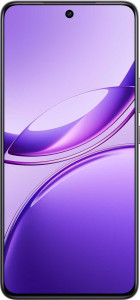
Vivo V50 Lite 5G
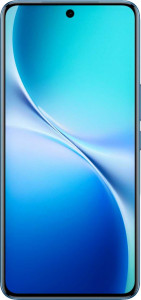
Vivo V60

Vivo V50 Lite 5G Vivo V60

Overview

Welcome to our in-depth specification comparison between the Vivo V50 Lite 5G and the Vivo V60. Both smartphones share a surprising amount of common ground, from their 6.77″ OLED displays and 6500 mAh batteries to their 90W fast charging and Android 15 software. Yet beneath the surface, key battlegrounds emerge around camera capabilities, chipset performance, and build protection that could make all the difference for your next upgrade.

Common Features

  • Neither product has a rugged build.
  • Neither product can be folded.
  • Both products feature an OLED/AMOLED display.
  • Both products have a screen size of 6.77″.
  • Both products have a pixel density of 388 ppi.
  • Both products have a resolution of 1080 x 2392 px.
  • Both products support a 120Hz refresh rate.
  • HDR10 support is not available on either product.
  • HDR10+ support is not available on either product.
  • Dolby Vision support is not available on either product.
  • Both products have 512GB of internal storage.
  • Both products have integrated LTE.
  • Both products use big.LITTLE technology.
  • Both products support multithreading.
  • Both products run Android 15.
  • Both products have a 6500 mAh battery.
  • Wireless charging is not available on either product.
  • Both products support 90W fast charging and come with a charger.
  • Neither product has a 3.5mm audio jack.
  • Both products feature stereo speakers.
  • Both products support 5G.
  • Both products support Wi-Fi 4 (802.11n) and Wi-Fi 5 (802.11ac).
  • Both products accommodate 2 SIM cards.
  • Both products have Bluetooth 5.4.
  • Both products have USB Type-C with USB 2.0.
  • Both products have NFC.
  • Both products have a fingerprint scanner.
  • Neither product has a dual-tone LED flash.
  • Both products have phase-detection autofocus for photos.
  • Both products support slow-motion video recording.
  • Both products have a built-in HDR mode and manual exposure.

Main Differences

  • Water resistance is rated as water resistant (IP65) on Vivo V50 Lite 5G and waterproof (IP68) on Vivo V60.
  • Weight is 197g on Vivo V50 Lite 5G and 192g on Vivo V60.
  • Thickness is 7.8mm on Vivo V50 Lite 5G and 7.5mm on Vivo V60.
  • Width is 76.3mm on Vivo V50 Lite 5G and 77mm on Vivo V60.
  • Height is 163.8mm on Vivo V50 Lite 5G and 163.5mm on Vivo V60.
  • Volume is 97.48 cm³ on Vivo V50 Lite 5G and 94.42 cm³ on Vivo V60.
  • Display brightness is 1300 nits on Vivo V50 Lite 5G and 1500 nits on Vivo V60.
  • Damage-resistant glass is present on Vivo V60 but not available on Vivo V50 Lite 5G.
  • Always-On Display is available on Vivo V50 Lite 5G but not on Vivo V60.
  • RAM is 12GB on Vivo V50 Lite 5G and 16GB on Vivo V60.
  • The chipset is MediaTek Dimensity 6300 on Vivo V50 Lite 5G and Qualcomm Snapdragon 7 Gen 4 on Vivo V60.
  • CPU speed is 2 x 2.4 & 6 x 2 GHz on Vivo V50 Lite 5G and 1 x 2.8 & 4 x 2.4 & 3 x 1.8 GHz on Vivo V60.
  • GPU clock speed is 950 MHz on Vivo V50 Lite 5G and 1000 MHz on Vivo V60.
  • RAM speed is 2133 MHz on Vivo V50 Lite 5G and 4200 MHz on Vivo V60.
  • Semiconductor size is 6nm on Vivo V50 Lite 5G and 4nm on Vivo V60.
  • Maximum memory bandwidth is 17.07 GB/s on Vivo V50 Lite 5G and 33.6 GB/s on Vivo V60.
  • DDR memory version is DDR4 on Vivo V50 Lite 5G and DDR5 on Vivo V60.
  • Main camera megapixels are 50 & 8 MP on Vivo V50 Lite 5G and 50 & 50 & 8 MP on Vivo V60.
  • Front camera resolution is 32MP on Vivo V50 Lite 5G and 50MP on Vivo V60.
  • Optical image stabilization is present on Vivo V60 but not available on Vivo V50 Lite 5G.
  • Main camera video recording is 1080p at 30fps on Vivo V50 Lite 5G and 2160p at 30fps on Vivo V60.
  • Number of flash LEDs is 1 on Vivo V50 Lite 5G and 4 on Vivo V60.
  • A CMOS sensor is present on Vivo V60 but not on Vivo V50 Lite 5G.
  • Optical zoom is 0x on Vivo V50 Lite 5G and 3x on Vivo V60.
  • An infrared sensor is present on Vivo V60 but not available on Vivo V50 Lite 5G.
Specs Comparison
Vivo V50 Lite 5G

Vivo V50 Lite 5G

Vivo V60

Vivo V60

Design:
water resistance Water resistant Waterproof
weight 197 g 192 g
thickness 7.8 mm 7.5 mm
width 76.3 mm 77 mm
height 163.8 mm 163.5 mm
volume 97.483932 cm³ 94.42125 cm³
Ingress Protection (IP) rating IP65 IP68
has a rugged build
can be folded

At a glance, both phones share a nearly identical footprint — similar height (~163.5–163.8 mm), comparable width, and neither folds nor claims a rugged build. However, the Vivo V60 is measurably more compact where it counts: it is 5 g lighter (192 g vs. 197 g) and 0.3 mm thinner (7.5 mm vs. 7.8 mm), translating into a slightly smaller overall volume. While these margins are slim on paper, a thinner, lighter device is perceptibly more comfortable during long one-handed use and fits more naturally in a pocket.

The most meaningful design differentiator, however, is water protection. The V50 Lite 5G carries an IP65 rating, which means it can resist low-pressure water jets and dust — adequate for rain or accidental splashes, but it cannot survive submersion. The V60 steps up to IP68, certifying it for sustained immersion in water (typically 1.5 m for 30 minutes). In practical terms, IP68 is the standard users associate with a phone they can drop in a sink, pool, or puddle without panic — a substantially more robust protection level.

Overall, the Vivo V60 holds a clear edge in this category. Its superior IP68 waterproofing is not a cosmetic upgrade — it meaningfully expands real-world durability. The marginally lighter weight and slimmer profile further reinforce its advantage, making it the more refined and better-protected design of the two.

Display:
Display type OLED/AMOLED OLED/AMOLED
screen size 6.77" 6.77"
pixel density 388 ppi 388 ppi
resolution 1080 x 2392 px 1080 x 2392 px
refresh rate 120Hz 120Hz
brightness (typical) 1300 nits 1500 nits
has branded damage-resistant glass
supports HDR10
supports HDR10+
Always-On Display
supports Dolby Vision
Has a secondary screen
has a touch screen

On the core display fundamentals, these two phones are virtually indistinguishable: both feature a 6.77″ OLED/AMOLED panel with an identical 1080 x 2392 px resolution, 388 ppi pixel density, and a 120Hz refresh rate. In day-to-day use, this means both screens will deliver the same punchy colors, deep blacks, and smooth scrolling experience that AMOLED technology is known for.

The differentiators emerge in two areas. First, brightness: the Vivo V60 reaches 1500 nits typical brightness versus 1300 nits on the V50 Lite 5G — a 200-nit gap that translates to noticeably better outdoor legibility in direct sunlight. Second, the V60 includes branded damage-resistant glass, adding a meaningful layer of scratch and impact protection that the V50 Lite 5G lacks entirely. The V50 Lite 5G counters with an Always-On Display, letting users glance at time and notifications without waking the screen — a convenience the V60 does not offer.

Weighing these trade-offs, the Vivo V60 holds the display advantage. Higher outdoor brightness and factory-fitted screen protection address more consequential real-world concerns than AOD convenience. The Always-On Display is a useful feature, but it does not offset what is a more durable and more visible screen on the V60.

Performance:
internal storage 512GB 512GB
RAM 12GB 16GB
Chipset (SoC) name MediaTek Dimensity 6300 Qualcomm Snapdragon 7 Gen 4
CPU speed 2 x 2.4 & 6 x 2 GHz 1 x 2.8 & 4 x 2.4 & 3 x 1.8 GHz
GPU clock speed 950 MHz 1000 MHz
Has integrated LTE
RAM speed 2133 MHz 4200 MHz
semiconductor size 6 nm 4 nm
Supports 64-bit
DirectX version DirectX 12 DirectX 12
Has integrated graphics
Uses big.LITTLE technology
maximum memory bandwidth 17.07 GB/s 33.6 GB/s
uses multithreading
DDR memory version 4 5

The silicon gap between these two phones is substantial. The V50 Lite 5G runs on a MediaTek Dimensity 6300 built on a 6 nm process, while the Vivo V60 uses a Qualcomm Snapdragon 7 Gen 4 on a more advanced 4 nm node. A smaller semiconductor size generally means greater power efficiency and more transistors in the same physical space — in practice, the V60's chip can deliver more performance per watt, which benefits both sustained workloads and battery longevity under load.

The memory architecture tells an equally telling story. The V60 packs 16 GB of LPDDR5 RAM running at 4200 MHz with a maximum memory bandwidth of 33.6 GB/s — nearly double the V50 Lite 5G's 12 GB of LPDDR4 at 2133 MHz and 17.07 GB/s. This is not just a spec-sheet gap: faster, wider memory bandwidth directly feeds the CPU and GPU with data more quickly, reducing bottlenecks during demanding tasks like gaming, video editing, or heavy multitasking. The V60's GPU also edges ahead with a 1000 MHz clock versus 950 MHz, a modest but consistent advantage in graphics-intensive scenarios.

Across every meaningful performance dimension — chipset generation, process node, RAM capacity, memory speed, and bandwidth — the Vivo V60 holds a clear and commanding advantage. The V50 Lite 5G is no slouch for everyday tasks, but users who prioritize sustained performance, gaming, or future-proofing will find the V60 in a different league entirely.

Cameras:
megapixels (main camera) 50 & 8 MP 50 & 50 & 8 MP
wide aperture (main camera) 2.2 & 1.8f 1.9 & 2.7 & 2f
Has a dual-lens (or multi-lens) main camera
megapixels (front camera) 32MP 50MP
has built-in optical image stabilization
video recording (main camera) 1080 x 30 fps 2160 x 30 fps
Has a dual-tone LED flash
number of flash LEDs 1 4
has a BSI sensor
has a CMOS sensor
has continuous autofocus when recording movies
Has phase-detection autofocus for photos
supports slow-motion video recording
has a built-in HDR mode
has manual exposure
has a flash
optical zoom 0x 3x
has manual ISO
has a serial shot mode
has manual focus
has a front camera
Has laser autofocus
Shoots 360° panorama
has manual white balance
shoots raw
has touch autofocus
has manual shutter speed
can create panoramas in-camera
wide aperture (front camera) 2.5f 2.2f
Has timelapse function
Has a front-facing LED flash
has a dual-lens (or multi-lens) front camera
supports HDR10 recording
supports Dolby Vision recording
has a front-facing camera under the display
Has a RGB LED flash
has 3D photo/video recording capabilities

The camera systems diverge significantly in versatility and capability. The V50 Lite 5G offers a dual rear setup — a 50 MP primary and an 8 MP secondary lens — while the Vivo V60 fields a triple rear system with 50 MP + 50 MP + 8 MP sensors. That additional 50 MP lens on the V60 is paired with a dedicated 3x optical zoom, meaning telephoto shots are captured with true optical magnification rather than digital cropping. For anyone who regularly shoots subjects at a distance — portraits, events, wildlife — this is a genuinely meaningful hardware advantage the V50 Lite 5G simply cannot replicate.

Beyond lens count, the V60 pulls ahead in two other critical areas. First, it includes optical image stabilization (OIS), which physically compensates for hand movement during both photography and video — especially valuable in low-light conditions where longer exposure times amplify shake. The V50 Lite 5G has no OIS. Second, the V60 records video up to 4K at 30 fps compared to the V50 Lite 5G's ceiling of 1080p at 30 fps — a full resolution tier lower. For video creators, that gap is significant. The V60 also has a CMOS sensor and a 4-LED flash array versus a single LED on the V50 Lite 5G, further reinforcing its low-light credentials. On the front, the V60's 50 MP selfie camera with a wider f/2.2 aperture outclasses the V50 Lite 5G's 32 MP at f/2.5.

This category is not close. The Vivo V60 holds a decisive camera advantage — more lenses, real optical zoom, OIS, 4K video, a superior selfie sensor, and better flash hardware. The V50 Lite 5G covers the basics competently, but for users who treat the camera as a primary purchase driver, the V60 is the clear choice.

Operating system:
Android version Android 15 Android 15
has clipboard warnings
has location privacy options
has camera/microphone privacy options
has Mail Privacy Protection
has theme customization
can block app tracking
blocks cross-site tracking
has on-device machine learning
has notification permissions
has media picker
Can play games while they download
has dark mode
has Wi-Fi password sharing
has battery health check
has an extra dim mode
has focus modes
has dynamic theming
can offload apps
Has customizable notifications
has Live Text
has full-page screenshots
supports split screen
gets direct OS updates
has PiP
Can be used as a PC
Has sharing intents
has a child lock
Supports widgets
Is free and open source
Has offline voice recognition
has voice commands
Tracks the current position of a mobile device
is a multi-user system
has Quick Start

Rare in a head-to-head comparison, the operating system category produces a perfect tie. Both phones run Android 15 and share an identical feature set across every tracked spec — from privacy controls like location and camera/microphone permissions, to usability features like split-screen, Picture-in-Picture, dynamic theming, and offline voice recognition. Neither receives direct OS updates, and neither supports Quick Start or cross-site tracking blocking.

This is a complete draw. Buyers will experience the same software environment on both devices, and no OS-level feature should factor into the decision between them.

Battery:
battery power 6500 mAh 6500 mAh
has wireless charging
Supports fast charging
charging speed 90W 90W
comes with a charger
has a removable battery
has a battery level indicator
has a rechargeable battery

Battery is another category where the two phones converge entirely. Both carry a 6500 mAh cell — a generously large capacity that comfortably targets all-day and into-the-evening endurance for most usage patterns. Both also support 90W fast charging and ship with a charger in the box, meaning top-up speeds are identical and neither user faces an out-of-box disadvantage.

Neither phone offers wireless charging, and neither has a removable battery — both standard trade-offs at this segment. With no differentiator on capacity, charging speed, or any other battery spec, this category is a complete tie and should not influence the buying decision between these two devices.

Audio:
has a socket for a 3.5 mm audio jack
has stereo speakers
Has a radio

Audio hardware offers no basis for differentiation here. Both phones feature stereo speakers, omit a 3.5 mm headphone jack, and include no built-in radio — an identical profile across every tracked spec. This is a complete tie, and audio should play no role in choosing between these two devices.

Connectivity & Features:
release date March 2025 August 2025
has 5G support
Wi-Fi version Wi-Fi 4 (802.11n), Wi-Fi 5 (802.11ac) Wi-Fi 4 (802.11n), Wi-Fi 5 (802.11ac)
SIM cards 2 SIM 2 SIM
Bluetooth version 5.4 5.4
Has USB Type-C
USB version 2 2
has NFC
Has a fingerprint scanner
has emergency SOS via satellite
has crash detection
is DLNA-certified
has a gyroscope
supports ANT+
Has a heart rate monitor
has GPS
has a compass
supports Wi-Fi
Has an infrared sensor
has an accelerometer
has a cellular module
Has a barometer
has an HDMI output
Uses 3D facial recognition
Has an iris scanner
Stylus included
supports Galileo
Has motion tracking
Has optical tracking
Has a built-in projector

Connectivity is largely a mirror image across these two phones. Both support 5G, dual SIM, Wi-Fi 5, Bluetooth 5.4, USB Type-C (USB 2.0), and NFC — covering all the essentials a modern smartphone user would expect. Sensors are equally matched: fingerprint scanner, GPS, gyroscope, accelerometer, and compass are present on both, and neither offers satellite SOS, crash detection, or a barometer.

The sole differentiator in this entire category is the infrared sensor on the Vivo V60, which the V50 Lite 5G lacks. An IR blaster lets the phone act as a universal remote for TVs, air conditioners, and other home appliances — a niche but genuinely useful convenience for users who want to consolidate their remote controls into one device.

Given how closely matched the two phones are here, the Vivo V60 holds a narrow edge purely by virtue of that infrared sensor. It is not a compelling standalone reason to choose one phone over the other, but as a tie-breaker within this category, the V60 offers one more tool the V50 Lite 5G simply does not.

Miscellaneous:
has a video light
Has sapphire glass display
Has a curved display
Has an e-paper display

The miscellaneous category yields no differentiation whatsoever. Both phones include a video light and share identical absences — no sapphire glass, no curved display, no e-paper panel. This is a complete tie, and none of these data points should factor into the choice between the two devices.

Comparison Summary & Verdict

After a thorough side-by-side analysis, both phones deliver strong foundations, but they clearly target different buyers. The Vivo V50 Lite 5G stands out with its Always-On Display and competitive price positioning, making it a solid everyday smartphone for users who want a reliable screen experience without overspending. The Vivo V60, however, pulls ahead in nearly every performance and imaging metric: it packs a more powerful Snapdragon 7 Gen 4 chipset, DDR5 RAM, a triple-camera system with 3x optical zoom and optical image stabilization, 4K video recording, a brighter display with damage-resistant glass, and superior IP68 waterproofing. If raw performance, photography versatility, and premium durability are your priorities, the Vivo V60 is the clear choice. If you value the Always-On Display feature and a slightly more compact volume, the Vivo V50 Lite 5G remains a capable, well-rounded option.

Vivo V50 Lite 5G
Buy Vivo V50 Lite 5G if...

Buy the Vivo V50 Lite 5G if you want an Always-On Display and a capable everyday smartphone at a more accessible tier, and can live without advanced camera features like optical zoom or 4K video.

Vivo V60
Buy Vivo V60 if...

Buy the Vivo V60 if you prioritize superior performance, a versatile triple-camera system with 3x optical zoom and 4K recording, a brighter damage-resistant display, and robust IP68 waterproofing.