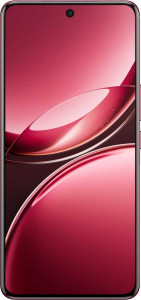
Vivo V50
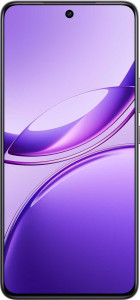
Vivo V50 Lite 5G

Vivo V50 Vivo V50 Lite 5G

Overview

Welcome to our in-depth spec comparison between the Vivo V50 and the Vivo V50 Lite 5G. Both phones share a surprisingly strong foundation — identical display size, refresh rate, and fast charging — yet they diverge sharply in areas that matter most to demanding users. From chipset performance and camera capabilities to water resistance ratings and connectivity features, this comparison breaks down exactly where each device pulls ahead. Read on to find out which one is the right fit for you.

Common Features

  • Neither product has a rugged build.
  • Neither product can be folded.
  • Both products feature an OLED/AMOLED display.
  • Both products have a screen size of 6.77″.
  • Both products have a pixel density of 388 ppi.
  • Both products have a resolution of 1080 x 2392 px.
  • Both products support a 120Hz refresh rate.
  • Both products have a typical brightness of 1300 nits.
  • Neither product has branded damage-resistant glass.
  • Both products support Always-On Display.
  • Both products come with 512GB of internal storage.
  • Both products have 12GB of RAM.
  • Both products run Android 15.
  • Both products support fast charging at 90W.
  • Both products have a 6000+ mAh battery and come with a charger included.
  • Neither product supports wireless charging.
  • Both products have stereo speakers but no 3.5mm audio jack.
  • Both products support 5G connectivity.
  • Both products support Bluetooth 5.4.
  • Both products have a fingerprint scanner.

Main Differences

  • Water resistance is rated as Waterproof on Vivo V50 and Water resistant on Vivo V50 Lite 5G.
  • IP rating is IP69 on Vivo V50 and IP65 on Vivo V50 Lite 5G.
  • Weight is 194g on Vivo V50 and 197g on Vivo V50 Lite 5G.
  • Thickness is 7.6mm on Vivo V50 and 7.8mm on Vivo V50 Lite 5G.
  • HDR10 support is present on Vivo V50 but not available on Vivo V50 Lite 5G.
  • HDR10+ support is present on Vivo V50 but not available on Vivo V50 Lite 5G.
  • The chipset is Qualcomm Snapdragon 7 Gen 3 on Vivo V50 and MediaTek Dimensity 6300 on Vivo V50 Lite 5G.
  • The GPU is Adreno 720 on Vivo V50 and Arm Mali-G57 MC2 on Vivo V50 Lite 5G.
  • Semiconductor size is 4nm on Vivo V50 and 6nm on Vivo V50 Lite 5G.
  • RAM speed is 3200 MHz on Vivo V50 and 2133 MHz on Vivo V50 Lite 5G.
  • Maximum memory bandwidth is 25.6 GB/s on Vivo V50 and 17.07 GB/s on Vivo V50 Lite 5G.
  • Maximum memory amount is 16GB on Vivo V50 and 12GB on Vivo V50 Lite 5G.
  • Main camera megapixels are 50 & 50 MP on Vivo V50 and 50 & 8 MP on Vivo V50 Lite 5G.
  • Front camera resolution is 50MP on Vivo V50 and 32MP on Vivo V50 Lite 5G.
  • Main camera video recording goes up to 2160x30fps on Vivo V50 and 1080x30fps on Vivo V50 Lite 5G.
  • A CMOS sensor is present on Vivo V50 but not on Vivo V50 Lite 5G.
  • Battery capacity is 6000 mAh on Vivo V50 and 6500 mAh on Vivo V50 Lite 5G.
  • NFC is available on Vivo V50 Lite 5G but not on Vivo V50.
  • Download speed is 5000 Mbits/s on Vivo V50 and 3300 Mbits/s on Vivo V50 Lite 5G.
Specs Comparison
Vivo V50

Vivo V50

Vivo V50 Lite 5G

Vivo V50 Lite 5G

Design:
water resistance Waterproof Water resistant
weight 194 g 197 g
thickness 7.6 mm 7.8 mm
width 76.7 mm 76.3 mm
height 163.3 mm 163.8 mm
volume 95.190836 cm³ 97.483932 cm³
Ingress Protection (IP) rating IP69 IP65
has a rugged build
can be folded

The most meaningful difference in this group comes down to water protection. The Vivo V50 carries an IP69 rating, which means it can withstand high-pressure, high-temperature water jets — a notably higher bar than simple submersion. The Vivo V50 Lite 5G holds an IP65 rating, offering protection against low-pressure water jets from any direction but falling short of the V50's more rigorous standard. In practical terms, the V50 can handle a rinse under a forceful tap or rain exposure with more confidence, while the Lite 5G is best treated as splash- and rain-resistant rather than truly waterproof.

In terms of physical dimensions, the two phones are remarkably close. The V50 Lite 5G is marginally heavier at 197 g versus 194 g, and fractionally thicker at 7.8 mm compared to 7.6 mm. These differences are unlikely to be perceptible during daily use. Neither device has a rugged build or a foldable form factor, so both target the same mainstream, slim-smartphone audience.

The Vivo V50 holds a clear edge in this group, driven entirely by its superior IP69 water resistance versus the Lite 5G's IP65. For users who frequently use their phone near water, in rain, or in environments where liquid exposure is a real concern, that gap is genuinely significant. The minor weight and thickness advantages of the V50 add a small but real bonus to an already stronger design package.

Display:
Display type OLED/AMOLED OLED/AMOLED
screen size 6.77" 6.77"
pixel density 388 ppi 388 ppi
resolution 1080 x 2392 px 1080 x 2392 px
refresh rate 120Hz 120Hz
brightness (typical) 1300 nits 1300 nits
has branded damage-resistant glass
supports HDR10
supports HDR10+
Always-On Display
supports Dolby Vision
Has a secondary screen
has a touch screen

For the vast majority of display specs, these two phones are carbon copies of each other. Both feature a 6.77″ OLED/AMOLED panel at 1080 x 2392 px, delivering 388 ppi — sharp enough that individual pixels are essentially invisible at normal viewing distances. A 120Hz refresh rate ensures smooth scrolling and responsive touch interaction, and 1300 nits of typical brightness provides solid outdoor legibility. Always-On Display is present on both, rounding out an otherwise identical feature set.

The single differentiator in this group is HDR support. The Vivo V50 supports both HDR10 and HDR10+, while the V50 Lite 5G supports neither. In practice, HDR10 and HDR10+ enable richer contrast and more accurate highlight detail when streaming HDR-graded content from compatible platforms. HDR10+ adds dynamic metadata on top of that, allowing tone mapping to adjust scene by scene rather than relying on a fixed curve. For users who regularly watch streaming video, this is a tangible, visible difference.

The Vivo V50 takes a clear edge here, and the reason is straightforward: every other display parameter is identical, so HDR10 and HDR10+ support is the sole deciding factor. It won't matter for casual browsing or social media, but for media consumption on HDR-enabled platforms, the V50 delivers a more capable and future-proof display experience.

Performance:
internal storage 512GB 512GB
RAM 12GB 12GB
Chipset (SoC) name Qualcomm Snapdragon 7 Gen 3 MediaTek Dimensity 6300
GPU name Adreno 720 Arm Mali-G57 MC2
CPU speed 1 x 2.63 & 3 x 2.4 & 4 x 1.8 GHz 2 x 2.4 & 6 x 2 GHz
GPU clock speed 950 MHz 950 MHz
Has integrated LTE
RAM speed 3200 MHz 2133 MHz
semiconductor size 4 nm 6 nm
Supports 64-bit
DirectX version DirectX 12 DirectX 12
Has integrated graphics
Uses big.LITTLE technology
CPU threads 8 threads 8 threads
maximum memory bandwidth 25.6 GB/s 17.07 GB/s
maximum memory amount 16GB 12GB
uses multithreading
DDR memory version 5 4

Underneath identical storage and RAM configurations, the two phones are built on fundamentally different silicon tiers. The Vivo V50 runs on the Qualcomm Snapdragon 7 Gen 3, fabbed on a 4 nm process, while the V50 Lite 5G relies on the MediaTek Dimensity 6300 at 6 nm. The smaller node on the V50's chip translates directly to greater power efficiency and more transistor density — meaning it can sustain higher performance levels while generating less heat over time.

The memory subsystem tells a similarly one-sided story. The V50 uses DDR5 RAM running at 3200 MHz with a peak bandwidth of 25.6 GB/s, versus the Lite 5G's DDR4 at 2133 MHz and 17.07 GB/s. Higher memory bandwidth directly accelerates tasks that move large amounts of data quickly — gaming, video processing, and multitasking between heavy apps all benefit. The V50 also supports up to 16 GB of RAM versus the Lite 5G's ceiling of 12 GB, giving it more headroom for future-proofing. GPU clock speeds happen to match at 950 MHz, but the Adreno 720 in the V50 is a more capable architecture than the Mali-G57 MC2, so raw clock parity does not mean equal graphics output.

The Vivo V50 holds a decisive performance advantage across every meaningful dimension in this group — chipset generation, process node, memory speed, bandwidth, and maximum RAM capacity. For users who prioritize sustained performance, gaming, or simply want a device that ages more gracefully, the gap here is substantial and unambiguous.

Cameras:
megapixels (main camera) 50 & 50 MP 50 & 8 MP
wide aperture (main camera) 2 & 1.9f 2.2 & 1.8f
Has a dual-lens (or multi-lens) main camera
megapixels (front camera) 50MP 32MP
has built-in optical image stabilization
video recording (main camera) 2160 x 30 fps 1080 x 30 fps
Has a dual-tone LED flash
has a BSI sensor
has a CMOS sensor
has continuous autofocus when recording movies
Has phase-detection autofocus for photos
supports slow-motion video recording
has a built-in HDR mode
has manual exposure
has a flash
optical zoom 0x 0x
has manual ISO
has a serial shot mode
has manual focus
has a front camera
Has laser autofocus
Shoots 360° panorama
has manual white balance
shoots raw
has touch autofocus
has manual shutter speed
can create panoramas in-camera
wide aperture (front camera) 2f 2.5f
Has timelapse function
Has a front-facing LED flash
has a dual-lens (or multi-lens) front camera
supports HDR10 recording
supports Dolby Vision recording
has a front-facing camera under the display
Has a RGB LED flash
has 3D photo/video recording capabilities

The secondary rear camera is where the two systems diverge most sharply. The Vivo V50 pairs its 50 MP primary sensor with a second 50 MP lens, while the V50 Lite 5G's secondary camera drops to just 8 MP. In practical terms, a 50 MP secondary lens retains far more detail and flexibility in its output — whether for ultra-wide shots or portrait depth — whereas an 8 MP secondary is typically limited to a supporting role with noticeably lower resolution results. Video capability follows the same pattern: the V50 records at 2160p (4K) at 30 fps compared to the Lite 5G's ceiling of 1080p at 30 fps, a meaningful gap for anyone who values video quality or wants footage that holds up on larger screens.

Selfie shooters will also notice a difference. The V50 features a 50 MP front camera with an f/2.0 aperture, versus the Lite 5G's 32 MP sensor behind a narrower f/2.5 aperture. Higher resolution aside, the wider aperture on the V50 admits more light, which tends to produce cleaner results in dim conditions. Additionally, the V50 is noted as having a CMOS sensor while the Lite 5G is not, pointing to a more conventional and well-supported imaging pipeline on the V50.

Across every differentiating camera dimension in this group — secondary lens resolution, video ceiling, front camera resolution, and front aperture — the Vivo V50 holds a clear and consistent advantage. The shared feature set between the two is broad, but the gaps that exist all point in the same direction, making the V50 the stronger imaging device by a meaningful margin.

Operating system:
Android version Android 15 Android 15
has clipboard warnings
has location privacy options
has camera/microphone privacy options
has Mail Privacy Protection
has theme customization
can block app tracking
blocks cross-site tracking
has on-device machine learning
has notification permissions
has media picker
Can play games while they download
has dark mode
has Wi-Fi password sharing
has battery health check
has an extra dim mode
has focus modes
has dynamic theming
can offload apps
Has customizable notifications
has Live Text
has full-page screenshots
supports split screen
gets direct OS updates
has PiP
Can be used as a PC
Has sharing intents
has a child lock
Supports widgets
Is free and open source
Has offline voice recognition
has voice commands
Tracks the current position of a mobile device
is a multi-user system
has Quick Start

This is a rare case of a complete dead heat. Both the Vivo V50 and the Vivo V50 Lite 5G run Android 15 and share an identical feature set across every single data point in this group — privacy controls, productivity tools, customization options, and accessibility features all match exactly.

Worth noting for both devices: the shared software package is genuinely well-equipped. Privacy-conscious users get camera and microphone controls, location permissions, and app tracking blocks out of the box. Daily usability is covered by split-screen multitasking, Picture-in-Picture, dynamic theming, on-device machine learning, and offline voice recognition. Neither phone receives direct OS updates, meaning both rely on Vivo's own update pipeline rather than getting patches straight from Google.

There is no edge to declare here — the two phones are software twins. A buyer's choice between them should rest entirely on the hardware differences covered in other groups, as the operating system experience will be indistinguishable in practice.

Battery:
battery power 6000 mAh 6500 mAh
has wireless charging
Supports fast charging
charging speed 90W 90W
comes with a charger
has a removable battery
has a battery level indicator
has a rechargeable battery

Battery capacity is the one variable that separates these two devices in this group. The Vivo V50 Lite 5G packs a 6500 mAh cell versus the V50's 6000 mAh — a 500 mAh difference that represents roughly an 8% larger reserve. Both are already large batteries by modern smartphone standards, so neither phone is likely to struggle through a full day, but the Lite 5G's extra headroom translates to a meaningful buffer during heavy-use days or when access to a charger is limited.

Everything else in this group is identical: both phones support 90W fast charging, come bundled with a charger, and lack wireless charging. At 90W, top-up times will be quick on both devices, which somewhat offsets the capacity gap — a larger battery matters less when you can replenish it rapidly.

On balance, the Vivo V50 Lite 5G holds a narrow but real edge here solely due to its larger 6500 mAh battery. Given that charging speed and all other battery features are perfectly matched, the Lite 5G simply offers more total energy storage — an advantage that compounds on demanding days or during extended time away from a power source.

Audio:
has a socket for a 3.5 mm audio jack
has stereo speakers
Has a radio

Audio is another category where the two phones are entirely identical. Both feature stereo speakers and omit a 3.5 mm headphone jack, placing them squarely in the mainstream of modern smartphone audio design — wired listening requires an adapter or a USB-C solution, while media and calls through the device itself benefit from the spatial quality that dual-speaker setups provide over a single mono driver.

Neither device includes an FM radio, so users dependent on over-the-air broadcasts will need a streaming alternative on both phones alike. This is a common omission at this tier and is unlikely to be a deciding factor for most buyers.

With every data point in this group matching exactly, the audio comparison is a complete tie. There is no basis within the provided specs to favour one device over the other here — the decision remains with the hardware and feature differences found in other categories.

Connectivity & Features:
release date February 2025 March 2025
has 5G support
Wi-Fi version Wi-Fi 4 (802.11n), Wi-Fi 5 (802.11ac) Wi-Fi 4 (802.11n), Wi-Fi 5 (802.11ac)
SIM cards 2 SIM 2 SIM
Bluetooth version 5.4 5.4
Has USB Type-C
USB version 2 2
has NFC
download speed 5000 MBits/s 3300 MBits/s
Has a fingerprint scanner
has emergency SOS via satellite
has crash detection
is DLNA-certified
has a gyroscope
supports ANT+
Has a heart rate monitor
has GPS
has a compass
supports Wi-Fi
Has an infrared sensor
has an accelerometer
has a cellular module
Has a barometer
has an HDMI output
Uses 3D facial recognition
Has an iris scanner
Stylus included
supports Galileo
Has motion tracking
Has optical tracking
Has a built-in projector

Two genuine differentiators emerge from an otherwise near-identical connectivity profile. The Vivo V50 Lite 5G includes NFC, which the standard V50 lacks. In practice, NFC is the technology that enables contactless payments, quick device pairing, and tap-to-transfer interactions — for users who rely on digital wallets or public transit cards on their phone, its absence on the V50 is a real limitation, not a minor footnote.

Going the other way, the Vivo V50 pulls ahead on cellular throughput with a peak download speed of 5000 Mbps versus the Lite 5G's 3300 Mbps. While neither figure is a bottleneck in everyday mobile use — real-world 5G speeds rarely approach either ceiling — the V50's higher theoretical bandwidth offers more headroom as network infrastructure improves. The shared foundation is strong: both support 5G, Wi-Fi 5, Bluetooth 5.4, dual SIM, USB Type-C, fingerprint scanning, GPS, and Galileo positioning.

This group presents a genuine trade-off rather than a clear winner. The V50 Lite 5G's NFC is a practical, daily-use advantage for the significant portion of users who rely on contactless payments, while the V50's higher download speed ceiling is more of a forward-looking technical edge. Which matters more depends entirely on the individual buyer's habits — but for most users, NFC utility is more immediately tangible than the gap in peak cellular speeds.

Miscellaneous:
has a video light
Has sapphire glass display
Has a curved display
Has an e-paper display

The miscellaneous category offers no new ground for differentiation. Both the Vivo V50 and the Vivo V50 Lite 5G share an identical profile across every data point here: each has a video light, and neither features a sapphire glass display, a curved screen, or an e-paper panel.

This is a complete tie. With no distinguishing feature on either side, this group contributes nothing to the buying decision. Any preference between these two devices should be based on the differences surfaced in other specification categories.

Comparison Summary & Verdict

After examining every spec, these two phones serve distinctly different buyers. The Vivo V50 is the stronger performer overall: its Snapdragon 7 Gen 3 chipset built on a 4nm process, superior RAM speed, higher-resolution dual 50MP camera system, 4K video recording, and a tougher IP69 waterproof rating make it the clear pick for users who demand top-tier performance and durability. The Vivo V50 Lite 5G, on the other hand, carves out its own appeal with a larger 6500 mAh battery and the addition of NFC support, making it a practical daily driver for users who prioritize endurance and contactless convenience over raw power. Both phones run Android 15 and offer stereo speakers, 5G, and 90W fast charging, so neither feels like a compromise on the basics.

Vivo V50
Buy Vivo V50 if...

Buy the Vivo V50 if you want stronger processing performance, superior camera quality with 4K video, and the highest level of water resistance with an IP69 rating.

Vivo V50 Lite 5G
Buy Vivo V50 Lite 5G if...

Buy the Vivo V50 Lite 5G if you prioritize a larger battery for longer endurance and need built-in NFC for contactless payments.