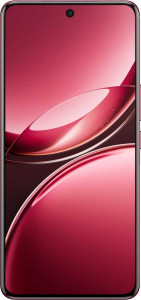
Across most of this spec group, the Vivo V50 and Vivo V50e are indistinguishable: both support 5G, dual SIM, Wi-Fi 5, USB Type-C (USB 2.0), fingerprint scanning, GPS with Galileo support, and the same motion sensors — gyroscope, accelerometer, and compass. Neither offers NFC, an external memory slot, or infrared, making these shared omissions equally relevant to both buyers.
The one area of genuine divergence is cellular throughput. The V50 reaches a peak download speed of 5000 Mbits/s — significantly higher than the V50e's 3270 Mbits/s — suggesting a more capable modem for pulling data from the network. However, the V50's upload speed is capped at just 160 Mbits/s, whereas the V50e supports upload speeds up to 3270 Mbits/s, a dramatically more balanced and upload-capable configuration. In practical terms, this makes the V50e a substantially stronger device for upload-heavy tasks such as video calls, cloud backups, live streaming, or transferring large files to remote servers.
The connectivity edge depends entirely on use case. The V50 is better positioned for download-intensive scenarios like streaming or large file retrieval, while the V50e's symmetrical throughput gives it a commanding advantage for upload-heavy workflows. For most casual users the difference may rarely surface, but professionals or content creators who regularly push data upstream will find the V50e's upload capability meaningfully superior.