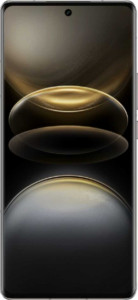
vivo X200 Ultra
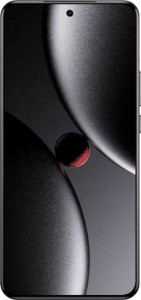
Xiaomi 15 Ultra

vivo X200 Ultra Xiaomi 15 Ultra

Overview

Welcome to our in-depth comparison of the vivo X200 Ultra and the Xiaomi 15 Ultra, two flagship Android powerhouses vying for the top spot in the ultra-premium smartphone segment. Both devices share the same Snapdragon 8 Elite chip, a 6000 mAh battery, and a 200 MP main camera, yet they take notably different paths when it comes to display brightness, camera versatility, and charging speed. Read on to discover which one better matches your priorities.

Common Features

  • Both phones are waterproof with no rugged build and cannot be folded.
  • Both weigh 229 g.
  • Both use an OLED/AMOLED display with a 120Hz refresh rate and 300Hz touch sampling rate.
  • HDR10 and HDR10+ support is available on both products.
  • Always-On Display is available on both products.
  • Dolby Vision support is available on both products.
  • Both displays share an 8000000:1 contrast ratio.
  • Both phones are powered by the Qualcomm Snapdragon 8 Elite chipset with an Adreno 830 GPU running at 1100 MHz.
  • Both offer 16GB of RAM and 1024GB of internal storage.
  • Both achieve a Geekbench 6 multi-core score of 10059 and a single-core score of 3234.
  • Both phones run Android 15.
  • Both cameras support optical image stabilization, phase-detection autofocus, continuous autofocus during video, slow-motion recording, and a built-in HDR mode.
  • Both record video at up to 4320 x 30 fps on the main camera.
  • Both feature a multi-lens main camera system including a 200 MP sensor.
  • Both have a 6000 mAh battery with 90W wired fast charging, wireless charging, and reverse wireless charging.
  • A charger is included in the box for both phones, and neither has a removable battery.
  • Both support an ultra power-saving mode.
  • Neither phone has a 3.5mm audio jack, but both feature stereo speakers.
  • Both support aptX, aptX HD, aptX Adaptive, aptX Lossless, and LDAC audio codecs.
  • Both support 5G, dual SIM, NFC, USB Type-C 3.2, Wi-Fi 7, with download speeds of 10000 Mbits/s and upload speeds of 3500 Mbits/s.

Main Differences

  • Thickness is 8.7 mm on vivo X200 Ultra and 9.4 mm on Xiaomi 15 Ultra.
  • Width is 76.8 mm on vivo X200 Ultra and 75.3 mm on Xiaomi 15 Ultra.
  • Height is 163.1 mm on vivo X200 Ultra and 161.3 mm on Xiaomi 15 Ultra.
  • Volume is 108.976896 cm³ on vivo X200 Ultra and 114.171366 cm³ on Xiaomi 15 Ultra.
  • The IP rating is IP69 on vivo X200 Ultra and IP68 on Xiaomi 15 Ultra.
  • Screen size is 6.82″ on vivo X200 Ultra and 6.73″ on Xiaomi 15 Ultra.
  • Pixel density is 510 ppi on vivo X200 Ultra and 522 ppi on Xiaomi 15 Ultra.
  • Resolution is 1440 x 3168 px on vivo X200 Ultra and 1440 x 3200 px on Xiaomi 15 Ultra.
  • Typical brightness is 4500 nits on vivo X200 Ultra and 3200 nits on Xiaomi 15 Ultra.
  • Damage-resistant glass is present on vivo X200 Ultra but not available on Xiaomi 15 Ultra.
  • AnTuTu benchmark score is 2819127 on vivo X200 Ultra and 2746580 on Xiaomi 15 Ultra.
  • The main camera system has 3 lenses (200 & 50 & 50 MP) on vivo X200 Ultra and 4 lenses (200 & 50 & 50 & 50 MP) on Xiaomi 15 Ultra.
  • Front camera resolution is 50 MP on vivo X200 Ultra and 32 MP on Xiaomi 15 Ultra.
  • A BSI sensor is present on vivo X200 Ultra but not available on Xiaomi 15 Ultra.
  • Optical zoom is 3.7x on vivo X200 Ultra and 4.3x on Xiaomi 15 Ultra.
  • DxOMark Mobile score is 167 on vivo X200 Ultra and 153 on Xiaomi 15 Ultra.
  • 3D photo/video recording is supported on vivo X200 Ultra but not available on Xiaomi 15 Ultra.
  • Dual-tone LED flash is not present on vivo X200 Ultra but is available on Xiaomi 15 Ultra.
  • Wireless charging speed is 40W on vivo X200 Ultra and 80W on Xiaomi 15 Ultra.
  • Battery life is 21 hours on vivo X200 Ultra and 19 hours on Xiaomi 15 Ultra.
  • Number of microphones is 3 on vivo X200 Ultra and 4 on Xiaomi 15 Ultra.
  • Wi-Fi 6E (802.11ax) support is present on Xiaomi 15 Ultra but not available on vivo X200 Ultra.
  • Bluetooth version is 5.4 on vivo X200 Ultra and 6 on Xiaomi 15 Ultra.
  • A barometer is present on Xiaomi 15 Ultra but not available on vivo X200 Ultra.
  • A curved display is featured on vivo X200 Ultra but not on Xiaomi 15 Ultra.
  • Focus modes are available on Xiaomi 15 Ultra but not on vivo X200 Ultra.
Specs Comparison
vivo X200 Ultra

vivo X200 Ultra

Xiaomi 15 Ultra

Xiaomi 15 Ultra

Design:
water resistance Waterproof Waterproof
weight 229 g 229 g
thickness 8.7 mm 9.4 mm
width 76.8 mm 75.3 mm
height 163.1 mm 161.3 mm
volume 108.976896 cm³ 114.171366 cm³
Ingress Protection (IP) rating IP69 IP68
has a rugged build
can be folded

Both phones weigh exactly 229 g and are rated waterproof, so on those two fronts users will feel no difference day-to-day. The meaningful divergence starts with water resistance certification: the vivo X200 Ultra carries an IP69 rating, while the Xiaomi 15 Ultra is rated IP68. IP68 covers prolonged submersion in still water, which is sufficient for most real-world scenarios like rain or accidental drops in a sink. IP69, however, additionally certifies resistance against high-pressure, high-temperature water jets — a meaningfully stricter standard that gives the X200 Ultra a genuine edge for users who work in demanding or outdoor environments.

In terms of form factor, the two devices take different approaches. The X200 Ultra is 8.7 mm thick compared to the Xiaomi 15 Ultra's 9.4 mm — a 0.7 mm difference that is noticeable in-hand and in a pocket, making the vivo the slimmer option. The Xiaomi 15 Ultra, however, is slightly narrower (75.3 mm vs 76.8 mm) and shorter (161.3 mm vs 163.1 mm), which translates to a more compact footprint. The net result is that the X200 Ultra has a notably smaller overall volume (108.98 cm³ vs 114.17 cm³), meaning it packs its internals more efficiently despite being taller and wider.

Overall, the vivo X200 Ultra holds a clear design edge: it achieves a smaller volumetric footprint, a slimmer profile, and a superior IP69 water-resistance rating — all at the same weight. The Xiaomi 15 Ultra's slightly narrower and shorter body makes one-handed use marginally easier, but that ergonomic advantage is modest and does not outweigh the X200 Ultra's combination of sleekness and stronger environmental protection.

Display:
Display type OLED/AMOLED OLED/AMOLED
screen size 6.82" 6.73"
pixel density 510 ppi 522 ppi
resolution 1440 x 3168 px 1440 x 3200 px
refresh rate 120Hz 120Hz
touch sampling rate 300Hz 300Hz
brightness (typical) 4500 nits 3200 nits
has branded damage-resistant glass
supports HDR10
supports HDR10+
Always-On Display
supports Dolby Vision
contrast ratio 8000000:1 8000000:1
Has a secondary screen
has a touch screen

The two displays share the same panel technology, refresh rate, touch sampling rate, HDR support, and contrast ratio — so the battleground narrows to a handful of specs that genuinely separate them. The most striking gap is peak brightness: the vivo X200 Ultra reaches 4500 nits versus the Xiaomi 15 Ultra's 3200 nits. That 40% advantage is not merely a spec sheet number — in direct sunlight, the X200 Ultra will remain far more legible, which is a tangible daily benefit for outdoor users.

Screen size and sharpness trade off in an interesting way here. The X200 Ultra's larger 6.82″ panel offers more screen real estate for media and multitasking, while the Xiaomi 15 Ultra's slightly smaller 6.73″ display squeezes in a marginally higher pixel density of 522 ppi versus 510 ppi. In practice, both figures sit well above the threshold where individual pixels become invisible to the naked eye, so neither advantage is perceptible in everyday use. A more meaningful physical difference is glass protection: the X200 Ultra features branded damage-resistant glass while the Xiaomi 15 Ultra does not, which has real implications for long-term scratch and drop resilience.

Taking the group as a whole, the vivo X200 Ultra holds the stronger display package. Its dramatically higher brightness and the inclusion of protective glass give it concrete real-world advantages that the Xiaomi 15 Ultra's negligible sharpness lead cannot offset. For users who prioritize outdoor visibility and display durability, the X200 Ultra is the clear choice here.

Performance:
internal storage 1024GB 1024GB
RAM 16GB 16GB
AnTuTu benchmark score 2819127 2746580
Chipset (SoC) name Qualcomm Snapdragon 8 Elite Qualcomm Snapdragon 8 Elite
GPU name Adreno 830 Adreno 830
CPU speed 2 x 4.32 & 6 x 3.53 GHz 2 x 4.32 & 6 x 3.53 GHz
Geekbench 6 result (multi) 10059 10059
Geekbench 6 result (single) 3234 3234
GPU clock speed 1100 MHz 1100 MHz
Has integrated LTE
RAM speed 5300 MHz 5300 MHz
semiconductor size 3 nm 3 nm
Supports 64-bit
DirectX version DirectX 12 DirectX 12
Has integrated graphics
OpenGL version 3.2 3.2
OpenGL ES version 3.2 3.2
Uses big.LITTLE technology
CPU threads 8 threads 8 threads
Uses HMP
Has TrustZone
maximum memory bandwidth 85.1 GB/s 85.1 GB/s
OpenCL version 3 3
memory channels 2 2
L2 cache 12 MB 12 MB
Supports ECC memory
L1 cache 192 KB 192 KB
maximum memory amount 24GB 24GB
uses multithreading
GPU turbo 1100 MHz 1100 MHz
Thermal Design Power (TDP) 8.2W 8.2W
DDR memory version 5 5
shading units 1536 1536
supported displays 2 2
L3 cache 8 MB 8 MB

At the silicon level, these two phones are effectively twins. Both are powered by the Qualcomm Snapdragon 8 Elite — built on a 3 nm process — paired with 16 GB of DDR5 RAM running at 5300 MHz and 1024 GB of internal storage. Every architectural detail from CPU core configuration and clock speeds to GPU shading units, cache hierarchy, and memory bandwidth is identical. Their Geekbench 6 scores are a perfect match too, with both posting 3234 single-core and 10059 multi-core results, confirming there is no meaningful CPU performance gap between them.

The only numerical divergence in the entire group is the AnTuTu benchmark: the X200 Ultra scores 2,819,127 against the Xiaomi 15 Ultra's 2,746,580 — a difference of roughly 2.6%. AnTuTu is a composite score that folds in memory throughput and storage speed alongside CPU and GPU performance, so this small gap likely reflects minor variations in thermal management or storage controller tuning rather than any fundamental hardware difference. In real-world usage — gaming, app launches, multitasking — no user would perceive a gap of this magnitude.

This group is effectively a tie. Choosing between the vivo X200 Ultra and the Xiaomi 15 Ultra on performance grounds alone is not meaningful; both deliver the same flagship-tier experience across every scenario, and the decision should rest entirely on the differentiators found in other specification groups.

Cameras:
megapixels (main camera) 200 & 50 & 50 MP 200 & 50 & 50 & 50 MP
wide aperture (main camera) 2.3 & 1.7 & 2f 2.6 & 1.8 & 1.6 & 2.2f
Has a dual-lens (or multi-lens) main camera
megapixels (front camera) 50MP 32MP
has built-in optical image stabilization
video recording (main camera) 4320 x 30 fps 4320 x 30 fps
Has a dual-tone LED flash
number of flash LEDs 3 2
has a BSI sensor
has a CMOS sensor
has continuous autofocus when recording movies
Has phase-detection autofocus for photos
supports slow-motion video recording
has a built-in HDR mode
has manual exposure
has a flash
optical zoom 3.7x 4.3x
has manual ISO
has a serial shot mode
has manual focus
pixel size (main camera) 1.22 µm 0.56 & 0.7 & 1.6 & 0.64 µm
has a front camera
Has laser autofocus
Shoots 360° panorama
has manual white balance
shoots raw
has touch autofocus
has manual shutter speed
can create panoramas in-camera
wide aperture (front camera) 2.5f 2f
Has timelapse function
Has a front-facing LED flash
has a dual-lens (or multi-lens) front camera
DxOMark Mobile score 167 153
supports HDR10 recording
supports Dolby Vision recording
has a front-facing camera under the display
Has a RGB LED flash
has 3D photo/video recording capabilities

The rear camera systems diverge in a meaningful way: the Xiaomi 15 Ultra fields four lenses versus the vivo X200 Ultra's three, and leverages that extra module to achieve a higher 4.3x optical zoom compared to the X200 Ultra's 3.7x. For telephoto enthusiasts, that gap translates to noticeably more reach before digital cropping takes over. However, the X200 Ultra counters with a larger main-sensor pixel size of 1.22 µm — larger individual pixels capture more light per shot, a meaningful advantage in low-light conditions. The X200 Ultra also incorporates a BSI (backside-illuminated) sensor architecture, which further improves light gathering efficiency, a feature absent on the Xiaomi 15 Ultra.

On the selfie side, the X200 Ultra's 50 MP front camera versus the Xiaomi 15 Ultra's 32 MP gives it a resolution advantage for detail-rich portraits and video calls, though the Xiaomi's wider front aperture of f/2.0 versus f/2.5 lets in more light — a genuine trade-off between resolution and low-light selfie performance. The X200 Ultra also supports 3D photo and video recording, a capability the Xiaomi 15 Ultra entirely lacks, adding a creative dimension that some users will value.

The most decisive data point in this group is the DxOMark Mobile score: the X200 Ultra posts 167 against the Xiaomi 15 Ultra's 153 — a 14-point gap that is substantial by DxOMark standards and reflects a consistently superior real-world imaging output. While the Xiaomi wins on zoom reach and lens count, the X200 Ultra takes the overall camera crown here, offering higher-rated image quality, a stronger main sensor, a superior front camera, and exclusive 3D capture capabilities.

Operating system:
Android version Android 15 Android 15
has clipboard warnings
has location privacy options
has camera/microphone privacy options
has Mail Privacy Protection
has theme customization
can block app tracking
blocks cross-site tracking
has on-device machine learning
has notification permissions
has media picker
Can play games while they download
has dark mode
has Wi-Fi password sharing
has battery health check
has an extra dim mode
has focus modes
has dynamic theming
can offload apps
Has customizable notifications
has Live Text
has full-page screenshots
supports split screen
gets direct OS updates
has PiP
Can be used as a PC
Has sharing intents
has a child lock
Supports widgets
Is free and open source
Has offline voice recognition
has voice commands
Tracks the current position of a mobile device
is a multi-user system
has Quick Start

Running Android 15 on both devices, the software experience is remarkably uniform across this entire spec group. Privacy controls, productivity features, display customization, and core Android utilities — from split-screen and Picture-in-Picture to dynamic theming and offline voice recognition — are identical on paper. For the vast majority of users, day-to-day software interaction will feel functionally indistinguishable between the two.

Scanning the full list for any divergence, a single difference emerges: the Xiaomi 15 Ultra supports focus modes, while the vivo X200 Ultra does not. Focus modes allow users to define dedicated usage profiles that restrict notifications and app access during specific activities — work, sleep, exercise — helping manage digital distractions in a structured way. It is a genuinely useful productivity and wellness feature, and its absence on the X200 Ultra is a minor but real omission for users who rely on scheduled digital boundaries.

This group is essentially a near-tie, with the Xiaomi 15 Ultra holding a narrow edge solely due to focus modes. It is not a decisive advantage, but it is the only differentiator the data provides, and for users who actively use focus or digital wellbeing profiles, it tips the balance toward the Xiaomi.

Battery:
battery power 6000 mAh 6000 mAh
has wireless charging
Supports fast charging
charging speed 90W 90W
wireless charging speed 40W 80W
has reverse wireless charging
comes with a charger
has a removable battery
Has an ultra power-saving mode
has a battery level indicator
Battery life 21 hours 19 hours
has a rechargeable battery

Shared foundations first: both phones carry a 6000 mAh battery with 90W wired fast charging, reverse wireless charging, and an included charger in the box. At this capacity and charging speed, either device can comfortably last a full day and top up quickly when needed — so the fundamentals are equally strong across the board.

Where the two diverge is wireless charging speed and real-world battery endurance. The Xiaomi 15 Ultra charges wirelessly at an impressive 80W, which is nearly double the vivo X200 Ultra's 40W wireless rate. For users who rely on wireless pads as their primary charging method, that gap meaningfully reduces the time spent waiting for a top-up. On the flip side, the X200 Ultra posts a notably longer rated battery life of 21 hours versus the Xiaomi 15 Ultra's 19 hours — a two-hour difference that, despite the identical cell size, suggests more efficient power management and translates directly to more time away from any charger at all.

The two phones trade advantages in a clean swap: the Xiaomi 15 Ultra wins when you need to charge fast wirelessly, while the vivo X200 Ultra wins by needing to charge less often. For heavy wireless-charger users, the Xiaomi is the better fit; for those who prioritize longevity between charges, the X200 Ultra has the edge. Neither holds an unconditional overall advantage in this group.

Audio:
has a socket for a 3.5 mm audio jack
has stereo speakers
has aptX
has LDAC
has aptX HD
has aptX Adaptive
has aptX Lossless
Has a radio
number of microphones 3 4

Wireless audio codec support is identical across both devices — aptX, aptX HD, aptX Adaptive, aptX Lossless, and LDAC are all present on each. This means users of high-resolution Bluetooth headphones will get the same lossless and low-latency wireless audio experience regardless of which phone they choose. Neither has a 3.5mm jack, and both feature stereo speakers, so the listening experience from a hardware and codec standpoint is a genuine tie.

The sole differentiator in this group is microphone count: the Xiaomi 15 Ultra is equipped with 4 microphones versus the vivo X200 Ultra's 3. In practice, more microphones enable better spatial audio capture, more accurate noise cancellation during calls and voice recordings, and improved beamforming — all of which matter for video recording quality, voice clarity on calls, and hands-free voice recognition in noisy environments.

This group is largely a tie, but the Xiaomi 15 Ultra claims a narrow edge courtesy of its extra microphone. It is not a transformative advantage, but for users who frequently record video with on-device audio or make calls in loud environments, that additional input point can produce a meaningfully cleaner result.

Connectivity & Features:
release date April 2025 February 2025
has 5G support
Wi-Fi version Wi-Fi 4 (802.11n), Wi-Fi 6 (802.11ax), Wi-Fi 5 (802.11ac), Wi-Fi 7 (802.11be) Wi-Fi 4 (802.11n), Wi-Fi 6 (802.11ax), Wi-Fi 5 (802.11ac), Wi-Fi 7 (802.11be), Wi-Fi 6E (802.11ax)
SIM cards 2 SIM 2 SIM
Bluetooth version 5.4 6
has an external memory slot
Has USB Type-C
USB version 3.2 3.2
has NFC
download speed 10000 MBits/s 10000 MBits/s
upload speed 3500 MBits/s 3500 MBits/s
Has a fingerprint scanner
has emergency SOS via satellite
has crash detection
is DLNA-certified
has a gyroscope
supports ANT+
Has a heart rate monitor
has GPS
has a compass
supports Wi-Fi
Has an infrared sensor
has an accelerometer
has a cellular module
Has a barometer
has an HDMI output
Uses 3D facial recognition
Has an iris scanner
Stylus included
supports Galileo
Has motion tracking
Has optical tracking
Has a built-in projector

Across the core connectivity checklist — 5G, Wi-Fi 7, USB 3.2 Type-C, NFC, dual SIM, satellite SOS, GPS, and infrared — both phones are completely identical. For most users, this means the connected experience will feel indistinguishable in everyday scenarios. The differentiation is concentrated in just three specs, but each carries real weight.

The Xiaomi 15 Ultra pulls ahead on wireless standards in two ways. First, it supports Wi-Fi 6E in addition to the shared Wi-Fi 4/5/6/7 stack — Wi-Fi 6E unlocks the 6 GHz band, offering less congestion and lower latency in dense wireless environments like offices or apartment buildings. Second, and more significantly, it features Bluetooth 6.0 versus the vivo X200 Ultra's Bluetooth 5.4. Bluetooth 6 introduces Channel Sounding for precise distance and location awareness, along with further improvements to connection stability and efficiency — advantages that will become increasingly relevant as the ecosystem of Bluetooth 6-compatible accessories matures. The Xiaomi 15 Ultra also includes a barometer, absent on the X200 Ultra, which enables accurate altitude readings — useful for navigation apps, weather monitoring, and fitness tracking during outdoor activities.

With three distinct connectivity and sensor advantages to none, the Xiaomi 15 Ultra takes a clear edge in this group. Bluetooth 6.0 and Wi-Fi 6E represent genuine forward-looking upgrades, and the barometer adds a practical sensor the X200 Ultra simply lacks.
Miscellaneous:
has a video light
Has sapphire glass display
Has a curved display
Has an e-paper display

This is a compact spec group with limited data points, and three of the four are identical — both phones share a video light, lack sapphire glass, and have no e-paper display. The only differentiator is display geometry: the vivo X200 Ultra features a curved display, while the Xiaomi 15 Ultra uses a flat panel.

Curved displays are a matter of genuine preference with real trade-offs in either direction. The curve creates a more immersive, premium aesthetic and can make edge-swiping gestures feel more natural. However, flat displays are generally easier to use with screen protectors, less prone to accidental edge touches, and tend to offer better palm rejection — reasons why many users and even some manufacturers have shifted back toward flat designs in recent years.

Neither choice is objectively superior, making this group essentially a tie decided by personal taste. Users who prize a sleek, curved look will lean toward the vivo X200 Ultra; those who favor practicality and easier screen protection will prefer the Xiaomi 15 Ultra's flat panel. The data provides no other differentiators to tip the balance further in either direction.

Comparison Summary & Verdict

After examining every spec, it is clear that both the vivo X200 Ultra and the Xiaomi 15 Ultra are exceptional flagships with more in common than not. However, their differences are meaningful. The vivo X200 Ultra stands out with its superior 4500-nit brightness, damage-resistant glass, a higher DxOMark score of 167, longer 21-hour battery life, and a slimmer, lighter profile — making it the stronger choice for users who prioritize screen quality, camera performance, and endurance. The Xiaomi 15 Ultra, on the other hand, counters with a four-lens camera system offering greater 4.3x optical zoom, significantly faster 80W wireless charging, a newer Bluetooth 6 radio, Wi-Fi 6E support, and a flat display that some users prefer. Neither phone is a clear-cut winner; your ideal choice depends entirely on what matters most to you.

vivo X200 Ultra
Buy vivo X200 Ultra if...

Buy the vivo X200 Ultra if you want the brightest display, a higher DxOMark camera score, longer battery life, and a slimmer form factor with damage-resistant glass.

Xiaomi 15 Ultra
Buy Xiaomi 15 Ultra if...

Buy the Xiaomi 15 Ultra if you prefer a four-lens camera system with greater optical zoom, much faster 80W wireless charging, and the latest connectivity features like Wi-Fi 6E and Bluetooth 6.