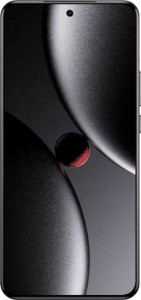
At the core connectivity level, these two phones are essentially identical — both carry Bluetooth 6, USB 3.2 Type-C, 5G, NFC, dual SIM, satellite emergency SOS, and an infrared sensor. The sensor suite also mirrors each other closely, with GPS, Galileo, gyroscope, accelerometer, and compass present on both. Given how competitive flagship connectivity has become, this near-parity is expected, but the shared feature set is genuinely comprehensive.
The meaningful differences are few but worth noting. The Xiaomi 15 Ultra extends its Wi-Fi stack with Wi-Fi 6E support alongside the standard Wi-Fi 4/5/6/7 that the X300 Pro already covers. Wi-Fi 6E opens access to the less congested 6GHz band, which can deliver lower latency and more consistent speeds in dense wireless environments like offices or apartments with many competing networks. On the flip side, the Vivo X300 Pro lists a marginally higher peak download speed of 10,700 Mbits/s versus the 15 Ultra's 10,000 Mbits/s — a difference unlikely to be felt in real-world conditions but technically in the X300 Pro's favor. The 15 Ultra also includes a barometer, absent on the X300 Pro, which enables more accurate altitude readings and can improve GPS precision in navigation scenarios.
This category is closely contested, but the Xiaomi 15 Ultra holds a slim overall edge — Wi-Fi 6E support in crowded environments and the addition of a barometer are both genuinely useful inclusions that the X300 Pro lacks. Neither advantage is transformative for average users, but for those who care about network resilience or precise location data, the 15 Ultra is the more capable device here.