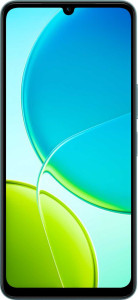
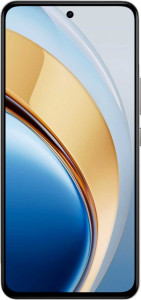
At the silicon level, the gap between these two devices is substantial. The Y19e runs on a Unisoc T7225 built on a 12 nm process, while the Y200 4G is powered by a Qualcomm Snapdragon 685 fabricated on a much more modern 6 nm node. A smaller process size means the chip can pack more transistors into the same space, running faster while consuming less power — so the Y200 4G is positioned to deliver both better performance and greater energy efficiency simultaneously. The Snapdragon 685 also fields a more capable CPU configuration, with its four high-performance cores clocked at 2.8 GHz compared to the T7225's top speed of 1.8 GHz across all cores.
The memory and storage story follows the same pattern. The Y200 4G ships with 8 GB of RAM at 2133 MHz and 256 GB of internal storage, versus the Y19e's 4 GB of RAM at 1866 MHz and a tight 64 GB of storage. In practice, more RAM means more apps can stay open in the background without being reloaded, and the faster RAM speed contributes to the Y200 4G's higher maximum memory bandwidth of 17 GB/s versus 12.8 GB/s. The fourfold difference in storage is especially consequential — 64 GB fills up quickly once apps, photos, and media accumulate. On the graphics side, the Y200 4G's Adreno 610 GPU with a turbo clock of 1260 MHz dwarfs the Y19e's Mali G57 MP1 at 614.4 MHz, and DirectX 12 support further underscores its gaming and compute headroom.
The Y200 4G wins this category without contest. Across every meaningful performance dimension — CPU architecture, process node, RAM capacity, storage, memory bandwidth, and GPU throughput — it holds a commanding lead. The Y19e's specs are adequate for very basic smartphone tasks, but users who multitask, game, or plan to hold onto their phone for several years will find the Y200 4G considerably more capable and future-proof.