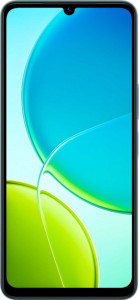
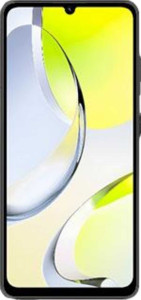
Vivo Y29s
ZTE Blade A76

Vivo Y29s ZTE Blade A76

Overview

Welcome to our in-depth comparison of the Vivo Y29s and the ZTE Blade A76 — two 5G-capable mid-range smartphones that share a surprising amount of common ground yet differ in several meaningful ways. Both run Android 15 on a 90Hz LCD IPS display and pack 6GB of RAM, but key battlegrounds like battery life and fast charging, camera capabilities, and internal storage set them apart. Read on to see which one earns a place in your pocket.

Common Features

  • Both phones have water resistance with a thickness of 8.2 mm.
  • Neither phone has a rugged build or can be folded.
  • Both display panels use LCD IPS technology with a 90Hz refresh rate.
  • Branded damage-resistant glass is not present on either phone.
  • HDR10, HDR10+, Dolby Vision, and Always-On Display are not available on either phone.
  • Both phones come with 6GB of RAM running at 2133 MHz.
  • Both phones support 64-bit processing and use big.LITTLE technology with 8 CPU threads.
  • Both phones have integrated LTE, integrated graphics, and DirectX 12 support.
  • Both main cameras feature a dual-lens setup without optical image stabilization.
  • Phase-detection autofocus for photos and continuous autofocus during video recording are available on both phones.
  • Neither phone has a BSI sensor, but both have a CMOS sensor and a single LED flash.
  • Both phones run Android 15 with theme customization, clipboard warnings, location privacy options, and camera/microphone privacy options.
  • App tracking blocking is available on both phones, but neither blocks cross-site tracking or has Mail Privacy Protection.
  • Wireless charging is not available on either phone, and neither has a removable battery.
  • Both phones have a 3.5 mm audio jack but lack aptX, LDAC, aptX HD, aptX Adaptive, aptX Lossless support.
  • Both phones support 5G, Wi-Fi 4 and Wi-Fi 5, dual SIM, Bluetooth 5.4, USB Type-C 2.0, NFC, and a fingerprint scanner.
  • Both phones have a video light but lack a sapphire glass display, curved display, or e-paper display.

Main Differences

  • Weight is 199 g on Vivo Y29s and 203 g on ZTE Blade A76.
  • Width is 77 mm on Vivo Y29s and 74.8 mm on ZTE Blade A76.
  • Height is 167.3 mm on Vivo Y29s and 163.3 mm on ZTE Blade A76.
  • Volume is 105.63 cm³ on Vivo Y29s and 100.16 cm³ on ZTE Blade A76.
  • Ingress Protection rating is IP64 on Vivo Y29s and IP54 on ZTE Blade A76.
  • Screen size is 6.74″ on Vivo Y29s and 6.75″ on ZTE Blade A76.
  • Pixel density is 260 ppi on Vivo Y29s and 262 ppi on ZTE Blade A76.
  • Resolution is 720 x 1600 px on Vivo Y29s and 720 x 1612 px on ZTE Blade A76.
  • Internal storage is 256GB on Vivo Y29s and 128GB on ZTE Blade A76.
  • The chipset is MediaTek Dimensity 6300 on Vivo Y29s and Unisoc Tanggula T760 on ZTE Blade A76.
  • The GPU is Arm Mali-G57 MC2 on Vivo Y29s and Mali-G57 on ZTE Blade A76.
  • CPU speed is 2 x 2.4 & 6 x 2 GHz on Vivo Y29s and 4 x 2.2 & 4 x 1.8 GHz on ZTE Blade A76.
  • Semiconductor size is 6 nm on Vivo Y29s and 7 nm on ZTE Blade A76.
  • Maximum memory amount is 12GB on Vivo Y29s and 32GB on ZTE Blade A76.
  • Main camera megapixels are 50 & 0.08 MP on Vivo Y29s and 50 MP on ZTE Blade A76.
  • Main camera wide aperture is f/3 & f/1.8 on Vivo Y29s and f/1.8 on ZTE Blade A76.
  • Front camera resolution is 5MP on Vivo Y29s and 8MP on ZTE Blade A76.
  • Main camera video recording is 1080p at 30 fps on Vivo Y29s and 2160p at 30 fps on ZTE Blade A76.
  • Battery capacity is 5500 mAh on Vivo Y29s and 5000 mAh on ZTE Blade A76.
  • Fast charging is supported on Vivo Y29s but not available on ZTE Blade A76.
  • Stereo speakers are present on Vivo Y29s but not available on ZTE Blade A76.
  • An external memory slot is available on Vivo Y29s but not present on ZTE Blade A76.
Specs Comparison
Vivo Y29s

Vivo Y29s

ZTE Blade A76

ZTE Blade A76

Design:
water resistance Water resistant Water resistant
weight 199 g 203 g
thickness 8.2 mm 8.2 mm
width 77 mm 74.8 mm
height 167.3 mm 163.3 mm
volume 105.63322 cm³ 100.161688 cm³
Ingress Protection (IP) rating IP64 IP54
has a rugged build
can be folded

In terms of overall form factor, the Vivo Y29s and ZTE Blade A76 are closely matched, sharing the same 8.2 mm thickness and near-identical weight — 199 g versus 203 g respectively. That 4-gram difference is imperceptible in daily use, so neither phone has a meaningful edge in hand comfort based on weight alone. Both are non-folding, standard-slab designs with no rugged build, placing them squarely in the mainstream consumer category.

Where a real difference emerges is in physical footprint and water protection. The Y29s is noticeably taller (167.3 mm vs 163.3 mm) and wider (77 mm vs 74.8 mm), resulting in a larger overall volume (105.6 cm³ vs 100.2 cm³). In practice, the Blade A76 is the more compact and easier-to-pocket device, which matters for one-handed use or smaller hands. On water resistance, both carry an IP rating, but the Y29s holds a IP64 certification versus the Blade A76′s IP54 — the key distinction being that IP6x offers full dust-tight protection, while IP5x only resists dust ingress partially. In dusty or outdoor environments, the Y29s is meaningfully better protected.

Overall, design is a split decision depending on priorities. The Blade A76 wins on compactness and one-handed ergonomics, while the Y29s has a clear edge in environmental durability thanks to its superior IP64 rating. Users who frequently use their phone in dusty or harsh conditions should favor the Y29s; those who prioritize a smaller, easier-to-handle device will prefer the Blade A76.

Display:
Display type LCD, IPS LCD, IPS
screen size 6.74" 6.75"
pixel density 260 ppi 262 ppi
resolution 720 x 1600 px 720 x 1612 px
refresh rate 90Hz 90Hz
has branded damage-resistant glass
supports HDR10
supports HDR10+
Always-On Display
supports Dolby Vision
Has a secondary screen
has a touch screen

The display specs for these two phones are remarkably close — both use an LCD IPS panel, run at a 90Hz refresh rate, and top out at 720p resolution. That 90Hz figure is a genuine everyday benefit at this price tier, delivering noticeably smoother scrolling and navigation compared to standard 60Hz screens. However, neither phone crosses into Full HD territory, so text and images will appear softer than on a 1080p display — something to keep in mind for anyone who reads a lot or watches video content frequently.

The size and sharpness gap between the two is essentially nonexistent. The Blade A76 measures 6.75″ against the Y29s at 6.74″, and pixel density is 262 ppi versus 260 ppi — differences so marginal that no user will perceive them in real-world use. Neither device offers branded damage-resistant glass, HDR support of any kind, or an Always-On Display, so both share the same limitations on durability and content quality.

This is a near-perfect tie. The display category offers no meaningful basis for choosing one phone over the other — the panel technology, sharpness, size, and feature set are functionally identical. Buyers should look to other specification groups to differentiate between the two.

Performance:
internal storage 256GB 128GB
RAM 6GB 6GB
Chipset (SoC) name MediaTek Dimensity 6300 Unisoc Tanggula T760
GPU name Arm Mali-G57 MC2 Mali-G57
CPU speed 2 x 2.4 & 6 x 2 GHz 4 x 2.2 & 4 x 1.8 GHz
Has integrated LTE
RAM speed 2133 MHz 2133 MHz
semiconductor size 6 nm 7 nm
Supports 64-bit
DirectX version DirectX 12 DirectX 12
Has integrated graphics
Uses big.LITTLE technology
CPU threads 8 threads 8 threads
maximum memory amount 12GB 32GB
DDR memory version 4 4

The chipset gap is the most consequential difference here. The Vivo Y29s runs on the MediaTek Dimensity 6300, built on a 6 nm process node, while the ZTE Blade A76 uses the Unisoc Tanggula T760 on a 7 nm process. That smaller node on the Y29s translates to better power efficiency — the chip generates less heat under load and draws less battery for the same tasks. The Y29s also fields two high-performance cores clocked at 2.4 GHz, giving it a sharper peak for demanding single-threaded tasks like app launches and UI responsiveness, whereas the Blade A76 spreads its workload across four mid-range cores at 2.2 GHz with no dedicated performance cores.

Storage is another clear divide. The Y29s ships with 256 GB of internal storage — double the Blade A76′s 128 GB. For users who store photos, offline videos, or games locally, this difference is immediately practical and hard to overlook. Both phones start with 6 GB of RAM and use DDR4 memory at the same speed, so day-to-day multitasking starts from an equal footing. The Blade A76 does support a higher maximum memory ceiling of 32 GB versus the Y29s′s 12 GB, but since both ship at 6 GB, this spec only matters if expanded RAM options are offered at point of sale.

The Vivo Y29s holds a clear performance advantage in this group. The more modern and efficient chipset, stronger peak CPU clocks, and significantly larger base storage make it the more capable device for users who care about sustained performance and long-term usability as apps and media libraries grow.

Cameras:
megapixels (main camera) 50 & 0.08 MP 50 MP
wide aperture (main camera) 3 & 1.8f 1.8f
Has a dual-lens (or multi-lens) main camera
megapixels (front camera) 5MP 8MP
has built-in optical image stabilization
video recording (main camera) 1080 x 30 fps 2160 x 30 fps
Has a dual-tone LED flash
number of flash LEDs 1 1
has a BSI sensor
has a CMOS sensor
has continuous autofocus when recording movies
Has phase-detection autofocus for photos
supports slow-motion video recording
has a built-in HDR mode
has manual exposure
has a flash
optical zoom 0x 0x
has manual ISO
has a serial shot mode
has manual focus
has a front camera
Has laser autofocus
Shoots 360° panorama
has manual white balance
shoots raw
has touch autofocus
has manual shutter speed
can create panoramas in-camera
Has a front-facing LED flash
has a dual-lens (or multi-lens) front camera
supports HDR10 recording
supports Dolby Vision recording
has a front-facing camera under the display
Has a RGB LED flash
has 3D photo/video recording capabilities

At first glance, the rear cameras look similar — both lead with a 50 MP main sensor and a secondary lens, and both share the same broad feature set: phase-detection autofocus, continuous autofocus during video, HDR mode, slow-motion, and a solid range of manual controls. However, the Y29s′s second lens is a near-vestigial 0.08 MP sensor, which in practice functions purely as a depth aid for portrait mode rather than adding any real photographic versatility. The Blade A76′s dual setup, while not specified beyond resolution, pairs more usefully with its primary f/1.8 aperture lens.

The sharpest divergence comes in video and selfie capability. The Blade A76 records at 2160p (4K) @ 30 fps, while the Y29s tops out at 1080p @ 30 fps. For anyone who shoots video — travel clips, family moments, social content — that difference is substantial: 4K footage retains far more detail and gives much more flexibility for cropping or reframing in post. On the selfie side, the Blade A76 again pulls ahead with an 8 MP front camera versus the Y29s′s 5 MP, meaning sharper, more detailed self-portraits and video calls.

The ZTE Blade A76 wins the camera category. Despite sharing most of the same features and a matching main sensor resolution, its 4K video recording capability and higher-resolution front camera are meaningful real-world advantages that the Y29s simply cannot match.

Operating system:
Android version Android 15 Android 15
has clipboard warnings
has location privacy options
has camera/microphone privacy options
has Mail Privacy Protection
has theme customization
can block app tracking
blocks cross-site tracking
has on-device machine learning
has notification permissions
has media picker
Can play games while they download
has dark mode
has Wi-Fi password sharing
has battery health check
has an extra dim mode
has focus modes
has dynamic theming
can offload apps
Has customizable notifications
has Live Text
has full-page screenshots
supports split screen
gets direct OS updates
has PiP
Can be used as a PC
Has sharing intents
has a child lock
Supports widgets
Is free and open source
Has offline voice recognition
has voice commands
Tracks the current position of a mobile device
is a multi-user system
has Quick Start

Both phones ship with Android 15 and are spec-for-spec identical across every single data point in this category — from privacy controls like location and camera/microphone permissions, to productivity features like split-screen, Picture-in-Picture, and widgets, to quality-of-life additions like dark mode, dynamic theming, and battery health checks. This level of parity is unusual and tells a clear story: at the OS feature level, these two devices offer buyers exactly the same experience out of the box.

A few shared limitations are worth noting. Neither phone receives direct OS updates — meaning software upgrades are routed through the manufacturer rather than pushed straight from Google. This can result in delayed or inconsistent update schedules, which has long-term security and feature implications. Neither device supports Wi-Fi password sharing or Focus Modes either, though these are relatively minor omissions at this price tier.

This is an absolute tie. The operating system category provides zero basis for differentiation — every supported feature and every missing one is shared equally between the Vivo Y29s and the ZTE Blade A76. Buyers should weigh other specification groups entirely when making their decision here.

Battery:
battery power 5500 mAh 5000 mAh
has wireless charging
Supports fast charging
has a removable battery
has a battery level indicator
has a rechargeable battery

Battery is one of the more decisive categories in this comparison. The Vivo Y29s packs a 5500 mAh cell against the ZTE Blade A76's 5000 mAh — a 10% capacity advantage that, all else being equal, translates to meaningfully longer time between charges. For moderate to heavy users, that gap can realistically represent an extra hour or two of screen-on time over the course of a day, which matters when access to a charger isn't guaranteed.

The more impactful differentiator, though, is charging. The Y29s supports fast charging, while the Blade A76 does not. A larger battery that also charges faster is a compounding advantage: not only does the Y29s last longer, it spends less time tethered to a wall when it does need topping up. The Blade A76's lack of fast charging means replenishing its smaller battery will take considerably longer — a frustrating combination for anyone with a busy schedule.

The Vivo Y29s wins the battery category clearly and on two fronts. Its larger capacity and fast charging support together make it the more practical choice for users who prioritize endurance and convenience, with no offsetting advantage on the Blade A76's side.

Audio:
has a socket for a 3.5 mm audio jack
has stereo speakers
has aptX
has LDAC
has aptX HD
has aptX Adaptive
has aptX Lossless

Audio hardware is lean on both devices, but there is one meaningful split. Both phones retain the increasingly rare 3.5 mm headphone jack — a practical win for users with wired headphones or earbuds who want to avoid dongles or Bluetooth dependency. Neither device supports high-resolution wireless audio codecs like LDAC or aptX, so Bluetooth audio quality is limited to standard transmission regardless of which phone you choose.

The key differentiator is speaker configuration. The Vivo Y29s features stereo speakers, while the ZTE Blade A76 has only a mono speaker. In practice, stereo output creates a noticeably wider, more immersive soundstage for media consumption — whether watching videos, playing games, or listening to music without headphones. Mono speakers, by contrast, produce a flat, single-channel sound that lacks spatial depth and tends to feel thin at higher volumes.

The Vivo Y29s takes this category. The shared headphone jack levels the playing field for wired audio, but the Y29s′s stereo speakers represent a tangible upgrade in loudspeaker experience that users who consume media on their phone will notice every day.

Connectivity & Features:
release date March 2025 June 2025
has 5G support
Wi-Fi version Wi-Fi 4 (802.11n), Wi-Fi 5 (802.11ac) Wi-Fi 4 (802.11n), Wi-Fi 5 (802.11ac)
SIM cards 2 SIM 2 SIM
Bluetooth version 5.4 5.4
has an external memory slot
Has USB Type-C
USB version 2 2
has NFC
Has a fingerprint scanner
has emergency SOS via satellite
has crash detection
is DLNA-certified
has a gyroscope
supports ANT+
Has a heart rate monitor
has GPS
has a compass
supports Wi-Fi
Has an infrared sensor
has an accelerometer
has a cellular module
Has a barometer
has an HDMI output
Uses 3D facial recognition
Has an iris scanner
Stylus included
supports Galileo
Has motion tracking
Has optical tracking
Has a built-in projector

Connectivity fundamentals are remarkably well-matched. Both phones offer 5G, Wi-Fi 5, Bluetooth 5.4, NFC, dual SIM, USB Type-C, and GPS with Galileo support. Bluetooth 5.4 is a relatively current standard, bringing improved connection stability and efficiency over older versions, and NFC covers contactless payments and quick pairing — useful features at this price tier that not all budget devices guarantee. The shared Wi-Fi 5 support means both can handle fast home and office networks without bottlenecking on Wi-Fi 4 limitations.

The sole differentiator in this category is the microSD card slot. The Vivo Y29s includes expandable storage support; the ZTE Blade A76 does not. Given that the Blade A76 also ships with only 128 GB of internal storage — half that of the Y29s — the absence of a memory slot is a compounding limitation. Users who accumulate large photo libraries, offline media, or app data will have no way to extend capacity on the Blade A76, making the fixed storage a harder constraint over the device's lifespan.

The Vivo Y29s edges ahead in this group purely on the strength of its expandable storage slot. Every other connectivity and feature spec is identical between the two devices, so that single hardware addition becomes the deciding factor — and it's one that meaningfully extends the phone's long-term usability.

Miscellaneous:
has a video light
Has sapphire glass display
Has a curved display
Has an e-paper display

The miscellaneous category offers nothing to separate these two devices — every data point is identical. Both include a video light, and neither features sapphire glass, a curved display, or an e-paper panel. The absence of the latter three is entirely expected at this market segment, where such features are reserved for flagship or niche devices.

This is a complete tie. There is no differentiating factor in this group, and buyers should place no weight on miscellaneous specs when choosing between the Vivo Y29s and the ZTE Blade A76.

Comparison Summary & Verdict

After a thorough look at the specs, both the Vivo Y29s and the ZTE Blade A76 offer strong foundations for everyday use, but they cater to different priorities. The Vivo Y29s stands out with its larger 5500 mAh battery with fast charging, more generous 256GB internal storage, expandable memory support, stereo speakers, and a superior IP64 water resistance rating — making it the better all-rounder for users who want endurance and multimedia performance. The ZTE Blade A76, on the other hand, counters with a higher-resolution 4K video recording capability, an 8MP selfie camera, and a more compact and lighter form factor. If you prioritize media content creation and a smaller footprint, the Blade A76 holds its own. Choose the Vivo Y29s for longevity and storage, or the ZTE Blade A76 for sharper video output in a more pocketable package.

Vivo Y29s
Buy Vivo Y29s if...

Buy the Vivo Y29s if you want a longer-lasting battery with fast charging, more built-in storage, expandable memory, and stereo speakers for a richer multimedia experience.

ZTE Blade A76
Buy ZTE Blade A76 if...

Buy the ZTE Blade A76 if you prefer a more compact design, a sharper 8MP front camera, and 4K video recording capability from the main camera.