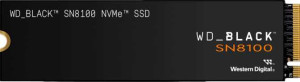
Western Digital WD Black SN8100 1TB
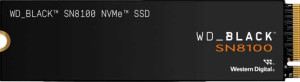
Western Digital WD Black SN8100 2TB

Western Digital WD Black SN8100 1TB Western Digital WD Black SN8100 2TB

Overview

When choosing between the Western Digital WD Black SN8100 1TB and the Western Digital WD Black SN8100 2TB, the decision goes deeper than storage capacity alone. Both drives share the same cutting-edge platform, yet key metrics like sequential write speed and random read performance tell a more nuanced story. This comparison breaks down every specification to help you find the right fit for your workload.

Common Features

  • Both products share the same sequential read speed of 14900 MB/s.
  • Both products use the M2 form factor.
  • Both products feature a DRAM cache.
  • Both products are NVMe SSDs.
  • Both products use NVMe version 2.
  • Both products are powered by the Silicon Motion SM2508 controller.
  • Both products use TLC NAND storage technology.
  • Both products support PCI Express version 5.
  • Both products have 8 controller channels.

Main Differences

  • Random read speed is 1600000 IOPS on Western Digital WD Black SN8100 1TB and 2300000 IOPS on Western Digital WD Black SN8100 2TB.
  • Sequential write speed is 11000 MB/s on Western Digital WD Black SN8100 1TB and 14000 MB/s on Western Digital WD Black SN8100 2TB.
  • Random write speed is 2400000 IOPS on Western Digital WD Black SN8100 1TB and 2300000 IOPS on Western Digital WD Black SN8100 2TB.
  • Internal storage capacity is 1000GB on Western Digital WD Black SN8100 1TB and 2000GB on Western Digital WD Black SN8100 2TB.
  • Terabytes Written (TBW) endurance rating is 600 TBW on Western Digital WD Black SN8100 1TB and 1200 TBW on Western Digital WD Black SN8100 2TB.
Specs Comparison
Western Digital WD Black SN8100 1TB

Western Digital WD Black SN8100 1TB

Western Digital WD Black SN8100 2TB

Western Digital WD Black SN8100 2TB

Read speed:
sequential read speed 14900 MB/s 14900 MB/s
random read speed 1600000 IOPS 2300000 IOPS

Both the WD Black SN8100 1TB and 2TB share an identical sequential read speed of 14,900 MB/s, placing them on equal footing for large-file workloads such as loading game assets, transferring video files, or reading large datasets. At this level, sequential throughput is essentially a non-factor when choosing between the two capacities.

The meaningful differentiator lies in random read performance. The 2TB model reaches 2,300,000 IOPS versus the 1TB's 1,600,000 IOPS — a gap of roughly 44%. Random IOPS governs how quickly a drive handles the small, scattered read requests that dominate real-world OS responsiveness, application launches, database queries, and multitasking. A higher random read ceiling translates directly into snappier system behavior under concurrent workloads, where many small files are accessed simultaneously rather than one large stream.

The 2TB variant holds a clear edge in this group. While both drives are elite performers for sequential tasks, the substantially higher random read IOPS of the 2TB model makes it the stronger choice for users running demanding, latency-sensitive workloads — particularly those involving virtualization, professional applications, or heavy multitasking environments.

Write speed:
sequential write speed 11000 MB/s 14000 MB/s
random write speed 2400000 IOPS 2300000 IOPS

Write performance tells a more nuanced story between these two drives. The 2TB model pulls ahead significantly in sequential write speed at 14,000 MB/s compared to the 1TB's 11,000 MB/s — a 27% advantage that becomes tangible when writing large continuous data streams, such as capturing high-bitrate video, cloning drives, or staging large game installations.

Flip to random writes, however, and the dynamic reverses. The 1TB edges out the 2TB with 2,400,000 IOPS versus 2,300,000 IOPS — a difference of roughly 4%. In practice, this gap is too narrow to produce any perceptible difference in workloads driven by small, scattered write operations like OS file management, application installs, or database transactions. Users should not consider this a meaningful advantage in either direction.

On balance, the 2TB holds the edge in this group, primarily due to its substantially higher sequential write throughput. For users whose workflows involve moving or writing large files frequently, that gap is real and consistent. The near-identical random write performance means the 1TB offers no compensating advantage for mixed or latency-sensitive write scenarios.

General info:
type M2 M2
SSD cache DRAM cache DRAM cache
Is an NVMe SSD
NVMe version 2 2
internal storage 1000GB 2000GB
release date May 2025 May 2025
controller Silicon Motion SM2508 Silicon Motion SM2508
SSD storage type TLC TLC
PCI Express (PCIe) version 5 5
Controller channels 8 8
Terabytes Written (TBW) 600 1200
MTBF 1.8million hours 1.8million hours
warranty period 5 years 5 years
Has an integrated heatsink
has RGB lighting

At their core, these two drives are platform twins. Both use the Silicon Motion SM2508 controller over a PCIe 5.0 interface with NVMe 2.0, backed by DRAM cache and TLC NAND — a configuration that represents the current high-end standard for consumer SSDs. Shared traits like 8 controller channels, the M.2 form factor, and identical 1.8 million hour MTBF and 5-year warranty confirm these are not meaningfully different products in terms of architecture or long-term reliability expectations.

The only substantive divergence in this group is endurance. The 2TB model is rated for 1,200 TBW — exactly double the 1TB's 600 TBW. This scaling is expected and proportional to capacity, meaning neither drive is particularly more or less durable relative to its size. For most consumer and prosumer users, even 600 TBW far exceeds realistic write accumulation over a 5-year lifespan; the higher TBW of the 2TB only becomes relevant in write-intensive professional environments.

As a general platform, neither drive has a structural advantage over the other — they are essentially the same product at different capacities. The choice here comes down entirely to storage needs, with no architectural or reliability reason to favor one over the other.

Comparison Summary & Verdict

Both drives are built on the same strong foundation, sharing a 14900 MB/s sequential read speed, the Silicon Motion SM2508 controller, PCIe 5.0 interface, and TLC NAND storage. However, the differences are meaningful for demanding users. The Western Digital WD Black SN8100 2TB pulls ahead with a higher sequential write speed of 14000 MB/s and a superior random read rate of 2300000 IOPS, alongside double the TBW endurance at 1200 TBW, making it ideal for content creators and professionals who need sustained throughput and long-term reliability. The Western Digital WD Black SN8100 1TB, while slightly behind in most write and read metrics, offers a competitive random write speed of 2400000 IOPS and remains a strong choice for users who want excellent everyday performance at a lower storage tier.

Western Digital WD Black SN8100 1TB
Buy Western Digital WD Black SN8100 1TB if...

Buy the Western Digital WD Black SN8100 1TB if you need a high-performance PCIe 5.0 NVMe SSD for everyday use and prioritize a slightly faster random write speed of 2400000 IOPS over maximum capacity or sequential write throughput.

Western Digital WD Black SN8100 2TB
Buy Western Digital WD Black SN8100 2TB if...

Buy the Western Digital WD Black SN8100 2TB if you require greater storage capacity, higher sequential write speeds of 14000 MB/s, superior random read performance, and double the endurance rating for heavy professional workloads.