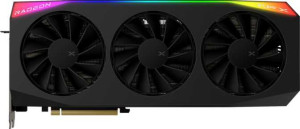
XFX Mercury Radeon RX 9070 XT OC Gaming Edition
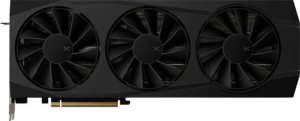
XFX Quicksilver Radeon RX 9070 OC Gaming Edition

XFX Mercury Radeon RX 9070 XT OC Gaming Edition XFX Quicksilver Radeon RX 9070 OC Gaming Edition

Overview

Welcome to our detailed specification face-off between the XFX Mercury Radeon RX 9070 XT OC Gaming Edition and the XFX Quicksilver Radeon RX 9070 OC Gaming Edition. Both cards share the same RDNA 4.0 architecture, 16GB GDDR6 memory, and a rich feature set including ray tracing and FSR4, but they diverge sharply on raw compute power and thermal envelope. Read on to see exactly where each card pulls ahead.

Common Features

  • Both cards share a GPU memory speed of 2518 MHz.
  • Both cards have 128 render output units (ROPs).
  • Double Precision Floating Point (DPFP) is supported on both cards.
  • Both cards have an effective memory speed of 20000 MHz.
  • Both cards offer a maximum memory bandwidth of 640 GB/s.
  • Both cards come with 16GB of VRAM.
  • Both cards use GDDR6 memory.
  • Both cards feature a 256-bit memory bus width.
  • ECC memory is supported on both cards.
  • Both cards support DirectX 12 Ultimate.
  • Both cards have an OpenGL version of 4.6.
  • Both cards have an OpenCL version of 2.2.
  • Multi-display technology is supported on both cards.
  • Ray tracing is supported on both cards.
  • 3D support is available on both cards.
  • DLSS is not supported on either card.
  • FSR4 is available on both cards.
  • Both cards have one HDMI output running HDMI 2.1b.
  • Both cards have three DisplayPort outputs, zero USB-C ports, zero DVI outputs, and zero mini DisplayPort outputs.
  • Both cards are built on the RDNA 4.0 GPU architecture.
  • Both cards use PCIe version 5.
  • Both cards contain 53900 million transistors.
  • Both cards carry a 3-year warranty.
  • Air-water cooling is not available on either card.

Main Differences

  • GPU base clock speed is 1870 MHz on XFX Mercury Radeon RX 9070 XT OC Gaming Edition and 1440 MHz on XFX Quicksilver Radeon RX 9070 OC Gaming Edition.
  • GPU turbo clock speed is 3100 MHz on XFX Mercury Radeon RX 9070 XT OC Gaming Edition and 2700 MHz on XFX Quicksilver Radeon RX 9070 OC Gaming Edition.
  • Pixel rate is 396.8 GPixel/s on XFX Mercury Radeon RX 9070 XT OC Gaming Edition and 345.6 GPixel/s on XFX Quicksilver Radeon RX 9070 OC Gaming Edition.
  • Floating-point performance is 50.79 TFLOPS on XFX Mercury Radeon RX 9070 XT OC Gaming Edition and 38.71 TFLOPS on XFX Quicksilver Radeon RX 9070 OC Gaming Edition.
  • Texture rate is 793.6 GTexels/s on XFX Mercury Radeon RX 9070 XT OC Gaming Edition and 604.8 GTexels/s on XFX Quicksilver Radeon RX 9070 OC Gaming Edition.
  • Shading units number 4096 on XFX Mercury Radeon RX 9070 XT OC Gaming Edition and 3584 on XFX Quicksilver Radeon RX 9070 OC Gaming Edition.
  • Texture mapping units (TMUs) total 256 on XFX Mercury Radeon RX 9070 XT OC Gaming Edition and 224 on XFX Quicksilver Radeon RX 9070 OC Gaming Edition.
  • Thermal Design Power (TDP) is 304W on XFX Mercury Radeon RX 9070 XT OC Gaming Edition and 220W on XFX Quicksilver Radeon RX 9070 OC Gaming Edition.
  • Semiconductor size is 4 nm on XFX Mercury Radeon RX 9070 XT OC Gaming Edition and 5 nm on XFX Quicksilver Radeon RX 9070 OC Gaming Edition.
  • Card width is 360 mm on XFX Mercury Radeon RX 9070 XT OC Gaming Edition and 355 mm on XFX Quicksilver Radeon RX 9070 OC Gaming Edition.
  • Card height is 155 mm on XFX Mercury Radeon RX 9070 XT OC Gaming Edition and 140 mm on XFX Quicksilver Radeon RX 9070 OC Gaming Edition.
Specs Comparison
XFX Mercury Radeon RX 9070 XT OC Gaming Edition

XFX Mercury Radeon RX 9070 XT OC Gaming Edition

XFX Quicksilver Radeon RX 9070 OC Gaming Edition

XFX Quicksilver Radeon RX 9070 OC Gaming Edition

Performance:
GPU clock speed 1870 MHz 1440 MHz
GPU turbo 3100 MHz 2700 MHz
pixel rate 396.8 GPixel/s 345.6 GPixel/s
floating-point performance 50.79 TFLOPS 38.71 TFLOPS
texture rate 793.6 GTexels/s 604.8 GTexels/s
GPU memory speed 2518 MHz 2518 MHz
shading units 4096 3584
texture mapping units (TMUs) 256 224
render output units (ROPs) 128 128
Has Double Precision Floating Point (DPFP)

The most telling gap between these two cards lies in their compute muscle. The Mercury RX 9070 XT delivers 50.79 TFLOPS of floating-point performance against the Quicksilver RX 9070's 38.71 TFLOPS — a roughly 31% advantage that directly translates to faster shader calculations, smoother frame generation, and more headroom for demanding workloads like ray tracing or AI-accelerated features. That gap is reinforced by a proportionally larger shader array: 4096 shading units and 256 TMUs on the XT versus 3584 units and 224 TMUs on the non-XT, meaning the Mercury can process more geometry and texture data simultaneously per clock cycle.

Clock speeds amplify this hardware advantage further. The Mercury's 3100 MHz boost clock versus the Quicksilver's 2700 MHz is a substantial 400 MHz delta at peak — unusually wide for two cards in the same product family. In practice, a higher boost clock means the GPU reaches and sustains its performance ceiling more aggressively under load, which benefits frame-time consistency in fast-paced games. One area where the two cards are completely equal is memory speed (2518 MHz) and render output units (128 ROPs), meaning their pixel fill rates at the ROP stage are closer than the shader counts alone suggest, and neither card has a bandwidth bottleneck edge over the other. Both also support Double Precision Floating Point, relevant for compute tasks beyond gaming.

Overall, the Mercury RX 9070 XT holds a clear and meaningful performance advantage across every major compute metric in this group. The ~31% lead in raw throughput and the significantly higher boost clock make it the stronger choice for higher resolutions or more GPU-intensive titles, while the Quicksilver RX 9070 trades that headroom for what is presumably a lower price point — a reasonable trade-off for users whose workloads don't push to the XT's ceiling.

Memory:
effective memory speed 20000 MHz 20000 MHz
maximum memory bandwidth 640 GB/s 640 GB/s
VRAM 16GB 16GB
GDDR version GDDR6 GDDR6
memory bus width 256-bit 256-bit
Supports ECC memory

On memory, these two cards are in complete lockstep. Both the Mercury RX 9070 XT and the Quicksilver RX 9070 ship with 16GB of GDDR6 across a 256-bit bus, delivering an identical 640 GB/s of peak bandwidth. That bandwidth figure is substantial — enough to comfortably feed even demanding 4K texture workloads without the memory subsystem becoming a bottleneck, and it means neither card will run into the kind of VRAM pressure that has plagued some competing 16GB offerings at high resolutions with texture-heavy asset packs.

The shared ECC memory support is worth noting for users considering these cards for mixed gaming and compute workloads. Error-Correcting Code memory catches and corrects single-bit data errors on the fly, which is a meaningful reliability feature for tasks like 3D rendering, simulation, or any professional workflow where data integrity matters. It adds no real-world cost to gaming performance, so it's a quiet but useful inclusion on both cards.

This group is an unambiguous tie. Every memory specification — capacity, speed, bus width, bandwidth, and ECC support — is identical across both products. Buyers choosing between the Mercury RX 9070 XT and the Quicksilver RX 9070 will experience exactly the same memory subsystem, and the decision should rest entirely on the performance and other differentiating factors found elsewhere in the spec sheet.

Features:
DirectX version DirectX 12 Ultimate DirectX 12 Ultimate
OpenGL version 4.6 4.6
OpenCL version 2.2 2.2
Supports multi-display technology
supports ray tracing
Supports 3D
supports DLSS
has FSR4
has XeSS (XMX)
AMD SAM / Intel Resizable BAR AMD SAM AMD SAM
has LHR
has RGB lighting
supported displays 4 4

Feature-for-feature, the Mercury RX 9070 XT and the Quicksilver RX 9070 are identical here. Both cards run on DirectX 12 Ultimate, which is the foundational requirement for hardware-accelerated ray tracing, mesh shaders, and variable rate shading in modern titles — so neither card leaves any current or near-future gaming feature on the table from an API standpoint. Ray tracing support is confirmed on both, meaning the architectural capability is present regardless of how the performance scales between the two SKUs.

On the upscaling front, both cards support FSR4 while lacking DLSS and XeSS (XMX). FSR4 is AMD's latest machine-learning-based upscaling solution, a meaningful generational leap over prior FSR versions in image quality and temporal stability. The absence of DLSS is expected given these are AMD cards, and XeSS in its ML-accelerated form is an Intel-specific feature. For the target audience, FSR4 is the relevant technology, and having it on both cards means users get the same upscaling toolset regardless of which they choose. AMD SAM (Smart Access Memory) support on both further ensures that users pairing either card with a compatible AMD platform can unlock the full CPU-to-GPU memory access benefit.

With all four display outputs, RGB lighting, and identical API and feature support across the board, this group is a clean tie. There is no feature-based reason to prefer one card over the other — both offer the same software ecosystem, the same upscaling generation, and the same multi-display capability. The differentiators lie entirely outside this spec group.
Ports:
has an HDMI output
HDMI ports 1 1
HDMI version HDMI 2.1b HDMI 2.1b
DisplayPort outputs 3 3
USB-C ports 0 0
DVI outputs 0 0
mini DisplayPort outputs 0 0

Both the Mercury RX 9070 XT and the Quicksilver RX 9070 carry the same port layout: one HDMI 2.1b output and three DisplayPort outputs, totalling four simultaneous display connections — consistent with the four-display limit confirmed in their features specs. HDMI 2.1b is the current high-watermark for the HDMI standard, supporting 4K at high refresh rates and 8K output, making it well-suited for modern gaming monitors and TVs alike without requiring an adapter.

The absence of USB-C is worth flagging for users who rely on that connector for display output to ultrawide monitors or VR headsets that use DisplayPort Alt Mode over USB-C. Neither card accommodates that use case directly. However, with three full-size DisplayPort outputs available, multi-monitor setups and daisy-chaining scenarios are well covered on both cards without needing dongles or adapters for most mainstream configurations.

This is another straight tie. The port selection is a mirror image across both products, and no connectivity advantage exists on either side. Users with specific display or peripheral requirements should verify compatibility independently, but in terms of what the specs show here, both cards offer the same connectivity ceiling.

General info:
GPU architecture RDNA 4.0 RDNA 4.0
release date March 2025 March 2025
Thermal Design Power (TDP) 304W 220W
PCI Express (PCIe) version 5 5
semiconductor size 4 nm 5 nm
number of transistors 53900 million 53900 million
warranty period 3 years 3 years
Has air-water cooling
width 360 mm 355 mm
height 155 mm 140 mm

Sharing the same RDNA 4.0 architecture and an identical transistor count of 53,900 million, these two cards are clearly cut from the same silicon family — yet they diverge in ways that matter for system builders. The most striking difference is process node: the Mercury RX 9070 XT is fabbed on 4nm while the Quicksilver RX 9070 uses a 5nm process. A smaller node generally enables higher transistor density and better power efficiency at equivalent clock speeds, which helps explain how the XT can push its significantly higher clocks without the die size ballooning further.

The TDP gap is the most consequential practical difference in this group. At 304W, the Mercury demands substantially more from a system's power delivery than the Quicksilver's 220W — an 84W delta that translates directly to PSU headroom requirements, case airflow planning, and long-term electricity costs. For compact or thermally constrained builds, the Quicksilver's lower draw is a meaningful advantage. The physical size difference reinforces this: the Mercury measures 360 × 155 mm versus the Quicksilver's 355 × 140 mm, a 15mm height reduction that could matter in tighter cases with limited vertical clearance between the GPU and the bottom panel or drive cages.

Both cards share a PCIe 5 interface and a 3-year warranty, keeping them on equal footing for platform compatibility and post-purchase protection. On balance, the Mercury RX 9070 XT's higher TDP and slightly larger footprint are the direct cost of its performance lead — buyers in well-ventilated, full-size builds with capable PSUs will absorb that cost easily, while those prioritizing efficiency or working within tighter spatial constraints will find the Quicksilver RX 9070 the more accommodating option here.

Comparison Summary & Verdict

After examining every specification, the two cards occupy distinct performance tiers despite their shared DNA. The XFX Mercury Radeon RX 9070 XT OC Gaming Edition leads across every compute metric, delivering 50.79 TFLOPS of floating-point performance, a 3100 MHz turbo clock, and a higher shading unit count of 4096, making it the stronger choice for demanding workloads. The trade-off is a 304W TDP and a slightly larger footprint. The XFX Quicksilver Radeon RX 9070 OC Gaming Edition answers with a leaner 220W power draw and a more compact 355 x 140 mm body, while still offering the same 16GB GDDR6 memory pool, identical port selection, and full feature parity including ray tracing and FSR4. Both carry a 3-year warranty and PCIe 5 support, so the decision ultimately comes down to how much performance headroom you need versus how constrained your case or power budget is.

XFX Mercury Radeon RX 9070 XT OC Gaming Edition
Buy XFX Mercury Radeon RX 9070 XT OC Gaming Edition if...

Buy the XFX Mercury Radeon RX 9070 XT OC Gaming Edition if you want the highest possible compute performance, with superior clock speeds, shading units, and texture throughput and your system can accommodate the higher 304W power requirement.

XFX Quicksilver Radeon RX 9070 OC Gaming Edition
Buy XFX Quicksilver Radeon RX 9070 OC Gaming Edition if...

Buy the XFX Quicksilver Radeon RX 9070 OC Gaming Edition if you have a power-constrained build or a compact case, since it delivers the same 16GB GDDR6 memory and full feature set at a significantly lower 220W TDP and in a smaller physical footprint.