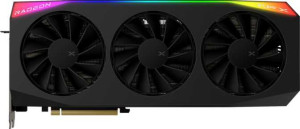
XFX Mercury Radeon RX 9070 XT OC Gaming Edition
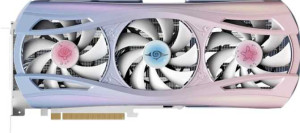
Yeston Sakura Atlantis Radeon RX 9070 XT

XFX Mercury Radeon RX 9070 XT OC Gaming Edition Yeston Sakura Atlantis Radeon RX 9070 XT

Overview

Welcome to our in-depth specification comparison between the XFX Mercury Radeon RX 9070 XT OC Gaming Edition and the Yeston Sakura Atlantis Radeon RX 9070 XT. Both cards are built on the same RDNA 4.0 architecture and share a great deal of common ground, yet they diverge in meaningful ways across GPU clock speeds, memory bandwidth, DirectX support, and physical dimensions. Read on to find out which card best matches your needs.

Common Features

  • Both cards share a GPU memory speed of 2518 MHz.
  • Both cards feature 4096 shading units.
  • Both cards have 256 texture mapping units (TMUs).
  • Both cards include 128 render output units (ROPs).
  • Double Precision Floating Point (DPFP) is supported on both cards.
  • Both cards have an effective memory speed of 20000 MHz.
  • Both cards come with 16GB of VRAM.
  • Both cards use GDDR6 memory.
  • Both cards feature a 256-bit memory bus width.
  • ECC memory is supported on both cards.
  • Both cards support OpenGL version 4.6.
  • Both cards support OpenCL version 2.2.
  • Multi-display technology is supported on both cards.
  • Ray tracing is supported on both cards.
  • 3D support is available on both cards.
  • DLSS is not supported on either card.
  • FSR4 is available on both cards.
  • XeSS (XMX) is not supported on either card.
  • Both cards include one HDMI 2.1b port and three DisplayPort outputs.
  • Neither card has USB-C, DVI, or mini DisplayPort outputs.
  • Both cards are built on the RDNA 4.0 GPU architecture.
  • Both cards have a Thermal Design Power (TDP) of 304W.
  • Both cards use PCIe version 5.
  • Both cards are manufactured on a 4 nm semiconductor process.
  • Both cards contain 53,900 million transistors.
  • Neither card features air-water cooling.

Main Differences

  • GPU base clock speed is 1870 MHz on XFX Mercury Radeon RX 9070 XT OC Gaming Edition and 1660 MHz on Yeston Sakura Atlantis Radeon RX 9070 XT.
  • GPU turbo clock is 3100 MHz on XFX Mercury Radeon RX 9070 XT OC Gaming Edition and 3060 MHz on Yeston Sakura Atlantis Radeon RX 9070 XT.
  • Pixel rate is 396.8 GPixel/s on XFX Mercury Radeon RX 9070 XT OC Gaming Edition and 391.7 GPixel/s on Yeston Sakura Atlantis Radeon RX 9070 XT.
  • Floating-point performance is 50.79 TFLOPS on XFX Mercury Radeon RX 9070 XT OC Gaming Edition and 50.14 TFLOPS on Yeston Sakura Atlantis Radeon RX 9070 XT.
  • Texture rate is 793.6 GTexels/s on XFX Mercury Radeon RX 9070 XT OC Gaming Edition and 783.4 GTexels/s on Yeston Sakura Atlantis Radeon RX 9070 XT.
  • Maximum memory bandwidth is 640 GB/s on XFX Mercury Radeon RX 9070 XT OC Gaming Edition and 644.6 GB/s on Yeston Sakura Atlantis Radeon RX 9070 XT.
  • DirectX 12 Ultimate is supported on XFX Mercury Radeon RX 9070 XT OC Gaming Edition, while Yeston Sakura Atlantis Radeon RX 9070 XT supports DirectX 12.
  • Card width is 360 mm on XFX Mercury Radeon RX 9070 XT OC Gaming Edition and 332 mm on Yeston Sakura Atlantis Radeon RX 9070 XT.
  • Card height is 155 mm on XFX Mercury Radeon RX 9070 XT OC Gaming Edition and 138 mm on Yeston Sakura Atlantis Radeon RX 9070 XT.
Specs Comparison
XFX Mercury Radeon RX 9070 XT OC Gaming Edition

XFX Mercury Radeon RX 9070 XT OC Gaming Edition

Yeston Sakura Atlantis Radeon RX 9070 XT

Yeston Sakura Atlantis Radeon RX 9070 XT

Performance:
GPU clock speed 1870 MHz 1660 MHz
GPU turbo 3100 MHz 3060 MHz
pixel rate 396.8 GPixel/s 391.7 GPixel/s
floating-point performance 50.79 TFLOPS 50.14 TFLOPS
texture rate 793.6 GTexels/s 783.4 GTexels/s
GPU memory speed 2518 MHz 2518 MHz
shading units 4096 4096
texture mapping units (TMUs) 256 256
render output units (ROPs) 128 128
Has Double Precision Floating Point (DPFP)

Both cards share the same fundamental compute architecture — identical 4096 shading units, 256 TMUs, and 128 ROPs — meaning any performance gap between them comes down entirely to clock speeds. This is a classic factory-overclock scenario: the XFX Mercury ships with a notably higher base clock of 1870 MHz versus the Yeston Sakura's 1660 MHz, and maintains that lead at the top end with a 3100 MHz boost versus 3060 MHz. In practice, a 40 MHz difference at boost is relatively minor, but the wider base clock gap means the XFX is less likely to dip into lower performance territory during sustained, thermally-challenging workloads.

Those clock advantages translate directly into the derived throughput metrics. The XFX edges out the Yeston with 50.79 TFLOPS of floating-point performance versus 50.14 TFLOPS, and a texture rate of 793.6 GTexels/s compared to 783.4 GTexels/s. The pixel fill rate gap is similarly slim — 396.8 GPixel/s versus 391.7 GPixel/s. Realistically, these ~1–2% differences are unlikely to be perceptible in frame rates under typical gaming conditions. Memory bandwidth is a non-factor here, as both cards run identical 2518 MHz memory speeds.

The XFX Mercury holds a narrow but consistent performance edge across every throughput metric in this group, solely by virtue of its higher factory overclock. Both cards support Double Precision Floating Point, which benefits compute and professional workloads equally. For a pure gamer, the real-world difference will be negligible, but the XFX is the technical winner here for users who want every last frame without manually overclocking.
Memory:
effective memory speed 20000 MHz 20000 MHz
maximum memory bandwidth 640 GB/s 644.6 GB/s
VRAM 16GB 16GB
GDDR version GDDR6 GDDR6
memory bus width 256-bit 256-bit
Supports ECC memory

From a memory standpoint, these two cards are essentially twins. Both feature 16GB of GDDR6 across a 256-bit bus at an effective speed of 20000 MHz, and both support ECC memory — a feature that matters for error-sensitive compute and professional workloads, though it has no bearing on gaming. At this VRAM capacity and bus width, neither card will be starved for memory bandwidth in any current gaming resolution, including 4K with high-texture assets.

The only numerical deviation in this group is a marginal bandwidth difference: the Yeston Sakura reports 644.6 GB/s versus the XFX Mercury's 640 GB/s. This ~0.7% gap is almost certainly a rounding or binning artifact rather than a meaningful engineering distinction, and would produce no detectable difference in real-world frame rates, texture streaming, or compute throughput.

This group is effectively a dead heat. No meaningful advantage exists for either card on memory specifications — buyers should look to other spec groups, such as performance clocks or cooling design, to differentiate between the two.

Features:
DirectX version DirectX 12 Ultimate DirectX 12
OpenGL version 4.6 4.6
OpenCL version 2.2 2.2
Supports multi-display technology
supports ray tracing
Supports 3D
supports DLSS
has FSR4
has XeSS (XMX)
AMD SAM / Intel Resizable BAR AMD SAM AMD SAM
has LHR
has RGB lighting
supported displays 4 4

The feature sets of these two cards are nearly identical, but one distinction stands out: the XFX Mercury lists support for DirectX 12 Ultimate, while the Yeston Sakura specifies only DirectX 12. DirectX 12 Ultimate is a superset that formally certifies support for advanced rendering features including hardware-accelerated ray tracing tiers, mesh shaders, and variable rate shading — capabilities that are increasingly leveraged by modern titles. Whether this reflects a genuine hardware difference or a documentation inconsistency is impossible to determine from the specs alone, but as listed, the XFX holds a nominal advantage here for future-facing software compatibility.

Where the two cards are unambiguously equal is everywhere else. Both support ray tracing, FSR4 (AMD's latest upscaling technology, a meaningful asset for performance at higher resolutions), and AMD SAM for CPU-GPU bandwidth optimization. Neither supports DLSS, which is expected given these are AMD products. The shared cap of 4 supported displays covers virtually all multi-monitor use cases.

The XFX Mercury takes a narrow edge in this group purely on the DirectX 12 Ultimate listing, which carries relevance for users prioritizing long-term API compatibility. For everyone else, the feature parity between these two cards is near-total, and FSR4 support on both ensures neither is left behind on AMD's current upscaling roadmap.

Ports:
has an HDMI output
HDMI ports 1 1
HDMI version HDMI 2.1b HDMI 2.1b
DisplayPort outputs 3 3
USB-C ports 0 0
DVI outputs 0 0
mini DisplayPort outputs 0 0

Port configuration is an exact match across both cards: each offers 1 HDMI 2.1b output and 3 DisplayPort outputs, for a total of four display connections — consistent with the maximum supported display count noted in their feature specs. HDMI 2.1b is the current top-tier HDMI standard, capable of handling 4K at high refresh rates and 8K output, making it well-suited for modern TVs and high-end monitors alike. The three DisplayPort outputs provide flexible multi-monitor coverage for desktop setups.

Neither card includes USB-C, mini DisplayPort, or DVI outputs. The absence of USB-C is worth noting for users with newer monitors that rely on that interface, as an adapter would be required — but this applies equally to both products and is not a differentiator.

This group is a complete tie. There is no basis to favor either card on connectivity; buyers dependent on a specific port configuration will find identical options on both the XFX Mercury and the Yeston Sakura.

General info:
GPU architecture RDNA 4.0 RDNA 4.0
release date March 2025 March 2025
Thermal Design Power (TDP) 304W 304W
PCI Express (PCIe) version 5 5
semiconductor size 4 nm 4 nm
number of transistors 53900 million 53900 million
Has air-water cooling
width 360 mm 332 mm
height 155 mm 138 mm

At the silicon level, these two cards are indistinguishable. Both are built on the same RDNA 4.0 architecture, fabbed at 4 nm with an identical 53,900 million transistors, and draw the same 304W TDP. PCIe 5.0 support on both ensures neither will face any interface bottleneck on current or near-future platforms. In short, the underlying chip is the same, and power demands on the system are equal.

Where they diverge is physical footprint. The XFX Mercury measures 360 mm × 155 mm, while the Yeston Sakura comes in notably more compact at 332 mm × 138 mm — a difference of 28 mm in length and 17 mm in height. That gap is practically significant: the Yeston is more likely to fit in smaller mid-tower and compact ATX cases where clearance is tight, while the XFX's larger cooler shroud may translate to different thermal headroom, though cooling performance itself is not quantified in these specs.

For case compatibility, the Yeston Sakura holds a clear advantage with its more compact dimensions. Builders working with space-constrained enclosures should take note. For those with full-size cases where fit is not a concern, this group offers no basis to favor one card over the other.

Comparison Summary & Verdict

After examining all the specifications, both cards are closely matched siblings sharing the same RDNA 4.0 foundation, 16GB GDDR6 VRAM, ray tracing support, and FSR4 capability. The XFX Mercury Radeon RX 9070 XT OC Gaming Edition pulls ahead with a higher GPU base and turbo clock, greater floating-point performance at 50.79 TFLOPS, and crucially, DirectX 12 Ultimate support, making it the stronger pick for enthusiasts who want maximum headroom and future-facing API compatibility. The Yeston Sakura Atlantis Radeon RX 9070 XT responds with a marginally higher memory bandwidth of 644.6 GB/s and a notably more compact form factor at 332x138 mm, making it the smarter choice for builds where case clearance is a real concern.

XFX Mercury Radeon RX 9070 XT OC Gaming Edition
Buy XFX Mercury Radeon RX 9070 XT OC Gaming Edition if...

Buy the XFX Mercury Radeon RX 9070 XT OC Gaming Edition if you want the higher GPU clock speeds, greater floating-point performance, and DirectX 12 Ultimate support, and your case has room for a larger card.

Yeston Sakura Atlantis Radeon RX 9070 XT
Buy Yeston Sakura Atlantis Radeon RX 9070 XT if...

Buy the Yeston Sakura Atlantis Radeon RX 9070 XT if you need a more compact card that fits tighter cases, and can take advantage of its slightly higher memory bandwidth of 644.6 GB/s.