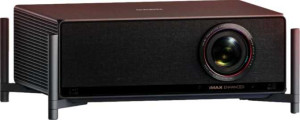
XGIMI Horizon 20
XGIMI Titan

XGIMI Horizon 20 XGIMI Titan

Overview

Welcome to our in-depth specification comparison between the XGIMI Horizon 20 and the XGIMI Titan. Both projectors share a laser light source, 4K resolution, and a wide range of connectivity features, yet they take markedly different approaches when it comes to size and portability, audio capabilities, and projection flexibility. Whether you are setting up a dedicated home cinema or looking for a more versatile living-room solution, this comparison will help you navigate the key distinctions between these two premium laser projectors.

Common Features

  • Both projectors use a laser light source.
  • Both projectors output at 4K resolution.
  • Both projectors have a 1 ms response time.
  • HDR10+ support is available on both projectors.
  • Both projectors have a 240Hz refresh rate.
  • Dolby Vision support is available on both projectors.
  • HDR10 support is available on both projectors.
  • AirPlay support is available on both projectors.
  • Bluetooth is available on both projectors.
  • Wi-Fi support is available on both projectors.
  • Both projectors have 2 USB ports.
  • Chromecast built-in is available on both projectors.
  • Neither projector has a VGA connector.
  • Both projectors are DLNA-certified.
  • Miracast support is available on both projectors.
  • Both projectors have stereo speakers.
  • Both projectors have vertical lens shift.
  • Both projectors have horizontal lens shift.
  • Both projectors include a remote control.
  • Both projectors have a built-in smart TV.
  • Both projectors have a built-in speaker with 2 x 12W audio output power.
  • Both projectors have a 3.5 mm audio jack socket.

Main Differences

  • Width is 218 mm on XGIMI Horizon 20 and 441 mm on XGIMI Titan.
  • Height is 208 mm on XGIMI Horizon 20 and 158 mm on XGIMI Titan.
  • Thickness is 136 mm on XGIMI Horizon 20 and 345 mm on XGIMI Titan.
  • Weight is 4900 g on XGIMI Horizon 20 and 11500 g on XGIMI Titan.
  • Volume is 6166.784 cm³ on XGIMI Horizon 20 and 24038.91 cm³ on XGIMI Titan.
  • Maximum projection size is 300″ on XGIMI Horizon 20 and 250″ on XGIMI Titan.
  • Minimum throw distance is 2.1 m on XGIMI Horizon 20 and 2.67 m on XGIMI Titan.
  • HDMI ports: XGIMI Horizon 20 has 2 and XGIMI Titan has 1.
  • A DVI connector is present on XGIMI Horizon 20 but not available on XGIMI Titan.
  • Dolby Atmos support is present on XGIMI Titan but not available on XGIMI Horizon 20.
Specs Comparison
XGIMI Horizon 20

XGIMI Horizon 20

XGIMI Titan

XGIMI Titan

General info:
has laser light source
release date September 2025 September 2025
width 218 mm 441 mm
height 208 mm 158 mm
thickness 136 mm 345 mm
weight 4900 g 11500 g
volume 6166.784 cm³ 24038.91 cm³

Both the XGIMI Horizon 20 and the XGIMI Titan share a laser light source, which is the single most important commonality in this group — laser projection typically delivers superior brightness, color accuracy, and longevity compared to conventional lamp-based systems. On that front, neither product has an inherent edge over the other.

Where these two projectors diverge dramatically is in their physical footprint. The Horizon 20 is a notably compact unit at 218 × 208 × 136 mm and 4,900 g, giving it a volume of roughly 6,167 cm³. The Titan, by contrast, measures 441 × 158 × 345 mm and weighs 11,500 g — nearly 2.35× heavier and occupying close to 4× the volume at approximately 24,039 cm³. In practical terms, the Horizon 20 can be repositioned, moved between rooms, or even taken on the road with relative ease, whereas the Titan is firmly a stationary, dedicated-installation device.

For users prioritizing flexibility and portability, the Horizon 20 holds a clear advantage. The Titan's substantially larger chassis and weight suggest it is engineered for a permanent home-theater setup where size is acceptable in exchange for other performance gains. Based purely on the general info specs, the Horizon 20 is the more versatile option for most living situations, while the Titan is better suited to dedicated, fixed installations.

Projection quality:
output resolution 4K 4K
response time 1 ms 1 ms
maximum projection size 300" 250"
supports HDR10+
minimum throw distance 2.1 m 2.67 m
refresh rate 240Hz 240Hz
supports Dolby Vision
supports HDR10

At the core of their image quality credentials, the Horizon 20 and Titan are remarkably well-matched. Both output native 4K resolution, deliver a 240Hz refresh rate, and carry the full suite of HDR formats — HDR10, HDR10+, and Dolby Vision. That last point is worth emphasizing: Dolby Vision is the most demanding and metadata-rich HDR standard available, and its presence on both units signals a serious commitment to image fidelity across streaming and disc-based content. The 1ms response time on both projectors is equally impressive, making either a strong candidate for gaming use where input lag is a genuine concern.

The meaningful separation between these two units lies in throw distance and maximum image size. The Horizon 20 requires a minimum throw distance of 2.1 m and can scale up to a 300″ image, while the Titan needs at least 2.67 m of clearance and tops out at 250″. That 0.57 m difference in minimum throw may seem minor, but in real rooms it can determine whether a projector fits at all — shorter throw flexibility is a genuine installation advantage. The 50″ gap in maximum image size further reinforces that the Horizon 20 is the more capable unit for viewers wanting to push screen size to the absolute limit.

On projection quality specs, the Horizon 20 holds a clear edge: it achieves a larger maximum image while also being usable in tighter spaces. For users with constrained room dimensions or ambitions for an especially large screen, this difference is practically significant. In every other image-quality dimension, the two projectors are effectively tied.

Connectivity:
HDMI ports 2 1
has AirPlay
Has Bluetooth
supports Wi-Fi
USB ports 2 2
has Chromecast built-in
has a VGA connector
is DLNA-certified
has a DVI connector
supports Miracast
RJ45 ports 0 0
Has S/PDIF Out port

Wireless connectivity is a wash between these two projectors — both support Wi-Fi, Bluetooth, AirPlay, Chromecast built-in, Miracast, and DLNA certification. That is a comprehensive and modern wireless stack, covering essentially every mainstream casting and streaming protocol a user is likely to need, from Apple devices to Android to network media sharing.

On the wired side, the differences are small but real. The Horizon 20 offers 2 HDMI ports versus the Titan's single 1 HDMI port, which is a meaningful practical distinction — two HDMI inputs allow a gaming console and a streaming stick (or any two source devices) to remain connected simultaneously without swapping cables. The Horizon 20 also includes a DVI connector, an older digital video standard absent on the Titan; while DVI is niche today, it adds compatibility with legacy PC hardware that some users may still rely on. USB port count is equal at 2 on both units.

The Horizon 20 has a connectivity edge, driven primarily by its dual HDMI ports — a genuinely useful advantage for multi-source setups. The DVI port is a secondary, more situational differentiator. For users running multiple wired devices, the Horizon 20 offers meaningfully more flexibility without requiring an external HDMI switch.

Features:
has stereo speakers
has lens shift (vertical)
has lens shift (horizontal)
has a remote control
has built-in smart TV
has a built-in speaker
audio output power 2 x 12W 2 x 12W
has a socket for a 3.5 mm audio jack
has Dolby Atmos

Feature parity between these two projectors is striking. Both carry identical audio hardware — 2 × 12W stereo speakers, a 3.5mm headphone jack, and a built-in smart TV platform — alongside both horizontal and vertical lens shift, which is a genuinely valuable installation feature that allows precise image alignment without physically repositioning the unit. Remote control and smart TV integration are equally present on both. For the vast majority of features in this category, buyers are getting the same package regardless of which model they choose.

The sole differentiator is Dolby Atmos, which the Titan supports and the Horizon 20 does not. Dolby Atmos is an object-based spatial audio format that, when present in source content, can produce a more immersive, three-dimensional soundscape compared to standard stereo. It is worth noting that the real-world benefit depends heavily on the content being watched and the room acoustics — through built-in stereo speakers alone, the Atmos experience will be more limited than through a dedicated surround sound system. Still, it does mean the Titan is capable of decoding and passing through Atmos signals, offering greater compatibility with modern streaming content and future-proofing for external audio setups.

The Titan holds a narrow but genuine edge in this group purely on the strength of Dolby Atmos support. For users invested in premium audio ecosystems or who frequently consume Atmos-encoded content, this distinction matters. For everyone else, the two projectors are functionally identical in their feature set.

Comparison Summary & Verdict

After reviewing all the specifications, it becomes clear that the XGIMI Horizon 20 and the XGIMI Titan are built for somewhat different audiences despite sharing a strong common foundation. The Horizon 20 stands out for its compact form factor, weighing 4900 g versus 11500 g, and its ability to project images up to 300″ from a shorter minimum throw distance of 2.1 m, making it ideal for users who need flexibility in tighter spaces. The Titan, on the other hand, brings Dolby Atmos audio and a more imposing build suited to a permanent, dedicated installation where audio immersion is a priority. Both projectors deliver identical picture quality credentials including 4K, 240Hz, HDR10+, Dolby Vision, and HDR10, so the decision ultimately comes down to portability versus audio performance and installation permanence.

XGIMI Horizon 20
Buy XGIMI Horizon 20 if...

Buy the XGIMI Horizon 20 if you want a lighter, more compact projector capable of a larger maximum projection size with a shorter minimum throw distance, and you value having two HDMI ports and a DVI connector.

XGIMI Titan
Buy XGIMI Titan if...

Buy the XGIMI Titan if you are setting up a permanent home cinema where Dolby Atmos audio immersion is a priority and the larger, heavier build is not a concern.