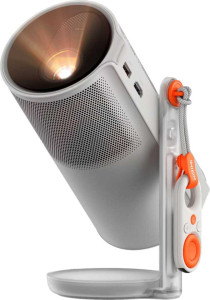
XGIMI MoGo 4
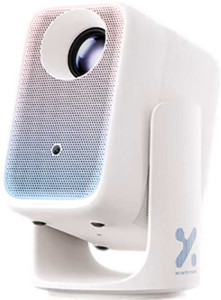
Xming Q6 Neo

XGIMI MoGo 4 Xming Q6 Neo

Common Features

  • Both products have an operating power consumption of 65W.
  • Both products have a dedicated smartphone app.
  • Both products support HDR10.
  • Both products have Bluetooth support.
  • Both products support Wi-Fi.
  • Both products have a DVI connector absent.
  • Both products support Miracast.
  • Both products have a remote control.
  • Both products have stereo speakers.
  • Both products have built-in smart TV functionality.
  • Both products have a built-in speaker.
  • Both products have a socket for a 3.5 mm audio jack.
  • Both products have no external memory slot.
  • Both products have Dolby Atmos support on one of the devices.
  • Both products have no laser light source.
  • Both products have a USB port.
  • Both products have one HDMI port.
  • Both products support AirPlay.
  • Both products are DLNA-certified.

Main Differences

  • XGIMI MoGo 4 is 96.5 mm wide, while Xming Q6 Neo is 148 mm wide.
  • XGIMI MoGo 4 has a height of 207.6 mm, while Xming Q6 Neo has a height of 236 mm.
  • XGIMI MoGo 4 is 96.5 mm thick, while Xming Q6 Neo is 162 mm thick.
  • XGIMI MoGo 4 weighs 1310 g, while Xming Q6 Neo weighs 1700 g.
  • XGIMI MoGo 4 has a volume of 1933.2231 cm³, while Xming Q6 Neo has a volume of 5658.336 cm³.
  • XGIMI MoGo 4 can project up to 200″, while Xming Q6 Neo can project up to 120″.
  • HDR10+ support is available on Xming Q6 Neo but not available on XGIMI MoGo 4.
  • XGIMI MoGo 4 has 2 USB ports, while Xming Q6 Neo has 1 USB port.
  • XGIMI MoGo 4 does not have a VGA connector, while Xming Q6 Neo has a VGA connector.
  • XGIMI MoGo 4 uses Bluetooth version 5.1, while Xming Q6 Neo uses Bluetooth version 5.3.
  • XGIMI MoGo 4 has 2 x 6W audio output power, while Xming Q6 Neo has 2 x 3W audio output power.
  • XGIMI MoGo 4 has Dolby Atmos support, while Xming Q6 Neo does not have Dolby Atmos support.
  • XGIMI MoGo 4 does not have voice commands, while Xming Q6 Neo has voice commands.
Specs Comparison
XGIMI MoGo 4

XGIMI MoGo 4

Xming Q6 Neo

Xming Q6 Neo

General info:
audible noise 28 dB 28 dB
has laser light source
release date June 2025 August 2025
operating power consumption 65W 65W
width 96.5 mm 148 mm
height 207.6 mm 236 mm
thickness 96.5 mm 162 mm
weight 1310 g 1700 g
Has a dedicated smartphone app
volume 1933.2231 cm³ 5658.336 cm³

Both the XGIMI MoGo 4 and the Xming Q6 Neo operate at the same audible noise level of 28 dB, so you can expect similar quiet performance from both models. Neither projector uses a laser light source, so their illumination technology is based on other methods. They also share identical operating power consumption of 65W, meaning their energy usage is the same.

In terms of size, the XGIMI MoGo 4 is notably more compact, with a width of 96.5 mm, height of 207.6 mm, and thickness of 96.5 mm. It also weighs 1310 g, making it lighter than the Xming Q6 Neo, which measures 148 mm in width, 236 mm in height, and 162 mm in thickness, and weighs 1700 g. The MoGo 4 is clearly smaller and lighter in comparison.

Both projectors come with a dedicated smartphone app, providing users with convenience for remote control and settings management. However, the volume of the two models differs significantly. The XGIMI MoGo 4 has a volume of 1933.2231 cm³, while the Xming Q6 Neo has a much larger volume of 5658.336 cm³, reflecting its bigger physical size.

Projection quality:
output resolution 1080p 1080p
maximum projection size 200" 120"
supports HDR10+
supports Dolby Vision
supports HDR10

The XGIMI MoGo 4 and the Xming Q6 Neo both offer 1080p output resolution, providing full HD quality for their projections. However, they differ when it comes to their maximum projection size. The MoGo 4 can project up to 200″, while the Q6 Neo is limited to 120″, offering a significantly smaller projection area.

When it comes to HDR support, both projectors support HDR10, enhancing the contrast and color quality of compatible content. The MoGo 4 does not support HDR10+ or Dolby Vision, while the Q6 Neo has HDR10+ support, but lacks Dolby Vision support. This means the Q6 Neo offers an additional layer of HDR compatibility with HDR10+, which the MoGo 4 does not provide.

In summary, while both projectors offer 1080p resolution and HDR10 support, the MoGo 4 stands out for its larger maximum projection size of 200″, while the Q6 Neo supports HDR10+ for a more advanced HDR experience.

Connectivity:
HDMI ports 1 1
has AirPlay
Has Bluetooth
supports Wi-Fi
USB ports 2 1
has Chromecast built-in
has a VGA connector
Bluetooth version 5.1 5.3
is DLNA-certified
has a DVI connector
supports Miracast
RJ45 ports 0 0
Has S/PDIF Out port

Both the XGIMI MoGo 4 and the Xming Q6 Neo feature a single HDMI port, and both support AirPlay, Bluetooth, Wi-Fi, and Chromecast built-in, allowing for versatile wireless connectivity options. However, they differ slightly in their Bluetooth capabilities. The MoGo 4 uses Bluetooth 5.1, while the Q6 Neo has the slightly newer Bluetooth 5.3, which could offer small improvements in range or connectivity stability.

When it comes to USB ports, the MoGo 4 provides two, whereas the Q6 Neo has only one. The MoGo 4 also has a VGA connector, while the Q6 Neo includes a VGA connector, meaning both models offer this type of connectivity.

Additional features like DLNA certification and support for Miracast are available on both models. Neither projector includes an RJ45 port or an S/PDIF Out port, and neither has a DVI connector, keeping their connectivity options similar in that respect.

Features:
has stereo speakers
has lens shift (vertical)
has lens shift (horizontal)
has a remote control
has built-in smart TV
has a built-in speaker
audio output power 2 x 6W 2 x 3W
has a socket for a 3.5 mm audio jack
has Dolby Atmos
has an external memory slot
has voice commands

Both the XGIMI MoGo 4 and the Xming Q6 Neo come with stereo speakers, a remote control, built-in smart TV functionality, and built-in speakers, making them convenient for various entertainment needs. They both also include a 3.5 mm audio jack socket for additional audio output options. However, the MoGo 4 delivers more powerful sound with an audio output power of 2 x 6W, while the Q6 Neo offers a lower audio output power of 2 x 3W.

Neither projector offers lens shift functionality, either vertical or horizontal, so both require placement adjustments for image alignment. The MoGo 4 supports Dolby Atmos for an enhanced audio experience, while the Q6 Neo does not include this feature.

In terms of extra features, the XGIMI MoGo 4 does not have voice commands or an external memory slot. The Q6 Neo, on the other hand, includes voice command support, but like the MoGo 4, it lacks an external memory slot. Therefore, while both share similar core features, the MoGo 4 has the advantage in audio output, while the Q6 Neo offers voice control functionality.

Comparison Summary

This is a specification comparison between XGIMI MoGo 4 and Xming Q6 Neo. Both products have an operating power consumption of 65W, include a dedicated smartphone app, support HDR10, and have Bluetooth and Wi-Fi connectivity. XGIMI MoGo 4 is more compact at 96.5 mm width, 207.6 mm height, and 96.5 mm thickness compared to Xming Q6 Neo's 148 mm width, 236 mm height, and 162 mm thickness. Projection size differs with XGIMI MoGo 4 reaching 200″ and Xming Q6 Neo 120″. USB and VGA ports also differ, with XGIMI MoGo 4 having 2 USB ports and no VGA connector, while Xming Q6 Neo has 1 USB port and a VGA connector. Audio capabilities vary, as XGIMI MoGo 4 has 2 x 6W output and Dolby Atmos, whereas Xming Q6 Neo has 2 x 3W output and voice commands. XGIMI MoGo 4 uses Bluetooth 5.1 while Xming Q6 Neo uses Bluetooth 5.3.