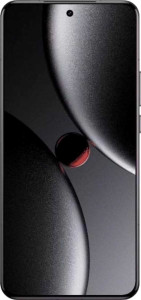
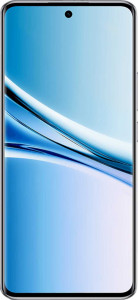
Wireless connectivity is where the generational gap between these devices becomes most apparent. The 15 Ultra supports Wi-Fi 7 (802.11be) and Wi-Fi 6E in addition to older standards, while the Redmi Note 15 5G tops out at Wi-Fi 5 (802.11ac). Wi-Fi 7 delivers dramatically higher throughput, lower latency, and better performance in congested environments — and the raw cellular numbers reflect a similar divide: the 15 Ultra achieves download speeds up to 10,000 Mbps versus the Redmi's 2,900 Mbps, and upload speeds of 3,500 Mbps against 1,600 Mbps. Bluetooth follows the same pattern, with the 15 Ultra on Bluetooth 6 versus the Redmi's 5.1 — the newer version brings improved connection stability, range, and energy efficiency.
The USB implementations diverge meaningfully too. The 15 Ultra uses USB 3.2, enabling fast data transfers and video output at full speed, while the Redmi is limited to USB 2.0 — a bottleneck that matters when transferring large files like 8K video or RAW photos. The Redmi does offer one practical advantage the 15 Ultra lacks: an external memory card slot, which gives users a low-cost way to expand storage. The 15 Ultra counters with emergency SOS via satellite — a potentially life-saving feature in areas without cellular coverage — and a barometer, useful for weather tracking and outdoor navigation apps, neither of which the Redmi provides.
Both phones share a strong common foundation: dual SIM, 5G, NFC, USB-C, fingerprint scanner, GPS with Galileo, infrared sensor, gyroscope, and accelerometer. But when weighing the full picture, the Xiaomi 15 Ultra holds a decisive connectivity advantage — its Wi-Fi 7 support, faster Bluetooth, superior USB speeds, and satellite SOS capability collectively represent a more future-proof and feature-rich package. The Redmi's microSD slot is a useful concession for budget-conscious users, but it does not offset the broader gap.