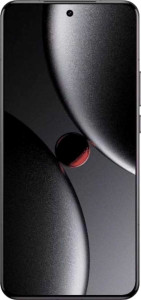
Xiaomi 15 Ultra (512GB / 16GB RAM)
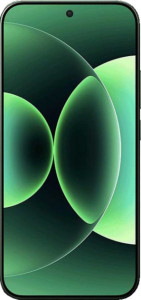
Xiaomi 17 Pro Max

Xiaomi 15 Ultra (512GB / 16GB RAM) Xiaomi 17 Pro Max

Overview

Welcome to our in-depth comparison of the Xiaomi 15 Ultra (512GB / 16GB RAM) and the Xiaomi 17 Pro Max. Both flagships share the same premium DNA, but they diverge in meaningful ways across camera versatility, battery capacity, display technology, and audio capabilities. Whether raw photography power or future-ready performance matters most to you, this comparison breaks down exactly where each device stands.

Common Features

  • Both phones are waterproof with an IP68 ingress protection rating.
  • Neither phone has a rugged build.
  • Neither phone can be folded.
  • Both phones feature an OLED/AMOLED display.
  • Both phones support a 120Hz refresh rate.
  • HDR10 support is available on both phones.
  • HDR10+ support is available on both phones.
  • Always-On Display is available on both phones.
  • Dolby Vision support is available on both phones.
  • Both phones have a touchscreen.
  • Both phones come with 16GB of RAM.
  • Both phones use an Adreno 830 GPU.
  • Both phones achieved a Geekbench 6 multi-core score of 10059 and a single-core score of 3234.
  • Both phones have integrated LTE.
  • Both phones use 5300 MHz RAM speed and a 3 nm semiconductor process.
  • Both phones support 64-bit processing.
  • Both phones feature a multi-lens main camera with built-in optical image stabilization.
  • Both phones support 4K video recording at 30fps on the main camera.
  • Both phones have a dual-tone LED flash with 2 LEDs.
  • Both phones have a CMOS sensor with continuous autofocus and phase-detection autofocus.
  • Both phones include clipboard warnings and location privacy options.
  • Both phones offer camera and microphone privacy options.
  • Mail Privacy Protection is not available on either phone.
  • Both phones support theme customization and can block app tracking.
  • Cross-site tracking blocking is not available on either phone.
  • Both phones support on-device machine learning.
  • Both phones support wireless charging, fast charging, and reverse wireless charging.
  • Both phones come with a charger included.
  • Neither phone has a removable battery.
  • Both phones have a battery level indicator and a rechargeable battery.
  • Neither phone has a 3.5mm audio jack.
  • Both phones feature stereo speakers.
  • Both phones support aptX, aptX HD, and aptX Adaptive.
  • Neither phone has a radio.
  • Both phones support 5G and dual SIM.
  • Neither phone has an external memory slot.
  • Both phones feature USB Type-C with USB 3.2.
  • Both phones have NFC.
  • Both phones support download speeds of 10000 Mbits/s and upload speeds of 3500 Mbits/s.
  • Both phones support Wi-Fi 4, Wi-Fi 5, Wi-Fi 6, Wi-Fi 6E, and Wi-Fi 7.
  • Both phones have a video light.
  • Neither phone has a sapphire glass display.
  • Neither phone has a curved or e-paper display.

Main Differences

  • Weight is 229 g on Xiaomi 15 Ultra (512GB / 16GB RAM) and 219 g on Xiaomi 17 Pro Max.
  • Thickness is 9.4 mm on Xiaomi 15 Ultra (512GB / 16GB RAM) and 8 mm on Xiaomi 17 Pro Max.
  • Width is 75.3 mm on Xiaomi 15 Ultra (512GB / 16GB RAM) and 77.6 mm on Xiaomi 17 Pro Max.
  • Height is 161.3 mm on Xiaomi 15 Ultra (512GB / 16GB RAM) and 162.9 mm on Xiaomi 17 Pro Max.
  • Volume is 114.17 cm³ on Xiaomi 15 Ultra (512GB / 16GB RAM) and 101.13 cm³ on Xiaomi 17 Pro Max.
  • Screen size is 6.73″ on Xiaomi 15 Ultra (512GB / 16GB RAM) and 6.9″ on Xiaomi 17 Pro Max.
  • Pixel density is 522 ppi on Xiaomi 15 Ultra (512GB / 16GB RAM) and 416 ppi on Xiaomi 17 Pro Max.
  • Resolution is 1440 x 3200 px on Xiaomi 15 Ultra (512GB / 16GB RAM) and 1200 x 2608 px on Xiaomi 17 Pro Max.
  • Branded damage-resistant glass is present on Xiaomi 17 Pro Max but not available on Xiaomi 15 Ultra (512GB / 16GB RAM).
  • A secondary screen is present on Xiaomi 17 Pro Max but not on Xiaomi 15 Ultra (512GB / 16GB RAM).
  • Internal storage is 512GB on Xiaomi 15 Ultra (512GB / 16GB RAM) and 1024GB on Xiaomi 17 Pro Max.
  • The chipset is Qualcomm Snapdragon 8 Elite on Xiaomi 15 Ultra (512GB / 16GB RAM) and Qualcomm Snapdragon 8 Elite Gen 5 on Xiaomi 17 Pro Max.
  • CPU speed is 2 x 4.32 & 6 x 3.53 GHz on Xiaomi 15 Ultra (512GB / 16GB RAM) and 2 x 4.6 & 6 x 3.62 GHz on Xiaomi 17 Pro Max.
  • GPU clock speed is 1100 MHz on Xiaomi 15 Ultra (512GB / 16GB RAM) and 1200 MHz on Xiaomi 17 Pro Max.
  • The main camera setup is 200 & 50 & 50 & 50 MP on Xiaomi 15 Ultra (512GB / 16GB RAM) and 50 & 50 & 50 MP on Xiaomi 17 Pro Max.
  • Main camera apertures are f/2.6, f/1.8, f/1.6 & f/2.2 on Xiaomi 15 Ultra (512GB / 16GB RAM) and f/1.7, f/2.4 & f/2.6 on Xiaomi 17 Pro Max.
  • Front camera resolution is 32MP on Xiaomi 15 Ultra (512GB / 16GB RAM) and 50MP on Xiaomi 17 Pro Max.
  • A BSI sensor is present on Xiaomi 17 Pro Max but not on Xiaomi 15 Ultra (512GB / 16GB RAM).
  • Optical zoom is 4.3x on Xiaomi 15 Ultra (512GB / 16GB RAM) and 5x on Xiaomi 17 Pro Max.
  • 360° panorama shooting is available on Xiaomi 15 Ultra (512GB / 16GB RAM) but not on Xiaomi 17 Pro Max.
  • Manual shutter speed is available on Xiaomi 15 Ultra (512GB / 16GB RAM) but not on Xiaomi 17 Pro Max.
  • Front camera aperture is f/2 on Xiaomi 15 Ultra (512GB / 16GB RAM) and f/2.2 on Xiaomi 17 Pro Max.
  • Android version is Android 15 on Xiaomi 15 Ultra (512GB / 16GB RAM) and Android 16 on Xiaomi 17 Pro Max.
  • Focus modes are available on Xiaomi 15 Ultra (512GB / 16GB RAM) but not on Xiaomi 17 Pro Max.
  • Battery capacity is 6000 mAh on Xiaomi 15 Ultra (512GB / 16GB RAM) and 7500 mAh on Xiaomi 17 Pro Max.
  • Wired charging speed is 90W on Xiaomi 15 Ultra (512GB / 16GB RAM) and 100W on Xiaomi 17 Pro Max.
  • Wireless charging speed is 80W on Xiaomi 15 Ultra (512GB / 16GB RAM) and 50W on Xiaomi 17 Pro Max.
  • Reverse wireless charging speed is 10W on Xiaomi 15 Ultra (512GB / 16GB RAM) and 22.5W on Xiaomi 17 Pro Max.
  • LDAC support is available on Xiaomi 15 Ultra (512GB / 16GB RAM) but not on Xiaomi 17 Pro Max.
  • aptX Lossless support is available on Xiaomi 15 Ultra (512GB / 16GB RAM) but not on Xiaomi 17 Pro Max.
  • Bluetooth version is 6 on Xiaomi 15 Ultra (512GB / 16GB RAM) and 5.4 on Xiaomi 17 Pro Max.
  • Emergency SOS via satellite is available on Xiaomi 15 Ultra (512GB / 16GB RAM) but not on Xiaomi 17 Pro Max.
Specs Comparison
Xiaomi 15 Ultra (512GB / 16GB RAM)

Xiaomi 15 Ultra (512GB / 16GB RAM)

Xiaomi 17 Pro Max

Xiaomi 17 Pro Max

Design:
water resistance Waterproof Waterproof
weight 229 g 219 g
thickness 9.4 mm 8 mm
width 75.3 mm 77.6 mm
height 161.3 mm 162.9 mm
volume 114.171366 cm³ 101.12832 cm³
Ingress Protection (IP) rating IP68 IP68
has a rugged build
can be folded

Both the Xiaomi 15 Ultra and the Xiaomi 17 Pro Max share the same foundational design credentials: an IP68 waterproof rating, no rugged or foldable build. In day-to-day terms, that IP68 certification means both phones can handle submersion in up to 1.5 meters of fresh water for 30 minutes, making them equally capable in rain, splashes, or accidental drops near water.

Where the two diverge meaningfully is in their physical form factor. The 17 Pro Max is notably slimmer at 8 mm versus the 15 Ultra's 9.4 mm — a 1.4 mm difference that is immediately perceptible in-hand and in a pocket. It is also lighter at 219 g compared to 229 g, and its total volume of 101.1 cm³ is substantially less than the 15 Ultra's 114.2 cm³. This is particularly notable because the 17 Pro Max is actually slightly taller and wider, meaning Xiaomi achieved a more compact overall package by dramatically reducing thickness — a sign of refined internal engineering.

For users who prioritize a sleek, lighter feel during extended use, the Xiaomi 17 Pro Max holds a clear design edge: it is thinner, lighter, and more volume-efficient despite a marginally larger screen footprint. The 15 Ultra is not uncomfortable by any measure, but the 17 Pro Max represents a more refined and pocketable package.

Display:
Display type OLED/AMOLED OLED/AMOLED
screen size 6.73" 6.9"
pixel density 522 ppi 416 ppi
resolution 1440 x 3200 px 1200 x 2608 px
refresh rate 120Hz 120Hz
has branded damage-resistant glass
supports HDR10
supports HDR10+
Always-On Display
supports Dolby Vision
Has a secondary screen
has a touch screen

On the fundamentals, both phones are well-matched: OLED/AMOLED panels, 120Hz refresh rates, and full support for HDR10, HDR10+, Dolby Vision, and Always-On Display. For everyday media consumption and scrolling fluidity, these shared traits put them on equal footing — no meaningful gap there.

The real story is a classic sharpness-versus-size trade-off. The 15 Ultra packs a 1440 x 3200 px resolution into a 6.73″ screen, yielding an impressive 522 ppi pixel density — text and fine detail are noticeably crisper at this density, especially for reading or viewing high-resolution content up close. The 17 Pro Max, meanwhile, opts for a larger 6.9″ panel but at a lower 1200 x 2608 px resolution, resulting in 416 ppi — a significant 106 ppi drop. At normal viewing distances the difference may be subtle, but it is objectively less pixel-dense. What the 17 Pro Max gains in return is a bigger canvas for video, gaming, and multitasking, plus branded damage-resistant glass and a secondary screen — two features entirely absent on the 15 Ultra.

Choosing between them depends on the user's priorities. For pixel-perfect sharpness and content fidelity, the 15 Ultra holds a clear display quality edge. But if screen real estate, physical durability against scratches, and the versatility of a secondary display matter more, the 17 Pro Max offers meaningful practical advantages that offset its lower pixel density.

Performance:
internal storage 512GB 1024GB
RAM 16GB 16GB
Chipset (SoC) name Qualcomm Snapdragon 8 Elite Qualcomm Snapdragon 8 Elite Gen 5
GPU name Adreno 830 Adreno 830
CPU speed 2 x 4.32 & 6 x 3.53 GHz 2 x 4.6 & 6 x 3.62 GHz
Geekbench 6 result (multi) 10059 10059
Geekbench 6 result (single) 3234 3234
GPU clock speed 1100 MHz 1200 MHz
Has integrated LTE
RAM speed 5300 MHz 5300 MHz
semiconductor size 3 nm 3 nm
Supports 64-bit
DirectX version DirectX 12 DirectX 12
Has integrated graphics
OpenGL version 3.2 3.2
OpenGL ES version 3.2 3.2
Uses big.LITTLE technology
CPU threads 8 threads 8 threads
Uses HMP
Has TrustZone
maximum memory bandwidth 85.1 GB/s 85.1 GB/s
OpenCL version 3 3
memory channels 2 2
L2 cache 12 MB 12 MB
Supports ECC memory
L1 cache 192 KB 192 KB
maximum memory amount 24GB 24GB
uses multithreading
Thermal Design Power (TDP) 8.2W 8.2W
DDR memory version 5 5
shading units 1536 1536
supported displays 2 2
L3 cache 8 MB 8 MB

These two phones are remarkably close in raw performance, and the benchmark data confirms it: both post identical Geekbench 6 scores of 10,059 (multi-core) and 3,234 (single-core). They also share the same 16GB of DDR5 RAM at 5300 MHz, identical memory bandwidth, cache hierarchy, and a matched 8.2W TDP. For the vast majority of tasks — gaming, multitasking, video editing — users will not feel a meaningful difference between them.

Look closer, though, and the 17 Pro Max does carry subtle hardware advantages. Its Snapdragon 8 Elite Gen 5 chip runs its prime cores at 4.6 GHz versus the 15 Ultra's 4.32 GHz, and its Adreno 830 GPU clocks higher at 1200 MHz compared to 1100 MHz. These gains are not yet reflected in the listed benchmark scores, but they suggest the 17 Pro Max has more headroom for sustained peak workloads and future-demanding applications. Additionally, its 1TB of internal storage doubles the 15 Ultra's 512GB — a practical advantage for users who store large media libraries or game installs locally.

On performance, this is effectively a near-tie in measured output, but the 17 Pro Max holds a technical edge: faster CPU and GPU clocks plus double the storage give it more ceiling and day-to-day practicality for power users who push their devices hard.

Cameras:
megapixels (main camera) 200 & 50 & 50 & 50 MP 50 & 50 & 50 MP
wide aperture (main camera) 2.6 & 1.8 & 1.6 & 2.2f 1.7 & 2.4 & 2.6f
Has a dual-lens (or multi-lens) main camera
megapixels (front camera) 32MP 50MP
has built-in optical image stabilization
video recording (main camera) 4320 x 30 fps 4320 x 30 fps
Has a dual-tone LED flash
number of flash LEDs 2 2
has a BSI sensor
has a CMOS sensor
has continuous autofocus when recording movies
Has phase-detection autofocus for photos
supports slow-motion video recording
has a built-in HDR mode
has manual exposure
has a flash
optical zoom 4.3x 5x
has manual ISO
has a serial shot mode
has manual focus
has a front camera
Has laser autofocus
Shoots 360° panorama
has manual white balance
has touch autofocus
has manual shutter speed
can create panoramas in-camera
wide aperture (front camera) 2f 2.2f
Has timelapse function
Has a front-facing LED flash
has a dual-lens (or multi-lens) front camera
supports HDR10 recording
supports Dolby Vision recording
has a front-facing camera under the display
Has a RGB LED flash
has 3D photo/video recording capabilities

The main camera systems reveal two distinctly different philosophies. The 15 Ultra deploys a four-lens array headlined by a 200MP primary sensor — a raw resolution advantage that enables extreme detail capture and flexible cropping. The 17 Pro Max, by contrast, uses a three-lens setup with a uniform 50MP across all lenses, but compensates with a wider f/1.7 main aperture and a BSI sensor — both of which improve light gathering in low-light conditions. Neither approach is universally superior; the 15 Ultra wins on resolving power and lens count, while the 17 Pro Max is engineered for stronger performance in challenging lighting.

Two practical differentiators stand out. First, optical zoom: the 17 Pro Max reaches 5x versus the 15 Ultra's 4.3x, a meaningful gap for telephoto shots of distant subjects. Second, the front camera swings decisively in the 17 Pro Max's favor — its 50MP selfie sensor is a substantial upgrade over the 15 Ultra's 32MP, making a real difference for portrait detail and video calls. The 15 Ultra does retain manual shutter speed control and 360° panorama shooting, features absent on the 17 Pro Max, which matter to more hands-on photography enthusiasts.

Overall, the camera comparison is genuinely split by use case. Users who prioritize maximum resolution, a fourth lens, and manual control granularity will favor the 15 Ultra. Those who shoot more in low light, want stronger zoom reach, or frequently use the front camera will find the 17 Pro Max better suited to their needs.

Operating system:
Android version Android 15 Android 16
has clipboard warnings
has location privacy options
has camera/microphone privacy options
has Mail Privacy Protection
has theme customization
can block app tracking
blocks cross-site tracking
has on-device machine learning
has notification permissions
has media picker
Can play games while they download
has dark mode
has Wi-Fi password sharing
has battery health check
has an extra dim mode
has focus modes
has dynamic theming
can offload apps
Has customizable notifications
has Live Text
has full-page screenshots
supports split screen
gets direct OS updates
has PiP
Can be used as a PC
Has sharing intents
has a child lock
Supports widgets
Is free and open source
Has offline voice recognition
has voice commands
Tracks the current position of a mobile device
is a multi-user system
has Quick Start

Across the vast majority of software features, these two phones are functionally identical — both run Xiaomi's Android-based OS with the same privacy controls, productivity tools, dark mode, dynamic theming, split-screen, and on-device machine learning. For most users, the day-to-day software experience will feel indistinguishable between them.

The two differences worth noting cut in opposite directions. The 17 Pro Max ships with Android 16, one full version ahead of the 15 Ultra's Android 15. A newer base OS version typically brings security patches, under-the-hood optimizations, and platform-level features that the older version lacks — and since neither phone receives direct OS updates according to the provided data, the 17 Pro Max starts from a more current foundation that the 15 Ultra cannot easily close. On the other hand, the 15 Ultra includes focus modes — a feature absent on the 17 Pro Max — which allow users to filter notifications and limit distractions based on activity or time of day, a genuinely useful productivity and wellbeing tool.

The edge here belongs to the 17 Pro Max by virtue of its newer OS version. Starting on a more current Android release matters for security and longevity, and that advantage outweighs the loss of focus modes for the majority of users.

Battery:
battery power 6000 mAh 7500 mAh
has wireless charging
Supports fast charging
charging speed 90W 100W
wireless charging speed 80W 50W
has reverse wireless charging
reverse wireless charging speed 10W 22.5W
comes with a charger
has a removable battery
has a battery level indicator
has a rechargeable battery

Battery capacity is where the 17 Pro Max makes its most emphatic statement: its 7500 mAh cell is a full 1500 mAh larger than the 15 Ultra's already-generous 6000 mAh — a 25% increase. All else being equal, that translates directly into meaningfully longer time between charges, which matters most for heavy users, travelers, or anyone who cannot reliably top up throughout the day. Recall too that the 17 Pro Max is the thinner, lighter phone, making this battery size advantage even more technically impressive.

Wired and wireless charging tell a more nuanced story. The 17 Pro Max pulls ahead on wired speed at 100W versus 90W — a modest but real difference when refilling a significantly larger battery. Wireless charging, however, flips: the 15 Ultra leads with 80W wireless compared to the 17 Pro Max's 50W, a substantial gap for users who rely on wireless pads as their primary charging method. Where the 17 Pro Max recovers ground is reverse wireless charging — its 22.5W reverse output more than doubles the 15 Ultra's 10W, making it considerably more capable as a charging pad for earbuds, watches, or another phone.

The overall battery edge belongs clearly to the 17 Pro Max: its larger capacity and faster wired charging are the most impactful day-to-day factors for most users. The 15 Ultra is the better choice only for those who depend heavily on high-speed wireless charging as their primary top-up method.

Audio:
has a socket for a 3.5 mm audio jack
has stereo speakers
has aptX
has LDAC
has aptX HD
has aptX Adaptive
has aptX Lossless
Has a radio

Stereo speakers and no headphone jack are shared ground — neither phone surprises there. The more meaningful distinction lives in Bluetooth audio codec support, which directly determines the quality ceiling when using wireless headphones. Both phones cover the essentials with aptX, aptX HD, and aptX Adaptive, ensuring broad compatibility with high-quality wireless audio gear.

Where they diverge is at the top of the codec ladder. The 15 Ultra adds support for LDAC and aptX Lossless — two codecs that matter specifically to audiophiles. LDAC, developed by Sony, transmits up to three times more data than standard Bluetooth audio and is widely supported by premium headphones; aptX Lossless goes further, enabling true CD-quality lossless wireless transmission when paired with compatible hardware. The 17 Pro Max supports neither, which means users with high-end LDAC or aptX Lossless-capable headphones will not be able to unlock their full audio potential.

For the audio-conscious user, the 15 Ultra holds a clear and meaningful advantage. The 17 Pro Max is perfectly capable for mainstream wireless listening, but if maximum wireless audio fidelity is a priority, the 15 Ultra is the stronger choice by a notable margin.

Connectivity & Features:
release date February 2025 September 2025
has 5G support
Wi-Fi version Wi-Fi 4 (802.11n), Wi-Fi 6 (802.11ax), Wi-Fi 5 (802.11ac), Wi-Fi 7 (802.11be), Wi-Fi 6E (802.11ax) Wi-Fi 4 (802.11n), Wi-Fi 6E (802.11ax), Wi-Fi 6 (802.11ax), Wi-Fi 5 (802.11ac), Wi-Fi 7 (802.11be)
SIM cards 2 SIM 2 SIM
Bluetooth version 6 5.4
has an external memory slot
Has USB Type-C
USB version 3.2 3.2
has NFC
download speed 10000 MBits/s 10000 MBits/s
upload speed 3500 MBits/s 3500 MBits/s
Has a fingerprint scanner
has emergency SOS via satellite
has crash detection
is DLNA-certified
has a gyroscope
supports ANT+
Has a heart rate monitor
has GPS
has a compass
supports Wi-Fi
Has an infrared sensor
has an accelerometer
has a cellular module
Has a barometer
has an HDMI output
Uses 3D facial recognition
Has an iris scanner
Stylus included
supports Galileo
Has motion tracking
Has optical tracking
Has a built-in projector

Connectivity fundamentals are essentially matched: both phones bring 5G, Wi-Fi 7, dual SIM, USB 3.2 Type-C, NFC, and an identical set of sensors including GPS, infrared, barometer, and compass. Peak cellular speeds of 10,000 Mbits/s down and 3,500 Mbits/s up are shared across both, so neither has a cellular throughput edge.

Two differences stand out. The 15 Ultra ships with Bluetooth 6, a full generational step ahead of the 17 Pro Max's Bluetooth 5.4. Bluetooth 6 introduces improved channel sounding for more precise device positioning, better connection reliability, and reduced latency — advantages that are most noticeable with modern wireless peripherals and earbuds. More significantly, the 15 Ultra includes emergency SOS via satellite, a feature entirely absent on the 17 Pro Max. This allows the device to send distress signals from locations with no cellular coverage — a potentially life-critical capability for users who travel to remote or rural areas.

The 15 Ultra takes a clear edge in this category. Its newer Bluetooth version improves everyday wireless peripheral performance, and satellite SOS is a safety feature with no equivalent on the 17 Pro Max — one that, while rarely needed, cannot be substituted when it matters most.

Miscellaneous:
has a video light
Has sapphire glass display
Has a curved display
Has an e-paper display

This specification group offers no differentiating data between the two phones. Both the Xiaomi 15 Ultra and the Xiaomi 17 Pro Max share identical attributes across every listed miscellaneous feature: both include a video light, and neither carries a sapphire glass display, curved display, or e-paper display.

This is a complete tie based on the provided data, and no advantage can be assigned to either product in this category.

Comparison Summary & Verdict

After examining every specification, both phones emerge as strong flagship contenders with distinct strengths. The Xiaomi 15 Ultra (512GB / 16GB RAM) stands out for its 200MP quad-camera system, higher pixel density display, LDAC and aptX Lossless audio support, faster wireless charging at 80W, and exclusive features like emergency SOS via satellite and manual shutter control — making it the better pick for photography enthusiasts and power users who value versatile imaging. The Xiaomi 17 Pro Max, on the other hand, offers a larger 7500 mAh battery, a newer Snapdragon 8 Elite Gen 5 chipset, a secondary screen, a higher-resolution 50MP front camera with a BSI sensor, and a greater 5x optical zoom — all in a slimmer, lighter body running Android 16. Choose the Xiaomi 17 Pro Max if longevity, cutting-edge performance, and a modern design are your top priorities.

Xiaomi 15 Ultra (512GB / 16GB RAM)
Buy Xiaomi 15 Ultra (512GB / 16GB RAM) if...

Buy the Xiaomi 15 Ultra (512GB / 16GB RAM) if you prioritize a versatile quad-camera system with a 200MP sensor, superior audio with LDAC and aptX Lossless support, faster 80W wireless charging, and exclusive features like emergency SOS via satellite.

Xiaomi 17 Pro Max
Buy Xiaomi 17 Pro Max if...

Buy the Xiaomi 17 Pro Max if you want a larger 7500 mAh battery for extended usage, a newer Snapdragon 8 Elite Gen 5 chipset, a slimmer and lighter design, a secondary screen, and a higher-resolution 50MP front camera.