Xiaomi 15 Ultra
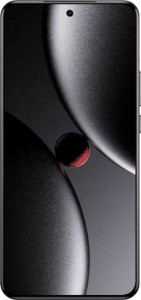
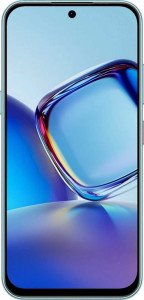
ZTE Blade V80 Design

Xiaomi 15 Ultra ZTE Blade V80 Design

Overview

Welcome to our in-depth comparison of the Xiaomi 15 Ultra and the ZTE Blade V80 Design — two smartphones that take very different approaches to what a modern Android device should be. From raw processing power and camera versatility to display quality and battery technology, these two devices occupy distinct positions in the market. Read on as we break down every key specification to help you decide which one truly fits your needs.

Common Features

  • Neither the Xiaomi 15 Ultra nor the ZTE Blade V80 Design has a rugged build.
  • Neither the Xiaomi 15 Ultra nor the ZTE Blade V80 Design can be folded.
  • Both devices share a 120Hz refresh rate.
  • Neither device features branded damage-resistant glass.
  • Neither device has a secondary screen.
  • Both devices have a touch screen.
  • Both devices have integrated LTE.
  • Both devices support 64-bit processing.
  • Both devices have integrated graphics.
  • Both devices use big.LITTLE technology.
  • Both devices have 8 CPU threads.
  • Both cameras use a CMOS sensor.
  • Both devices support continuous autofocus when recording movies.
  • Both devices have phase-detection autofocus for photos.
  • Both devices support slow-motion video recording.
  • Both devices have a built-in HDR mode.
  • Both devices support manual exposure.
  • Both devices have a flash.
  • Both operating systems include clipboard warnings.
  • Both devices offer location privacy options.
  • Both devices offer camera and microphone privacy options.
  • Neither device has Mail Privacy Protection.
  • Both devices support theme customization.
  • Both devices can block app tracking.
  • Neither device blocks cross-site tracking.
  • Both devices have on-device machine learning.
  • Both devices support fast charging.
  • Neither device has a removable battery.
  • Both devices have a battery level indicator.
  • Both devices have a rechargeable battery.
  • Both devices use 2 SIM cards.
  • Both devices have USB Type-C.
  • Both devices have NFC.
  • Both devices have a fingerprint scanner.
  • Neither device has crash detection.
  • Neither device is DLNA-certified.
  • Neither device supports ANT+.
  • Neither device has a heart rate monitor.
  • Both devices have a video light.
  • Neither device has a sapphire glass display.
  • Neither device has a curved display.
  • Neither device has an e-paper display.

Main Differences

  • Water resistance is rated as Waterproof on the Xiaomi 15 Ultra and Water resistant on the ZTE Blade V80 Design.
  • Weight is 229 g on the Xiaomi 15 Ultra and 191 g on the ZTE Blade V80 Design.
  • Thickness is 9.4 mm on the Xiaomi 15 Ultra and 7.7 mm on the ZTE Blade V80 Design.
  • Width is 75.3 mm on the Xiaomi 15 Ultra and 79 mm on the ZTE Blade V80 Design.
  • Height is 161.3 mm on the Xiaomi 15 Ultra and 166 mm on the ZTE Blade V80 Design.
  • Volume is 114.171366 cm³ on the Xiaomi 15 Ultra and 100.9778 cm³ on the ZTE Blade V80 Design.
  • Ingress Protection rating is IP68 on the Xiaomi 15 Ultra and IP64 on the ZTE Blade V80 Design.
  • Display type is OLED/AMOLED on the Xiaomi 15 Ultra and LCD IPS on the ZTE Blade V80 Design.
  • Screen size is 6.73″ on the Xiaomi 15 Ultra and 6.75″ on the ZTE Blade V80 Design.
  • Pixel density is 522 ppi on the Xiaomi 15 Ultra and 317 ppi on the ZTE Blade V80 Design.
  • Resolution is 1440 x 3200 px on the Xiaomi 15 Ultra and 900 x 1940 px on the ZTE Blade V80 Design.
  • HDR10 support is present on the Xiaomi 15 Ultra but not available on the ZTE Blade V80 Design.
  • HDR10+ support is present on the Xiaomi 15 Ultra but not available on the ZTE Blade V80 Design.
  • Always-On Display is available on the Xiaomi 15 Ultra but not on the ZTE Blade V80 Design.
  • Dolby Vision support is present on the Xiaomi 15 Ultra but not available on the ZTE Blade V80 Design.
  • Internal storage is 1024 GB on the Xiaomi 15 Ultra and 256 GB on the ZTE Blade V80 Design.
  • RAM is 16 GB on the Xiaomi 15 Ultra and 8 GB on the ZTE Blade V80 Design.
  • The chipset is a Qualcomm Snapdragon 8 Elite on the Xiaomi 15 Ultra and a Unisoc T7280 on the ZTE Blade V80 Design.
  • The GPU is an Adreno 830 on the Xiaomi 15 Ultra and a Mali-G57MC on the ZTE Blade V80 Design.
  • CPU speed is 2 x 4.32 & 6 x 3.53 GHz on the Xiaomi 15 Ultra and 8 x 1.9 GHz on the ZTE Blade V80 Design.
  • Geekbench 6 multi-core score is 10059 on the Xiaomi 15 Ultra and 1541 on the ZTE Blade V80 Design.
  • Geekbench 6 single-core score is 3234 on the Xiaomi 15 Ultra and 497 on the ZTE Blade V80 Design.
  • GPU clock speed is 1100 MHz on the Xiaomi 15 Ultra and 850 MHz on the ZTE Blade V80 Design.
  • RAM speed is 5300 MHz on the Xiaomi 15 Ultra and 1866 MHz on the ZTE Blade V80 Design.
  • Semiconductor size is 3 nm on the Xiaomi 15 Ultra and 12 nm on the ZTE Blade V80 Design.
  • Maximum memory amount is 24 GB on the Xiaomi 15 Ultra and 12 GB on the ZTE Blade V80 Design.
  • Thermal Design Power is 8.2W on the Xiaomi 15 Ultra and 10W on the ZTE Blade V80 Design.
  • The main camera resolution is 200 & 50 & 50 & 50 MP on the Xiaomi 15 Ultra and 50 MP on the ZTE Blade V80 Design.
  • Main camera aperture is f/2.6, f/1.8, f/1.6, and f/2.2 on the Xiaomi 15 Ultra and f/1.8 on the ZTE Blade V80 Design.
  • The Xiaomi 15 Ultra has a multi-lens main camera while the ZTE Blade V80 Design has a single-lens main camera.
  • Front camera resolution is 32 MP on the Xiaomi 15 Ultra and 16 MP on the ZTE Blade V80 Design.
  • Optical image stabilization is built in on the Xiaomi 15 Ultra but not available on the ZTE Blade V80 Design.
  • Main camera video recording capability is 4320 x 30 fps on the Xiaomi 15 Ultra and 1080 x 30 fps on the ZTE Blade V80 Design.
  • A dual-tone LED flash is present on the Xiaomi 15 Ultra but not on the ZTE Blade V80 Design.
  • The number of flash LEDs is 2 on the Xiaomi 15 Ultra and 1 on the ZTE Blade V80 Design.
  • Optical zoom is 4.3x on the Xiaomi 15 Ultra and 0x on the ZTE Blade V80 Design.
  • Laser autofocus is available on the Xiaomi 15 Ultra but not on the ZTE Blade V80 Design.
  • 360° panorama shooting is supported on the Xiaomi 15 Ultra but not on the ZTE Blade V80 Design.
  • RAW shooting is supported on the Xiaomi 15 Ultra but not on the ZTE Blade V80 Design.
  • Android version is Android 15 on the Xiaomi 15 Ultra and Android 16 on the ZTE Blade V80 Design.
  • Focus modes are available on the Xiaomi 15 Ultra but not on the ZTE Blade V80 Design.
  • Battery capacity is 6000 mAh on the Xiaomi 15 Ultra and 5000 mAh on the ZTE Blade V80 Design.
  • Wireless charging is supported on the Xiaomi 15 Ultra but not on the ZTE Blade V80 Design.
  • Charging speed is 90W on the Xiaomi 15 Ultra and 22.5W on the ZTE Blade V80 Design.
  • Reverse wireless charging is available on the Xiaomi 15 Ultra but not on the ZTE Blade V80 Design.
  • A 3.5 mm audio jack is present on the ZTE Blade V80 Design but not on the Xiaomi 15 Ultra.
  • Stereo speakers are present on the Xiaomi 15 Ultra but not on the ZTE Blade V80 Design.
  • aptX support is available on the Xiaomi 15 Ultra but not on the ZTE Blade V80 Design.
  • LDAC support is available on the Xiaomi 15 Ultra but not on the ZTE Blade V80 Design.
  • aptX HD support is available on the Xiaomi 15 Ultra but not on the ZTE Blade V80 Design.
  • aptX Adaptive support is available on the Xiaomi 15 Ultra but not on the ZTE Blade V80 Design.
  • aptX Lossless support is available on the Xiaomi 15 Ultra but not on the ZTE Blade V80 Design.
  • 5G support is present on the Xiaomi 15 Ultra but not on the ZTE Blade V80 Design.
  • Wi-Fi version support includes Wi-Fi 4, 5, 6, 6E, and 7 on the Xiaomi 15 Ultra and only Wi-Fi 4 and 5 on the ZTE Blade V80 Design.
  • Bluetooth version is 6 on the Xiaomi 15 Ultra and 5.2 on the ZTE Blade V80 Design.
  • USB version is 3.2 on the Xiaomi 15 Ultra and 2 on the ZTE Blade V80 Design.
  • Download speed is 10000 Mbit/s on the Xiaomi 15 Ultra and 300 Mbit/s on the ZTE Blade V80 Design.
  • Upload speed is 3500 Mbit/s on the Xiaomi 15 Ultra and 150 Mbit/s on the ZTE Blade V80 Design.
  • Emergency SOS via satellite is available on the Xiaomi 15 Ultra but not on the ZTE Blade V80 Design.
  • A gyroscope is present on the Xiaomi 15 Ultra but not on the ZTE Blade V80 Design.
  • An infrared sensor is present on the Xiaomi 15 Ultra but not on the ZTE Blade V80 Design.
  • A barometer is present on the Xiaomi 15 Ultra but not on the ZTE Blade V80 Design.
Specs Comparison
Xiaomi 15 Ultra

Xiaomi 15 Ultra

ZTE Blade V80 Design

ZTE Blade V80 Design

Design:
water resistance Waterproof Water resistant
weight 229 g 191 g
thickness 9.4 mm 7.7 mm
width 75.3 mm 79 mm
height 161.3 mm 166 mm
volume 114.171366 cm³ 100.9778 cm³
Ingress Protection (IP) rating IP68 IP64
has a rugged build
can be folded

In terms of form factor, the ZTE Blade V80 Design is the slimmer and lighter of the two, measuring just 7.7 mm thick and weighing 191 g, compared to the Xiaomi 15 Ultra's 9.4 mm profile and 229 g weight. That 38 g difference is noticeable in daily use — the ZTE will feel considerably lighter in hand and in a pocket, and its smaller overall volume (100.98 cm³ vs 114.17 cm³) makes it the more pocketable device despite being slightly taller and wider.

Where the Xiaomi 15 Ultra pulls ahead decisively is water protection. Its IP68 rating means it can be fully submerged in water — typically up to 1.5 m for 30 minutes — whereas the ZTE's IP64 rating only certifies resistance to splashes and dust, offering no protection against submersion. For users who want peace of mind near pools, sinks, or in rain, this is a meaningful real-world advantage.

Neither phone has a rugged build or a foldable form factor, so those traits don't differentiate them. Overall, the choice here comes down to priorities: the ZTE Blade V80 Design offers a slimmer, lighter design that is more comfortable for everyday carry, while the Xiaomi 15 Ultra holds a clear edge in water protection with its superior IP68 certification.

Display:
Display type OLED/AMOLED LCD, IPS
screen size 6.73" 6.75"
pixel density 522 ppi 317 ppi
resolution 1440 x 3200 px 900 x 1940 px
refresh rate 120Hz 120Hz
has branded damage-resistant glass
supports HDR10
supports HDR10+
Always-On Display
supports Dolby Vision
Has a secondary screen
has a touch screen

The display gap between these two phones is substantial. The Xiaomi 15 Ultra uses an OLED/AMOLED panel with a 522 ppi pixel density at 1440 x 3200 px resolution, delivering sharp, vivid visuals with deep blacks and high contrast — characteristics inherent to OLED technology. The ZTE Blade V80 Design, by contrast, relies on an LCD IPS panel at just 317 ppi and 900 x 1940 px resolution. That 205 ppi difference is clearly visible in everyday use: text appears crisper, images richer, and fine detail more defined on the Xiaomi.

Both screens share a 120Hz refresh rate, which means scrolling and animations feel equally fluid on either device — a genuine bright spot for the ZTE at its price tier. However, the Xiaomi 15 Ultra goes further with support for HDR10, HDR10+, and Dolby Vision, as well as an Always-On Display. These features collectively mean better tone mapping in HDR content, compatibility with premium streaming platforms, and at-a-glance notifications without fully waking the screen — none of which are available on the ZTE.

The Xiaomi 15 Ultra holds a commanding advantage in this category. Aside from the shared 120Hz refresh rate, virtually every display metric — panel technology, resolution, pixel density, and HDR support — favors the Xiaomi by a wide margin.

Performance:
internal storage 1024GB 256GB
RAM 16GB 8GB
Chipset (SoC) name Qualcomm Snapdragon 8 Elite Unisoc T7280
GPU name Adreno 830 Mali-G57MC
CPU speed 2 x 4.32 & 6 x 3.53 GHz 8 x 1.9 GHz
Geekbench 6 result (multi) 10059 1541
Geekbench 6 result (single) 3234 497
GPU clock speed 1100 MHz 850 MHz
Has integrated LTE
RAM speed 5300 MHz 1866 MHz
semiconductor size 3 nm 12 nm
Supports 64-bit
Has integrated graphics
Uses big.LITTLE technology
CPU threads 8 threads 8 threads
maximum memory amount 24GB 12GB
Thermal Design Power (TDP) 8.2W 10W
DDR memory version 5 4
shading units 1536 32

Few spec categories reveal a bigger gulf than this one. The Xiaomi 15 Ultra is powered by the Qualcomm Snapdragon 8 Elite, built on a cutting-edge 3 nm process, while the ZTE Blade V80 Design runs on the Unisoc T7280, fabbed on an older 12 nm node. Smaller semiconductor size translates directly to greater power efficiency and higher achievable performance — and the Geekbench 6 scores make the gap impossible to ignore: the Xiaomi posts 10,059 multi-core and 3,234 single-core, versus the ZTE's 1,541 and 497 respectively. That is roughly a 6.5× advantage in multi-core throughput, meaning tasks like video editing, gaming, and heavy multitasking are in an entirely different league on the Xiaomi.

Memory compounds the difference further. The Xiaomi 15 Ultra pairs its chip with 16 GB of DDR5 RAM running at 5300 MHz and up to 1024 GB of internal storage, while the ZTE offers 8 GB of DDR4 at 1866 MHz and 256 GB of storage. Faster RAM means snappier app switching and better sustained performance under load — DDR5 at 5300 MHz is nearly three times the bandwidth of the ZTE's memory configuration. On the GPU side, the Xiaomi's Adreno 830 with 1,536 shading units dwarfs the Mali-G57MC's 32 shading units, making graphically intensive games and GPU-accelerated tasks dramatically more capable on the Xiaomi.

One minor footnote: the ZTE's 10W TDP is slightly higher than the Xiaomi's 8.2W, which is somewhat counterintuitive given the performance gap — it suggests the older 12 nm chip runs less efficiently under load. The Xiaomi 15 Ultra wins this category decisively across every meaningful metric: raw CPU speed, GPU power, memory bandwidth, and storage capacity.

Cameras:
megapixels (main camera) 200 & 50 & 50 & 50 MP 50 MP
wide aperture (main camera) 2.6 & 1.8 & 1.6 & 2.2f 1.8f
Has a dual-lens (or multi-lens) main camera
megapixels (front camera) 32MP 16MP
has built-in optical image stabilization
video recording (main camera) 4320 x 30 fps 1080 x 30 fps
Has a dual-tone LED flash
number of flash LEDs 2 1
has a BSI sensor
has a CMOS sensor
has continuous autofocus when recording movies
Has phase-detection autofocus for photos
supports slow-motion video recording
has a built-in HDR mode
has manual exposure
has a flash
optical zoom 4.3x 0x
has manual ISO
has a serial shot mode
has manual focus
has a front camera
Has laser autofocus
Shoots 360° panorama
has manual white balance
shoots raw
has touch autofocus
has manual shutter speed
can create panoramas in-camera
Has timelapse function
Has a front-facing LED flash
has a dual-lens (or multi-lens) front camera
supports HDR10 recording
supports Dolby Vision recording
has a front-facing camera under the display
Has a RGB LED flash
has 3D photo/video recording capabilities

Camera hardware tells a dramatic story here. The Xiaomi 15 Ultra sports a quad-camera system with a 200 MP lead sensor joined by three 50 MP lenses, optical image stabilization, 4.3× optical zoom, and video capability up to 8K at 30 fps. The ZTE Blade V80 Design, by contrast, has a single 50 MP shooter, no OIS, no optical zoom, and tops out at 1080p at 30 fps. OIS matters enormously for handheld video and low-light shots — without it, footage is far more prone to blur and shake. The absence of any optical zoom on the ZTE means every telephoto shot is a digital crop, which degrades image quality noticeably at distance.

The Xiaomi also pulls ahead in shooting flexibility. It supports RAW capture, manual shutter speed, laser autofocus, and both HDR10 and Dolby Vision recording — tools that matter to enthusiasts and content creators who want precise control or premium video output. The ZTE covers the basics — HDR mode, manual ISO, phase-detection autofocus — but lacks RAW output, manual shutter speed, and any form of HDR video standard, limiting post-processing and professional use cases.

The Xiaomi 15 Ultra is the clear winner in this category by a substantial margin. Its multi-lens versatility, 8K video, OIS, optical zoom, and advanced manual controls place it in a different class entirely. The ZTE Blade V80 Design is adequate for casual everyday photography, but cannot compete with the Xiaomi's depth of capability across stills, video, or creative control.
Operating system:
Android version Android 15 Android 16
has clipboard warnings
has location privacy options
has camera/microphone privacy options
has Mail Privacy Protection
has theme customization
can block app tracking
blocks cross-site tracking
has on-device machine learning
has notification permissions
has media picker
Can play games while they download
has dark mode
has Wi-Fi password sharing
has battery health check
has an extra dim mode
has focus modes
has dynamic theming
can offload apps
Has customizable notifications
has Live Text
has full-page screenshots
supports split screen
gets direct OS updates
has PiP
Can be used as a PC
Has sharing intents
has a child lock
Supports widgets
Is free and open source
Has offline voice recognition
has voice commands
Tracks the current position of a mobile device
is a multi-user system
has Quick Start

This is one of the closest spec groups in the entire comparison. Both phones run stock Android, share an extensive and nearly identical feature set — dark mode, dynamic theming, split-screen, picture-in-picture, on-device machine learning, customizable notifications, and robust privacy controls among them. The meaningful differences are limited to just two points. The ZTE Blade V80 Design ships on Android 16, one version ahead of the Xiaomi 15 Ultra's Android 15, which means it launches with the latest platform security patches, privacy improvements, and any behavioral changes Google introduced in that release.

Flipping that, the Xiaomi 15 Ultra includes focus modes — a feature absent on the ZTE — which allows users to define scheduled or activity-based profiles that silence distracting apps and notifications. It is a productivity-oriented tool that some users rely on heavily for work/life separation, so its absence on the ZTE is worth noting for that audience.

Overall, this category is essentially a draw. The ZTE holds a marginal edge with a newer Android version at launch, while the Xiaomi counters with focus modes. Neither difference is significant enough to be a deciding factor for most users, and the overwhelming majority of the software experience is identical between the two devices.

Battery:
battery power 6000 mAh 5000 mAh
has wireless charging
Supports fast charging
charging speed 90W 22.5W
has reverse wireless charging
has a removable battery
has a battery level indicator
has a rechargeable battery

Raw capacity favors the Xiaomi 15 Ultra with a 6000 mAh battery versus the ZTE Blade V80 Design's 5000 mAh. That extra 1000 mAh represents a 20% larger reservoir, which — all else being equal — translates to meaningfully more screen-on time before needing a charge. It is worth noting that the Xiaomi's more powerful processor and higher-resolution display will draw more power than the ZTE's components, so real-world endurance gains may be more modest than the raw mAh gap suggests, but the larger battery still provides a cushion.

Where the Xiaomi pulls further ahead is charging. Its 90W wired fast charging is four times faster than the ZTE's 22.5W, meaning the Xiaomi can go from low battery to a significant charge in a fraction of the time. Beyond that, the Xiaomi adds wireless charging and reverse wireless charging — the latter allowing it to act as a charging pad for other devices like earbuds or a friend's phone. The ZTE supports neither, limiting it to wired top-ups only.

The Xiaomi 15 Ultra is the clear winner in this category. It offers a larger battery, dramatically faster charging, and two additional charging modalities that the ZTE simply lacks. For users who prioritize charging flexibility and topping up quickly on the go, the gap here is significant.

Audio:
has a socket for a 3.5 mm audio jack
has stereo speakers
has aptX
has LDAC
has aptX HD
has aptX Adaptive
has aptX Lossless

Audio is a category where each phone takes a different philosophical stance. The Xiaomi 15 Ultra drops the headphone jack entirely but compensates with stereo speakers and a comprehensive suite of high-resolution Bluetooth codecs: LDAC, aptX, aptX HD, aptX Adaptive, and aptX Lossless. For wireless headphone users, this is exceptional — LDAC and aptX Lossless in particular allow near-lossless audio transmission over Bluetooth, a meaningful upgrade over standard codecs for anyone with compatible high-fidelity headphones. The ZTE Blade V80 Design takes the opposite approach, retaining the 3.5 mm headphone jack but offering none of these advanced Bluetooth codecs and only a mono speaker setup.

The practical implications depend entirely on how a user listens. Wired headphone users — especially those who already own quality earphones with a 3.5 mm connector — will appreciate the ZTE's jack, avoiding the need for an adapter. But anyone invested in modern wireless audio will find the ZTE's Bluetooth audio ceiling noticeably limited, while the Xiaomi's codec support unlocks the full potential of premium wireless headphones.

For speaker listening, the Xiaomi's stereo speakers produce a wider soundstage than the ZTE's single speaker — a tangible difference when watching videos or playing games without headphones. On balance, the Xiaomi 15 Ultra holds the broader audio advantage, particularly for wireless and speaker use. The ZTE's headphone jack is a genuine win for a specific audience, but the Xiaomi covers more ground overall.

Connectivity & Features:
release date February 2025 November 2025
has 5G support
Wi-Fi version Wi-Fi 4 (802.11n), Wi-Fi 6 (802.11ax), Wi-Fi 5 (802.11ac), Wi-Fi 7 (802.11be), Wi-Fi 6E (802.11ax) Wi-Fi 4 (802.11n), Wi-Fi 5 (802.11ac)
SIM cards 2 SIM 2 SIM
Bluetooth version 6 5.2
Has USB Type-C
USB version 3.2 2
has NFC
download speed 10000 MBits/s 300 MBits/s
upload speed 3500 MBits/s 150 MBits/s
Has a fingerprint scanner
has emergency SOS via satellite
has crash detection
is DLNA-certified
has a gyroscope
supports ANT+
Has a heart rate monitor
has GPS
has a compass
supports Wi-Fi
Has an infrared sensor
has an accelerometer
has a cellular module
Has a barometer
has an HDMI output
Uses 3D facial recognition
Has an iris scanner
Stylus included
supports Galileo
Has motion tracking
Has optical tracking
Has a built-in projector

Wireless connectivity is another category where the Xiaomi 15 Ultra operates on a different tier. It supports 5G, Wi-Fi 7, and Bluetooth 6, alongside theoretical download speeds of 10,000 Mbits/s — figures that put it among the most capable phones available for future-proof networking. The ZTE Blade V80 Design is limited to 4G LTE, tops out at Wi-Fi 5, and uses Bluetooth 5.2, with a peak download speed of just 300 Mbits/s. For users in 5G coverage areas, the Xiaomi's cellular advantage translates to substantially faster mobile data; Wi-Fi 7 similarly unlocks higher throughput and lower latency on compatible routers, while the newer Bluetooth version offers improved range and connection stability.

The USB situation also differs meaningfully: the Xiaomi's USB 3.2 port enables fast data transfers and broader accessory compatibility, while the ZTE's USB 2.0 is significantly slower for file transfers and tethering. Both phones share USB Type-C and NFC — useful for contactless payments and data exchange — but the Xiaomi adds an infrared sensor (handy for controlling TVs and appliances), a barometer, a gyroscope, and emergency SOS via satellite. The satellite SOS feature in particular is a safety-critical differentiator, enabling distress signals in areas without cellular coverage.

The Xiaomi 15 Ultra wins this category convincingly. Across cellular, Wi-Fi, Bluetooth, USB, and onboard sensors, it is comprehensively more capable. The ZTE covers the everyday essentials — NFC, GPS, dual SIM — but falls short on every front where cutting-edge or safety-oriented connectivity is concerned.

Miscellaneous:
has a video light
Has sapphire glass display
Has a curved display
Has an e-paper display

The miscellaneous specs for these two devices are identical across every data point provided. Both have a video light, neither features sapphire glass, a curved display, or an e-paper display. There is simply nothing here to differentiate one from the other.

This category is a complete tie. Based strictly on the provided specs, neither the Xiaomi 15 Ultra nor the ZTE Blade V80 Design holds any advantage here, and this group has no bearing on any purchasing decision between the two.

Comparison Summary & Verdict

After examining every specification, a clear picture emerges for each device. The Xiaomi 15 Ultra is an uncompromising flagship: its Snapdragon 8 Elite chipset, quad-camera system with up to 200 MP and 4.3x optical zoom, stunning OLED display with HDR10+ and Dolby Vision, 90W wired and wireless charging, and comprehensive connectivity including 5G and Wi-Fi 7 make it the obvious choice for power users who demand the very best. The ZTE Blade V80 Design, on the other hand, appeals to a different audience — those who value a lighter and slimmer form factor, a 3.5 mm headphone jack, and a more straightforward Android 16 experience at a more accessible level. It won't match the Ultra in performance or camera capability, but it covers everyday essentials reliably. Choose the Xiaomi 15 Ultra for a top-tier all-round experience; choose the ZTE Blade V80 Design if simplicity, portability, and the headphone jack matter most to you.

Xiaomi 15 Ultra
Buy Xiaomi 15 Ultra if...

Buy the Xiaomi 15 Ultra if you want a top-of-the-line flagship experience with a powerful Snapdragon 8 Elite chip, a versatile quad-camera system, superior display quality, and fast wireless charging.

ZTE Blade V80 Design
Buy ZTE Blade V80 Design if...

Buy the ZTE Blade V80 Design if you prefer a lighter, slimmer phone with a 3.5 mm headphone jack and straightforward everyday performance without flagship-level complexity or cost.