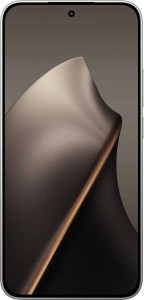
Xiaomi 15T
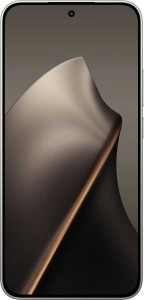
Xiaomi 15T Pro

Xiaomi 15T Xiaomi 15T Pro

Overview

Welcome to our in-depth specification comparison between the Xiaomi 15T and the Xiaomi 15T Pro. Both phones share a strong foundation — including a 6.83″ OLED display, IP68 waterproofing, and a 5500 mAh battery — but they diverge significantly when it comes to raw processing power, camera capabilities, and charging features. Read on to discover exactly how these two devices stack up across every key category.

Common Features

  • Both phones are waterproof with an IP68 rating and a depth rating of 3 m.
  • Neither phone has a rugged build or a foldable form factor.
  • Both phones feature a 6.83″ OLED/AMOLED display.
  • Both phones have a touch sampling rate of 480Hz.
  • Both phones are protected by Gorilla Glass 7i.
  • HDR10 and HDR10+ support is available on both phones.
  • Always-On Display is available on both phones.
  • Both phones come with 12GB of RAM and support up to 24GB maximum memory.
  • Both phones use big.LITTLE technology with 8 CPU threads and HMP support.
  • Both phones have a triple-lens main camera with 50, 50, and 12 MP sensors.
  • Both phones have a 32MP front camera.
  • Optical image stabilization is built into both phones.
  • Both phones run Android 16 with theme customization, clipboard warnings, and location and camera/microphone privacy options.
  • App tracking can be blocked on both phones, though neither blocks cross-site tracking.
  • Both phones have a 5500 mAh battery with fast charging and come with a charger included.
  • Neither phone has a removable battery, and both support ultra power-saving mode.
  • Both phones have stereo speakers but no 3.5mm audio jack and no radio.
  • Both phones support 5G, dual SIM, NFC, Bluetooth 6, USB Type-C (USB 2.0), and have a fingerprint scanner.
  • Neither phone has an external memory slot.
  • Both phones have a video light, no sapphire glass display, no curved display, and no e-paper display.

Main Differences

  • Weight is 194 g on Xiaomi 15T and 210 g on Xiaomi 15T Pro.
  • Thickness is 7.5 mm on Xiaomi 15T and 8 mm on Xiaomi 15T Pro.
  • Pixel density is 435 ppi on Xiaomi 15T and 447 ppi on Xiaomi 15T Pro.
  • Resolution is 1220 x 2712 px on Xiaomi 15T and 1280 x 2772 px on Xiaomi 15T Pro.
  • Refresh rate is 120Hz on Xiaomi 15T and 144Hz on Xiaomi 15T Pro.
  • The chipset is MediaTek Dimensity 8400 on Xiaomi 15T and MediaTek Dimensity 9400 Plus on Xiaomi 15T Pro.
  • The GPU is Mali G720 MC7 on Xiaomi 15T and Immortalis G925 on Xiaomi 15T Pro.
  • AnTuTu benchmark score is 1,821,100 on Xiaomi 15T and 2,718,159 on Xiaomi 15T Pro.
  • Geekbench 6 multi-core result is 6033 on Xiaomi 15T and 8969 on Xiaomi 15T Pro.
  • Geekbench 6 single-core result is 1571 on Xiaomi 15T and 2874 on Xiaomi 15T Pro.
  • RAM speed is 4267 MHz on Xiaomi 15T and 10667 MHz on Xiaomi 15T Pro.
  • Internal storage is 512GB on Xiaomi 15T and 1024GB on Xiaomi 15T Pro.
  • Semiconductor size is 4 nm on Xiaomi 15T and 3 nm on Xiaomi 15T Pro.
  • Optical zoom is 2x on Xiaomi 15T and 5x on Xiaomi 15T Pro.
  • Maximum video recording resolution is 2160p at 60fps on Xiaomi 15T and 4320p at 30fps on Xiaomi 15T Pro.
  • RAW photo shooting is supported on Xiaomi 15T Pro but not available on Xiaomi 15T.
  • Timelapse function is available on Xiaomi 15T Pro but not on Xiaomi 15T.
  • Charging speed is 67W on Xiaomi 15T and 90W on Xiaomi 15T Pro.
  • Wireless charging and reverse wireless charging are supported on Xiaomi 15T Pro but not available on Xiaomi 15T.
  • aptX and LDAC audio codec support is available on Xiaomi 15T Pro but not on Xiaomi 15T.
  • Wi-Fi 7 (802.11be) support is available on Xiaomi 15T Pro but not on Xiaomi 15T.
  • Maximum download speed is 5170 Mbit/s on Xiaomi 15T and 7300 Mbit/s on Xiaomi 15T Pro.
Specs Comparison
Xiaomi 15T

Xiaomi 15T

Xiaomi 15T Pro

Xiaomi 15T Pro

Design:
water resistance Waterproof Waterproof
weight 194 g 210 g
thickness 7.5 mm 8 mm
width 78 mm 77.9 mm
height 163.2 mm 162.7 mm
volume 95.472 cm³ 101.39464 cm³
Ingress Protection (IP) rating IP68 IP68
waterproof depth rating 3 m 3 m
has a rugged build
can be folded

Both the Xiaomi 15T and 15T Pro share identical water resistance credentials — an IP68 rating with a 3 m submersion depth — meaning neither has an edge in durability. Neither device offers a rugged build or a foldable form factor, so they compete purely on standard slab-phone design terms.

Where they diverge is in physical footprint and heft. The 15T is noticeably slimmer at 7.5 mm versus the Pro's 8 mm, and meaningfully lighter at 194 g compared to 210 g — a 16 g difference that is genuinely perceptible during extended one-handed use or long sessions. The total volume gap reinforces this: 95.5 cm³ versus 101.4 cm³. The two phones are nearly identical in their 2D footprint (height and width are within 0.5 mm of each other), so the difference is entirely about thickness and mass — likely a consequence of the Pro housing a larger battery or more substantial internal components.

For users who prioritize a lighter, more pocketable device, the standard 15T has a clear ergonomic edge. The 15T Pro's extra weight and thickness are not dramatic, but they are real trade-offs to keep in mind, especially for users sensitive to how a phone feels after hours of use.

Display:
Display type OLED/AMOLED OLED/AMOLED
screen size 6.83" 6.83"
pixel density 435 ppi 447 ppi
resolution 1220 x 2712 px 1280 x 2772 px
refresh rate 120Hz 144Hz
touch sampling rate 480Hz 480Hz
has branded damage-resistant glass
Gorilla Glass version Gorilla Glass 7i Gorilla Glass 7i
supports HDR10
supports HDR10+
Always-On Display
supports Dolby Vision
contrast ratio 5000000:1 5000000:1
Has a secondary screen
has a touch screen

On paper, these two screens look almost identical — same 6.83″ OLED panel, same Gorilla Glass 7i protection, same HDR10+, Dolby Vision, and Always-On Display support, and an identical 5,000,000:1 contrast ratio. For the vast majority of everyday use cases — scrolling, streaming, reading — both displays will feel indistinguishable in terms of color depth and brightness capability.

The meaningful differences are sharpness and motion smoothness. The 15T Pro pulls ahead with a 1280 x 2772 px resolution at 447 ppi, versus the 15T's 1220 x 2712 px at 435 ppi. The 12 ppi gap is subtle and unlikely to be obvious in daily use, but the Pro's crisper output may matter to users reading small text or viewing fine-detail content. More impactful is the refresh rate: the Pro's 144Hz panel versus the 15T's 120Hz produces visibly smoother animations and a more responsive feel in fast-scrolling or gaming contexts, even if the touch sampling rate is identically matched at 480Hz on both.

The 15T Pro holds a genuine display edge, driven by its higher refresh rate and marginally sharper resolution. Neither advantage is dramatic in isolation, but together they make the Pro the stronger choice for users who are particularly display-sensitive — gamers, media enthusiasts, or anyone who values that extra layer of visual fluidity.

Performance:
internal storage 512GB 1024GB
RAM 12GB 12GB
AnTuTu benchmark score 1821100 2718159
Chipset (SoC) name MediaTek Dimensity 8400 MediaTek Dimensity 9400 Plus
GPU name Mali G720 MC7 Immortalis G925
CPU speed 1 x 3.25 & 3 x 3 & 4 x 2.15 GHz 1 x 3.73 & 4 x 3.3 & 3 x 2.4 GHz
Geekbench 6 result (multi) 6033 8969
Geekbench 6 result (single) 1571 2874
GPU clock speed 1300 MHz 1300 MHz
RAM speed 4267 MHz 10667 MHz
semiconductor size 4 nm 3 nm
Supports 64-bit
Has integrated graphics
Uses big.LITTLE technology
CPU threads 8 threads 8 threads
Uses HMP
maximum memory bandwidth 68.2 GB/s 85.3 GB/s
maximum memory amount 24GB 24GB
DDR memory version 5 5
L3 cache 6 MB 12 MB

This is where the two phones diverge most dramatically. The 15T runs on a MediaTek Dimensity 8400 — a capable mid-to-upper-range chip built on a 4 nm process — while the 15T Pro houses the MediaTek Dimensity 9400 Plus, a flagship-tier processor on a more advanced 3 nm node. The real-world gap between them is substantial: the Pro scores 2,718,159 on AnTuTu versus the 15T's 1,821,100, a roughly 49% lead. Geekbench 6 tells the same story — the Pro nearly doubles the 15T's single-core result (2874 vs 1571) and pulls far ahead in multi-core performance (8969 vs 6033). These are not marginal differences; they reflect a full chipset generation of separation.

Memory architecture compounds the gap further. Despite both phones carrying 12 GB of RAM, the Pro's memory runs at 10,667 MHz — more than twice the 15T's 4,267 MHz — and offers significantly higher bandwidth at 85.3 GB/s versus 68.2 GB/s. The Pro also doubles the L3 cache to 12 MB, reducing latency for compute-heavy tasks. In practice, this translates to faster app launches, smoother multitasking under load, and more headroom for AI-driven features. Storage also differs: the Pro ships with 1 TB of internal storage versus the 15T's 512 GB, making it the stronger option for power users with large media libraries.

The 15T Pro wins this category decisively. The Dimensity 9400 Plus is a fundamentally faster chip at every level — CPU throughput, memory speed, and cache capacity — and the benchmark data confirms the advantage is meaningful, not cosmetic. The 15T remains competent for everyday tasks, but users who demand flagship-level performance for gaming, video editing, or intensive multitasking will find the Pro in a different league entirely.
Cameras:
megapixels (main camera) 50 & 50 & 12 MP 50 & 50 & 12 MP
wide aperture (main camera) 1.7 & 1.9 & 2.2f 1.6 & 3 & 2.2f
Has a dual-lens (or multi-lens) main camera
megapixels (front camera) 32MP 32MP
has built-in optical image stabilization
video recording (main camera) 2160 x 60 fps 4320 x 30 fps
Has a dual-tone LED flash
number of flash LEDs 1 1
has a BSI sensor
has a CMOS sensor
has continuous autofocus when recording movies
Has phase-detection autofocus for photos
supports slow-motion video recording
has a built-in HDR mode
has manual exposure
has a flash
optical zoom 2x 5x
has manual ISO
has a serial shot mode
has manual focus
has a front camera
Has laser autofocus
Shoots 360° panorama
has manual white balance
shoots raw
has touch autofocus
has manual shutter speed
can create panoramas in-camera
wide aperture (front camera) 2.2f 2.2f
Has timelapse function
minimum focal length 15 mm 15 mm
maximum focal length 46 mm 46 mm
Has a front-facing LED flash
has a dual-lens (or multi-lens) front camera
supports HDR10 recording
supports Dolby Vision recording
has a front-facing camera under the display
Has a RGB LED flash
has 3D photo/video recording capabilities

The two phones share the same triple-camera megapixel configuration — 50 & 50 & 12 MP — and an identical 32 MP front shooter, so resolution alone tells you nothing. The real story is in how each system is built around those sensors. The 15T Pro's main lens opens to f/1.6 versus the 15T's f/1.7, a meaningful advantage in low-light capture. More telling is the telephoto setup: the 15T offers just 2x optical zoom, while the Pro delivers 5x optical zoom. Optical zoom preserves image quality at distance in a way digital zoom cannot, so for portrait, wildlife, or any distant subject photography, the Pro's reach is a genuine and practical upgrade.

The video gap is equally striking. The 15T tops out at 4K @ 60 fps, which is excellent by any standard — but the Pro goes further with 8K @ 30 fps recording, giving videographers significantly more resolution headroom for cropping and post-production. The Pro also unlocks two features absent on the 15T: RAW shooting and a timelapse mode. RAW capture is particularly significant for enthusiast photographers, as it preserves full sensor data for editing, rather than locking users into the phone's processed JPEG output.

The 15T Pro holds a clear camera advantage across multiple dimensions — superior telephoto reach, higher video resolution ceiling, RAW support, and timelapse capability. The 15T is by no means a weak shooter, but the Pro is unmistakably the choice for users who treat the camera system as a priority.

Operating system:
Android version Android 16 Android 16
has clipboard warnings
has location privacy options
has camera/microphone privacy options
has Mail Privacy Protection
has theme customization
can block app tracking
blocks cross-site tracking
has on-device machine learning
has notification permissions
has media picker
Can play games while they download
has dark mode
has Wi-Fi password sharing
has battery health check
has an extra dim mode
has focus modes
has dynamic theming
can offload apps
Has customizable notifications
has Live Text
has full-page screenshots
supports split screen
gets direct OS updates
has PiP
Can be used as a PC
Has sharing intents
has a child lock
Supports widgets
Is free and open source
Has offline voice recognition
has voice commands
Tracks the current position of a mobile device
is a multi-user system
has Quick Start

Across every single software specification provided, the Xiaomi 15T and 15T Pro are identical. Both run Android 16, carry the same privacy toolkit — including location controls, camera/microphone permissions, and app tracking blockers — and support the same productivity and usability features: split-screen multitasking, Picture-in-Picture, widgets, dynamic theming, and offline voice recognition, among others.

This is a complete tie, and by a wide margin. There is not a single OS-level differentiator between the two devices based on the provided data. A buyer choosing between them on software grounds alone would have no rational basis to prefer one over the other — the experience out of the box, and the feature set available to them, will be functionally indistinguishable.

Battery:
battery power 5500 mAh 5500 mAh
has wireless charging
Supports fast charging
charging speed 67W 90W
has reverse wireless charging
comes with a charger
has a removable battery
Has an ultra power-saving mode
has a battery level indicator
has a rechargeable battery

Both phones carry an identical 5500 mAh battery, so raw capacity is a wash — users can expect comparable endurance from either device under similar usage patterns. The divergence lies entirely in how each phone replenishes that capacity. The 15T supports wired fast charging at 67W, which is respectable, but the 15T Pro steps up to 90W wired charging — a meaningful gap that translates to noticeably shorter time tethered to a cable, particularly useful during quick top-ups throughout the day.

Beyond charging speed, the Pro unlocks two capabilities the 15T lacks entirely: wireless charging and reverse wireless charging. Wireless charging adds genuine convenience — dropping the phone on a pad overnight or at a desk without fumbling for a cable — while reverse wireless charging allows the Pro to act as a power source for other Qi-compatible devices like earbuds or a smartwatch. Neither feature affects battery life, but both expand the ecosystem flexibility of the device significantly.

The 15T Pro wins this category clearly. Same battery size, but a faster wired charge, wireless charging support, and the ability to share power with other devices make it the more versatile and convenient option for users who prioritize charging flexibility in their daily routine.

Audio:
has a socket for a 3.5 mm audio jack
has stereo speakers
has aptX
has LDAC
has aptX HD
has aptX Adaptive
has aptX Lossless
Has a radio

For speaker output, the two phones are equal — both feature stereo speakers and neither includes a 3.5 mm headphone jack, so wired audio is limited to USB-C adapters on either device. The distinction that matters here is in wireless audio codec support. The 15T offers no high-quality Bluetooth audio codecs at all, while the 15T Pro supports both aptX and LDAC.

That codec gap has real consequences for wireless listening. LDAC in particular is Sony's high-resolution audio codec, capable of transmitting up to three times more data than standard Bluetooth audio — meaning users pairing the Pro with compatible LDAC headphones or earbuds will hear noticeably more detail, dynamic range, and fidelity. aptX adds lower-latency, higher-quality streaming for compatible devices. For casual listeners using standard Bluetooth earbuds, the difference may be subtle, but for audiophiles or anyone with high-quality wireless headphones, the Pro's codec support is a meaningful real-world upgrade.

The 15T Pro has a clear audio edge for wireless listening. The 15T's complete absence of premium Bluetooth codecs is a genuine limitation for users who care about audio quality through headphones, and the Pro's LDAC support alone is a compelling differentiator in this category.

Connectivity & Features:
release date September 2025 September 2025
has 5G support
Wi-Fi version Wi-Fi 4 (802.11n), Wi-Fi 6E (802.11ax), Wi-Fi 6 (802.11ax), Wi-Fi 5 (802.11ac) Wi-Fi 4 (802.11n), Wi-Fi 6E (802.11ax), Wi-Fi 6 (802.11ax), Wi-Fi 5 (802.11ac), Wi-Fi 7 (802.11be)
SIM cards 2 SIM 2 SIM
Bluetooth version 6 6
has an external memory slot
Has USB Type-C
USB version 2 2
has NFC
download speed 5170 MBits/s 7300 MBits/s
Has a fingerprint scanner
has emergency SOS via satellite
has crash detection
is DLNA-certified
has a gyroscope
supports ANT+
Has a heart rate monitor
has GPS
has a compass
supports Wi-Fi
Has an infrared sensor
has an accelerometer
has a cellular module
Has a barometer
has an HDMI output
Uses 3D facial recognition
Has an iris scanner
Stylus included
supports Galileo
Has motion tracking
Has optical tracking
Has a built-in projector

Across the bulk of this category — 5G, Bluetooth 6, NFC, dual SIM, USB-C, infrared sensor, GPS, and the full sensor suite — the two phones are identical. For most users, day-to-day connectivity will feel indistinguishable between them. The single but notable differentiator is Wi-Fi: the 15T Pro adds support for Wi-Fi 7 (802.11be), a standard the 15T lacks entirely, topping out instead at Wi-Fi 6E.

Wi-Fi 7 is not just a generational badge — it brings significantly higher throughput, lower latency, and improved performance in congested environments through multi-link operation. This translates directly to the peak download speed figures: the Pro reaches 7,300 Mbits/s versus the 15T's 5,170 Mbits/s, a roughly 41% advantage. In practice, the real-world gap depends heavily on router hardware — users without a Wi-Fi 7 router won't see any benefit — but the Pro is meaningfully future-proofed for network infrastructure that is rapidly becoming mainstream.

The 15T Pro holds a modest but forward-looking edge in connectivity. For users already on or planning to upgrade to a Wi-Fi 7 router, the Pro's network ceiling is a tangible advantage. For everyone else, the two phones are effectively tied in this category.

Miscellaneous:
has a video light
Has sapphire glass display
Has a curved display
Has an e-paper display

The miscellaneous specs for these two devices are a complete match — both include a video light, and neither features sapphire glass, a curved display, or an e-paper display. There is nothing in this data set that separates them in any meaningful way.

This is an unambiguous tie. Buyers will find no differentiating factor here, and this category should carry no weight in a purchase decision between the two models.

Comparison Summary & Verdict

After examining every specification, the Xiaomi 15T and Xiaomi 15T Pro clearly serve different types of users. The Xiaomi 15T is the more compact and lighter option at 194 g, offering solid everyday performance with the MediaTek Dimensity 8400 chipset — a strong choice for users who want a capable, balanced smartphone without paying a premium. The Xiaomi 15T Pro, on the other hand, steps up decisively with the MediaTek Dimensity 9400 Plus, a dramatically higher AnTuTu score of over 2.7 million, a 144Hz display, 8K video recording, 5x optical zoom, wireless charging, Wi-Fi 7, and superior audio codec support including LDAC and aptX. If power, versatility, and top-tier features matter most to you, the Pro is the clear pick.

Xiaomi 15T
Buy Xiaomi 15T if...

Buy the Xiaomi 15T if you want a lighter, slimmer device with dependable everyday performance and do not need advanced camera features or wireless charging.

Xiaomi 15T Pro
Buy Xiaomi 15T Pro if...

Buy the Xiaomi 15T Pro if you demand top-tier processing power, a smoother 144Hz display, 8K video, 5x optical zoom, wireless charging, and Wi-Fi 7 support.